
Listening & Culture
Alternative R&B Genre Explained: Origins, Sound, and Artists
Discover the alternative R&B genre explained: its unique sound, emotional depth, and key artists redefining music. Dive in now!
By DRVVYN · · 17 min read
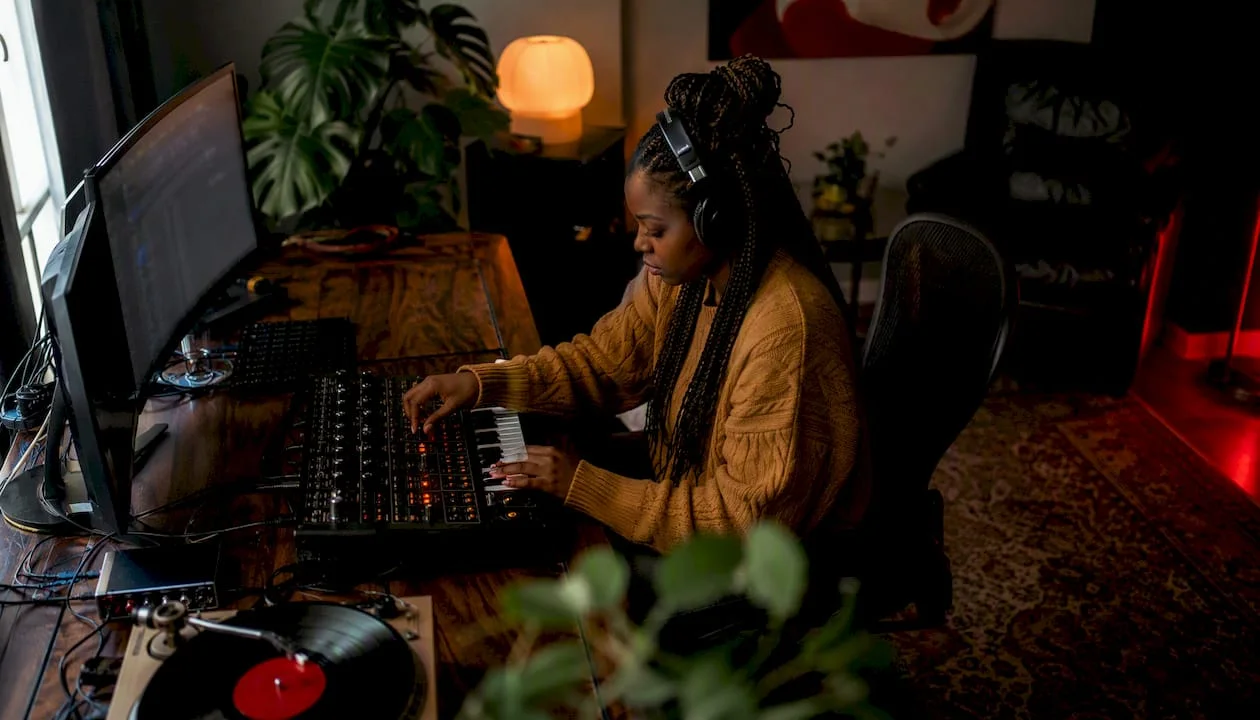
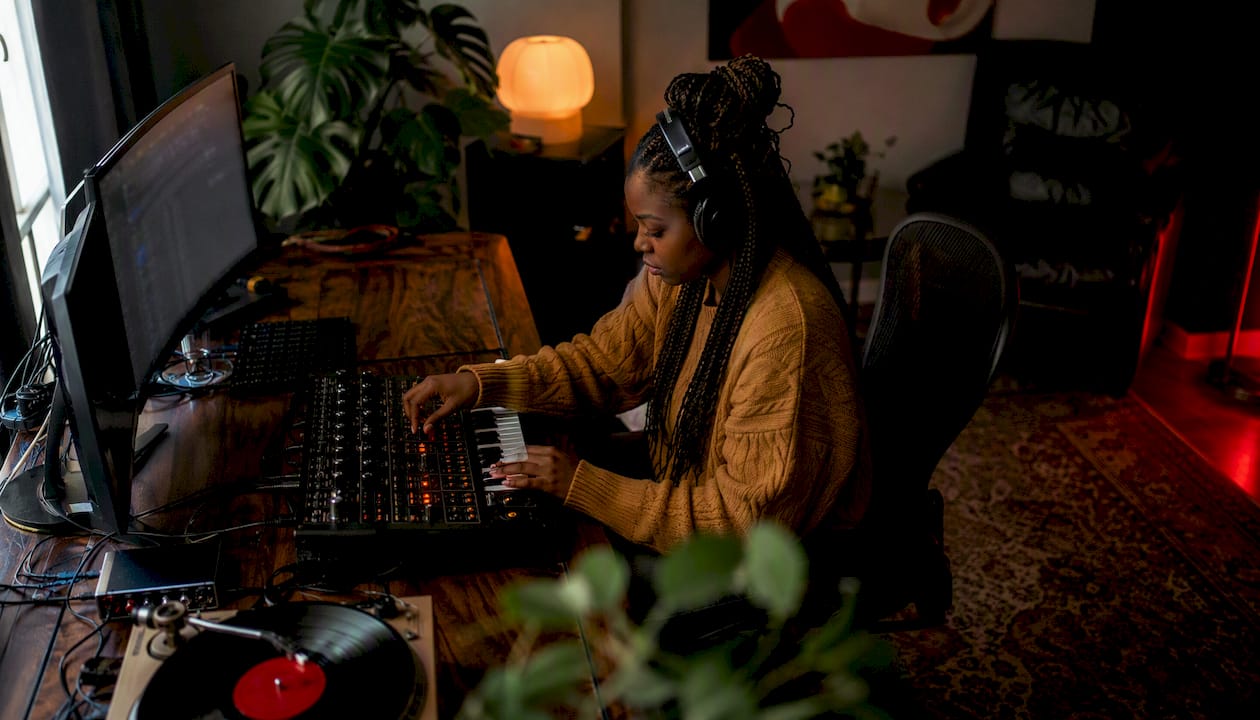
Alternative R&B is a stylistic offshoot of contemporary R&B that trades radio polish for atmosphere, emotional rawness, and experimental production. Where mainstream R&B leans on bright, compressed beats and melismatic vocals built for mass appeal, alt‑R&B pulls you into something quieter and stranger: reverb-soaked synths, half-time drums that feel suspended in air, and vocals that confess rather than perform. Frank Ocean’s “Thinking Bout You” drops you into that feeling in under a minute. The Weeknd’s “The Morning” wraps darkness in something almost beautiful. SZA’s “Drew Barrymore” turns self-doubt into a melody you can’t shake. If you’ve ever heard a song that felt like R&B but also felt like 2 AM in an empty city, you’ve already heard this genre.
Three quick signs you’re listening to alt‑R&B:
- The mood feels nocturnal or introspective, not celebratory
- The drums are sparse, often half-time or trap-leaning, with long silences between hits
- The vocals are processed, layered, or delivered in a near-whisper rather than a full-throated belt
Pro Tip:When a track feels like it’s holding its breath between the verses, that negative space is doing as much work as the notes. That’s alt‑R&B’s signature tension.
Table of Contents
- Where did alternative R&B come from?
- What does alternative R&B actually sound like?
- What do alt‑R&B lyrics actually say?
- How does alt‑R&B differ from mainstream R&B and related genres?
- Who are the essential alt‑R&B artists to know?
- Why does the label matter, and why do some artists reject it?
- How to identify alt‑R&B when you hear it
- Key Takeaways
- Why the “alternative” label misses the point
- Hear it for yourself with Drvvynsound
- Useful sources for further reading
Where did alternative R&B come from?
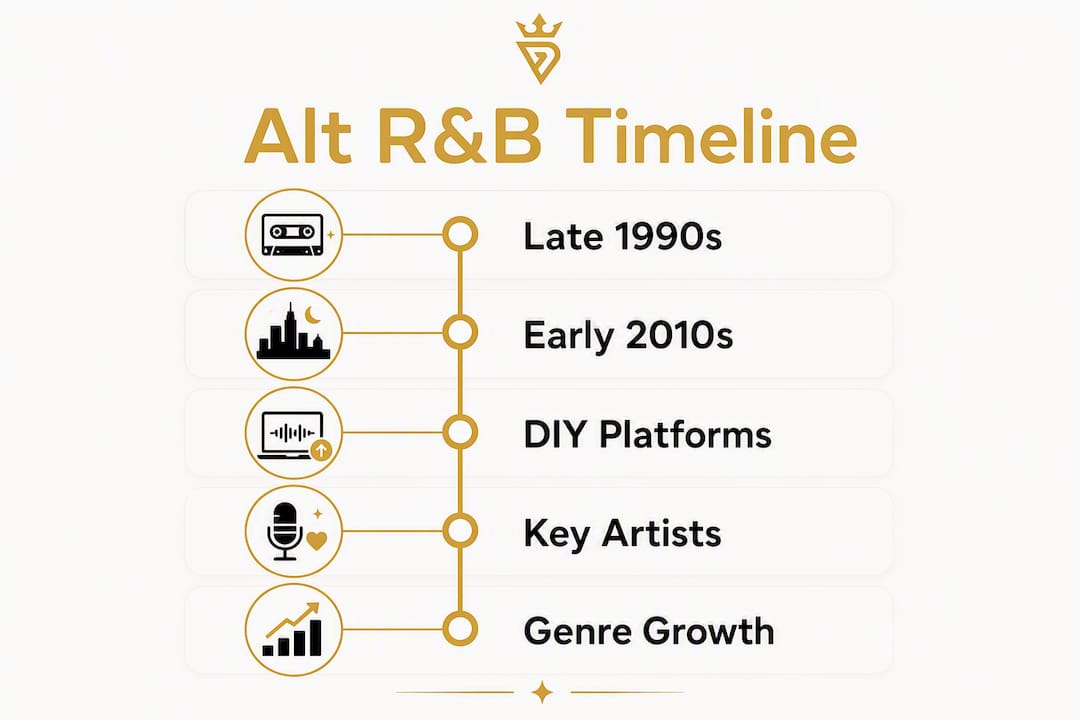
The roots reach back to the late 1990s, when artists like D’Angelo and Erykah Badu were already bending R&B toward something more introspective and less radio-dependent. That movement, broadly called neo-soul, planted the seed. But alt‑R&B as a distinct, recognized category began coalescing in the mid-2000s, when producers started fusing R&B songwriting with electronic textures drawn from UK post-dubstep, chillwave, and indie pop. Music journalists needed a name for it, and “alternative R&B” stuck, even if imperfectly.
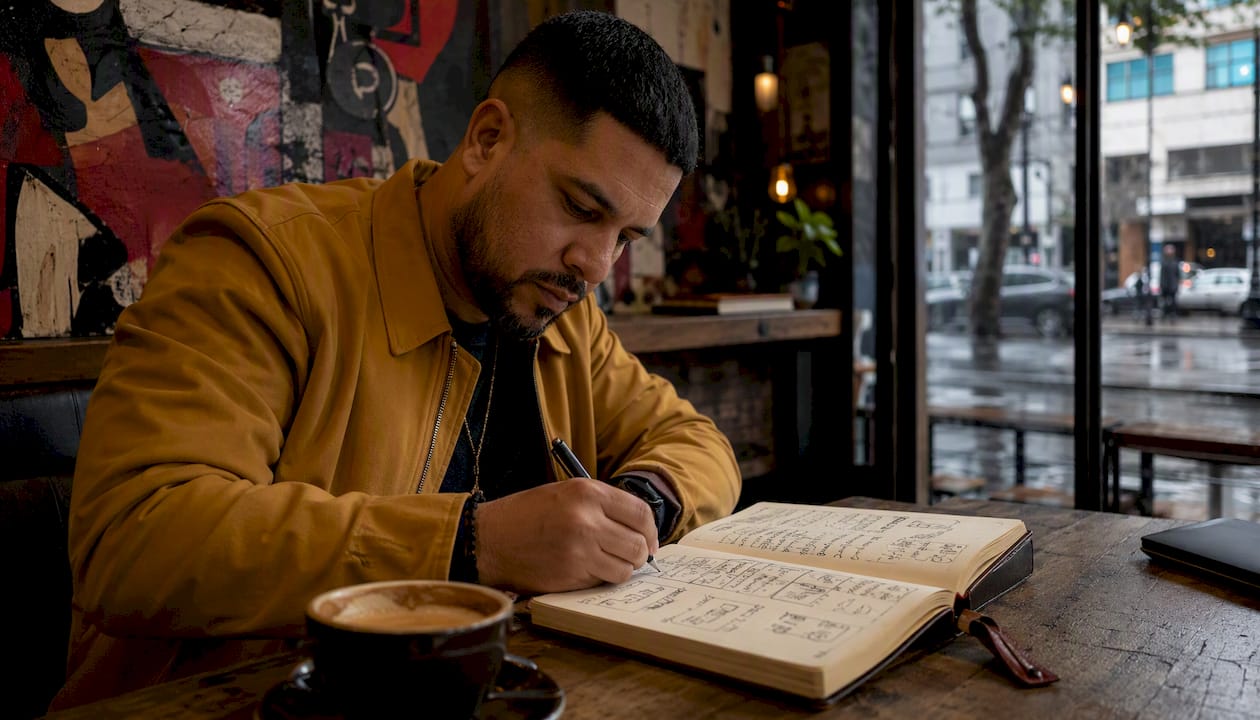
The real breakout came in the early 2010s, and the internet made it possible. DIY platforms like SoundCloud and Bandcamp let artists release directly to listeners without label approval, and music blogs amplified the sound to audiences who were hungry for something more textured than what radio offered. The Weeknd uploaded his mixtape House of Balloons to a blog in 2011 with no label, no press campaign, and almost no public identity. It spread because the music was undeniable. Frank Ocean’s Nostalgia, Ultra arrived the same year through a similar route, a free Tumblr release that bypassed every traditional gate.
A brief timeline of key moments
| Era | Milestone | Significance |
|---|---|---|
| Late 1990s | D’Angelo’s Voodoo, Erykah Badu’s Baduizm | Neo-soul antecedents; introspection enters R&B |
| Mid-2000s | Solange, Janelle Monáe early work | Electronic and indie textures begin merging with R&B songwriting |
| 2011 | The Weeknd’s House of Balloons, Frank Ocean’s Nostalgia, Ultra | Landmark DIY releases define the early sound |
| 2012 | Frank Ocean’s Channel Orange | Major-label release that brought alt‑R&B to mainstream awareness |
| 2012–2016 | SZA’s Z EP, Jhené Aiko’s Souled Out, Bryson Tiller’s T R A P S O U L | Second wave expands the genre’s emotional and sonic range |
| 2017–present | Khalid’s American Teen, Brent Faiyaz’s Sonder Son, SZA’s CTRL | Genre enters mainstream pop while retaining its atmospheric core |
The DIY workflow shaped the aesthetic as much as any single producer. Home studios meant lo‑fi textures weren’t a flaw; they were a fingerprint. That direct-to-audience path also meant artists could take sonic risks that a label A&R might have smoothed away.
What does alternative R&B actually sound like?
This is where the genre lives or dies for a listener: in the specific choices a producer makes about space, texture, and weight. Alt‑R&B uses trap-leaning or half-time drum patterns, minor harmonic colors, and vocal manipulation as core building blocks, but the way those elements combine is what creates the genre’s unmistakable atmosphere.
Production palette
The production tends to feel damp and wide. Reverb-drenched pads blur the edges of chords. Filtered synths pulse slowly, often sitting low in the mix rather than cutting through it. Silence, or near-silence, is used deliberately: a bar with almost nothing in it creates tension that the next note releases. This is the opposite of mainstream R&B production, which fills every frequency with energy to keep a listener locked in.
Rhythm and groove
The drums in alt‑R&B rarely feel urgent. Half-time patterns, where the snare lands on beat three instead of two and four, make the music feel like it’s breathing slowly. Sub-bass carries the low end, often more felt than heard. Trap hi-hat patterns appear frequently, but they’re stripped back, used for texture rather than drive. The overall effect is a groove that pulls you inward rather than pushing you onto a dance floor.
Harmony and melody
Minor modes dominate. Chord extensions, specifically 7ths, 9ths, and add9 voicings, give the harmony a lush, unresolved quality that mirrors emotional ambiguity. Melodies tend to stay in a narrow range, conversational in shape rather than soaring. The feeling is less “performance” and more “confession.”
Vocal treatment and song form
Vocals in alt‑R&B are often processed: Auto-Tune used not to correct pitch but to add a glassy, slightly inhuman quality; heavy layering that makes a single voice sound like a room full of whispers. Falsetto appears constantly, softening the emotional delivery. Song structures resist the traditional verse-chorus-bridge formula. Tracks often build through textural shifts, a beat dropping out, a synth swelling in, a vocal doubling, rather than through melodic hooks.
Pro Tip:Listen to the space between the kick and the snare in a track like SZA’s “The Weekend.” That gap is longer than you expect. That’s the half-time feel doing its work.
| Sonic Feature | What to Listen For | Example Track |
|---|---|---|
| Half-time drums | Snare on beat 3; slow, breathing groove | The Weeknd, “Often” |
| Reverb-drenched pads | Wide, blurred chords with long decay | Frank Ocean, “Pyramids” |
| Falsetto vocals | Soft, upper-register delivery; intimate tone | Khalid, “Location” |
| Chord extensions | Unresolved, lush harmonic color | SZA, “Drew Barrymore” |
| Vocal layering | Multiple stacked vocal tracks; whisper-like texture | Jhené Aiko, “The Worst” |
What do alt‑R&B lyrics actually say?
The emotional territory of alt‑R&B is specific. These songs don’t often celebrate; they examine. Lyrical themes are confessional, exploring vulnerability, desire, alienation, and late-night urban moods in ways that feel more like diary entries than anthems. The narrator is usually caught somewhere between wanting and withdrawing, between love and the fear that love will cost too much.
Frank Ocean writes with a cinematic precision that makes the personal feel universal. SZA’s lyrics carry a particular kind of self-aware ache, the feeling of knowing exactly what you’re doing wrong and doing it anyway. Jhené Aiko’s voice floats above her words as if she’s narrating from a slight distance, present but also watching herself from across the room.
That tone, low, slow, suspended between clarity and confusion, is the lyrical signature of the genre. The production amplifies it: a sparse beat under a confessional line makes the confession feel heavier, more exposed. There’s no crowd noise, no hype, nothing to hide behind.
Common lyrical themes in alt‑R&B:
- Romantic ambivalence and the complexity of modern desire
- Alienation from social expectations and the pressure to perform happiness
- Late-night introspection, often tied to specific urban settings
- Grief, numbness, and the slow process of feeling again
- Technology’s effect on intimacy: texting, distance, the strange loneliness of being always connected
The tone is rarely angry in a direct way. It tends toward the melancholic and the searching, a voice trying to locate itself inside a feeling rather than declare a position.
How does alt‑R&B differ from mainstream R&B and related genres?
The clearest way to hear the difference is to play two tracks back to back. Put on a mainstream contemporary R&B song, something built for radio with a bright mix, a four-on-the-floor pulse, and a hook designed to repeat in your head. Then play Frank Ocean’s “Nights.” The contrast is immediate: the production breathes differently, the emotional register drops, the whole thing feels more interior.
Key contrasts:
- Production finish: Mainstream R&B is polished and loud-mastered for radio; alt‑R&B favors dynamic range, lo‑fi texture, and atmosphere over clarity
- Drum feel: Contemporary R&B often uses driving, on-the-beat patterns; alt‑R&B leans half-time or sparse
- Vocal approach: Mainstream R&B showcases melisma and vocal power; alt‑R&B uses restraint, falsetto, and processing
- Distribution origin: Mainstream R&B is label-driven and radio-targeted; alt‑R&B grew through blogs, SoundCloud, and direct-to-fan channels
- Lyrical tone: Mainstream R&B often addresses love and relationships directly; alt‑R&B circles those themes with more ambiguity and introspection
Alt‑R&B vs. neo-soul and progressive soul
Neo-soul shares alt‑R&B’s introspective spirit and its resistance to radio formulas, but the instrumentation is different. Neo-soul leans on live drums, organic bass, and the warmth of analog recording. Alt‑R&B replaces much of that with electronic production: synthesizers, programmed drums, and digital processing. The emotional concerns overlap; the sonic tools diverge. Progressive soul, a broader category, encompasses both, but alt‑R&B is specifically tied to the electronic and internet-era production context that neo-soul predates.
| Dimension | Mainstream R&B | Alternative R&B | Neo-Soul |
|---|---|---|---|
| Production era | 1990s–present | Mid-2000s–present | Late 1990s–mid-2000s |
| Drum feel | On-beat, driving | Half-time, sparse | Live, organic |
| Instrumentation | Synths, programmed beats, full mix | Reverb pads, sub-bass, negative space | Live band, analog warmth |
| Vocal style | Melismatic, powerful | Falsetto, processed, conversational | Soulful, organic, expressive |
| Distribution | Radio, major labels | DIY, streaming, blogs | Independent labels, word of mouth |
| Lyrical tone | Direct, celebratory or heartbroken | Ambiguous, introspective, cinematic | Conscious, spiritual, personal |
Who are the essential alt‑R&B artists to know?
These six artists form the core listening roadmap for anyone trying to understand what the genre sounds like across its range and evolution. Each one pushed the sound in a different direction.
Frank Ocean
Frank Ocean’s Channel Orange (2012) is the genre’s clearest early landmark. His production blends live instrumentation with electronic textures in ways that feel effortless, and his lyrics carry a literary weight that most pop music doesn’t attempt. Blonde (2016) went further, stripping structure almost entirely and replacing it with mood. Start with “Thinking Bout You” for the BLUF version of his sound.
The Weeknd
The Weeknd’s 2011 mixtapes, House of Balloons, Thursday, and Echoes of Silence, collectively released as Trilogy, defined the nocturnal, morally ambiguous side of alt‑R&B. The production, handled largely by Illangelo and Doc McKinney, used chopped samples and cavernous reverb to create something that felt genuinely new. “The Morning” and “Wicked Games” remain essential.
SZA
SZA’s CTRL (2017) is the genre’s most emotionally direct statement. Her writing is specific in the way that great fiction is specific: the details are personal, but they land as universal. Producers like Terrace Martin and Kenny Beats contributed to the album’s warm, slightly hazy sound. “Drew Barrymore” and “The Weekend” are the entry points.
Jhené Aiko
Jhené Aiko’s voice sits at the softer end of the genre’s vocal spectrum. Her 2014 album Souled Out and the 2020 release Chilombo both use layered vocals, sparse production, and meditative pacing to create something closer to sound healing than conventional R&B. “The Worst” captures her approach in under three minutes.
Khalid
Khalid brought alt‑R&B’s introspective energy to a younger audience with American Teen (2017). His production leans toward warm, guitar-adjacent textures rather than pure electronics, and his lyrics center the specific loneliness of adolescence and early adulthood. “Location” is the track that introduced most listeners to his sound.
Brent Faiyaz
Brent Faiyaz represents the genre’s current edge. His 2017 debut Sonder Son and the 2022 album Wasteland use a slow-burning, cinematic production style that owes as much to film scoring as to R&B tradition. His voice is unhurried, almost reluctant, which makes the emotional weight of his lyrics hit harder. “Gravity” is the place to start.
Essential listening across the genre’s timeline:
- House of Balloons (The Weeknd, 2011): the genre’s founding document
- Channel Orange (Frank Ocean, 2012): literary alt‑R&B at its peak
- Souled Out (Jhené Aiko, 2014): meditative and atmospheric
- CTRL (SZA, 2017): emotionally direct, widely influential
- American Teen (Khalid, 2017): accessible entry point for new listeners
- Wasteland (Brent Faiyaz, 2022): the genre’s current cinematic direction
Why does the label matter, and why do some artists reject it?
The word “alternative” in alt‑R&B carries more weight than it might seem. Scholars argue the label functions more as a marketing convenience than a strict musical taxonomy, and that its persistence reflects the music industry’s tendency to classify Black innovation under subcategories rather than simply calling it R&B. When an artist like FKA twigs or Tinashe gets tagged as “alternative R&B,” the label can function as a way of saying “R&B, but for a different audience,” which carries uncomfortable implications about who R&B is assumed to be for.
The “PBR&B” nickname makes this tension visible. The term originated on Twitter in 2011 as a cultural joke linking the style to hipster signifiers, specifically Pabst Blue Ribbon beer, implying the music was R&B made palatable for white indie audiences. Many artists and critics now consider the term dated and dismissive. It’s worth knowing the origin if you encounter it, but using it without that context tends to flatten a complex cultural conversation into a punchline.
NPR has documented artists actively rejecting narrow genre labels, preferring “experimental pop” or simply “R&B” to avoid being pigeonholed. That resistance is itself meaningful: it signals that the genre’s most interesting artists see the label as a ceiling, not a home.
What the alt‑R&B label has done, for better and worse:
- Created a discoverable category that helped listeners find music they wouldn’t have encountered through radio
- Allowed music press to discuss a genuine stylistic shift in R&B production and songwriting
- Inadvertently created a subcategory that sometimes segregates Black experimental artists from the mainstream conversation
- Generated the PBR&B nickname, which many now view as condescending
- Persisted partly because the industry needs marketable tags, not because the artists themselves requested one
The genre’s influence on pop and hip-hop is undeniable regardless of what you call it. Production techniques that originated in alt‑R&B, specifically the half-time feel, the reverb-heavy pad, the confessional vocal, now appear across mainstream pop, trap, and even country. The sound escaped its label long ago.
How to identify alt‑R&B when you hear it
You don’t need music theory to recognize this genre. You need a few specific things to listen for and about 60 seconds of any track.
Listening checklist:
- Check the drums. Are they sparse? Does the snare feel like it lands later than you expect? Half-time feel is one of the clearest markers.
- Feel the space. Is there silence or near-silence between phrases? Alt‑R&B uses negative space as an instrument.
- Listen to the vocals. Is the singer whispering, using falsetto, or sounding slightly processed? Restraint is the signature, not power.
- Notice the chord color. Does the harmony feel unresolved, lush, slightly melancholy? Minor modes and extended chords create that suspended feeling.
- Read the emotional temperature. Is the mood introspective, nocturnal, or searching rather than celebratory? The lyrical tone is as diagnostic as the production.
- Check the structure. Does the song build through texture rather than a traditional verse-chorus-bridge? Structural looseness is common.
- Consider the production finish. Does it feel atmospheric and wide rather than bright and compressed? Lo‑fi or reverb-heavy textures point toward alt‑R&B.
Quick listening exercise
Play the first 60 seconds of any unfamiliar track. Work through the checklist above and mark each point that applies. If four or more fit, you’re almost certainly in alt‑R&B territory. If two or three fit, you may be in neo-soul, indie pop, or a related r&b fusion genre that shares some DNA. If fewer than two apply, the track probably belongs somewhere else entirely.
Pro Tip:The most reliable single test is the drum feel. Play 30 seconds and ask: does this groove feel like it’s breathing slowly? If yes, you’re probably home.
Key Takeaways
Alternative R&B is defined by atmospheric production, half-time grooves, confessional vocals, and a DIY origin story that let artists like Frank Ocean and The Weeknd build audiences without radio or major-label support.
| Point | Details |
|---|---|
| Core definition | Alt‑R&B trades radio polish for atmosphere, sparse drums, and confessional vocals rooted in electronic production. |
| Origin and spread | The genre coalesced in the mid-2000s and broke through in 2011 via DIY platforms like SoundCloud and music blogs. |
| Sonic hallmarks | Half-time drums, reverb-drenched pads, minor chord extensions, falsetto, and deliberate negative space define the sound. |
| Label controversy | “PBR&B,” coined on Twitter in 2011, is now widely considered dated; many artists prefer “experimental pop” or simply “R&B.” |
| Drvvynsound | Drvvynsound creates original alt‑R&B music and curated playlists that embody the genre’s atmospheric, emotionally driven core. |
Why the “alternative” label misses the point
The most honest thing you can say about alt‑R&B is that the artists who built it were never trying to make a genre. They were trying to make something true. The Weeknd wasn’t thinking “this is alternative R&B” when he uploaded House of Balloons to a blog in 2011. He was thinking about the specific feeling of a specific kind of night. Frank Ocean wasn’t writing for a category; he was writing toward something he couldn’t quite name yet.
The label came from critics and journalists who needed a way to describe what they were hearing, and that’s legitimate. But the label also has a tendency to contain what it names. Once a sound gets tagged, the tag starts to feel like a ceiling. Artists resist it not because they’re being difficult, but because the music was always bigger than the box.
What actually matters, for a listener, is simpler than any taxonomy. Alt‑R&B is music that makes space for the feelings that don’t fit anywhere else: the ones that are too quiet for a party, too complicated for a love song, too honest for radio. That’s not a genre description. It’s a reason to keep listening.
The production techniques that originated in this space, specifically the half-time feel, the atmospheric pad, the confessional vocal, now appear across pop, hip-hop, and even country. The sound has already escaped its label. What remains is the emotional core: music that asks you to sit with something rather than dance past it.
Hear it for yourself with Drvvynsound
Understanding alt‑R&B on the page is one thing. Feeling it in a track is another entirely.
Drvvynsound creates original alternative R&B music built on exactly the elements this article describes: atmospheric production, emotionally honest writing, and the kind of cinematic sound design that makes a song feel like a place you can return to. The DRVVYN Essentials playlist is curated to take you through the genre’s emotional range, from the slow-burning introspection of early alt‑R&B to the more textured, contemporary direction the sound is moving in now. Whether you’re building your own understanding of the genre or just looking for music that meets you where you are, it’s a direct path into the sound. Visit drvvynsound.com to listen, explore the catalog, and follow along as new music drops.
Useful sources for further reading
These are the primary sources used to research this article, organized by what each one covers best.
- Alternative R&B, Wikipedia — The most comprehensive overview of the genre’s definition, alternate names (PBR&B, indie R&B), timeline, and associated artists. Start here for a broad orientation.
- “Where Do You Go When the Radio’s Down?” — American Music journal — Scholarly analysis of how the alt‑R&B label functions racially and culturally, with focus on Black women experimental pop artists. Essential for understanding the label debate.
- NPR feature on artists and labeling — Profiles of artists who actively resist narrow genre tags; useful context for the cultural significance section.
- Beginner’s Guide to Alternative R&B, The Melodic Margin — Accessible listening guide covering classic alt‑R&B albums and the DIY distribution story behind the genre’s rise.
- Alternative R&B genre profile, Melodigging — Technical breakdown of the genre’s sonic features, including rhythmic patterns and harmonic colors.
- Alternative R&B, Vibepedia — Concise genre summary with emphasis on lyrical themes and the confessional tone that defines alt‑R&B writing.
- Contemporary R&B, Wikipedia — Broader context for how contemporary R&B developed and how alt‑R&B fits within that larger tradition.
- Bass Music Production Styles Compared, The Gurlz — Production-focused comparison across bass-heavy electronic styles; useful for understanding how electronic textures inform alt‑R&B’s sonic palette.