

Artist Strategy
How Digital Platforms Shape Music Careers in 2026
How Digital Platforms Shape Music Careers in 2026
! Hands adjusting audio cables in dim music studio
In 2026, the role of digital platforms in music is clear: they are discovery engines and promotional funnels, not reliable full-service income sources.
By DRVVYN · · 10 min read

How Digital Platforms Shape Music Careers in 2026

In 2026, the role of digital platforms in music is clear: they are discovery engines and promotional funnels, not reliable full-service income sources. Treat them that way, and everything shifts.
Streaming surpassed US$22 billion in revenues and grew 7.7% in 2025, which tells you the ecosystem is healthy. But a 2026 study summarized by Hypebot found 77% of musicians earn under €10,000 annually from streaming and 83% are dissatisfied with royalties. Scale and income are not the same thing. The platform gets the audience. You have to build what comes next.
- Convert attention upstream. Use streams and social plays to capture emails, sell direct, and build fan subscriptions.
- Protect your rights and metadata. Clean splits, registered compositions, and clear master ownership are what let you collect every dollar the system generates.
Key Takeaways
Digital platforms in 2026 are discovery infrastructure, not income infrastructure. Build your release strategy around converting platform attention into owned fans and upstream revenue.
| Point | Details |
|---|---|
| Platforms are funnels, not income | Streaming grew 7.7% in 2025, but 77% of musicians still earn under €10,000 annually from it. |
| Upstream revenue outpaces streams | 1,000 fans at $10/month generates $120,000 yearly, far more than equivalent pro-rata stream volume. |
| Fraud detection is real and fast | Non-organic activity is identified within days and triggers recommendation downgrades, not just stream loss. |
| Metadata is your rights infrastructure | Clean ISRC codes, registered compositions, and signed splits are what ensure every royalty pipeline pays you. |
| Drvvynsound builds the full architecture | Distribution, D2F funnels, cinematic assets, and licensing-ready production, connected into one release strategy. |
Table of Contents
- How do digital platforms actually work for music creators in 2026?
- What each major platform is best for in 2026
- What does monetization actually look like for musicians in 2026?
- What risks should you watch for on platforms in 2026?
- A practical 2026 playbook for your next release
- How do you choose the right distributor or label partner in 2026?
- What DRVVYN’s platform strategy actually looks like
- Drvvynsound can help you build what platforms cannot
- Sources
How do digital platforms actually work for music creators in 2026?
Platforms do three things automatically: they index your content, feed it into algorithmic recommendation, and surface it through editorial curation. What they do not do automatically is pay you well for it.
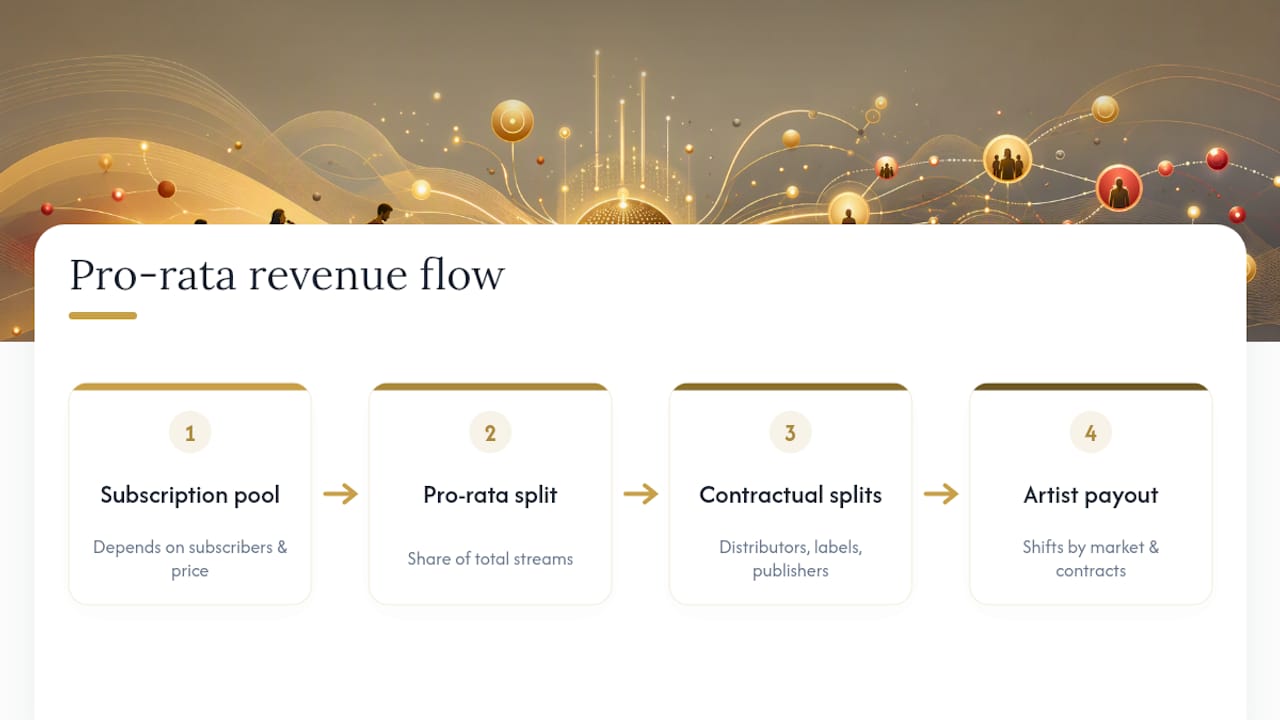
The pro-rata royalty model pools all subscription revenue, then distributes shares based on each track’s proportion of total streams. That means your per-stream value shifts with the platform’s subscriber count, the subscription price in each market, and the contractual splits between distributors, labels, and publishers. Market-level policy changes reshape that pool directly. Geography and subscription mix matter more than most artists realize.
Fraud detection has tightened considerably. Platforms can now identify non-organic activity within days, disqualify those streams, and reduce the track’s standing in recommendation systems. Bot services are not a shortcut anymore. They are a liability.
Pro Tip:Treat your streaming analytics as a conversion signal, not a scorecard. A spike in saves-to-listeners ratio or a playlist add that drives profile visits tells you where real fans are forming. That is where you redirect them to an owned channel.
Subscription streaming grew 8.8% in 2025 alongside the overall IFPI-reported revenue milestone. The ecosystem is growing. The question is whether your slice of it is growing with you, or just for the platform.
What each major platform is best for in 2026
Every platform has a distinct role in a release funnel. Think of them in four categories: discovery engines, social virality channels, long-form hosting, and direct sales. Matching your effort to each platform’s actual strength is where most creators lose time.
| Platform | Primary role | Monetization model | Audience control | Data access | Best for |
|---|---|---|---|---|---|
| Spotify | Algorithmic discovery | Pro-rata subscription share | Limited (no email) | Spotify for Artists dashboard | Pre-saves, playlist pitching, catalog discovery |
| Apple Music | Editorial curation | Pro-rata subscription share | Limited | Apple Music for Artists | Premium listener reach, editorial placement |
| YouTube / YouTube Music | Long-form hosting + search | Ad revenue + subscription share | Moderate (subscribers) | YouTube Studio analytics | Music videos, Shorts virality, Content ID income |
| TikTok | Short-form social virality | Creator fund + brand deals | Low (no direct export) | TikTok Analytics | Viral hooks, trend-driven discovery |
| Bandcamp | Direct sales | Artist-set pricing, fan subscriptions | High (email, fan list) | Sales dashboard | D2C sales, physical releases, superfan offers |
| SoundCloud | Early-stage discovery | Fan-powered royalties, Go+ | Moderate (followers) | SoundCloud Pulse | Demo sharing, niche community building |
| DistroKid | Distribution aggregator | Annual fee, keeps all royalties | Depends on downstream | Basic reporting | Fast, affordable self-distribution |
| CD Baby | Distribution aggregator | Per-release fee + revenue share | Depends on downstream | CD Baby Pro dashboard | Publishing admin + distribution bundle |
| AWAL | Label services | Revenue share, no upfront fee | Moderate | AWAL analytics | Artists ready to scale with label-adjacent support |
A few differences worth acting on:
- Bandcamp is the only platform on this list where you own the fan relationship directly. Build your D2C funnel there.
- YouTube’s Content ID system generates passive income from user-generated content using your masters. Register your catalog.
- TikTok drives discovery but exports nothing. Every viral moment needs a landing page that captures the listener before they scroll away.
- For playlist pitching differences between Spotify and Apple Music, editorial lead times and submission windows vary. Plan your release calendar around both.
What does monetization actually look like for musicians in 2026?
Streaming income is real but thin for most catalogs. The streaming paradox research is clear: visibility and income are decoupled. Platforms give you reach. They rarely give you a living.
The income sources worth stacking in 2026:
- Subscription/ad streaming revenue — baseline income, grows with catalog size and playlist placement
- Direct-to-fan subscriptions — 1,000 fans at $10/month generates substantial annual income that would require tens of millions of streams to match at typical pro-rata rates
- Programmatic micro-sync licensing — automated placement in content, ads, and apps; high-margin for small catalogs when metadata is clean
- Sync licensing for film and TV — one placement can outpace months of streaming; a complete guide to music licensing covers the submission process in depth
- High-value asset sales — stems, spatial masters, and exclusive session files sold directly to producers or superfans
- Tipping and patronage — platforms like Bandcamp and Patreon let fans pay what a song is worth to them
- Merch and physical releases — vinyl and limited physical runs carry emotional weight that digital files cannot replicate
Streaming payments split across master and composition pipelines separately, and each layer has its own intermediaries. Knowing which PRO holds your composition rights and which distributor controls your master metadata is not optional. It is the difference between collecting and leaving money behind.
What risks should you watch for on platforms in 2026?
The highest-impact risks in 2026 are streaming fraud, AI-generated content flooding recommendation systems, metadata errors that misdirect royalties, and platform enforcement actions that can remove your content without warning.
Protective actions to take now:
- Audit your metadata. Every release needs accurate ISRC codes, ISWC numbers, correct splits, and consistent artist name spelling across all platforms.
- Register with PROs. ASCAP, BMI, or SESAC for compositions; SoundExchange for digital master royalties. Both pipelines must be active.
- Document your splits before distribution. Signed agreements between collaborators prevent disputes that freeze payouts.
- Keep master ownership clear. Know exactly what rights your distributor or label holds and what reverts to you.
- Flag AI-generated content accurately. Platforms are developing disclosure requirements. Mislabeling AI content creates takedown risk.
Fraud detection consequences are not limited to losing streams. Non-organic activity triggers recommendation downgrades that can suppress a track for weeks after the disqualification. The algorithm remembers.
Pro Tip:Run a quarterly audit of your distributor dashboard and cross-reference stream counts against your PRO statements. A gap between what platforms report and what your PRO collects often signals a metadata error or an unregistered composition. Log discrepancies and contact your distributor in writing.
A practical 2026 playbook for your next release
The single priority: convert platform attention into owned fans and upstream income before the algorithm moves on.
30-day release campaign:
- Finalize metadata (ISRC, ISWC, splits, credits) at least 21 days before release.
- Submit to Spotify editorial and Apple Music playlists 7 days before release via their respective artist portals.
- Activate a pre-save campaign linked to an email capture page.
- Post three to five short-form video hooks on TikTok and YouTube Shorts in the week before release, each ending with a link-in-bio redirect.
- Release day: send to your email list first, then post across social channels.
- Week two: pitch to independent playlist curators and music blogs.
- Week three: run a small paid social campaign targeting listeners of similar artists, driving to a Bandcamp or direct-purchase page.
- Week four: review analytics. Which platform drove the most profile visits? That is where you double down next cycle.
12-month roadmap:
- Segment your audience by engagement level (casual listeners, repeat streamers, email subscribers, paying fans) and build offers for each tier.
- Launch a D2F membership with at least one exclusive monthly deliverable (early access, stems, visualizers, behind-the-scenes content).
- Produce sync-ready assets: stems, instrumental versions, and spatial masters for every release.
- Review your streaming discovery strategy quarterly and adjust based on what is converting, not just what is streaming.
Metrics that matter: playlist adds, pre-save conversion rate, email capture rate from social traffic, and direct sale conversion from email list. Streams are the top of the funnel. Everything below that line is where income lives.
Pro Tip:Post your short-form content at the times your specific audience is most active, not generic “best times to post” advice. Your social platform timing is a variable you can test and own.
How do you choose the right distributor or label partner in 2026?
Three qualities matter above everything else: metadata control, transparent accounting, and D2C integration. A partner that locks your metadata, delays payouts, or prevents you from selling directly to fans is costing you money even when the contract looks clean.
Questions to ask before signing:
- Can I export my full metadata and streaming data at any time?
- How are splits managed and paid, and what is the payout lag?
- Do you offer API access or integrations with direct-to-fan platforms?
- What happens to my catalog if I leave?
- Who controls my ISRC codes after distribution?
Red flags that should stop a conversation:
- Opaque or bundled royalty reporting with no track-level breakdown
- Payout lags longer than 60 days with no explanation
- Forced label branding on your releases
- Contracts that assign metadata rights to the distributor rather than the artist
Self-distribution through DistroKid or CD Baby makes sense when you want speed, low cost, and full royalty retention. A label partner or AWAL-style service makes sense when you need marketing infrastructure, sync connections, or advance funding, and you are willing to share revenue for those resources. The best independent streaming services guide breaks down the tradeoffs in more detail.
What DRVVYN’s platform strategy actually looks like
The honest recommendation: spend less time chasing streams and more time building the infrastructure that captures the people those streams find. Platforms surface your music to strangers. Your job is to turn strangers into fans, and fans into a sustainable income.
A release that converts well does not necessarily stream the most. It has a clear pre-save path, a short-form hook that lands on an email capture, and a direct offer waiting for the listener who wants more than a free play. The future of direct-to-fan music is not a trend. It is the correction to a decade of treating streams as endpoints.
Drvvynsound builds releases around this architecture: cinematic visual assets that hold attention on YouTube and Shorts, metadata-clean distribution that feeds every royalty pipeline, and direct offers that give the most engaged listeners somewhere to go. That combination is what makes platform attention compound rather than evaporate.
Drvvynsound can help you build what platforms cannot
Drvvynsound offers what the platforms themselves leave out: a complete release architecture that connects streaming distribution to direct fan revenue.
The work covers distribution strategy, metadata hygiene, D2F funnel setup, cinematic visualizers, and licensing-ready asset production. If your streams are growing but your income is not, that gap is exactly where Drvvynsound operates.
Start with the direct-to-fan music guide to see how the architecture fits together, or explore the alternative R&B production style guide for a closer look at the creative process behind releases built to convert. When you are ready to build your own release funnel, reach out directly at Drvvynsound.
Sources
- IFPI — Global Music Report 2026 (GMR2026_SOTI.pdf)
- Hypebot — What Is “the Streaming Paradox?” New Study Explores the Labor of Music
- Alte Magazine — Inside the Next-Gen Music Rights Economy: Direct Fan Monetization and Smart Royalties in 2026
- LabelGrid — Streaming royalties in 2026: what’s changing and how to respond