

Music Marketing
Why Artists Post After Dark: A Fan’s Guide
Why Artists Post After Dark: A Fan's Guide
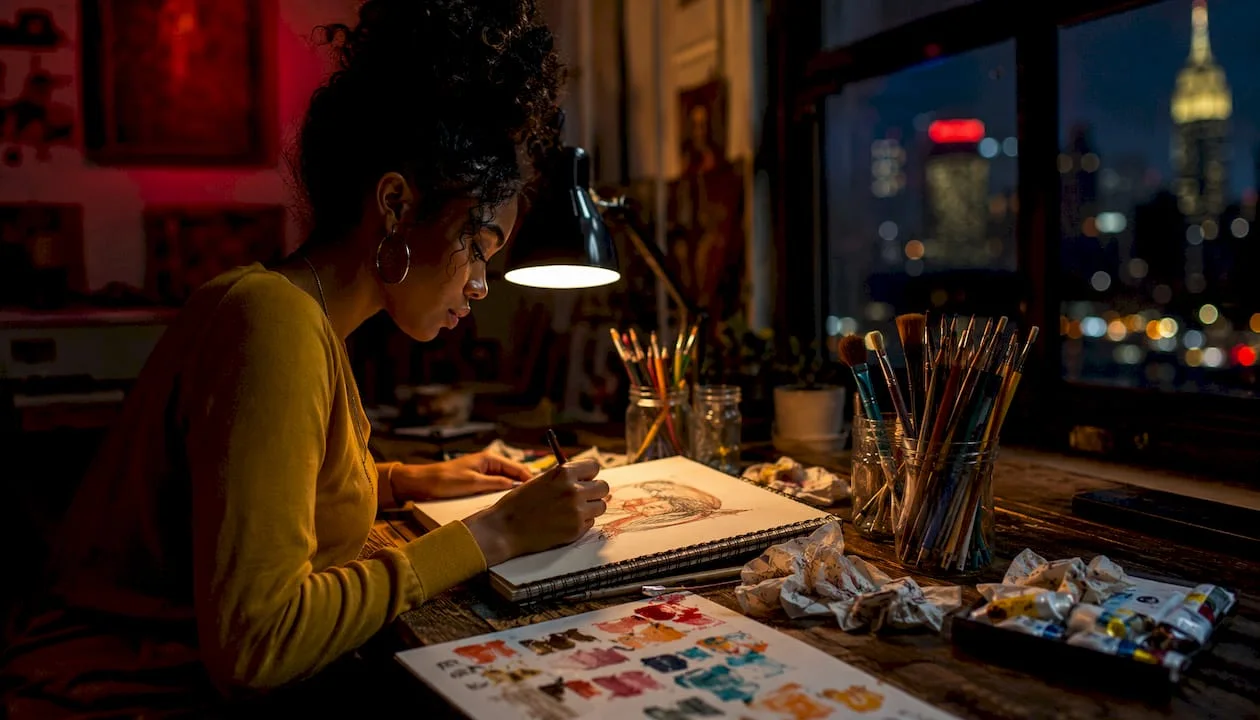
! Artist sketching in late-night studio
Artists post after dark because the late-night hour aligns creative flow states with a receptive, lower-competition audience and different algorithm behavior.
By DRVVYN · · 11 min read
Why Artists Post After Dark: A Fan’s Guide
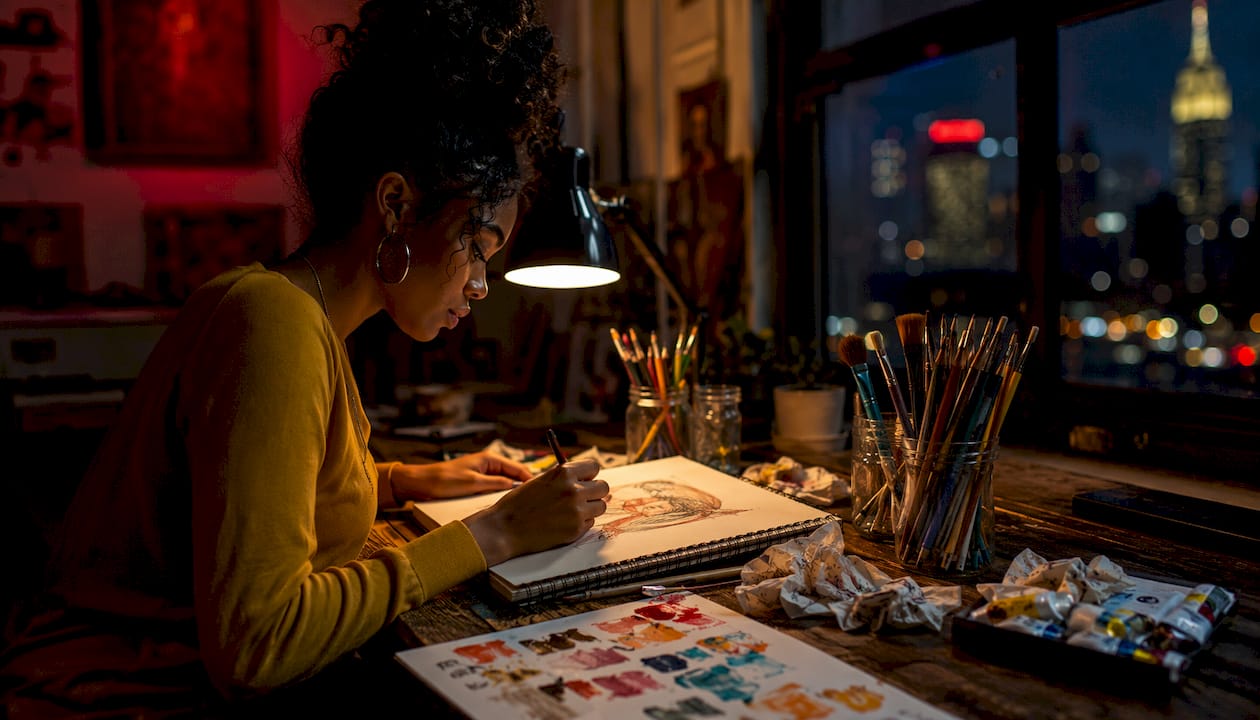
Artists post after dark because the late-night hour aligns creative flow states with a receptive, lower-competition audience and different algorithm behavior. When the editorial brain finally quiets, the work that surfaces tends to be rawer, more honest, and more emotionally resonant. DRVVYN Sound LLC builds its release strategy around exactly this truth: R&B and cinematic music land differently at midnight than at noon. Night-owl chronotype research confirms that late-night hours reduce mental filtering and deepen creative focus. PostFast analysis shows late-evening slots are becoming unsaturated windows that reach highly engaged audiences. TL;DR: If you listen to R&B or cinematic music, the posts that hit you hardest at 11 PM were probably made that way on purpose.
Table of Contents
- Why do artists post after dark? The creative and psychological truth
- How late-night posting changes what fans actually feel
- What “after dark” looks like on each major platform
- Timing vs. consistency: what should artists actually prioritize?
- How fans can find and engage with after-dark posts
- Drvvynsound’s approach: late-night posting for R&B and cinematic releases
- Should you post after dark? A quick decision checklist
- Key Takeaways
- The honest reason DRVVYN posts after dark
- The late-night sound is waiting for you
- Sources and further reading
Why do artists post after dark? The creative and psychological truth
The silence after midnight does something specific to the creative mind. It removes the noise of comparison, the pressure of performance, and the voice that says too much, too personal, too strange. What remains is closer to the truth.
Psychologists describe this through chronotype theory: night owls are not simply undisciplined sleepers. Their circadian rhythm peaks later, meaning alertness, emotional depth, and creative output often sharpen well after the rest of the world has gone quiet. For artists working in mood-driven genres, that biological window is precious.
There is also the matter of the inner critic. Some research suggests that reduced mental filtering at night allows broader, freer thinking. A songwriter who struggles to finish a verse at 3 PM may find the words arrive effortlessly at 1 AM, not because the craft changed, but because the self-editing mechanism finally stepped aside.
R&B and cinematic music benefit from this more than most genres. The atmosphere of a late-night room, the weight of unresolved feeling, the way silence can feel sharp rather than empty — these are the exact textures that make a cinematic visualizer or an intimate vocal clip land with full force.
- Night-owl chronotypes experience deeper, uninterrupted focus after the world quiets down.
- Reduced social pressure at night lowers self-censorship, producing more vulnerable, authentic posts.
- Mood-driven genres like R&B pair naturally with late-night atmospheres, both sonically and visually.
- The absence of daytime brand noise means a listener’s attention is less divided.
Pro Tip:If you are an artist drawn to late-night creation, protect that window deliberately. Do not force it into a 9 AM content calendar. Batch your ideas during those hours and schedule them — preserve the authenticity without sacrificing your sleep to panic-post every night.
How late-night posting changes what fans actually feel
The shift that happens after 10 PM is not just about who is awake. It is about how they are awake. During the day, most people consume content in active, productive mode: quick scrolls, fast likes, half-watched videos. After dark, that mode softens. The mind moves from doing to feeling.
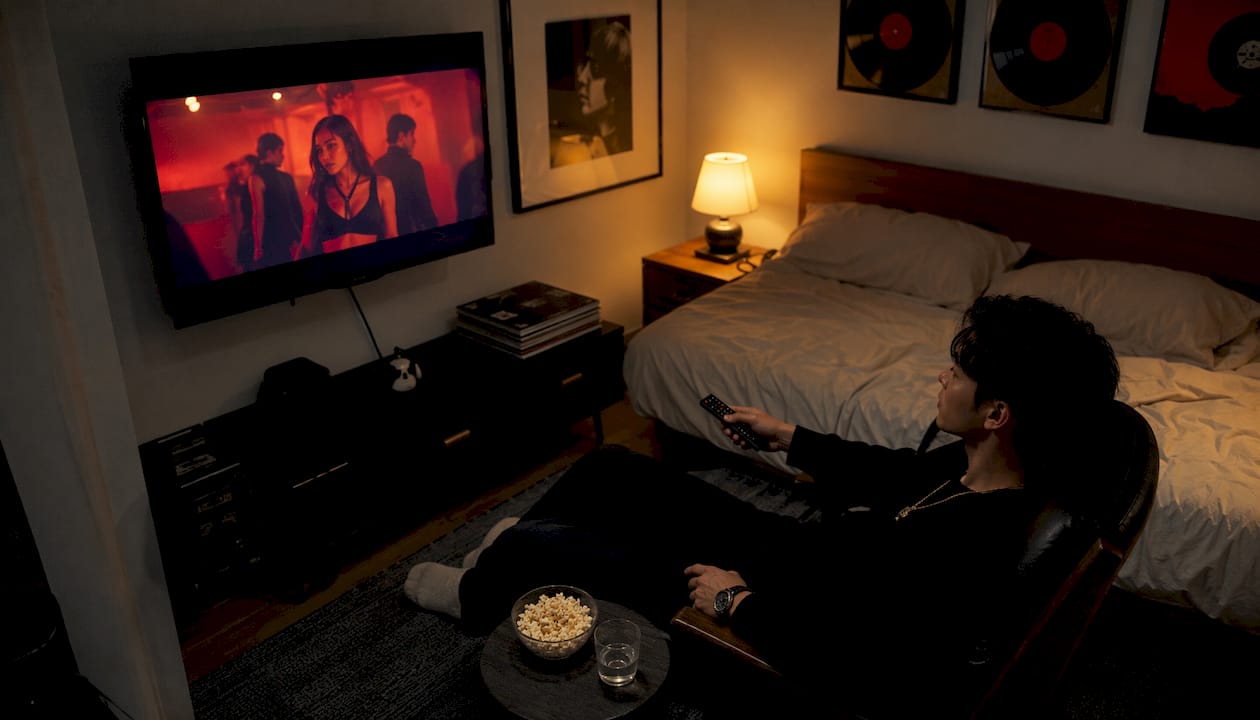
Late-night internet audiences shift from high-velocity consumption to reflective engagement, which favors longer watch times and more meaningful comments. A listener who watches a visualizer twice at midnight and leaves a three-sentence comment about what the song means to them is worth more to an artist’s growth than fifty passive daytime views.
The impact of nighttime engagement also shows up in the texture of the interactions: fewer brand posts competing for attention, less curated algorithmic filtering, and communities that favor vulnerability and longer-form reactions.
Common late-night engagement behaviors include:
- Watching a video all the way through, often more than once.
- Leaving detailed comments that reference specific lyrics or visual moments.
- Sending DMs that open real conversations with the artist.
- Saving posts to playlists or collections for repeated listening.
The tradeoff is real: a late-night post may reach fewer people initially. But the people it reaches are often in a state where the music can actually move them.
What “after dark” looks like on each major platform
Platform timing is not one-size-fits-all. Research analyzing over 30 million posts shows that platform-specific timing is where the real patterns emerge, and where generic advice most often breaks down.
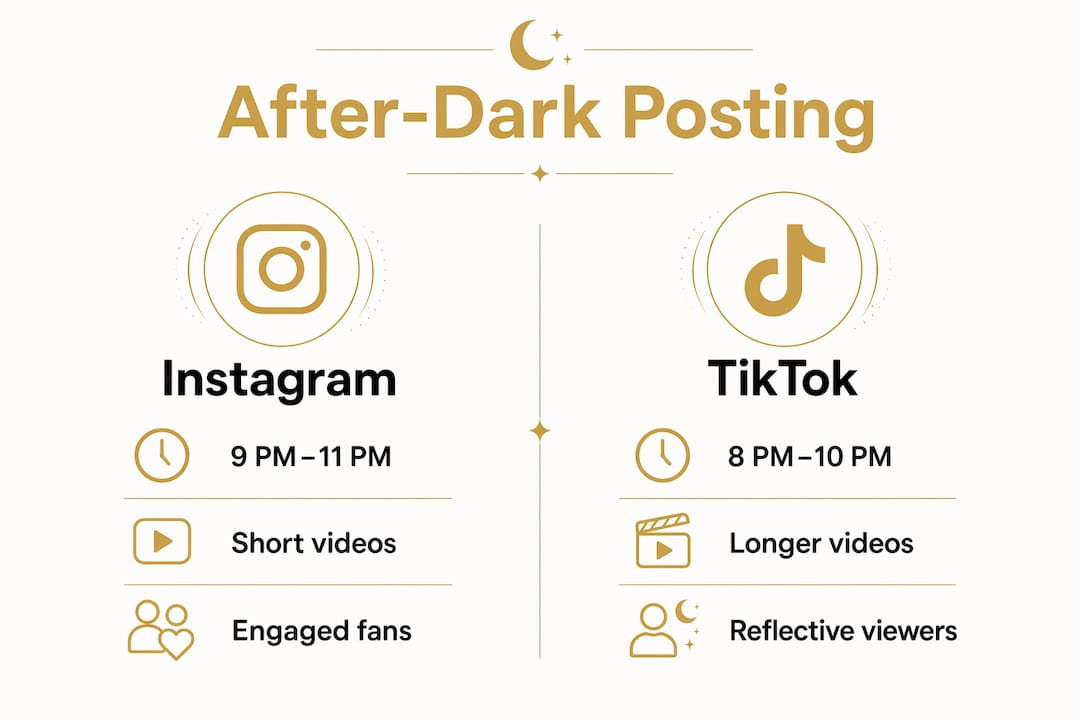
| Platform | Common after-dark window | Best format for late-night |
|---|---|---|
| 9 PM–11 PM local | Short Reels, intimate story clips | |
| TikTok | 9 PM–midnight local | Raw, low-production vertical video |
| YouTube | 10 PM–1 AM local | Ambient visualizers, lyric videos |
| Streaming (Spotify, Apple Music) | 10 PM–2 AM local | Playlist drops, new single releases |
Cross-platform data points to 20:00–21:00 UTC as the strongest evening window across TikTok and Instagram combined, scoring well above the normalized average. For US-based artists, that translates to roughly 3–5 PM ET, which feeds into the evening scroll that peaks later in local time.
TikTok behaves differently from Instagram. As social strategist Eileen Kwok of Hootsuite notes, TikTok videos tend to need 24 hours to be fully pushed out, making posting time a weaker lever there than on Instagram, where the first-hour engagement burst directly influences feed distribution.
The most important caveat: treat these windows as a starting point, not a prescription. Your audience’s actual behavior, visible in your platform analytics, will always outperform a generic chart.
Timing vs. consistency: what should artists actually prioritize?
Timing matters as an initial signal. Algorithms reward early traction: posting when your audience is active increases the chance of early engagement that tells the recommendation system your content has value. But chasing the perfect hour at the expense of regular output tends to backfire.
Consistency and audience-specific testing generally outperform any aggregate “best time” chart. An account that posts reliably at a good time beats one that posts sporadically at a perfect time.
A practical test approach for artists:
- Choose two time windows: one evening slot (around 9 PM local) and one late-night slot (around midnight).
- Post the same content type at each window for two weeks.
- Track watch time, comment depth, and saves — not just like counts.
- Shift toward whichever window produces deeper engagement, not just higher reach.
- Reassess every four to six weeks as your audience grows and shifts.
Pro Tip:Treat late-night posting as a creative sketchbook zone. Batch several pieces of content during one inspired session, then schedule them across the week. This preserves the raw energy of the late-night creative state without forcing you to perform it on demand every night.
How fans can find and engage with after-dark posts
If you listen to R&B or cinematic music and you want to catch the posts that actually matter, a few habits make a real difference.
Turn on post notifications for artists whose work moves you. Most late-night drops happen without announcement, and the algorithm will not always surface them the next morning. Being there in the first hour matters, both for you and for the artist.
When you do engage, go deeper than a quick tap. A thoughtful comment that names a specific lyric, a visual moment, or an emotion the song unlocked tells the platform that this content created a real reaction. Saves and shares to your own stories carry even more weight. Fan engagement platforms for independent artists increasingly track these deeper signals as the clearest indicator of genuine audience connection.
Pro Tip:When you save a late-night post or add a song to a playlist, you are sending a signal to the platform that this content belongs in your world. Do that consistently for an artist you love, and their work will start appearing in your feed more reliably.
Drvvynsound’s approach: late-night posting for R&B and cinematic releases
Drvvynsound builds its release strategy around the emotional logic of late-night listening. The DRVVYN creative model pairs cinematic visualizers and intimate vocal clips with late-night posting windows, specifically because R&B and mood-driven music land differently when the listener is already in a reflective state.
Key elements of the Drvvynsound after-dark approach:
- Visualizers and ambient clips released between 10 PM and midnight, when listeners are winding down rather than scrolling fast.
- Copy and captions written in the same emotional register as the music itself, so the post feels like an extension of the song.
- Story replies and DMs treated as real conversations, not metrics, because late-night fans who reach out are often sharing something personal.
- New releases paired with playlist context, giving listeners an immediate way to go deeper into the sound.
The fan interactions that matter most in this model are not the ones with the highest numbers. They are the ones where someone writes back to say the song described exactly what they could not put into words.
Pro Tip:Align your visual and sonic mood before you post. A warm, low-lit visualizer paired with a caption that matches the emotional weight of the lyric creates a complete late-night experience. The image, the words, and the sound should feel like one thing, not three separate pieces of content.
Should you post after dark? A quick decision checklist
- Does your genre rely on mood and atmosphere? R&B, cinematic, lo-fi, and soul all benefit more from late-night posting than high-energy or instructional content.
- Are your core listeners in a single time zone, or spread across several? If spread, identify the overlap window around 10 PM ET as a starting point.
- Is your content polished enough to hold attention, or raw enough to feel intentional? Both work at night — forced polish at midnight reads as hollow.
- Do you have capacity to respond to comments and DMs within a few hours of posting? Late-night engagement rewards artists who show up in the conversation.
- Can you commit to a two-week test before drawing conclusions? One late-night post tells you almost nothing; a pattern tells you everything.
Run the test. Post one piece of content at your usual time and one comparable piece after 10 PM. Measure watch time and comment depth after 48 hours, then let the data guide the next decision.
Key Takeaways
Late-night posting works for R&B and cinematic music because the audience, the algorithm, and the creative state all align after dark in ways that produce deeper, more honest engagement.
| Point | Details |
|---|---|
| Creative flow peaks at night | Night-owl chronotypes experience reduced mental filtering, producing more authentic, emotionally honest work. |
| Late-night audiences engage more deeply | Reflective evening mode drives longer watch times, detailed comments, and meaningful DMs over passive likes. |
| Platform timing varies | Instagram rewards the first-hour engagement burst; TikTok distributes over roughly 24 hours, making consistency more important than precision. |
| Consistency outranks perfect timing | Posting regularly at a good time outperforms sporadic posts at an ideal time, per audience-specific testing guidance. |
| Drvvynsound’s late-night model | Drvvynsound pairs cinematic visualizers with 10 PM–midnight releases to reach listeners in a reflective, emotionally open state. |
The honest reason DRVVYN posts after dark
There is a version of this conversation that is purely strategic: algorithms, engagement windows, watch-time metrics. That version is real and worth understanding. But it is not the whole truth.
The deeper reason is simpler. Late-night hours are when the music actually feels like itself. The pressure of the day lifts. The need to perform for an audience that might not understand quiets down. What is left is the song as it was meant to be heard: in the dark, with space around it, when the listener is finally still enough to let it in.
DRVVYN’s creative focus has always been on themes of love, reflection, healing, and growth. Those themes do not arrive on a schedule. They surface when the world gets quiet. Posting after dark is not a tactic. It is an acknowledgment that some music was made for exactly this hour, and the people who need it most are still awake.
The late-night sound is waiting for you
Drvvynsound releases original R&B music and cinematic visualizers designed for exactly the hours when everything else goes quiet. The DRVVYN catalog includes late-night playlist drops, immersive visual content, and emotionally driven songs built around themes of love, reflection, and healing. If you have been looking for music that meets you where you actually are at midnight, this is where to start.
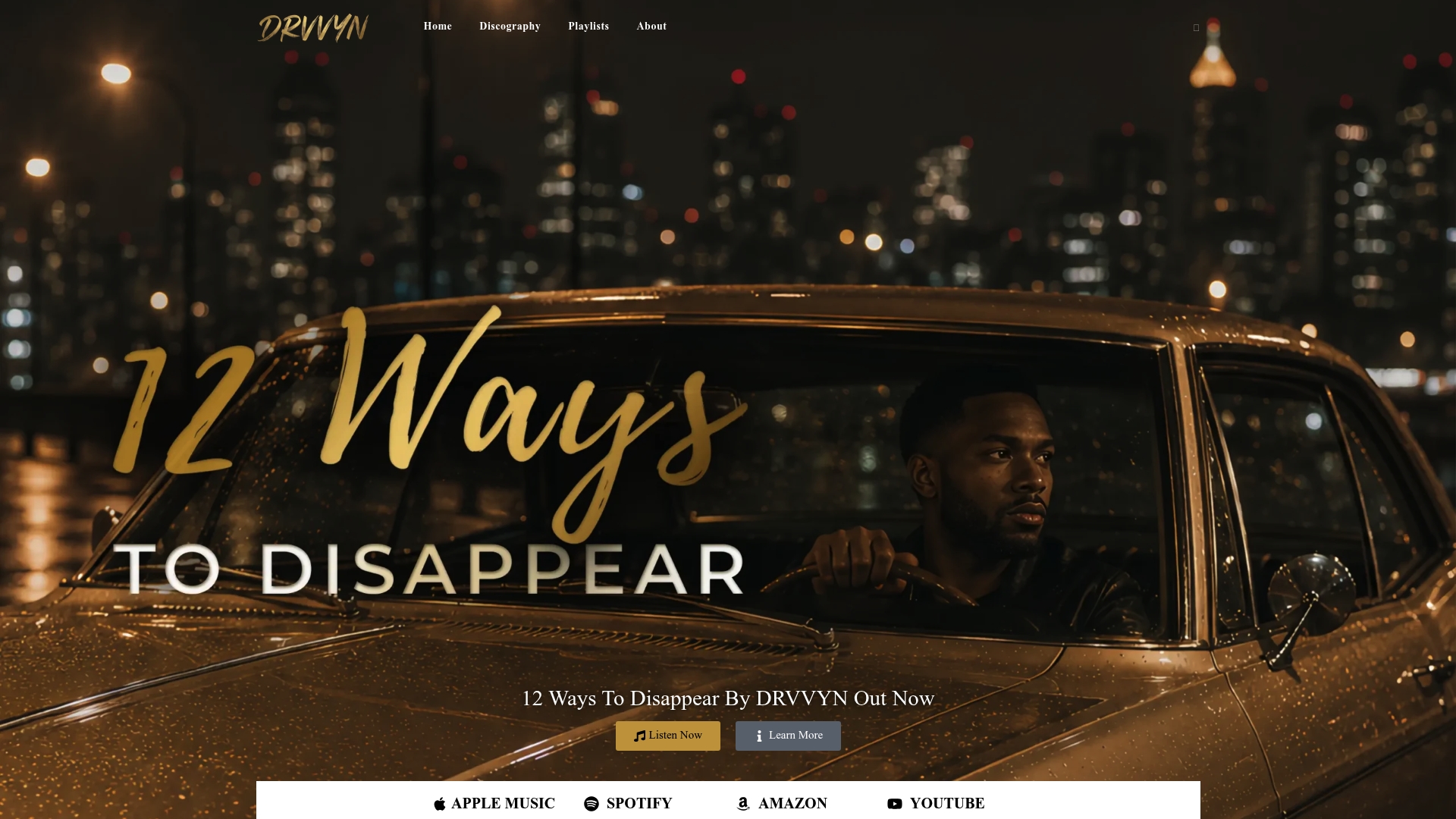
Head to drvvynsound.com to explore the latest releases, add them to your late-night playlist, and follow along for new drops. The next one will probably arrive after dark.
Sources and further reading
- PostFast: Best Times to Post on Instagram — late-evening slot analysis and algorithm timing signals
- ArtisticMasterclass: Best Times to Post for Artists in 2026 — evening windows and video format performance data
- The Economic Times: Why People Are More Creative at Night — chronotype theory and night-owl psychology
- phreak.fm: The 3AM Frequency — late-night internet culture and audience vulnerability
- Later: Best Time to Post on Social Media — consistency vs. timing research and platform-specific guidance
- SocialCrawl: Best Time to Post on Social Media 2026 — cross-platform UTC timing data
- Medium: Why the Internet Feels Different at 2 AM — observational essay on late-night audience behavior
- Women of Illustration: Low Stress Social Media System — batching and sketchbook approach to late-night content
- Fan Engagement Platforms for Independent Artists in 2026 — tools and outcomes for musicians building late-night audience connection
- The Role of Audience in Dance Events Explained — audience behavior and interaction patterns in evening contexts
- DRVVYN Sound official site — releases, visualizers, and late-night playlist content