

Listening & Culture
Dark Ambient Love Songs That Stay With You
Dark ambient love songs turn romance into atmosphere – slow, haunted, intimate music for late nights, quiet longing, and deeper feeling.
By DRVVYN · · 7 min read
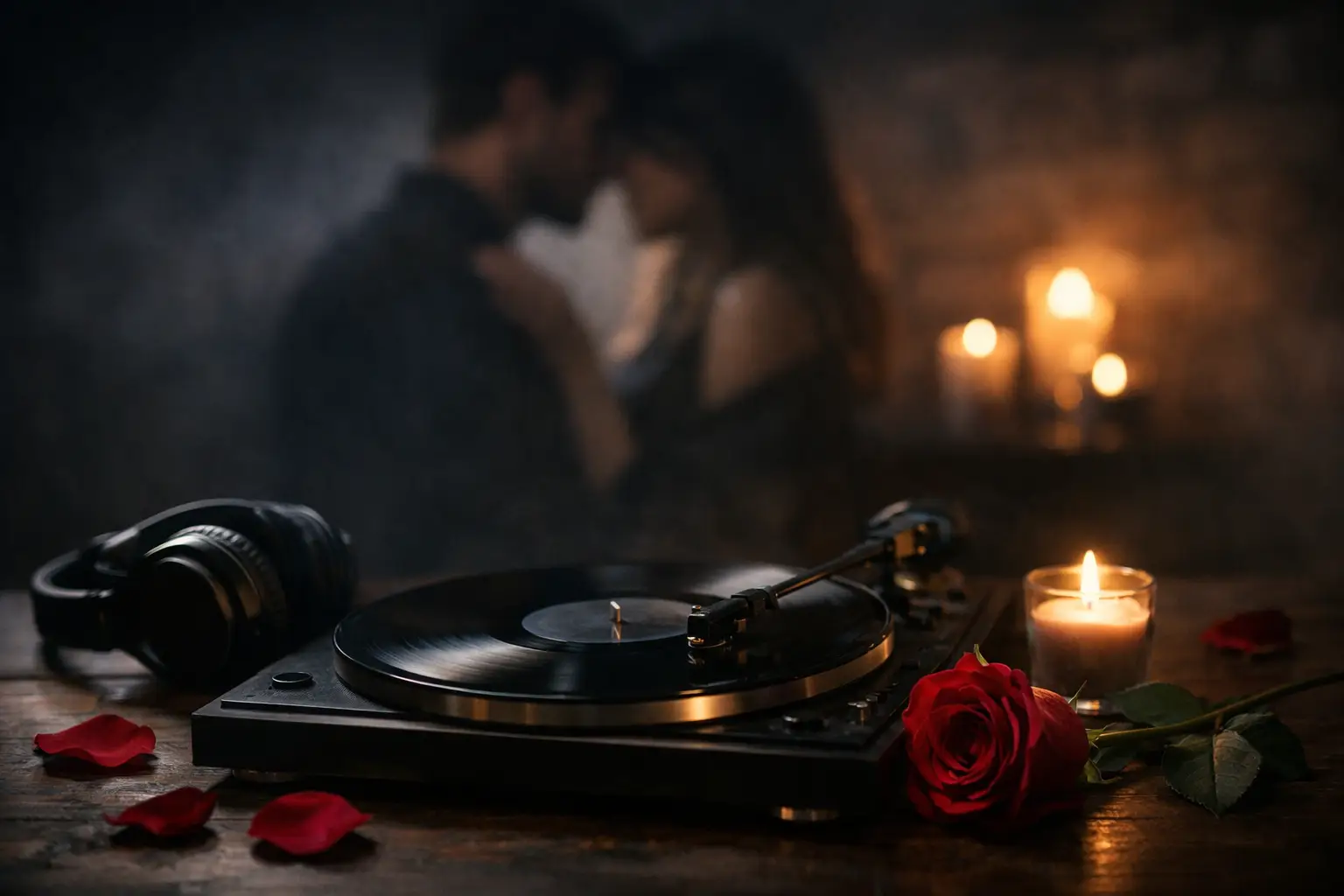
Some love songs ask for the spotlight. Others barely lift their voice above a whisper. Dark ambient love songs belong to that second world – the one built for 2 a.m., dim rooms, rain on glass, and feelings that don’t arrive clean.
They aren’t always obvious. Sometimes there’s no chorus to hold onto, no big confession, no neat emotional release. What they offer instead is atmosphere with a pulse. Romance, but shadowed. Desire, but distant. Grief and tenderness sitting in the same frame.
What dark ambient love songs really feel like
A dark ambient love song doesn’t need to sound traditionally romantic to carry love at its center. In fact, the genre works best when it avoids the familiar cues. Instead of bright melodies and rising hooks, you get low synths, slow movement, empty space, and a sense that something unresolved is still hanging in the air.
That’s what makes it hit differently. It mirrors the parts of love most songs skip past – obsession without closure, intimacy after damage, missing someone who still feels present, wanting connection while protecting your distance. It’s not just sadness. It’s emotional depth without performance.
For some listeners, that mood feels more honest than a polished ballad ever could. Love is not always warm. Sometimes it’s cold in a beautiful way. Sometimes it sounds like memory instead of touch.
Why dark ambient love songs stay with you
Most music tells you what to feel. Dark ambient tends to leave room. That space matters.
When a track moves slowly and resists easy payoff, your own emotion starts filling in the gaps. A drone becomes longing. A distant vocal becomes regret. A barely-there melody becomes the exact feeling you couldn’t name all week. The song doesn’t hand you a message. It creates a place for one.
That’s part of why these tracks become repeat listens. They don’t burn bright and disappear. They settle into your nights. They become attached to drives home, text threads left unanswered, quiet mornings after too little sleep. You return to them because they still have something hidden inside.
There’s also a strange comfort in music that doesn’t rush to heal you. Not every moment needs resolution. Sometimes you want sound that understands the weight and lets it stay weight.
The emotional range inside dark ambient love songs
It’s easy to flatten the genre into one color – bleak, heavy, numb. But the best dark ambient love songs are more layered than that. They can feel sensual, spiritual, haunted, fragile, and cinematic at once.
Some songs lean into devotion. They feel like surrender, like standing still inside a feeling too large to explain. Others are built around absence. You hear distance in the production itself – vocals blurred into the background, textures stretched thin, percussion that feels more like a heartbeat than a rhythm.
Then there are the tracks that sit somewhere between love and ruin. Those tend to be the most unforgettable. They don’t separate tenderness from danger. They understand that desire can distort time, that memory can romanticize pain, that closeness can leave an echo long after the person is gone.
That tension is where the genre lives.
What makes a song feel both dark and romantic
It depends on the balance. Too much darkness and the song becomes purely atmospheric, emotionally distant, maybe even cold. Too much romance and it loses the edge that gives dark ambient its gravity. The strongest tracks hold both.
Usually that balance comes through restraint. A soft vocal delivered like a confession. A synth line that feels warm for a few seconds, then disappears back into shadow. Lyrics that speak in fragments instead of declarations. The music trusts you to feel the implication.
Tempo matters too. Slower songs create room for tension, but slow alone isn’t enough. There has to be emotional pressure under the surface. A sense that the song is carrying something it can’t fully release.
That’s the difference between a moody track and one that really lingers. Mood sets the scene. Emotional pressure gives it meaning.
Dark ambient love songs and the late-night listener
This kind of music rarely belongs to daytime. It asks for privacy.
Late at night, everything sharp softens a little. Your guard drops. Small things feel larger. A sound you’d ignore in the afternoon suddenly lands in your chest. Dark ambient love songs meet you there – not when you’re distracted, but when you’re open enough to actually hear yourself.
That’s why they connect so deeply with listeners who use music as space, not just entertainment. You’re not pressing play for background noise. You’re choosing an emotional environment. You want something that matches the room, the weather, the version of yourself that only shows up when everything else goes quiet.
For that listener, subtlety matters more than spectacle. The song doesn’t need to impress. It needs to be accurate.
Where these songs show up in real life
Not every love story has a clean soundtrack. Some need something stranger.
Dark ambient love songs fit the moments after the moment. The drive back alone. The walk through the city with one conversation replaying in your head. The hour between missing someone and deciding not to text. The kind of intimacy that feels almost sacred because it may not last.
They also work in relationships that aren’t simple. If your emotional life has contradiction in it, bright pop romance can feel false. Music with shadow makes more sense. It leaves room for desire and doubt to exist together.
That’s also why these songs are often deeply cinematic. They don’t just accompany emotion – they frame it. They make ordinary moments feel charged, almost mythic, without losing the intimacy. A bedroom, a dashboard, a streetlight, a goodbye at the door. Suddenly everything has weight.
How to find dark ambient love songs that actually move you
Genre labels only help so much. Plenty of songs get called dark ambient because they’re slow or atmospheric, but they don’t carry emotional depth. Others aren’t tagged that way at all, yet they land exactly where you need them.
A better approach is to listen for intention. Does the song create a world? Does it hold tension without forcing drama? Does it leave emotional residue after it ends? Those are stronger signals than category names.
It also helps to follow mood before genre. Search through spaces built around late-night listening, introspection, shadowed romance, or cinematic melancholy. The best discoveries often live between genres – ambient, electronic, dream pop, slowcore, experimental R&B, even instrumental score work.
That in-between space is where a lot of the most affecting music lives. DRVVYN Sound understands that instinct well – music organized less by category, more by state of mind.
Why this sound matters now
There’s a reason more listeners are drawn to emotionally immersive music that doesn’t flatten everything into easy language. People are tired of being overexplained to. They want music that trusts their interior world.
Dark ambient love songs do that. They don’t interrupt the feeling with too much narrative. They let ambiguity breathe. In a time when everything competes for immediate reaction, that kind of patience feels rare.
It also feels human.
Not every emotion is meant to be posted, captioned, or turned into a clean takeaway. Some feelings are better lived in for a while. Some songs understand that instinct and build around it. They become less like content and more like atmosphere you return to when the world gets too loud or too flat.
And maybe that’s the real appeal. These songs don’t try to fix longing. They give it shape. They turn love into weather, memory into texture, silence into something almost holy.
If that’s the kind of music you keep reaching for, trust that impulse. The songs that stay closest are usually the ones that don’t chase you. They wait in the dark, and when you come back, they still know exactly how the night feels.