

Listening & Culture
Build Your Music Library for Solo Evenings
The most effective way to build a music library for solo evenings is to unify your local files and streaming sources into a single, metadata-rich.
By DRVVYN · · 10 min read

The most effective way to build a music library for solo evenings is to unify your local files and streaming sources into a single, metadata-rich collection, then organize it by mood and album rather than by individual songs. That shift alone changes how the music feels. Instead of tapping “next” through an algorithm’s guess at what you want, you move through something you built, something that holds the shape of who you are.
Here is the core process, distilled:
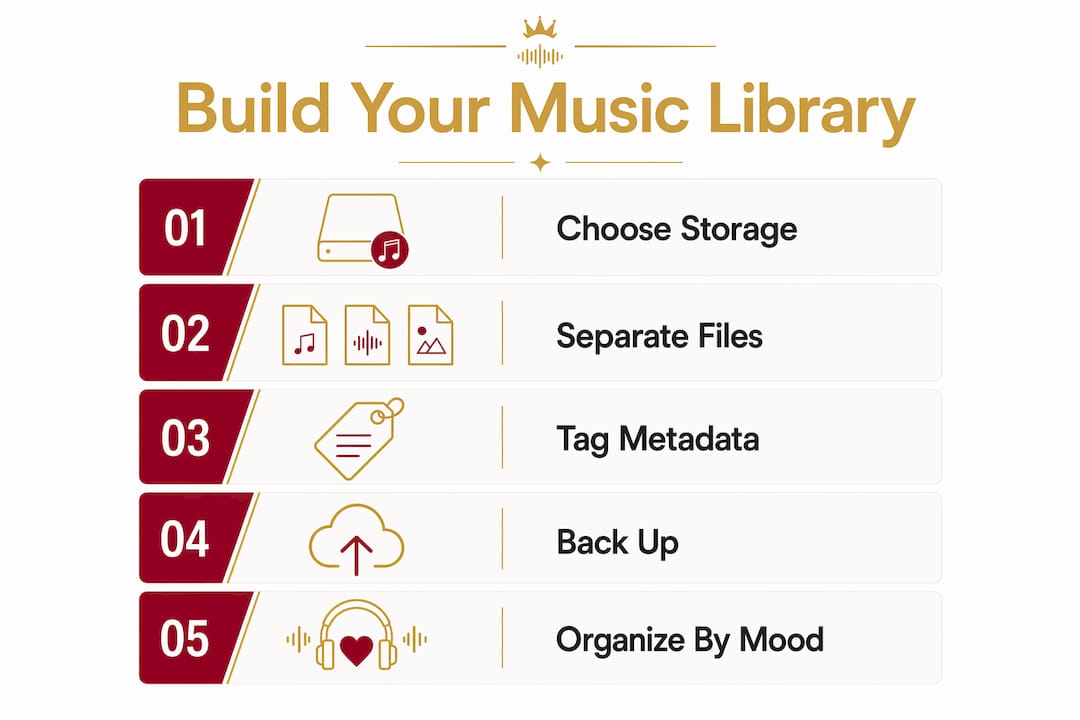
- Unify your collection. Pull local files and streaming sources together using tools like Crates or SoulSync, so everything lives in one searchable space.
- Enrich your metadata. Use MusicBrainz, Discogs, and Last.fm to fill in accurate tags, artwork, and release details. Self-hosted pipelines like MusicHoarder can achieve over 90% metadata completeness by pulling from multiple sources at once.
- Organize by album and mood. Group music by energy level or emotional arc, not just genre or artist name. This creates listening experiences that breathe.
- Choose lossless audio formats. FLAC or ALAC files preserve the warmth and detail that compressed formats strip away, which matters most in a quiet evening room.
- Back up and sync. Protect what you build. A local drive plus a cloud or network backup keeps your collection safe across system changes.
This is not just a technical project. It is a personal one. The library you build becomes, as one collector put it, “a strange, accurate map of one’s life at different points in time.”
How to set up digital storage and manage your music files
Your storage foundation determines how stable and portable your library will be for years to come. Get this right first, and everything else becomes easier to maintain.
Choose the right storage media
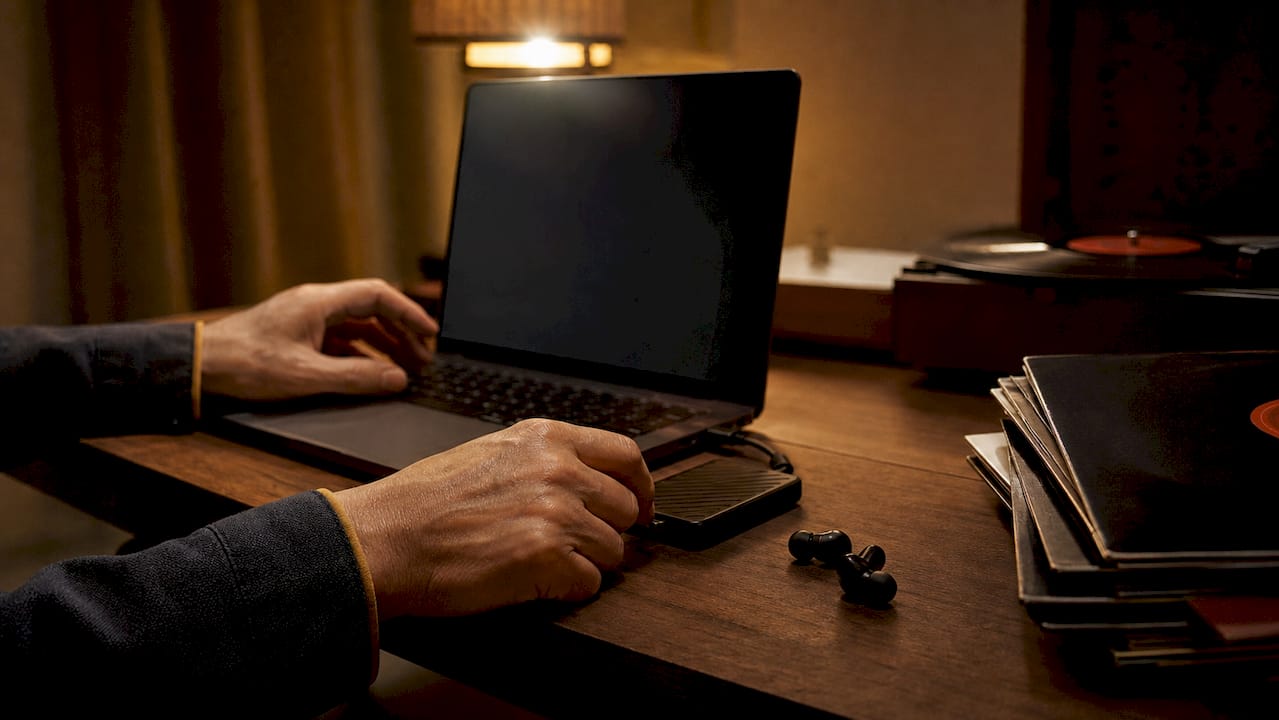
Local hard drives work for most people starting out, but a solid-state drive (SSD) offers faster access and greater durability for a growing collection. For larger libraries, a network-attached storage (NAS) device lets you reach your music from any device on your home network without moving files around manually. NAS units from brands like Synology or QNAP support RAID configurations that protect against drive failure.
Separate your raw files from your organized library
This is the step most people skip, and it causes the most pain later. Keep your original, unprocessed downloads in one folder and your clean, organized library in a separate destination folder. MusicHoarder enforces this by mounting your source folder as read-only, then writing a tidy copy to a separate library path. That means your originals stay untouched no matter what the pipeline does.
Automate metadata tagging
Manual tagging is slow and inconsistent. MusicBrainz Picard, the free desktop tagger from the MusicBrainz project, matches your audio files against a global database using acoustic fingerprinting via AcoustID. SoulSync goes further, running 10 enrichment workers across providers including MusicBrainz, Discogs, Last.fm, iTunes, and Deezer to tag entire albums consistently. Embedding tags and artwork directly in your audio files, rather than storing them in an external database, keeps your library portable and future-proof.
Deploy self-hosted management with Docker
Docker Compose is the standard method for running self-hosted music library tools without complex server configuration. MusicHoarder’s setup requires just two files: a docker-compose.yml and a .env file where you point MUSIC_SOURCE_PATH at your messy folder and MUSIC_DESTINATION_PATH at an empty destination. Run docker compose up -d, and the pipeline starts scanning immediately. No account, no subscription, no cloud dependency.
Back up and sync your library
A library you cannot recover is a library you do not really own. Keep at least two copies: one on your primary drive and one on an external drive or NAS. For offsite protection, tools like rclone can sync your library to encrypted cloud storage on a schedule. If you use a self-hosted server like Navidrome, an SFTP client such as FileZilla handles syncing your local library to the server whenever you add new music.
Pro Tip:Set a recurring calendar reminder, once a month, to run your backup sync. Automation is better, but a manual habit beats no habit at all.
Organizing your library to enhance evening listening sessions
Structure is what separates a music library from a music pile. The way you arrange your collection shapes how you move through it on a quiet evening, and that movement either pulls you deeper in or leaves you skipping around without landing anywhere.

Prioritize album-based organization
Album-based organization respects the artist’s original intent and creates a more immersive listening arc than shuffled playlists. When you sit with a full album, you hear the emotional high point the artist placed at track seven, the breath between tracks three and four, the way the closing song resolves everything that came before it. Crates, the music library app, is built around exactly this idea: its tagline is “playlists are for songs, crates are for albums.”
Group music by mood and energy level
Beyond albums, organizing by mood creates what you might call listening arcs for your evenings. Think of it like a live set: you open with something mid-tempo and familiar, move into deeper or more intense territory in the middle, then wind down toward the end. Grouping by qualitative energy levels, such as “late-night introspection,” “focused and still,” or “slow release,” guides your listening without forcing it. This approach mirrors how a thoughtful DJ paces a set, and it works just as well for a solo evening at home.
Use Crates for themed collections
Crates automatically fetches artwork, genres, release details, and artist information from Discogs and other sources, then lets you build custom crates organized by genre, mood, era, or any category that makes sense to you. Its CratesGPT feature can analyze your listening habits and generate themed collections automatically. For solo evening exploration, you might build a crate called “2 AM R&B” or “Sunday wind-down” and let it grow over time as you add albums that fit the feeling.
Maintain consistent, enriched metadata
Good metadata is what makes your library searchable and sortable without friction. When every track carries accurate artist, album, year, genre, and mood tags, you can filter by any of those fields instantly. Inconsistent tagging, where the same artist appears as “D’Angelo,” “d’angelo,” and “D Angelo,” fragments your library and breaks sorting. MusicBrainz Picard resolves this by matching tracks to a canonical database entry and writing standardized tags across every file in an album at once.
Use open, non-proprietary tagging standards
ID3 tags for MP3 files and Vorbis comments for FLAC files are open standards that any player can read. Avoid organizing systems that store metadata only in a proprietary database, because if that software stops working, your organizational structure disappears with it. Embedding tags directly in the audio file means the information travels with the music, regardless of which player or platform you use next.
How to set up playback and create the right environment for solo evenings
The room matters as much as the music. A carefully built library played through a phone speaker in a bright, notification-filled room will not give you what you are looking for. The environment is part of the ritual.
Choose a dedicated playback device
A standalone music player, one with no social apps, no browser, and no notification badge pulling your attention sideways, changes how you listen. The friction of streaming disappears, but so does the distraction. Devices like the Snowsky Echo Mini, loaded with your curated library on a microSD card, give you physical buttons and a single purpose. You press play. That is all it does.
For home listening, a self-hosted server like Navidrome paired with a desktop app or a quality Bluetooth receiver keeps your library accessible across devices without surrendering control to a streaming platform.
Optimize audio quality
Lossless formats like FLAC and ALAC preserve every detail of the original recording. The difference is most audible through quality headphones or speakers in a quiet room, which is exactly the solo evening context. If storage space is a concern, SoulSync can download from high-resolution sources including Tidal, Qobuz, and Deezer, giving you the best available quality for each track automatically.
For a dedicated listening space, consider a professional audio environment with proper acoustic treatment if you want to hear your collection at its fullest. At home, rugs, curtains, and soft furnishings reduce harsh reflections without requiring any renovation.
Create an intentional listening space
Dim the lights. Put your phone face-down or in another room. Arrange your seating so you face the speakers rather than a screen. These are small choices, but they signal to your nervous system that this time is different from scrolling or working. Warm, low lighting, the kind that makes a room feel like late evening even at 8 PM, shifts your mood before the first track plays.
Pro Tip:Use a simple three-part arc for your evening: a warm-up crate for the first 20–30 minutes, your main listening focus in the middle, and a wind-down crate for the final stretch. The pacing carries you through the night without any decisions required.
Manage volume and ambient sound
Keep your listening volume at a level where you can hear the quietest details in a recording without straining. Too loud, and the music becomes an event rather than a companion. Too soft, and ambient noise competes with it. If you live in a noisy environment, closed-back headphones from brands like Sennheiser or Beyerdynamic isolate external sound without requiring you to raise the volume. For speakers, placing them closer to your listening position rather than against a far wall lets you hear clearly at lower, more comfortable levels.
Expert insights on curating your library for deeper solo introspection
The technical setup gets your library organized. Curation is what makes it yours.
Limit your choices deliberately
Streaming platforms offer everything, and that abundance creates a specific kind of paralysis. When every song ever recorded is one tap away, the act of choosing loses meaning. A personal library works differently because it is bounded. You chose what is in it. That constraint is not a limitation; it is the source of the library’s emotional weight. Curating music experts note that limiting discovery in a personal library fosters deeper emotional engagement, particularly in nightly solo listening rituals where familiarity and meaning matter more than novelty.
Build mood capsules, not just playlists
A mood capsule is a small, themed collection of albums or tracks that captures a specific emotional state or period in your life. It might be the three albums you listened to obsessively during a particular winter, or the R&B records that felt like company on nights when the silence was too sharp. These capsules become anchors. When you return to them, the music carries the memory of who you were when you first heard it, and that layering is something no algorithm can replicate.
Embrace album listening as a practice
Shifting from individual songs to albums allows for more deliberate and cohesive music discovery. An album is an argument, a sequence of ideas the artist arranged with intention. Listening from track one to the last gives you access to that argument in full. For solo evenings built around introspection, this depth is the point. You are not filling silence; you are entering a conversation.
Let your library reflect your life
A well-curated personal music library functions as what one collector described as “a strange, accurate map of one’s life.” The albums you choose to include, the ones you rip from old CDs, the ones you buy on Bandcamp because something in the cover art caught you, all of these choices accumulate into a portrait. That portrait is more honest than any algorithm’s model of your taste, because you made every decision yourself. For solo evening listening, that personal resonance is what transforms background sound into something that actually moves you.
For music that already carries that emotional depth built in, DRVVYN’s curated releases offer R&B and introspective tracks designed for exactly this kind of late-night, personal listening. Drvvynsound builds music around themes of love, reflection, and healing, which makes it a natural fit for the mood capsule approach described above.

Key Takeaways
Building a personal music library for solo evenings works best when technical organization and intentional curation reinforce each other, creating a collection that feels personal rather than algorithmic.
| Point | Details |
|---|---|
| Unify and enrich metadata | Tools like MusicHoarder can achieve over 90% metadata completeness by pulling from multiple sources at once. |
| Separate raw from organized files | Keep original files in a read-only source folder; write the clean library to a separate destination to prevent corruption. |
| Organize by album and mood | Album-based crates and mood capsules create intentional listening arcs that serve solo evening introspection better than shuffled playlists. |
| Build a dedicated listening environment | Dim lighting, a standalone playback device, and minimal distractions shift solo music sessions from background noise to a restorative ritual. |
| Limit your collection deliberately | A bounded personal library builds emotional connection; the constraint is what gives each album its weight and meaning. |