

Listening & Culture
Why Music Feels Better at Night: The Real Reason
Discover why music feels better at night. Learn how your brain shifts from logic to emotion, enhancing your listening experience.
By DRVVYN · · 10 min read
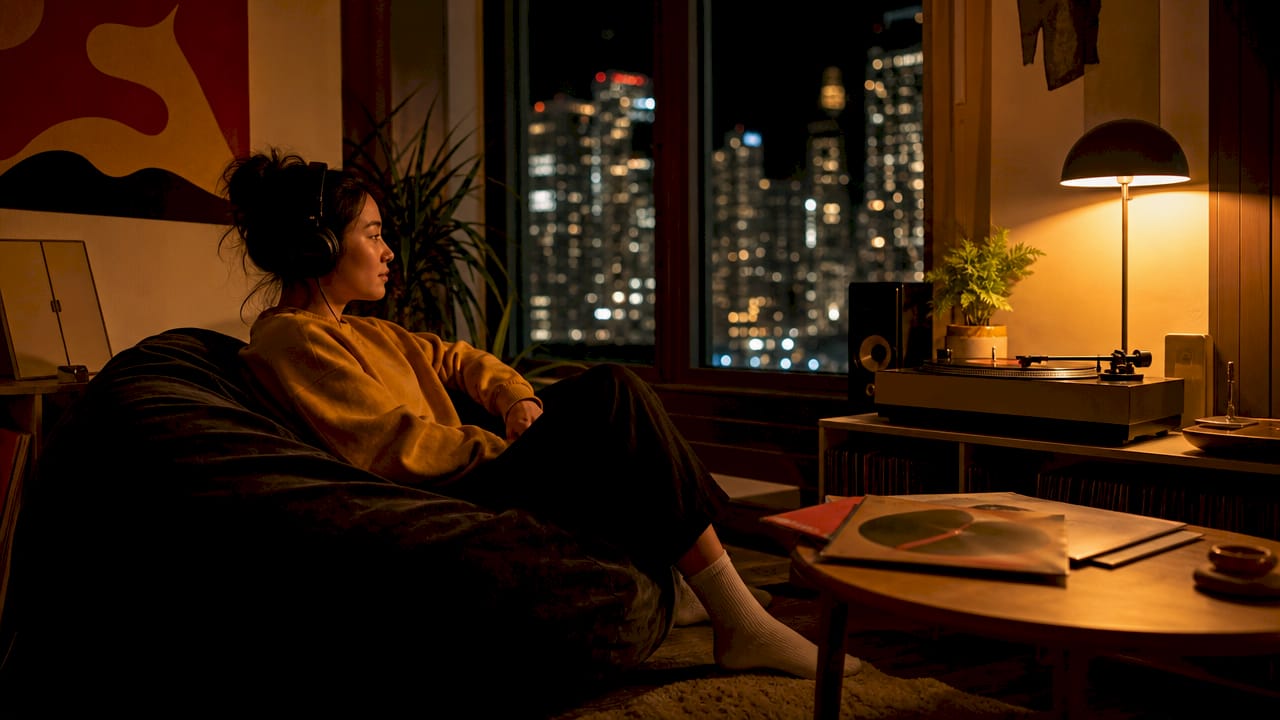
Music feels better at night because your brain shifts from analytical processing to emotional dominance after dark, letting sound bypass your rational filters and land somewhere deeper. The prefrontal cortex quiets down. The limbic system, the part of your brain that handles memory and feeling, takes over. Add cooler air that sharpens acoustic clarity, melatonin that softens every edge, and the absence of daytime noise, and you have a listening environment that simply does not exist at noon. This is why music feels better at night, and the science behind it is more layered than most people realize.
Why does music feel better at night? The neuroscience explained
The brain does not process music the same way at 11 PM as it does at 11 AM. At night, the prefrontal cortex slows its activity. That is the region responsible for logic, judgment, and second-guessing. When it quiets, music stops being something you analyze and starts being something you feel.
The limbic system fills that space. It governs emotion, memory, and instinct. Nighttime music perception is driven by this shift from the prefrontal cortex to the limbic system, allowing music to connect directly to memory and emotion without rational interference. That is why a song you have heard a hundred times can suddenly make you feel something new at midnight.
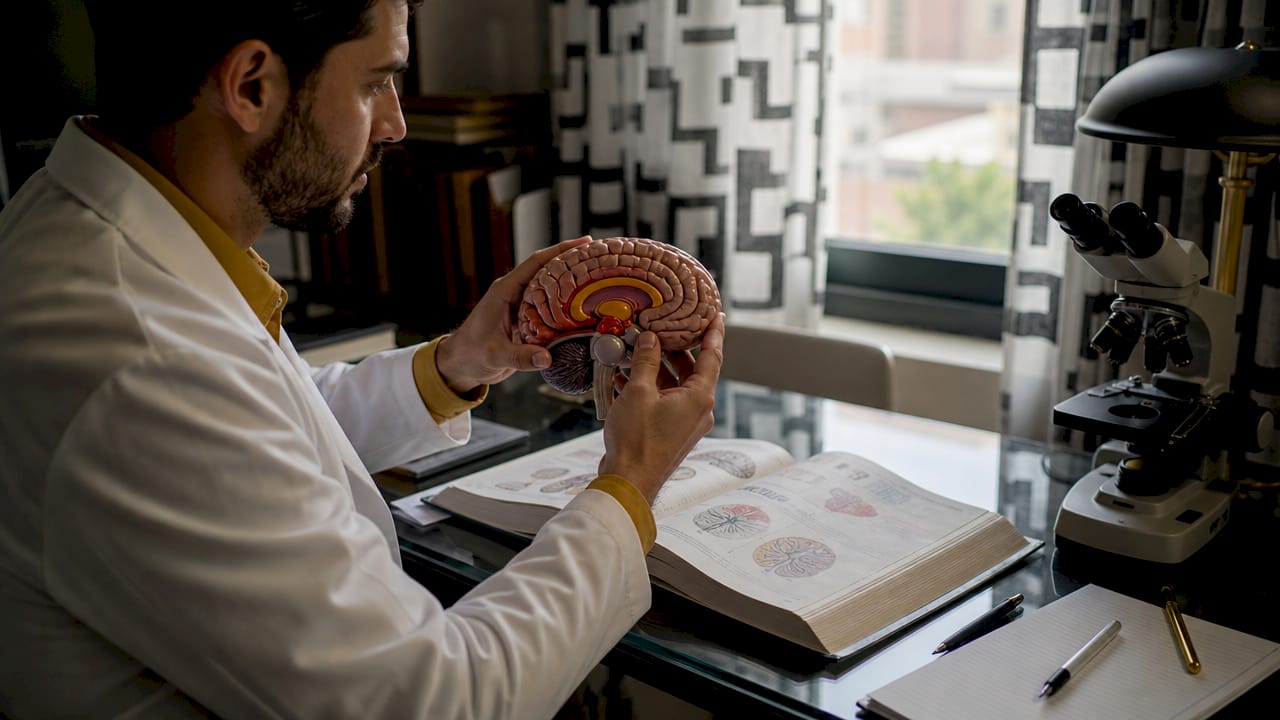
Melatonin plays a direct role here too. Production begins around 9 PM, and its effect on auditory processing is real. Melatonin’s influence effectively tints music perception by impacting emotional processing centers, creating rounder, softer sound experiences that deepen emotional impact. The music has not changed. Your brain’s chemistry has.
Cortisol, the stress hormone that peaks in the morning, drops significantly by evening. Lower cortisol means lower emotional resistance. You are less guarded, less defended, and more open to what the music is actually saying. EEG research supports this pattern, showing heightened emotional brain activity during nighttime listening compared to daytime sessions.
Pro Tip:If you want the most emotionally resonant listening session, start around 9 PM when melatonin begins rising. That window is when your auditory and emotional systems are most aligned.
- The prefrontal cortex reduces analytical interference
- The limbic system amplifies emotional and memory responses
- Melatonin softens auditory edges and deepens emotional peaks
- Lower cortisol removes emotional resistance
- Music bypasses rational filters and connects to feeling directly
How the environment makes music sound clearer at night
The brain shift is only half the story. The physical world around you changes at night too, and those changes are audible.
Ambient noise drops sharply after dark. Traffic thins, conversations end, construction stops. That nighttime quiet reduces sensory competition, enabling the auditory cortex to pick up subtle details masked during the day. The reverb tail on a piano note. The breath before a vocal phrase. The texture in a bass line you never noticed before. These details were always there. The noise was just covering them.
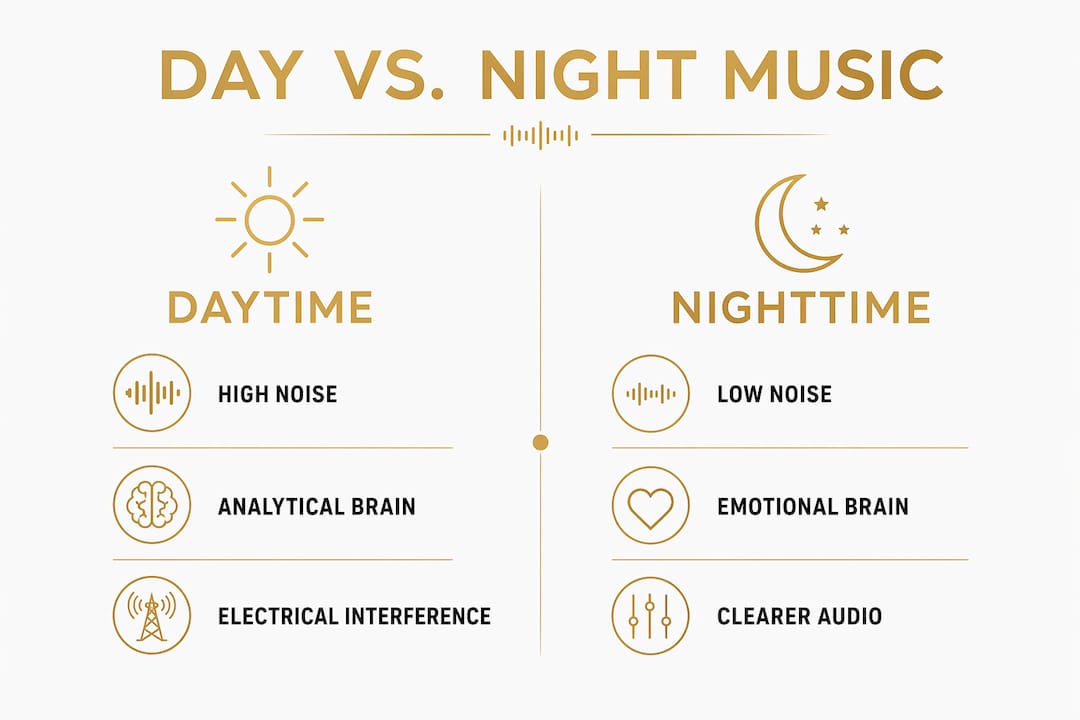
The air itself behaves differently. Cooler, denser air refracts sound waves toward the ground, making faint mix details more audible than during the day. This is basic atmospheric physics, but its effect on music is significant. Bass frequencies feel warmer. High frequencies feel crisper. The whole mix gains a sense of weight and presence.
Less electrical interference at night also improves audio equipment performance. Fewer devices running on the grid means less electromagnetic noise bleeding into amplifiers and DACs. Audiophiles have known this for decades. The technical improvement is subtle, but in a quiet room with good headphones, it is perceptible.
Immersive nighttime music events confirm this effect at scale. Zen Night events in Japan, held at Kyoto’s Tofukuji Temple, pair ambient soundscapes with reduced sensory input. These events attracted over 50,000 attendees and achieved over 94% participant satisfaction. That is not coincidence. It is the nighttime acoustic environment doing exactly what the science predicts.
Pro Tip:Turn off overhead lights and reduce screen brightness before your listening session. Dimming visual input pushes your brain to rely more on hearing, which sharpens your auditory focus.
| Factor | Daytime effect | Nighttime effect |
|---|---|---|
| Ambient noise | High, masks fine details | Low, reveals subtle mix elements |
| Air temperature | Warmer, disperses sound | Cooler, refracts sound toward listener |
| Electrical interference | Higher from active devices | Lower, cleaner audio signal |
| Visual stimulation | High, competes with hearing | Low, sharpens auditory focus |
| Emotional brain state | Analytical, guarded | Open, emotionally receptive |
Why nighttime music hits harder emotionally
The emotional impact of night music is not just about brain chemistry. It is about what the night removes from your life for a few hours.
Daytime carries weight. Work deadlines, social expectations, the performance of being a functional person. At night, those pressures ease. Nighttime music listening helps emotional regulation by reducing social and professional pressures, enabling listeners to process feelings and decompress. The music does not have to compete with your to-do list anymore.
Carl Jung’s concept of the shadow self offers a useful frame here. The shadow self refers to the unconscious parts of your identity that you suppress during the day. At night, when the social mask comes off, music triggers an encounter with those repressed emotions. That is why a song about loss can feel unbearably personal at midnight when it felt like background noise at lunch.
Fatigue deepens this effect. Psychological tiredness lowers emotion regulation efficiency, making listeners respond more intensely to melancholic music at night. You are not weaker at night. You are more honest. The defenses that keep feeling at arm’s length during the day have simply run out of energy.
Dopamine also plays a role. Music triggers dopamine release, and that release feels more rewarding when the brain is not already flooded with stimulation from the day. The quiet amplifies the pleasure. One in five listeners report late-night music as their primary tool for identity exploration and stress relief. That number reflects something real about what happens when music meets an unguarded mind.
- Reduced social pressure lowers emotional defenses
- The shadow self surfaces, making personal themes in music feel raw and immediate
- Fatigue reduces the brain’s ability to suppress emotional responses
- Dopamine hits harder when the brain is not overstimulated
- Music becomes a space for processing feelings that had nowhere to go during the day
How to get the most from your nighttime listening
The conditions are already working in your favor at night. A few deliberate choices push the experience further.
1. Choose music with low urgency. Tracks with slow rhythms, minimal lyrics, and open space give your emotional brain room to respond. Dark ambient music helps transition from day to night and reduces overthinking. Artists like Brian Eno, Stars of the Lid, and Grouper create exactly this kind of space. The music asks nothing of you. It simply holds the room.
2. Avoid fast-tempo or lyrically dense tracks. Tracks with fast tempo and bright, dense lyrics prevent re-engagement of the rational brain, breaking the meditative listening state. High-energy pop or aggressive rap re-activates the prefrontal cortex. Save those for the morning commute.
3. Use quality headphones or speakers. The acoustic details that night reveals are only audible through equipment that can reproduce them. Over-ear headphones like the Sony WH-1000XM5 or Sennheiser HD 650 let you hear the warmth and texture that nighttime acoustics bring out. Earbuds compress those details.
4. Time your session around melatonin. The 9 PM to midnight window is when melatonin production peaks and emotional sensitivity is highest. Listening during this window aligns your body’s chemistry with the music’s emotional content.
5. Reduce screen time before and during listening. Screens flood the brain with blue light and visual stimulation. Both suppress melatonin and re-engage the analytical brain. A dim room with no screen is the closest you can get to a private immersive sound experience.
Pro Tip:Build a short pre-listening ritual. Five minutes of stillness before pressing play primes your nervous system to receive music rather than just hear it.
Key takeaways
Music feels better at night because the brain’s emotional centers become dominant while analytical functions quiet down, creating conditions for deeper, more personal listening.
| Point | Details |
|---|---|
| Brain state shifts at night | The limbic system takes over from the prefrontal cortex, making music feel emotional rather than analytical. |
| Melatonin tints the sound | Rising melatonin after 9 PM softens auditory edges and deepens emotional peaks in music. |
| Nighttime acoustics improve clarity | Cooler air and reduced ambient noise reveal mix details that daytime conditions mask. |
| Fatigue lowers emotional defenses | Psychological tiredness makes melancholic music hit harder and feel more personal. |
| Music choice shapes the experience | Slow, low-urgency tracks sustain the emotional listening state; fast or dense music breaks it. |
What I have learned from listening in the dark
Music does not change at night. You do. That is the insight I keep coming back to, and it took years of late-night sessions to really feel the difference between knowing that and understanding it.
I have noticed it most clearly after long creative days working on music for Drvvynsound. By the time the work is done and the room goes quiet, the same reference tracks I monitored all afternoon suddenly sound different. Richer. More present. The bass sits lower in my chest. The vocals feel like they are speaking directly to something I was not ready to hear at 2 PM.
There is something about the night that strips away the performance of the day. You stop listening to music as a producer, a critic, or a distracted person with a full inbox. You just listen. And in that space, music does what it was always meant to do. It tells you the truth about how you feel.
The emotional breakthroughs I have witnessed at immersive events confirm this. When you put people in a dark, quiet space with music designed for depth, something opens up. People cry. People sit still for the first time in weeks. The music did not cause that. The night did. The music just walked through the door the night left open.
My honest advice: stop treating nighttime music as background noise for winding down. Treat it as a scheduled encounter with yourself. Pick something that asks something of you emotionally. Sit with it. Let the quiet do its work.
— DRVVYN
Music built for the way you listen at night
The nighttime listening experience deserves music that was made with that depth in mind.

Drvvynsound creates emotionally driven R&B and ambient music designed for exactly the kind of listening this article describes. The songs are built around themes of love, reflection, healing, and personal growth. They are made for the hours when your defenses are down and music can actually reach you. You can find original music and playlists on the Drvvynsound website, where the catalog is organized for streaming across all major platforms. If you are looking for music that fits the nighttime brain state, this is where to start.
FAQ
Why does music feel more emotional at night?
At night, the prefrontal cortex reduces its activity and the limbic system becomes dominant, allowing music to connect directly to emotion and memory without analytical interference. Melatonin and lower cortisol levels deepen this effect by softening emotional resistance.
Does music actually sound different at night?
Yes. Cooler, denser nighttime air refracts sound waves toward the ground, improving bass warmth and mix clarity. Reduced ambient noise also lets the auditory cortex detect fine details that daytime noise masks.
Why do sad songs hit harder at night?
Fatigue lowers the brain’s ability to regulate emotion, making melancholic music feel more intense after dark. The shadow self, the unconscious emotional layer suppressed during the day, also surfaces at night, making personal themes in music feel immediate and raw.
What kind of music is best for nighttime listening?
Music with slow rhythms, minimal lyrics, and open sonic space works best. Dark ambient artists like Brian Eno and Grouper sustain the emotional listening state without re-engaging the analytical brain.
What time is best for a deep nighttime listening session?
The 9 PM to midnight window aligns with peak melatonin production and the brain’s shift toward emotional processing, making it the most receptive period for immersive music enjoyment at night.