

Listening & Culture
A Guide to Mood Based Playlists
A guide to mood based playlists for listeners who want music that meets the moment – reflective, cinematic, intimate, and built to last.
By DRVVYN · · 7 min read
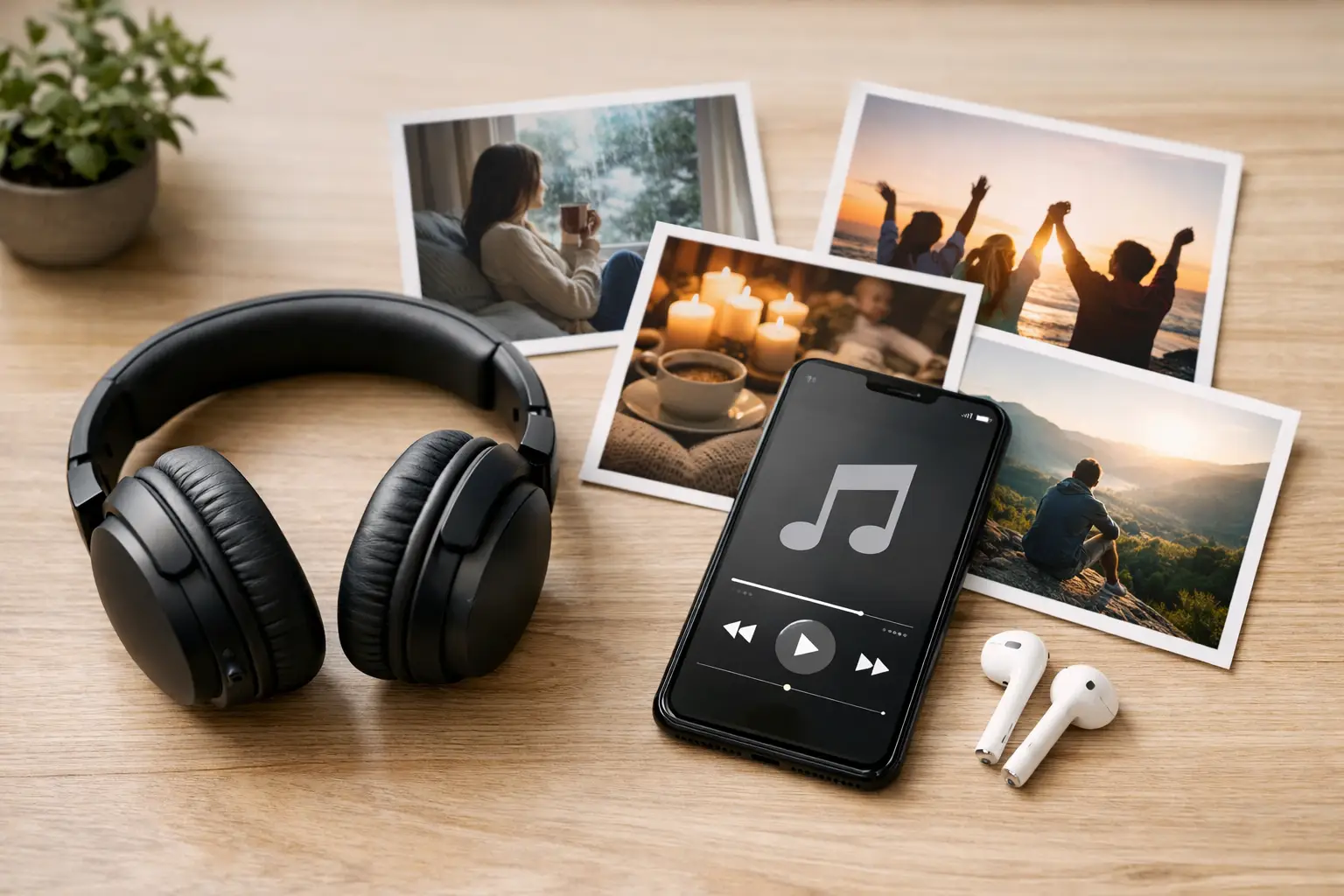
Some nights, a single song is enough. Other nights, one track breaks the spell.
That’s where a guide to mood based playlists starts – not with genre, not with popularity, but with the feeling you’re trying to stay inside. The right playlist doesn’t just fill silence. It holds a room together. It sharpens a drive, softens a late hour, or gives shape to something you haven’t fully said out loud yet.
Mood-based listening works because most people aren’t searching for music in neat categories. They’re searching for recognition. Something that sounds like the moment feels. That’s a different instinct than looking for rap, ambient, indie, or R&B. It’s more personal than that. More honest.
Why mood based playlists stay with you
A strong playlist leaves an afterimage. You remember where you were when it played, what the light looked like, what version of yourself it seemed to understand.
That’s the difference between a playlist built for function and one built for atmosphere. Functional playlists are useful. Focus music, workout music, sleep music – they do a job. But mood based playlists have more gravity. They create emotional continuity. They let one track lead into another without breaking the internal tone.
This matters if music is part of how you process things. A scattered playlist can pull you out of yourself. A well-shaped one can keep you close.
There’s also a trade-off here. If you build too strictly around one emotion, the playlist can feel flat. If you make it too broad, it loses its center. The best playlists don’t sit on one note forever. They move within a narrow emotional range, like a film scene that changes subtly while staying in the same world.
A guide to mood based playlists that actually feels right
Start with a scene, not a category. That usually tells you more.
Instead of asking what kind of music you want, ask what kind of space you’re in. Is this for city lights through a car window? A slow morning with no one texting back? A gym session that needs tension, not hype? A playlist gets stronger when it has a visual edge to it. Mood is easier to hear when you can almost see it.
From there, choose the emotional temperature. Warm and intimate feels different from dark and suspended. Both might live near each other sonically, but they do different work. One holds you. The other haunts a little. Being specific here saves you from adding songs that sound good on their own but shift the energy too hard.
Then pay attention to pace. Not just BPM – pulse. Some songs move slowly but carry pressure. Others are technically midtempo and still feel weightless. When you’re building a mood based playlist, momentum matters more than speed. You want the listener to stay inside the feeling, not keep adjusting to it.
How to choose songs without breaking the mood
The most common mistake is choosing tracks by name value. A big song can still be the wrong song.
A playlist like this should be built by emotional fit. Ask simple questions. Does this track deepen the mood or interrupt it? Does it say too much too early? Does it feel lived-in, or does it demand attention in a way that pulls the whole sequence off center?
Vocals matter here. Some moods can hold a lot of language. Others need songs that leave more space. If the playlist is meant for reflection, lyrics that are too literal can crowd it. If it’s meant for release, a sharper vocal may be exactly what gives it shape.
Production matters just as much. Reverb, low-end weight, vocal distance, drum texture – all of it affects how a playlist feels in the body. You don’t need technical language to hear that. You just need to notice whether a track sounds close, cold, heavy, blurred, bright, or stripped bare.
This is why playlists built around mood often cross genre lines without effort. If the emotional texture matches, the playlist stays intact. A cinematic electronic track can sit next to an alternative R&B record if they share the same emotional air.
Sequencing is where the feeling becomes real
A playlist can have the right songs and still feel wrong.
Order is what turns a collection into an experience. The first track sets the door. It shouldn’t explain everything. It should place you somewhere. The second and third tracks matter even more than people think, because that’s where trust is built. If the early run feels intentional, the listener stays with you.
After that, think in arcs. Maybe the playlist opens in restraint, swells into something heavier, then fades into softer aftermath. Maybe it stays low-lit the whole time but shifts from distant to intimate. There isn’t one perfect structure. It depends on the mood. But there should be some sense of emotional movement, even if it’s subtle.
Transitions matter more than peaks. One jarring handoff can pull someone all the way out. Volume shifts, mismatched vocal intensity, or a sudden jump in energy can break the spell. That doesn’t mean every song should sound the same. It means contrast should feel intentional.
A good test is simple: if you drop into the middle of the playlist, does it still feel like the same world?
The moods people return to most
Some moods naturally ask for playlists because they’re hard to hold with one song alone.
Late-night reflection is one of them. It needs space, restraint, and a sense of emotional depth without tipping into melodrama. Songs with too much shine usually don’t last here. You want texture. Breath. Something that feels like streetlights and unfinished thoughts.
Cinematic escape is another. This mood can hold more drama, more rise, more atmosphere. It works when the music feels larger than the room without becoming empty spectacle. Instrumentals, distant vocals, and tracks with strong visual energy tend to live well here.
Then there’s intimate intensity – music for closeness, tension, and all the feelings that sit between tenderness and obsession. This kind of playlist needs control. Too soft, and it fades. Too explicit, and it loses mystery. The strongest versions stay suggestive. They let the listener bring their own history into it.
There are practical moods too. Focus, movement, recovery. But even those work better when they’re emotionally tuned instead of mechanically assembled. A workout playlist built on aggression feels different from one built on confidence. A focus playlist built on calm feels different from one built on pressure. The task may be the same. The internal state isn’t.
When to edit, when to leave it alone
Not every playlist needs to keep growing.
Some are living spaces. You add to them over time, and they shift with you. Others are snapshots. Ten tracks. Twenty at most. A fixed emotional document from a specific stretch of life. Both approaches work. It depends on whether you want the playlist to evolve or preserve something.
Editing is usually more important than adding. If a song only half fits, it probably doesn’t fit. If the playlist starts to feel diluted, it usually is. Mood based playlists get their power from consistency, not volume.
It also helps to leave them alone for a while. Come back at a different hour. Play them on a walk, in headphones, through speakers, in the car. Some playlists only reveal their weak points when the setting changes. Others become stronger because the mood survives every context.
That kind of durability matters. If a playlist only works in theory, it’s not done yet.
Why this kind of listening matters
There’s a reason people keep returning to artists and platforms that organize music by feeling. It respects how listening actually happens.
Most of us aren’t pressing play because we want content. We’re trying to stay close to something. A memory. A version of ourselves. A mood we’re not ready to leave. That’s why a carefully built playlist can feel more personal than an album you admire but don’t live inside.
At its best, this kind of curation becomes a place. That’s part of what DRVVYN Sound understands so well – music can be more than a release schedule or a loose collection of tracks. It can be a state you return to.
If you’re building your own playlists, trust the pull of what feels accurate. Not what looks impressive. Not what should work on paper. The right sequence is the one that keeps you there a little longer.