

Listening & Culture
How to Discover Cinematic Songs That Stay
Learn how to discover cinematic songs that feel immersive, emotional, and lasting – from playlists to scenes, moods, and smarter listening habits.
By DRVVYN · · 7 min read
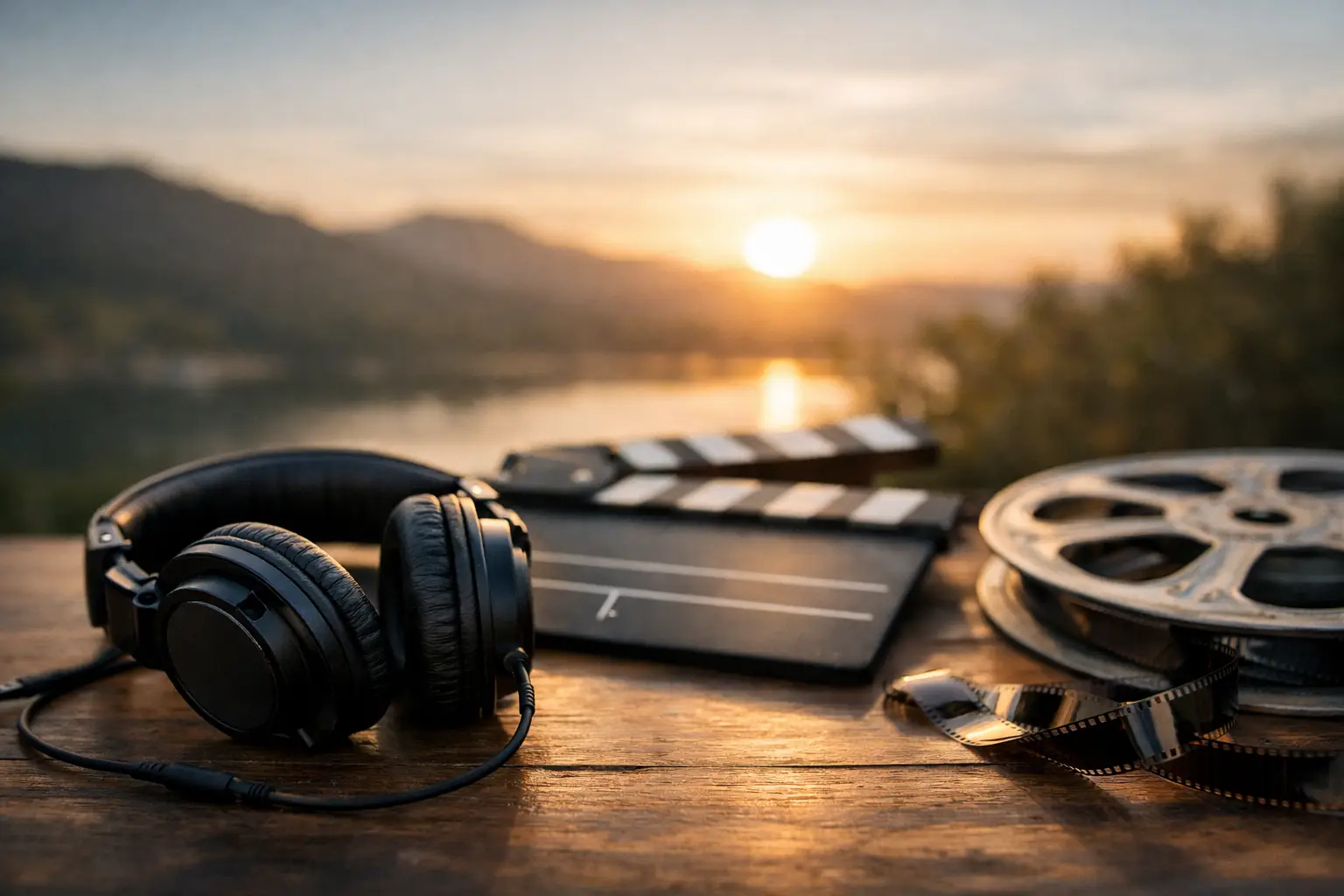
Some songs don’t just play. They widen the room.
If you’ve been trying to figure out how to discover cinematic songs, you’re probably not looking for background music. You’re looking for scale. Tension. Air. Something that feels like a memory before it feels like a track.
That kind of song usually doesn’t show up when you search by genre alone. “Cinematic” isn’t one sound. Sometimes it’s orchestral and massive. Sometimes it’s minimal, dark, and almost whispered. What connects it is the feeling – music that suggests a scene, carries emotional weight, and leaves space for your mind to project its own film onto it.
How to discover cinematic songs by feeling first
The fastest way to miss cinematic music is to search too literally. If you type in “epic trailer music,” you’ll get one narrow version of it. Useful sometimes, but limited. A lot of the best cinematic songs live outside obvious labels.
Start with the feeling you want, not the category you think fits. Maybe you want something that sounds like driving through a city at 2 a.m. Maybe you want music that feels devotional, haunted, romantic, or quietly overwhelming. Those emotional cues tend to lead somewhere better than genre tags ever will.
This matters because cinematic songs often borrow from everywhere. Ambient music can feel cinematic. Alternative R&B can feel cinematic. Post-rock, electronic, neoclassical, experimental pop – all of them can carry that same visual depth when they’re arranged with intention.
So instead of asking, “What genre is this?” ask, “What kind of scene does this create?” That question gets closer to the truth.
Look for atmosphere, not just drama
A lot of people equate cinematic with huge. Strings. Percussion. Big drops. And yes, sometimes that’s part of it. But cinematic music isn’t always loud or grand.
Sometimes it’s the opposite.
A soft vocal buried in reverb can feel more cinematic than an overproduced climax. A slow synth progression can feel like a closing shot. A song with restraint often leaves more room for emotion to build inside you. That tension – the sense that something is unfolding just beneath the surface – is often where the real pull lives.
When you’re searching, pay attention to songs with space in them. Long intros. Patient builds. Textural layers. Melodies that feel suspended rather than rushed. Those are often stronger signs than volume or speed.
Use playlists the right way
Playlists can help, but only if you treat them as starting points instead of answers.
Search terms like cinematic songs, dark atmospheric music, late night soundscapes, emotional instrumentals, ambient alternative, or music for stargazing can open the door. But once you land in a playlist, don’t just let it run and hope. Listen for the one track that actually stops you.
That’s the track to follow.
Open the artist. Look at what else they’ve made. Check what projects that song belongs to. Notice whether the rest of their catalog carries the same emotional language or whether that track was an outlier. Some artists build entire worlds around this feeling. Others touch it once and move on.
Mood-based curation tends to work better than broad editorial playlists because it reflects how cinematic music is actually experienced. Not as a style box, but as a state. That’s part of why listeners return to platforms like DRVVYN Sound – not just for songs, but for a more intentional way of entering the right mood.
YouTube is still one of the best places to find it
Streaming platforms are good at giving you more of what already fits a pattern. YouTube is better at accidents.
That matters when you’re looking for cinematic songs, because a lot of this music lives in visual culture before it becomes part of your daily rotation. Short films, fan edits, scene compilations, obscure live sessions, slowed clips, visualizers – these are all places where emotionally heavy music gets paired with image and context.
Search for songs through scenes. Search through edits. Search through moods people name in imperfect but revealing ways. “Songs that feel like the end of summer.” “Music for when you miss a life you never had.” “Dark angelic playlist.” Those phrases may sound dramatic, but they often lead to exactly the kind of emotionally specific curation that cinematic listeners want.
The trade-off is that discovery there can be messier. You’ll dig through more filler. But the reward is that you’ll also find songs before algorithms flatten them into the usual cycle.
Follow the edges of artists you already love
If a song already gives you that cinematic feeling, don’t stop at the song. Follow its edges.
Look at the producers, featured artists, remixers, and composers around it. Look at what playlists it gets added to by actual listeners, not just platform editors. If the artist has visuals, pay attention to the aesthetic choices too. The same instinct that shapes a song’s atmosphere often shows up in cover art, sequencing, and video direction.
This is where better discovery starts to feel less random.
Cinematic songs usually don’t exist alone. They tend to belong to ecosystems of sound – artists who understand pacing, texture, and emotional continuity. Once you find one of those artists, you often find five more by tracing who they orbit.
Albums often reveal more than singles
If you’re only skimming singles, you’ll find some great tracks. But you may miss the deeper ones.
Cinematic artists often think in arcs, not just moments. A song that feels almost too slow on its own can hit harder inside the architecture of a full project. The sequencing matters. The silence between tracks matters. Even the shift in tone from one song to the next can change how you hear what came before.
So when something catches you, take the extra step and play the full project at night, on headphones, without multitasking. Not every album will reward that kind of attention. The right ones do.
And when they do, you’re not just discovering songs anymore. You’re finding worlds you can return to.
How to discover cinematic songs without chasing trends
Some cinematic songs go wide online. Most don’t.
If you only follow what’s already moving fast, you’ll mostly find tracks built for immediate impact. There’s nothing wrong with that, but cinematic music often works differently. It can be slower to reveal itself. Less obvious on first listen. More dependent on context, timing, and your own emotional state.
That means a song can be incredible and still not be trending.
Try giving songs a second listen if the atmosphere feels right, even when the hook isn’t instant. Not every slow-burn track deserves your time, but some of the best ones need a little room before they land. The key is knowing the difference between boring and patient. One goes nowhere. The other is building a horizon.
Build your own discovery system
Finding cinematic music gets easier when you stop relying on one app to do all the work.
Use streaming platforms for pattern recognition. Use YouTube for visual and emotional discovery. Save songs into your own mood-based folders instead of one giant catchall playlist. Split them by actual use: night drive, grief, stillness, ascent, longing, afterglow, collapse. The names don’t need to make sense to anyone else. They just need to be true.
Over time, you’ll start hearing your own taste more clearly. You’ll notice whether you lean toward orchestral depth, ambient melancholy, shadowy electronic textures, or vocal-led songs that feel like film without sounding like score. That self-awareness sharpens discovery. It tells the algorithm less about genre and more about your internal weather.
Trust the song that changes the light
The best cinematic songs usually announce themselves in a small way.
Not with hype. Not with volume. Just a shift.
The room feels different. Your attention narrows. Something in the production opens up and suddenly your own thoughts have a setting. That’s the song worth keeping. That’s the artist worth following. That’s the trail worth pulling.
If you’re trying to find more music like that, be patient with the process. Search by mood. Follow the atmosphere. Let visuals guide you sometimes. Let full projects breathe. And when a song makes the world feel a little wider, don’t scroll past it too fast.
That’s usually where the real ones begin.