

Listening & Culture
Build a Late Night Music Playlist That Lands
Build a late night music playlist that feels honest, immersive, and replayable. Shape the mood, pacing, and emotion without overthinking it.
By DRVVYN · · 7 min read
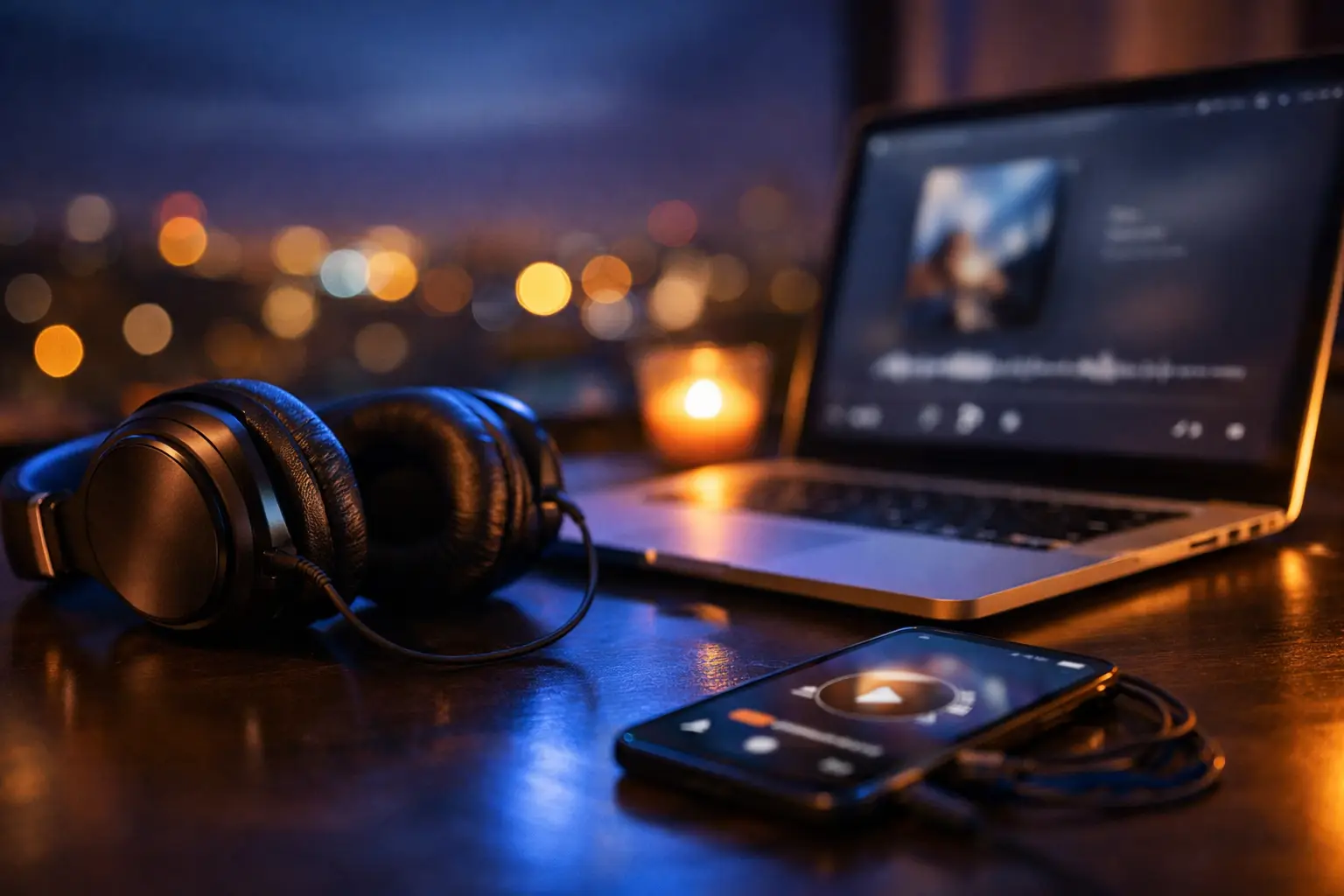
Some nights don’t need more noise. They need the right sound at the right temperature.
A good late night music playlist isn’t just a stack of songs you like after dark. It carries a mood without breaking it. It knows when to stay close, when to drift, and when to leave space for whatever the night is asking from you. That might be a long drive with the city blurred out beyond the glass. It might be headphones at 1:17 a.m., lights off, mind still moving.
The difference is intention.
What makes a late night music playlist feel right
Late-night listening has its own gravity. During the day, music competes with messages, traffic, conversation, work. At night, every sound sits closer to the surface. A snare can feel too sharp. A chorus can say too much. Even a song you love can break the spell if it arrives with the wrong energy.
That’s why the best playlists for night don’t chase variety for its own sake. They stay emotionally coherent. Not flat, not repetitive – coherent. The songs can move through different shades of feeling, but they should still sound like they belong in the same room.
Usually, that room is built from a few things at once. Warm production. Space in the arrangement. Vocals that feel intimate instead of performative. Rhythm that moves, but doesn’t rush. Lyrics that leave a little air around them.
None of this means every late-night track has to be slow or sad. Some nights lean romantic. Some are restless. Some want something hypnotic enough to keep the thoughts from getting too loud. It depends on what kind of midnight you’re building for.
Start with the feeling, not the genre
Genre is useful, but mood is what people actually stay for.
If you build a late night music playlist by genre alone, it can end up feeling too broad or too predictable. A playlist made only of alternative R&B, ambient pop, or mellow electronic can still miss the mark if the emotional thread isn’t there. What matters more is the shared atmosphere between tracks.
Start by asking a quieter question: what is this playlist supposed to hold?
Maybe it’s solitude that doesn’t feel empty. Maybe it’s tension with a pulse under it. Maybe it’s softness that never turns sleepy. Once you know that, the song choices get clearer. You stop adding tracks because they fit a category, and start adding them because they tell the truth of the moment.
That’s where replay value comes from. People return to playlists that understand a feeling before they have words for it.
Pacing matters more than people think
A playlist can have great songs and still fail because the sequencing is off.
Late-night listening is sensitive. If the opening feels too loud, people leave. If the middle loses shape, they stop noticing what they’re hearing. If the ending has nowhere to go, the whole thing feels unfinished. The flow matters because night listening is often less active. People are driving, writing, scrolling, thinking, staring at the ceiling. The music has to guide without demanding too much.
The first two or three tracks should establish trust. Not your biggest song. Not the most dramatic moment. Just the clearest invitation into the world you’re creating.
From there, let the energy breathe. A playlist that stays on one exact level can feel numb. A playlist with too many jumps feels careless. The sweet spot is movement with restraint. Let one track deepen the mood. Let the next add texture. Let another introduce a little tension, then bring it back down before the atmosphere slips away.
Sequencing is where curation becomes storytelling.
Choose songs that leave space
At night, overproduction stands out fast.
Songs with too many ideas, too many vocal layers, too many sudden turns can feel crowded when the room is quiet. The strongest late-night tracks usually leave something unresolved in a good way. They don’t explain themselves all at once. They let tone do part of the work.
That can mean a beat that loops like a thought you can’t shake. A vocal that sounds close enough to feel confessional. A synth line that hangs in the background instead of trying to own the whole frame. The point isn’t minimalism for its own sake. The point is emotional space.
This is also why lyrics matter differently at night. A line that seems simple during the day can land harder when everything around it goes still. If a song says too much too directly, it can flatten the mood. If it says just enough, it can stay with someone for weeks.
Don’t confuse sad with deep
A lot of people hear “late night” and immediately lean into melancholy. Sometimes that works. Sometimes it’s exactly what the moment needs. But depth and sadness aren’t the same thing.
A late night music playlist can feel intimate without being heavy. It can be sensual, suspended, reflective, cinematic, even slightly dangerous. Some of the best night playlists carry a quiet confidence instead of heartbreak. They don’t collapse inward. They glow.
That trade-off matters if you want the playlist to reach more than one kind of listener. Too much sadness can narrow the use case. Too much neutrality can make it forgettable. The strongest approach is usually a mix of emotional gravity and control.
Think less “I’m trying to make this devastating” and more “I’m trying to make this feel true at midnight.”
Think in scenes, not just songs
The easiest way to shape a better playlist is to imagine where it lives.
Is this for a drive through empty streets? A room lit by one lamp? An after-hours conversation that keeps stretching longer? A night when sleep isn’t coming and you’ve stopped fighting it? Different scenes need different kinds of movement.
A driving playlist can hold more rhythm. A reflective one can move slower and softer. A romantic one needs tension, but not too much distance. A playlist for insomnia might need repetition and warmth more than surprise.
When you think in scenes, the editing gets easier. A song can be beautiful on its own and still not belong. That doesn’t make it bad. It just means the camera angle changed.
This is where a platform like DRVVYN Sound makes sense to listeners who want more than random recommendation loops. Mood-first curation creates a place to return to, not just a queue to burn through once.
How long should it be?
Long enough to settle in. Short enough to mean something.
For most listeners, 20 to 35 songs is a strong range for a late-night playlist. That gives the mood time to develop without becoming shapeless. If you go much shorter, it can feel more like a temporary vignette. If you go much longer, the identity can blur unless the curation is especially tight.
There are exceptions. Some playlists are built to loop in the background for hours. Others are meant to feel like one contained arc. It depends on the purpose. But if you’re building for replay, restraint usually wins.
A playlist people finish is often more powerful than one they abandon halfway through.
The small details people remember
The songs matter most, but small choices shape the experience.
The title should feel like a mood, not a marketing exercise. The cover image should match the emotional color of the sound. Even the first and last tracks leave a signature. People may not analyze those details, but they feel them.
That’s the difference between a playlist that plays and one that lingers.
It also helps to revisit your sequence after a few nights. What feels perfect at 11:40 p.m. might feel too slow at 1:00 a.m. A track that seemed subtle might actually drain momentum. A song you almost cut might end up being the one that holds the whole thing together. Good curation usually comes from listening back in the same kind of hour you built it for.
Night reveals flaws quickly. It also reveals what’s real.
A playlist should feel lived in
The best late-night playlists don’t sound assembled for content. They sound like someone meant them.
That doesn’t require obscurity or perfection. It requires taste, patience, and a willingness to leave out songs that don’t serve the mood, even if they’re good. It means trusting atmosphere over algorithm and sequence over excess. It means understanding that people come to night music for recognition, not interruption.
If you build with that in mind, your playlist becomes more than a set of tracks. It becomes a place. Somewhere someone can return to when the room is quiet, the hour is late, and they want music that meets them there.
Start there. Then listen for what still belongs when everything else falls away.