

Listening & Culture
Moody Playlist for Night That Actually Lands
Build a moody playlist for night that feels cinematic, intimate, and honest. Learn what to include, what to avoid, and how to shape the mood.
By DRVVYN · · 7 min read
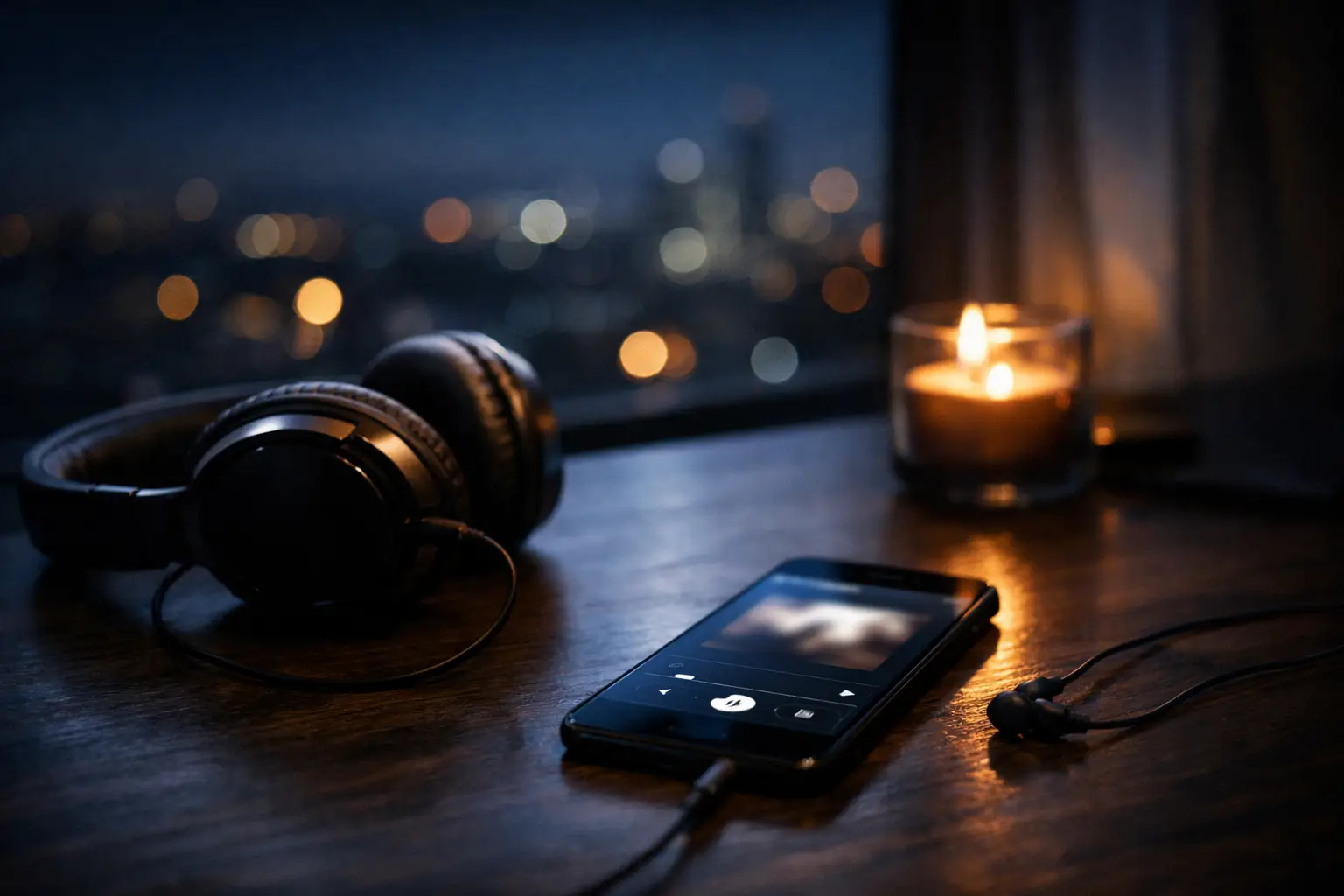
Some nights ask for silence. Others ask for a soundtrack that can hold what silence can’t. A moody playlist for night lives in that space – somewhere between reflection and release, between dim lights and whatever thought won’t let go.
The difference is usually not the genre. It’s the feeling. A late-night playlist can fall apart fast when it tries too hard to impress, jump energy too quickly, or crowd the room with songs that demand too much attention. Night listening needs restraint. It needs tension, space, and a kind of emotional accuracy.
What makes a moody playlist for night work
The best night playlists don’t chase a single emotion. They move like a real night does. You start one way, drift somewhere else, circle back, then sit in whatever remains. That’s why a strong playlist usually feels less like a stack of favorite songs and more like a sequence of scenes.
Mood comes from control. The pacing matters. The textures matter. Even the way a vocal enters matters. A song with too much brightness can break the spell. A track with the right amount of shadow can say more in thirty seconds than a louder song says in three minutes.
This is where people often miss. They think moody means sad. Sometimes it does. But often it means suspended. Intimate. Half-lit. A little unresolved. The right playlist for night can feel romantic, detached, cinematic, lonely, warm, or quietly dangerous. It depends on the room you’re trying to create.
Start with the room, not the songs
Before you add a single track, think about the kind of night this playlist belongs to. Not every moody playlist should sound the same. One night is about driving with the city blurred out beyond the windshield. Another is about lying still with your phone face down. Another is about missing someone you should probably stop thinking about.
If you don’t know the setting, the playlist usually turns into a mood board with no center. The songs may be good, but they won’t hold together.
A better approach is to choose one emotional frame and stay loyal to it. Maybe your night feels soft and dissociated. Maybe it feels sensual and slow. Maybe it feels heavy but clear. Once you know that, the choices get easier. You’re no longer asking whether a song is good. You’re asking whether it belongs.
Build around temperature and space
Night music has a physical quality. Some tracks feel cold – distant synths, thin percussion, empty space around the vocal. Some feel warm – low keys, soft bass, voices that sit close to your ear. Neither is better. The point is consistency.
If your playlist keeps switching between icy minimalism and rich, full-bodied soul, it can work, but only if the transition is intentional. Otherwise it feels like two different nights fighting each other.
Space matters just as much. Songs that leave room to breathe tend to last longer at night. They don’t rush the moment. They let the listener enter. Dense tracks can still work, but they need to earn their place. One emotionally intense song can hit harder when it’s surrounded by restraint.
Think less about labels and more about atmosphere. R&B, alternative, ambient pop, slow electronic, indie soul, and stripped-down hip-hop can all live in the same world if the emotional temperature matches.
Sequence is where the feeling gets real
A lot of playlists fail in the transitions. The individual tracks make sense, but the movement doesn’t. Night listening is sensitive that way. You notice when the spell breaks.
The opening should feel like a door, not a drop. Start with something that sets the tone without revealing the whole emotional weight too early. A track with a slow pull works better than one that arrives fully formed in the first ten seconds.
From there, let the playlist deepen before it expands. In other words, don’t peak too soon. Build trust with a few songs that share a similar pulse, then widen the emotional frame. This is where a slightly darker or more vulnerable song can shift the entire atmosphere.
By the middle, the playlist should feel fully inside itself. This is usually where the most memorable tracks sit – the ones that carry the emotional center. They don’t have to be the biggest songs. Often they’re the ones with the most patience.
The ending matters more than people think. Don’t close with something random just because you ran out of ideas. A strong final stretch either leaves the listener suspended or lets them land softly. Both can work. It depends on whether you want the night to linger or release.
What to leave out
Not every good song belongs in a moody playlist for night. That sounds obvious, but it’s where taste can get in the way of cohesion.
If a song is too performative, too polished, or too eager for attention, it can pull the listener out of the mood. The same goes for tracks with overly bright hooks, sharp tonal shifts, or lyrics that feel emotionally shallow next to everything around them.
Nostalgia can also be tricky. A song tied to a strong memory may feel perfect to you, but if it changes the emotional language of the playlist, it can disrupt the whole experience. Personal meaning matters, but so does the world you’re building.
That doesn’t mean every song needs to be muted and minimal. A little contrast gives the playlist shape. But contrast should feel like a shadow moving across the wall, not someone flipping on the overhead light.
The best night playlists feel lived-in
A playlist gets better when it stops trying to prove you have taste. Night listening is not the place for showing off. It’s where honesty wins.
Sometimes the right track is imperfect. Maybe the vocal is frayed. Maybe the mix feels rough around the edges. Maybe the lyric says too much. But if it feels real in the moment, it earns its place.
That’s part of why people return to certain playlists. They don’t just sound good. They feel accurate. They know how to sit beside you without crowding you. They know when to speak and when to disappear into the room.
This is also why shorter playlists often hit harder. Fifteen deeply aligned songs can do more than forty loosely connected ones. Too many tracks can flatten the mood. A tighter sequence keeps the emotional thread intact.
How to know when it’s done
You’ll feel the difference. The playlist stops sounding assembled and starts sounding inevitable.
A finished night playlist has its own gravity. You can press play and trust it. You’re not waiting for it to get good three songs in. You’re already there. The mood is present from the first minute, and every track either deepens it or sharpens it.
One useful test is simple: listen without touching anything. No skipping. No rearranging halfway through. Walk, drive, stare at the ceiling, whatever the night asks for. If one song keeps breaking the atmosphere, remove it. If the playlist starts to drag, trim it. If a transition makes you feel something you can’t quite name, keep it exactly where it is.
The goal is not perfection. It’s emotional continuity.
Why people keep coming back to this kind of playlist
Night strips away a lot of noise. What’s left tends to be more honest. That’s why mood-based listening hits harder after dark. You’re not looking for background music. You’re looking for something that understands the moment without explaining it back to you.
A strong moody playlist for night becomes part of a ritual. It catches the same hour, the same kind of feeling, the same private version of yourself. Over time, it stops being just a set of tracks. It turns into a place.
That’s the deeper value of intentional curation. Not more music. Better alignment. A sound that meets the night where it already is. Platforms like DRVVYN Sound understand that instinct well – music not as content, but as atmosphere you return to when words feel too blunt.
If you’re building your own playlist, trust the quieter choices. Trust the songs with space in them. Trust the track that feels like a streetlight through the window at 1:12 a.m. The right night playlist should not force a feeling. It should recognize one that was already there.