

Listening & Culture
Why Late Night Music Hits Different
Late night music meets you where daylight can't – softer, deeper, more honest. Here's why those after-hours songs stay with you.
By DRVVYN · · 7 min read
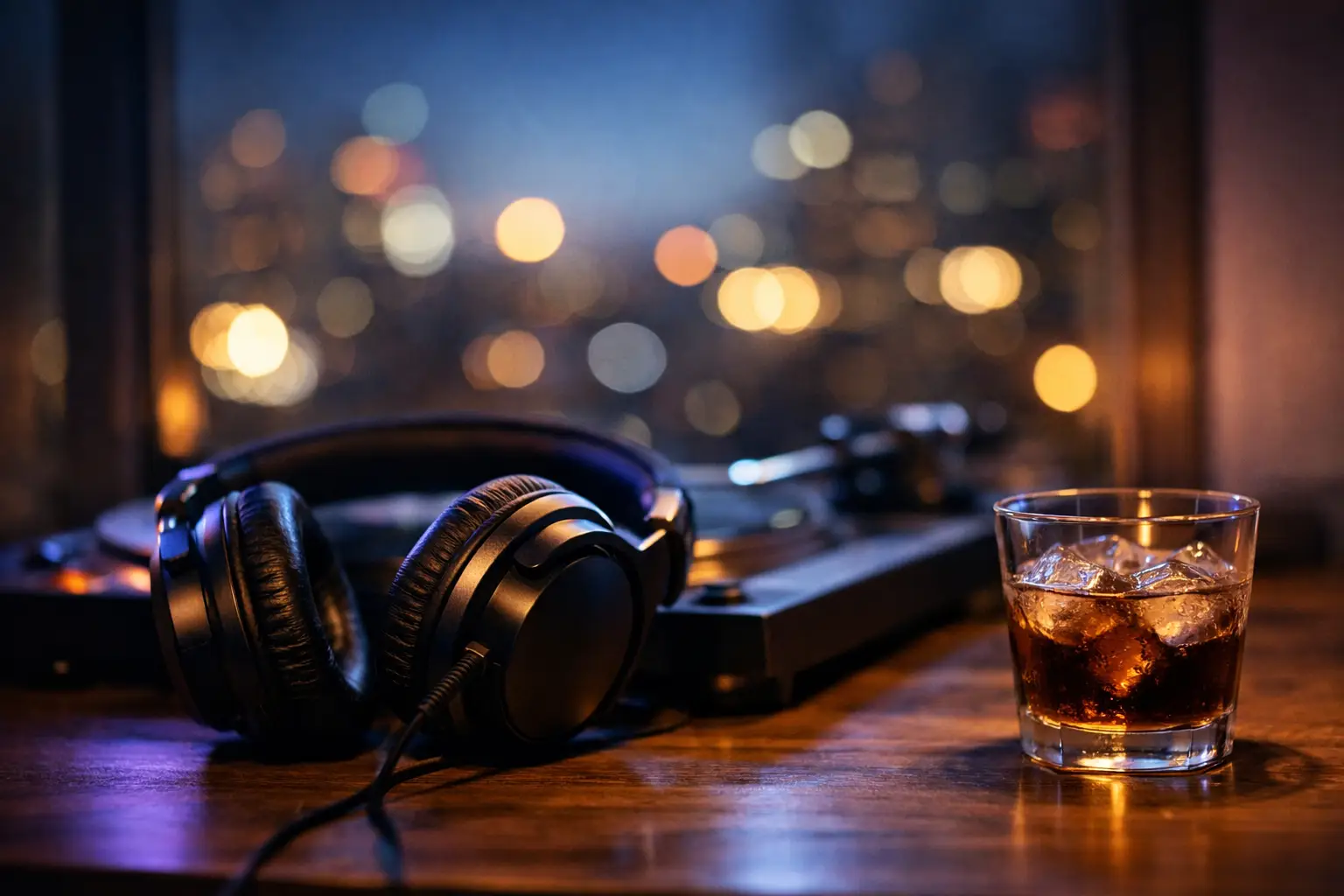
Some songs only make sense after midnight.
Late night music lives in that hour when the room is quiet, your phone is face down, and whatever you kept moving past all day finally catches up. It does not ask for attention the way daytime music often does. It waits. Then it finds the exact part of you that is still awake.
That is why the same track can feel casual at 2 p.m. and devastating at 1:17 a.m. Nothing in the song changed. You did. The night stripped the noise off everything else.
What late night music really does
People talk about music as background, but late at night, it rarely stays there. It moves closer. A song becomes the room, the memory, the version of yourself you only hear when no one else is around.
That shift is part atmosphere, part honesty. Night changes how we listen. There are fewer interruptions. Less performance. Less pressure to be productive or upbeat. You are not looking for something to fill space. You are looking for something that understands it.
That is why late night music tends to feel slower even when it is not. More intimate even when the vocals are distant. More revealing even when the lyrics barely say anything. At that hour, texture matters as much as melody. A low synth, a fading piano note, a voice that sounds half-confession and half-dream – those details land harder when the world goes dim.
Why the night changes your ears
The night has its own emotional acoustics. During the day, music competes with movement. Traffic. Notifications. Conversations. The constant low-grade demand to stay outward. At night, that pressure drops. You start hearing with more of yourself.
This is not always peaceful. Sometimes night opens a door you were trying not to touch. That is part of why certain records become sacred after dark. They do not distract you from what you feel. They sit beside it.
And that is the trade-off. Late night listening can be healing, but it can also intensify things. The right song can calm your thoughts. The wrong one can send you deeper into them. It depends on the night, your state, and what you came to the music for. Escape and reflection are not the same need.
Not every quiet song belongs to the night
There is a difference between soft music and late night music. Soft music can still feel decorative. Late night music carries weight. It has atmosphere, but also tension. Even when it is minimal, there is something unresolved in it.
That unresolved quality matters. Night is rarely about clean answers. It is about suspended feeling. The text you did not send. The version of the story you keep replaying. The peace that almost arrived. Songs built for that space do not rush to resolve the emotion. They let it breathe.
A bright acoustic track might be beautiful at sunset and feel completely wrong after midnight. Meanwhile, a sparse, haunted record with almost no percussion can feel like the only honest thing in the room. Mood is not a genre. It is a form of accuracy.
The sound of late night music
There is no single blueprint, which is part of the appeal. Late night music can come from ambient, alternative R&B, minimalist electronic, slow-burning hip-hop, indie soul, cinematic instrumentals, or something harder to name. What connects it is not style. It is emotional temperature.
Usually, the sound leaves space. Space in the mix. Space in the arrangement. Space for your own memory to enter. Vocals often feel close, even when they are layered in reverb. Drums, if they are there, tend to pulse rather than push. Melodies do not chase you. They linger.
The best late-night records understand restraint. They know when not to fill the silence. They trust repetition. They let a single phrase do more than a crowded verse ever could. That kind of music does not try to prove itself fast. It unfolds, and if you are in the right state, it stays.
Why repetition works after dark
At night, repetition can feel less like sameness and more like ritual. A looped chord progression, a line that returns three times, a beat that barely shifts – these things can steady you. They give your thoughts something soft to lean on.
But repetition only works when the feeling is real. If the song is empty, the loop exposes it. If the song has depth, repetition becomes hypnosis. The difference is subtle, but listeners who really live in music hear it immediately.
Listening as a place, not a task
The best late-night listening is not passive, even when it feels effortless. You are not just consuming tracks. You are entering a mood on purpose.
That is why playlists matter, but only when they are built with intention. A random stack of slow songs is not the same thing as a sequence that carries you somewhere. Flow matters. The transition from one emotional shade to the next matters. Too abrupt, and the feeling breaks. Too flat, and the whole thing disappears into wallpaper.
This is where curation becomes more than convenience. It becomes care. A well-made late night set understands pacing the way a film understands light. It knows when to hold tension and when to release it. It gives you enough continuity to stay inside the world, but enough movement to keep the world alive.
That is also why some listeners return to the same songs for years. Not because they need novelty less, but because certain tracks become coordinates. They take you back to a specific interior place. A city drive at 12:40 a.m. A winter apartment window. A silence after a hard conversation. Once a song gets attached to a moment like that, it stops being just music. It becomes access.
When late night music becomes part of your identity
There is a point where your after-hours rotation starts saying something about you that daytime habits never could. Not in a performative way. In a real one.
The music you choose late at night tends to expose your unedited taste. You are not picking songs for a party, a gym session, or the mood of the group. You are choosing what feels true when no one is watching. That kind of listening builds a deeper bond. It is less about trend and more about recognition.
For some people, late night music becomes emotional maintenance. A way to come down. A way to process. A way to stay with themselves long enough to hear what is underneath the noise. For others, it is pure atmosphere – the soundtrack to night drives, dim lights, and the kind of solitude that feels chosen, not lonely.
Most people move between those two poles. Some nights you want release. Some nights you want to stay in the feeling a little longer. The music does not need to fix either one. It only needs to be honest enough to hold it.
How to find the right late night music for your mood
The easiest mistake is searching too broadly. If you look for songs for nighttime, you will get a little of everything and not much that lands. It helps to be more specific with yourself. Are you restless or heavy? Numb or reflective? Do you want something warm, distant, romantic, cold, blurred, or almost spiritual?
That emotional detail changes everything. A song that works for a lonely night may fail completely on a peaceful one. Something cinematic might feel perfect on a drive and too dramatic in headphones. A whisper-soft track can feel intimate one night and lifeless the next. It depends on how much presence you want from the music.
Start with feeling, not genre. Then listen for what stays with you after the song ends. Usually, that is the signal. Not the loudest track. Not the most obvious one. The one that leaves an atmosphere behind.
This is part of what DRVVYN Sound understands so well – that people are often not searching for a song first. They are searching for a state. The right record does not interrupt that state. It sharpens it.
Late night music is where songs tell the truth
Daytime listening has its place. So does loud music, fast music, careless music. But night asks different questions. It asks what still matters when everything else quiets down. It asks what sound feels like when it is no longer competing with the day.
That is why late night music lasts. It becomes attached to the versions of us that are hardest to fake. Tired, open, reflective, undone, calm, wanting more, wanting less. The songs that meet us there do not just sound good. They feel accurate.
And when you find music that feels accurate at night, keep it close. You are not just building a playlist. You are building a place to return to.