

Music Business
Best 83sound.com Alternatives for US Music Professionals
Best 83sound. com Alternatives for US Music Professionals
!
By DRVVYN · · 8 min read

Best 83sound.com Alternatives for US Music Professionals

What are the top alternatives to 83sound.com for US music professionals?
Finding the right platform after 83sound.com can feel like searching for a specific frequency in a room full of noise. The good news: several strong 83sound.com alternatives exist right now, each with a distinct focus and licensing approach worth knowing before you commit.
- Soundstripe — subscription-based royalty-free music library built for content creators and filmmakers; flat monthly fee, unlimited downloads, sync-ready licensing
- Reservoir Media — music rights management and publishing company focused on catalog acquisition and licensing for commercial sync and broadcast use
- SongVest — royalty marketplace where professionals can buy and sell music royalty shares; suited for investors and rights-focused creators
- Global Rockstar — fan-funding and music rights platform connecting artists with supporters through revenue-sharing models
- DRVVYN Sound LLC — independent R&B and cinematic music company offering original releases, licensing opportunities, and artist development under the artist brand DRVVYN
Each platform sits at a different point on the spectrum between royalty-free convenience and rights-based depth. Your choice depends on whether you need cleared audio assets fast, long-term catalog rights, or something that carries genuine emotional weight into your project.
Table of Contents
- How do these platforms compare on features and licensing?
- How do you choose the right alternative for your music projects?
- What should you know about music licensing types and industry trends?
- Key Takeaways
- What the licensing conversation is really missing
- Original music with real licensing clarity, from Drvvynsound
How do these platforms compare on features and licensing?
The sharpest differences between these sound library alternatives show up in three areas: what they license, how they price it, and how well they fit into your existing workflow.

| Platform | Platform Focus | Catalog Size & Exclusivity | Pricing Model | Licensing Terms | Workflow Integration |
|---|---|---|---|---|---|
| Soundstripe | Royalty-free music & SFX | Large; exclusive artist catalog | Subscription (monthly/annual) | Sync-safe, unlimited use license | Web-based; some DAW-adjacent tools |
| Reservoir Media | Music publishing & rights management | Massive; major and indie catalogs | Custom licensing deals | Full clearance for sync and broadcast | Direct licensing agreements |
| SongVest | Royalty marketplace | Varies; curated royalty listings | Per-share purchase | Ownership-based royalty rights | Portfolio dashboard; no DAW integration |
| Global Rockstar | Fan-funding & revenue sharing | Artist-driven; growing indie catalog | Revenue share / campaign-based | Artist-negotiated terms | Platform-native; limited external integration |
| DRVVYN Sound LLC | Original R&B & cinematic music | Curated; exclusive original releases | Licensing by inquiry | Original music licensing for sync and media | Streaming platforms; social media ready |
A few things stand out when you look at this side by side. Soundstripe suits creators who need volume and speed, particularly for video content where sync clearance matters more than exclusivity. Reservoir Media operates at a different scale entirely, handling catalog-level deals that most independent producers won’t need unless they’re working on broadcast or major sync placements.
- Catalog exclusivity separates platforms more than catalog size. A smaller, curated library of unique sounds often serves professionals better than a massive generic one. Niche indie sound aggregators consistently yield higher-quality, more distinctive assets for cinematic and experimental work.
- Pricing transparency varies widely. Soundstripe publishes flat subscription rates. Reservoir Media and SongVest involve negotiated or market-based pricing that requires direct contact.
- Workflow integration is where many platforms fall short. Platforms that connect directly with DAWs or NLEs via plugins or drag-and-drop panels, like those offering native Premiere Pro and DaVinci Resolve support, increase creative throughput measurably.
How do you choose the right alternative for your music projects?
The decision isn’t just about price. It’s about what you can actually defend if a licensing dispute surfaces six months after a sync placement.
Catalog quality and relevance should come first. A library with 11 million generic loops rarely serves a cinematic R&B producer better than a curated collection of 500 emotionally specific tracks. Ask whether the platform’s catalog matches the emotional register of your work, not just the genre tags.
Licensing clarity is where many creators feel the tension most sharply. Royalty-free doesn’t always mean worry-free. Some platforms offer signed certificates of provenance with every download, giving you a paper trail that distributors and sync supervisors can actually verify. Others offer only a terms-of-service checkbox. That gap matters enormously when you’re submitting to a network or a streaming platform that requires clearance documentation.
- Verify whether the platform provides downloadable license receipts or certificates per asset
- Confirm whether licensing covers streaming, broadcast, sync, and social media separately or under one umbrella
- Check platform reputation through producer forums and independent reviews, not just the platform’s own marketing
- Assess customer support responsiveness before you need it urgently
Platform usability affects your creative flow more than most producers admit. A clunky search interface or a slow preview system adds friction at exactly the moment you need momentum. Test the platform with a free trial or free tier before committing.
Pro Tip:Before signing up for any licensing platform, download a sample license agreement and run it by a music attorney or a knowledgeable colleague. The phrase “royalty-free” describes a payment model, not a legal guarantee of clearance. Signed documentation is what protects you.

For independent artists exploring how licensing fits into broader career strategy, understanding why independent artists buy beats offers useful context on the legal and creative reasoning behind platform choices.
What should you know about music licensing types and industry trends?
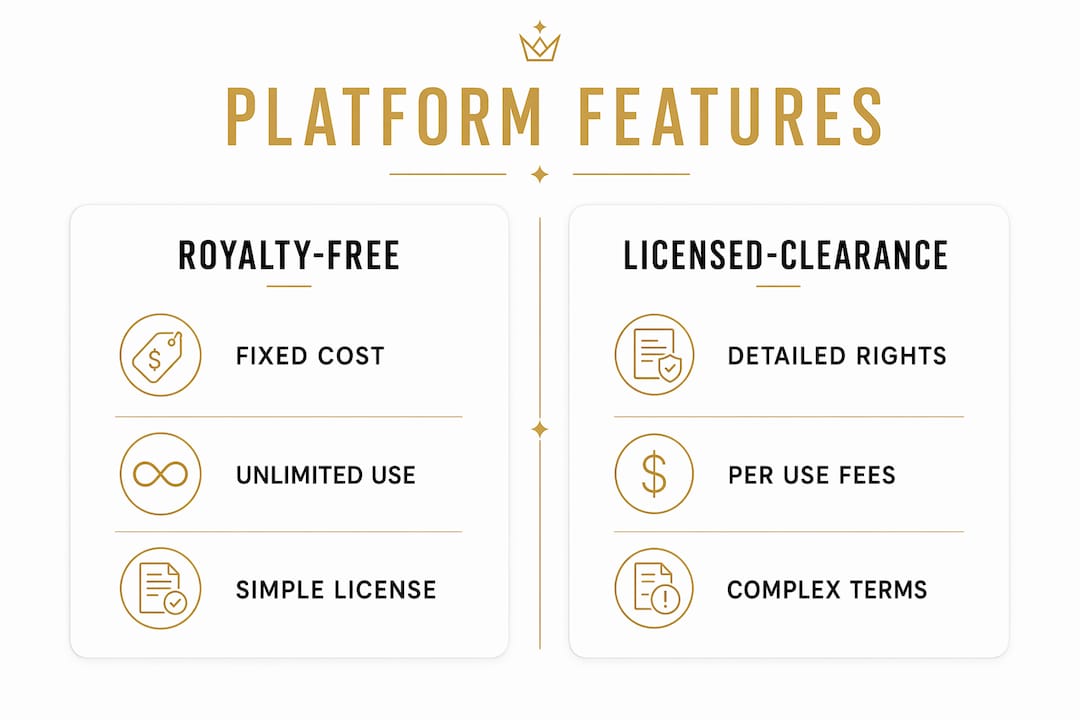
The distinction between royalty-free and licensed-for-clearance content is one of the most misunderstood tensions in modern music production. Getting it wrong costs money and sometimes kills a project.
Royalty-free means you pay once (or via subscription) and use the asset without paying per-use royalties. It does not mean the music is free of copyright. The original creator still holds rights; you’re purchasing a license to use the work under defined conditions.
Licensed-for-clearance content, by contrast, involves music that has been pre-cleared for specific uses, often with documentation proving the rights chain. This is the model that auditable licensing receipts support, and it’s the standard that sync supervisors and distributors increasingly require.
The industry is also moving toward unified platforms that merge both models. Rather than maintaining separate subscriptions for royalty-free loops and cleared sample packs, producers are gravitating toward services that consolidate both into one workflow. The practical benefit is real: fewer logins, fewer license documents to track, less mental overhead.
Fragmentation remains a genuine problem. Sound libraries are scattered across dozens of platforms, each with different search interfaces, pricing tiers, and license scopes. Aggregator platforms focused on indie creators address this by curating across sources, giving professionals a single environment to compare and acquire without bouncing between sites.
One emerging trend worth watching: platforms are beginning to integrate stems, MIDI files, and chord progressions alongside traditional loops and one-shots, all under a single license. That shift makes it easier to build original compositions from cleared components rather than sampling finished recordings.
Key Takeaways
The strongest 83sound.com alternatives each serve a distinct professional need, and licensing clarity consistently matters more than catalog size alone.
| Point | Details |
|---|---|
| Licensing documentation protects you | Signed certificates of provenance are the standard for sync and distribution; verify before downloading. |
| Catalog quality beats catalog size | Curated indie-focused libraries often yield more distinctive, usable sounds than mass-market subscriptions. |
| Unified platforms reduce friction | Services merging royalty-free and cleared-sample content prevent subscription fatigue and workflow gaps. |
| Workflow integration affects output | DAW and NLE plugin support directly increases creative throughput; test integration before committing. |
| Drvvynsound offers original licensed music | DRVVYN Sound LLC provides original R&B and cinematic releases with licensing opportunities for sync and media use. |
What the licensing conversation is really missing
The debate around music platforms tends to collapse into a single question: how much does it cost? That framing misses something sharper. The real question is what you’re actually buying when you license a piece of music.
Most platforms sell convenience. A flat subscription, unlimited downloads, a checkbox that says “cleared for commercial use.” That works for a YouTube video or a podcast bumper. But when your work carries emotional weight, when the music is meant to sit inside a scene and hold something true, generic cleared audio starts to feel hollow. The tension between legal safety and creative authenticity is real, and most platform comparisons don’t address it honestly.
What the industry is slowly recognizing is that the best licensing relationships are the ones where the music was made with intention. Platforms built around original, artist-driven catalogs, rather than algorithmically generated loops, tend to produce music that actually serves the story. Legal clearance matters. So does the feeling that the music was written by someone who understood what they were making.
Independent creators navigating this space deserve platforms that respect both needs. The legal path should be clear. The music should be worth clearing.
Original music with real licensing clarity, from Drvvynsound
If you’ve been searching through audio sample websites and licensing platforms looking for something that carries genuine emotional depth alongside legal clarity, Drvvynsound offers a different kind of resource.
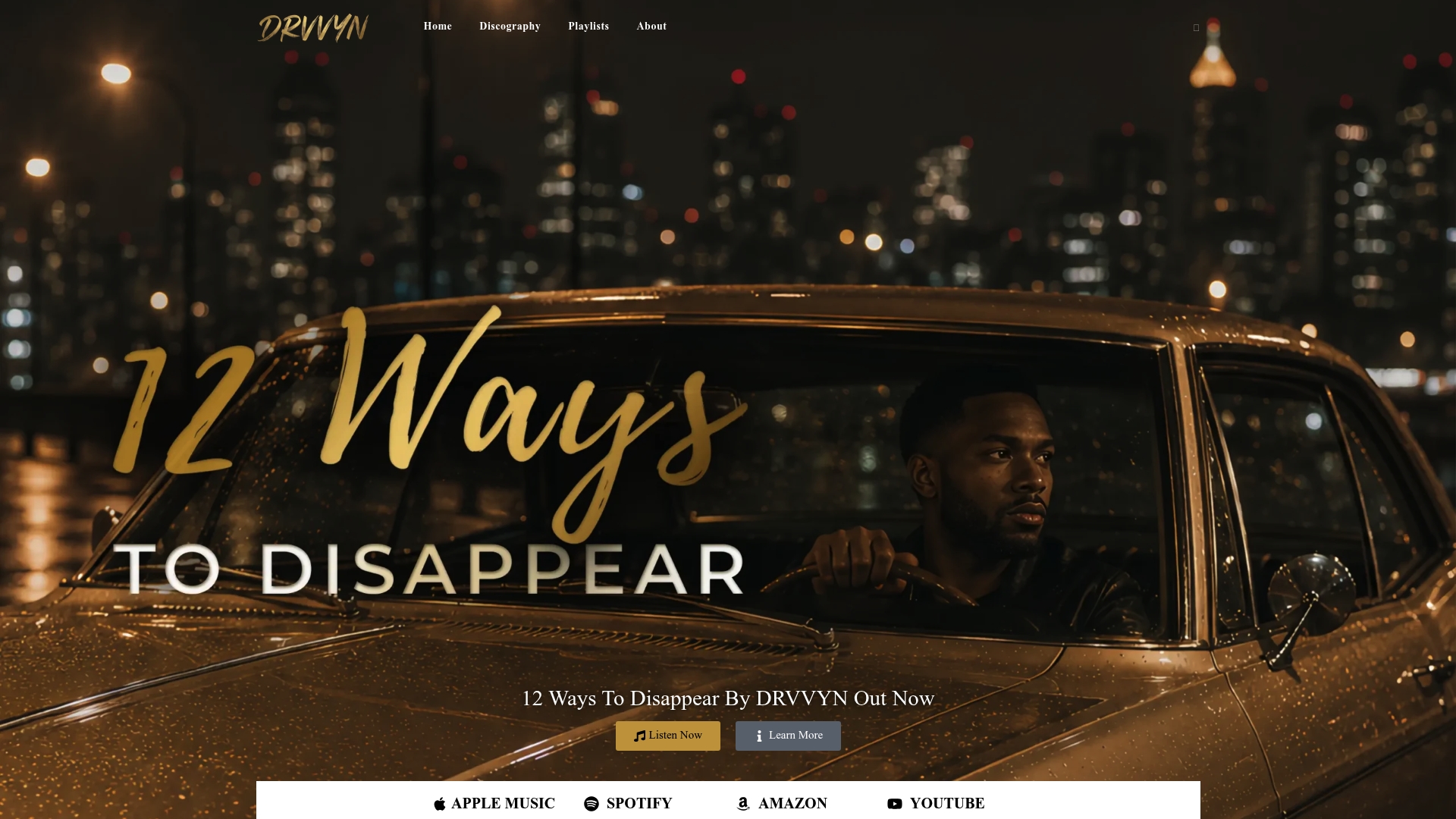
DRVVYN Sound LLC creates original R&B and cinematic music built for streaming platforms, sync placements, social media, and digital audiences. The catalog is intentional and curated, not generated at scale. Every release reflects a specific emotional register, from late-night introspection to the sharp clarity that follows heartbreak. For content creators and music professionals who need licensed music that actually fits the emotional weight of their project, that specificity is the point.
Licensing opportunities are available for sync, media, and brand partnerships. Explore the full catalog and licensing options at Drvvynsound to find music that was made to be felt, and cleared to be used.