
Artist Strategy
Playlists for Romantic Night Walks That Fit Your Sound
Playlists for romantic night walks can reveal your artist world. Learn to curate with intent, present your music well, and build a closer fan connection.
By DRVVYN · · 6 min read
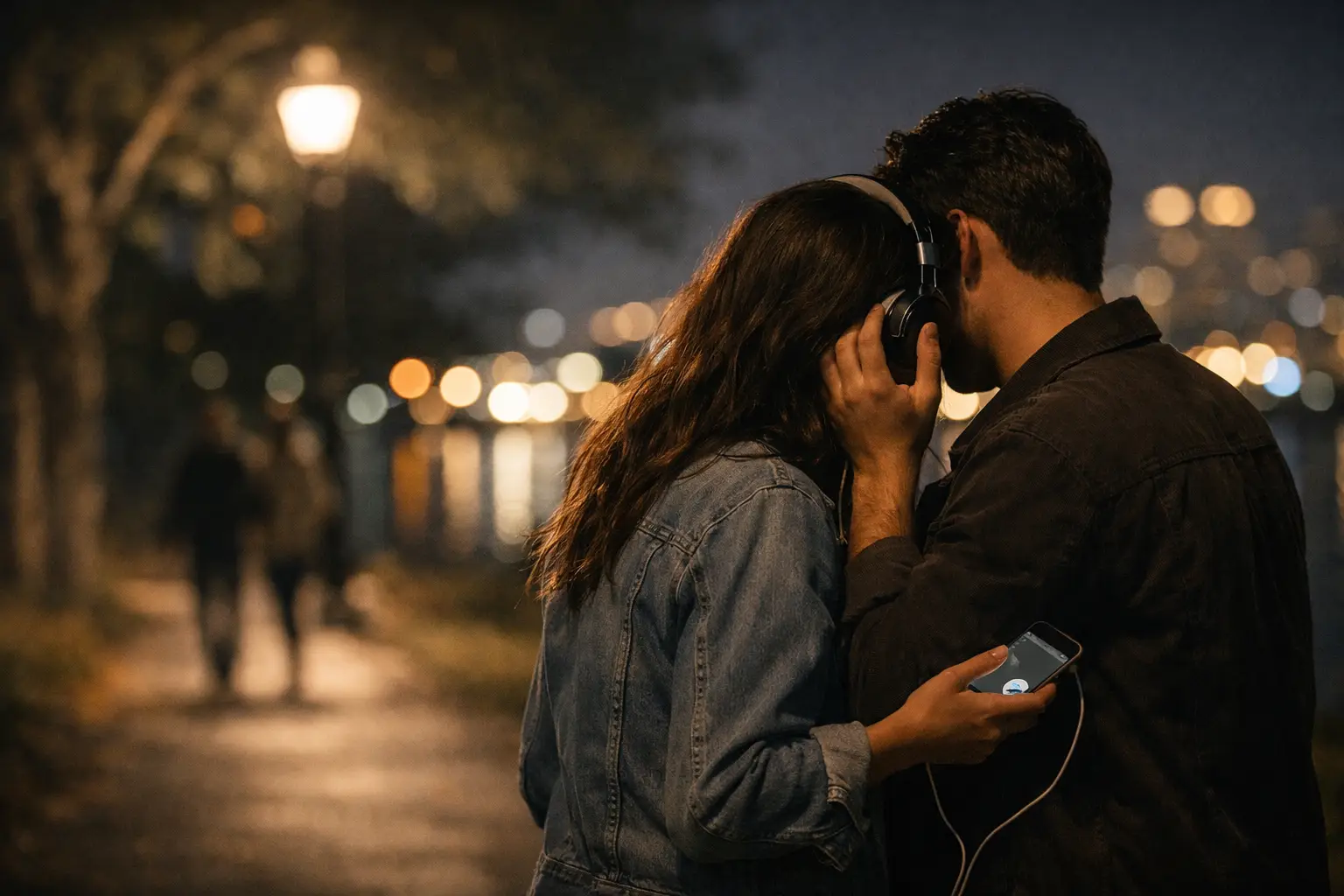
A good night-walk playlist does not begin with a genre. It begins with a scene.
Streetlights on wet pavement. A train passing somewhere out of sight. Two people walking slowly because neither is ready to go home. That feeling has a tempo, a temperature, and a point of view.
For independent artists, playlists for romantic night walks can be more than a collection of songs. Curated with care, they can become a small, believable entry point into your world. Not a pitch. Not a content trick. A place where someone hears what sits beside your music and understands the atmosphere you are building.
Why mood playlists matter to an artist
Listeners often meet an artist through a moment before they meet them through a biography. They need music for a drive, a late shift, a quiet apartment, or a walk after a difficult conversation. A well-made playlist gives your music a context that a single release page cannot always create on its own.
The tradeoff is simple: a playlist should not exist just because mood playlists are easy to post. If it feels interchangeable, it will be. Anyone can place familiar songs under a title about midnight streets. The useful question is more specific: what does this playlist reveal about your artistic taste that your audience would not otherwise see?
For DRVVYN Sound, that could mean a sequence that moves through distance, tension, and closeness without needing to explain each turn. For another artist, it may be guitar tones that feel like the last miles home, or songs with drum patterns that leave room for conversation. The mood is only the frame. Your choices are the statement.
Start with one precise scene
“Romantic” is broad. It can mean new attraction, old history, mutual silence, or the moment after goodbye. “Night walk” is equally open. A city sidewalk has a different pulse than a beach road or a neighborhood where every porch light is off.
Give the playlist a scene before you choose a song. Write one or two private sentences as a brief. For example: two people walk through a nearly empty part of town after a show, speaking carefully because the night might change something. That is enough direction to make better decisions.
From there, decide what the playlist should do. Should it make the listener feel held in a suspended moment? Should it build slowly toward warmth? Or should it keep a little distance between every track? There is no correct answer, but there should be an answer.
A useful playlist has edges. If every song is soft, slow, and dreamy, the result can blur into background noise. A little contrast gives the walk a shape: a track with movement after a quieter opening, a rough vocal after polished production, or a brief lift before the final descent.
Choose songs by function, not just favorites
Personal taste belongs in the playlist, but sequencing asks for more than personal favorites. Each track needs a role.
The opening track should feel like stepping outside. It sets the air around the listener. The middle needs motion, even if the music remains restrained. The final songs should leave an afterimage, not simply run out of energy.
Try listening without looking at the screen. Notice where your attention drifts. Notice when a transition feels too sharp or when two songs repeat the same emotional idea. Those moments are not failures. They are the edit showing itself.
Keep the playlist focused. Twenty-five to forty songs is often enough for a complete walk, a train ride, or a late-night return home. A much longer list can work if it is meant to be an archive, but it asks less of the curator. Restraint is part of the experience.
Where your own song belongs
Adding your music to a playlist is natural when it earns its place. The problem is not self-inclusion. The problem is making the playlist feel built around an obligation.
Put your track where its energy actually fits. If it needs the listener to arrive emotionally first, do not force it into the opening position. If its opening seconds create an immediate world, it may be the right first step. Listen to the sequence as if the song belonged to someone else.
One original track can be enough. Two may work if they serve clearly different moments. More than that depends on the purpose. If the playlist is a release companion, the balance can lean closer to your catalog. If it is intended as a first introduction to new listeners, make trust the priority. The broader the curation, the more honest your placement needs to be.
This approach also gives you a useful test before a release. If your new song cannot sit comfortably beside the music that shaped its mood, ask why. It may be a sequencing issue. It may mean the artwork, short-form visuals, and copy are telling a different story than the record. Or it may simply show that the song belongs to a more specific scene than you first assumed.
Present playlists for romantic night walks with care
The title should be searchable, but it should also sound like a person made it. “Romantic Night Walks” is clear. Adding a small detail can make it more ownable: “Romantic Night Walks After the Last Train” or “Romantic Night Walks Through Empty Streets.”
Keep the visual language consistent with the music. Avoid crowded graphics and generic neon if the playlist is intimate and spare. A single photo, a grainy street scene, or restrained type can hold more feeling than an overworked cover. The cover does not need to explain the playlist. It only needs to invite the first listen.
Your description can stay brief. One line about the setting is enough, followed by a quiet note that your song appears in the sequence if relevant. Do not turn the description into a press release. The listener came for the feeling first.
When you share it, give people a reason to press play in that moment. A short clip of a night street, a still image from the studio after dark, or a line from a lyric can work. The post should feel like a doorway, not a demand for attention.
Let the playlist teach you something
Curating is also listening research, though it should not become a spreadsheet exercise. Pay attention to the details that keep returning: certain vocal textures, the amount of space around a snare, lyrics that leave something unsaid, songs that move without rushing.
These patterns can clarify your next release campaign. They can guide visual references, show names, merchandise ideas, and the kind of language that belongs around a song. More importantly, they help you separate what you admire from what is genuinely part of your own artistic identity.
If you share a playlist through your artist site, it can also give fans a reason to return somewhere you control rather than relying only on a social post that disappears down the feed. This is part of the thinking behind the upcoming Artist DRVVYN Engine: fewer disconnected places for the work, the audience, and the story to live.
Still, do not overbuild a simple idea. A playlist does not need a campaign deck to be valuable. Sometimes it needs a title, a cover, a careful sequence, and enough confidence to leave space around it.
The best romantic night-walk playlist feels less like a recommendation engine and more like an honest answer to a quiet question: what would you play if someone you cared about was walking beside you, and neither of you wanted to break the spell?