

Listening & Culture
How to Curate Late Night Playlists
Learn how to curate late night playlists that feel immersive, intimate, and true to the hour, with pacing, mood, and emotional flow.
By DRVVYN · · 7 min read
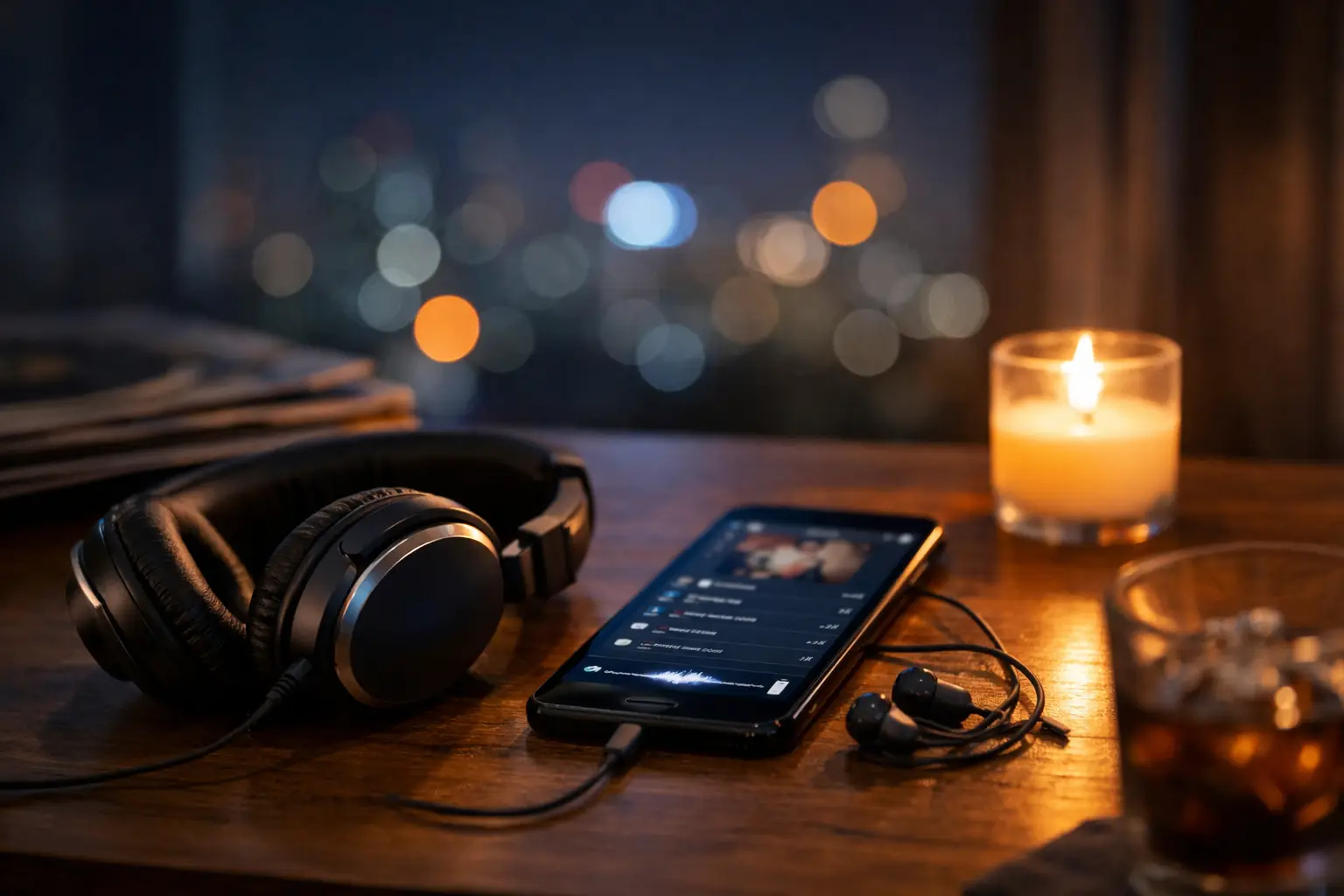
Some playlists keep you company. Others change the room.
That difference is the real starting point for how to curate late night playlists. You are not just stacking songs that sound good after dark. You are shaping a feeling that lands somewhere between solitude, memory, and motion. Late-night listening asks for more care than daytime background music. It notices when a song arrives too loud, says too much, or breaks the spell.
How to curate late night playlists without killing the mood
The first mistake is treating late night like a genre. It is not. Late night can feel tender, dissociated, romantic, heavy, numb, cinematic, or quietly hopeful. A playlist built for 12:30 a.m. on an empty drive should not feel the same as one made for headphones in bed with the lights off.
Start with the emotional temperature, not the category. Ask what kind of night this is. Is it reflective? Is it restless? Is it intimate? Is it the kind of hour where you want music to hold you still, or keep you from drifting too far into your own thoughts?
That answer will shape everything that follows. Song choice matters, but emotional direction matters more.
Pick one emotional lane and stay honest about it
The strongest late-night playlists usually do one thing well. They do not try to cover every shade of feeling in one sequence. If you force longing, seduction, grief, and euphoria into the same space, the playlist starts to feel like a feed instead of a world.
Choose a lane with enough room inside it. “Sad” is too broad. “Quiet after an argument” is specific. “City lights and no destination” gives you something to hear against. “Wanting to text them, not texting them” already has tension built in.
Specificity helps you avoid filler. It also makes the playlist feel personal, even if someone else is hearing their own story inside it.
Build around a scene, not just a sound
Think visually. Late-night music is often tied to environment. Streetlights through a windshield. Apartment silence. Rain against glass. The walk home after something ended. If you can see the scene, you can hear what belongs in it.
This does not mean every track has to be ambient or slow. It means each one should reinforce the atmosphere. A song with more movement can still fit if it carries the same emotional light.
Let the first three songs do the heavy lifting
People decide quickly whether a playlist understands them. The opening matters.
Your first song should set the air. Not the peak, not the twist, just the temperature. It needs enough character to establish mood, but not so much force that it overwhelms the listener before they settle in.
The second and third tracks deepen the space. This is where trust is built. If those songs feel too random, too obvious, or too eager to impress, the playlist loses its pull. Late-night listening wants a kind of restraint. It wants curation that feels aware, not performative.
A good test is simple. If the first three songs make you stop thinking about the playlist itself and slip into the feeling, you are close.
Pace matters more than popularity
One of the quiet skills in how to curate late night playlists is pacing. You can have beautiful songs and still ruin the experience by sequencing them poorly.
Late-night playlists need room to breathe. That usually means watching transitions in energy, not just genre. A hushed R&B track can sit well beside a dreamier electronic song if the pulse feels natural. A beloved classic can break the mood if its vocal presence is too commanding too soon.
This is where a lot of playlists go wrong. They prioritize recognizable tracks over emotional continuity. Familiarity is not the enemy, but it should not be the main event. If a song pulls the listener out of the moment and into its own cultural weight, it might belong somewhere else.
Think in arcs, not piles
A playlist should move, even if the movement is subtle. Maybe it starts detached, grows warmer, then fades into something blurred and unresolved. Maybe it begins with ache and slowly softens into release. Maybe it never resolves at all, because some nights do not.
That arc gives the playlist a reason to exist as a whole. Without it, you just have good songs nearby each other.
You do not need dramatic shifts. In fact, too much contrast often breaks the spell. But some progression matters. The listener should feel guided, not stalled.
Use contrast carefully
Late night can hold contradiction. A little coldness can make a warm song hit harder. A near-silent track can reset the ear after something dense. But contrast should feel intentional, not careless.
When you add a song that changes the texture, ask what it is doing there. Is it opening the room wider? Is it creating tension before relief? Is it giving the listener a moment to exhale? If the answer is just that you like the song, save it for another playlist.
This is the hardest part of curation. Taste matters, but discipline matters more.
How to curate late night playlists that feel immersive
Immersion comes from consistency across details people may not consciously notice. Vocal tone. Reverb. Tempo. Lyrical distance. Even the amount of space in the mix can shape whether a track feels close to the skin or too exposed for the hour.
Try listening for texture as much as melody. Some songs belong at night because they feel dimly lit. Others feel fluorescent, even when the lyrics are sad. That difference matters.
It also helps to avoid overcrowding the playlist. A tighter sequence often feels more immersive than a long one with weak spots. Twenty to thirty songs can be enough if each track earns its place. Past that, the mood can start to blur unless the arc is strong.
Leave room for instrumentals, interludes, or slower turns
Not every song has to explain itself. A late-night playlist benefits from moments that simply hold the atmosphere in place. Instrumentals, voice notes, ambient transitions, or songs with minimal lyrics can keep the emotional thread intact without asking too much of the listener.
This is especially true if the playlist leans heavy. Too many lyrically dense tracks in a row can make the experience feel crowded. Space gives emotion somewhere to land.
Edit harder than you think you need to
Most good playlists are too long before they become clear.
After your first pass, leave it alone for a night or two. Then come back when you are actually in the mood the playlist is meant for. Play it straight through. Notice where your attention drifts. Notice which transition feels too sharp, which chorus arrives too brightly, which song says the same thing as another but with less grace.
Cut the song that almost fits. Cut the one that works only because of nostalgia. Cut the track that belongs to your taste but not to this atmosphere.
Editing is where the playlist becomes itself.
Consider where the listener is hearing it
A playlist for headphones can be more intimate, more detailed, more fragile. A playlist for late drives needs a little more motion. A playlist meant for background listening in a dim room should not demand constant attention, but it still needs shape.
This is where context changes the choices. A nearly whispered vocal can feel perfect alone at 1 a.m. and disappear completely in a car. A low, rumbling track might feel cinematic through speakers and heavy-handed in earbuds.
It depends on use, and good curation respects that.
Make it personal, but not closed off
The best late-night playlists feel specific enough to be real and open enough to let someone else step inside. That balance is what gives them replay value.
So yes, follow your instinct. Trust the songs that feel like they belong to your hour. But leave some room for mystery. Do not over-explain the emotion with every track. Let a few songs suggest rather than state. Let the listener meet you halfway.
That is usually where the deeper connection happens.
If you are building with intention, the playlist stops feeling like content. It starts feeling like a place people return to when the room gets quiet and they want something that understands the silence.