

Creative Process
Alternative R&B Production Style: A Producer’s Guide
Explore the unique alternative R&B production style. Discover techniques that prioritize emotion over polish and redefine sound in music.
By DRVVYN · · 10 min read

Alternative R&B production style is defined by atmospheric soundscapes, jazz-influenced harmonic complexity, and experimental textures that pull the music away from mainstream R&B’s polished surface. Where traditional R&B chases a clean, radio-ready finish, the alternative approach lets tension breathe. It frames the vocal as emotional narration, not technical showcase. Producers working in this space reach for jazz-derived chords, ambient guitar, lo-fi processing, and non-traditional song structures to build something that feels more like a feeling than a format. The genre has grown sharply in recent years, with Dark R&B and related substyles pulling listeners who want music that sits closer to the bone.
What distinguishes alternative R&B production from mainstream R&B?
The clearest difference is intent. Mainstream R&B production targets groove, polish, and pop accessibility. Alternative R&B production targets atmosphere, emotional tension, and harmonic depth. The two approaches share a foundation in rhythm and vocal melody, but they diverge sharply in how they treat every element around that foundation.
Mainstream R&B typically uses tight, quantized drums, bright chord voicings, and vocal production that removes every imperfection. Alternative R&B does the opposite. Jazz-derived chords like maj7 and sus2 replace standard triads, creating harmonic ambiguity that avoids predictable resolution. The chord never quite lands where you expect it to. That suspension is the point.
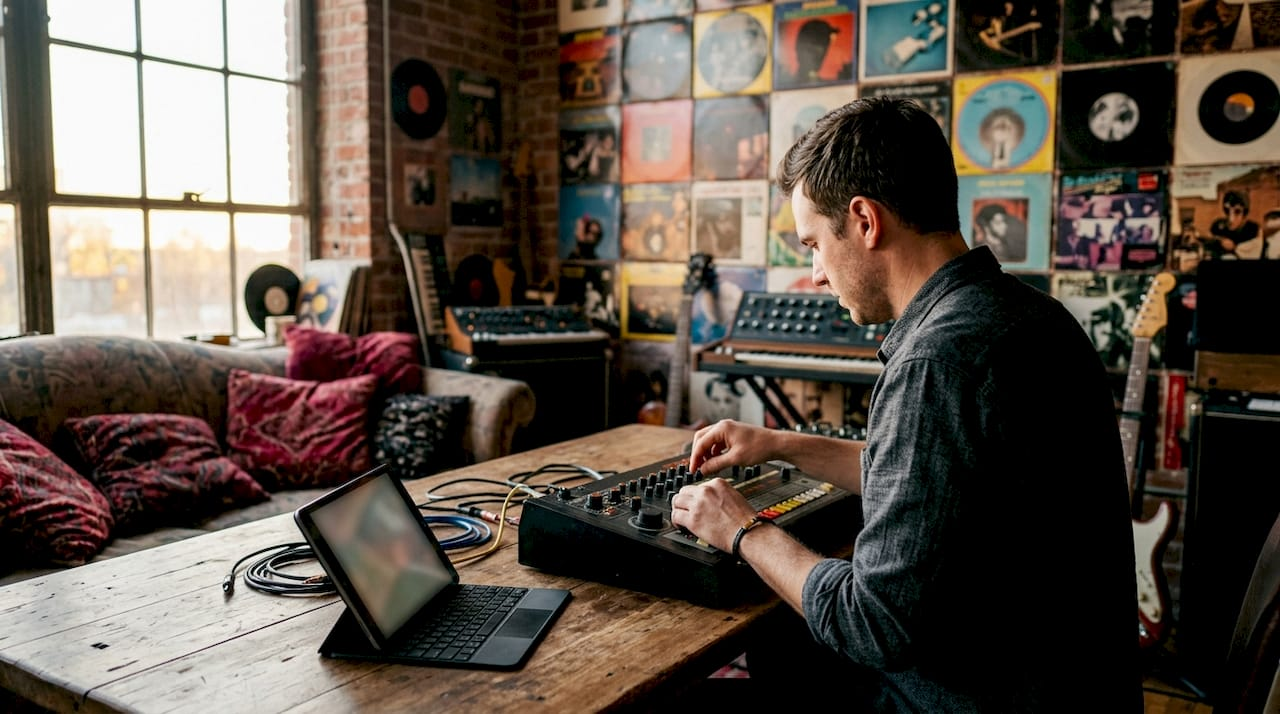
Song structure is another major dividing line. Mainstream R&B follows verse-chorus-verse with reliable precision. Alternative soul production often abandons that formula entirely, moving through through-composed sections or ambient passages that shift mood without a traditional hook. The track builds emotional architecture rather than a repeatable pop structure.
Vocal treatment reflects this philosophy directly. Producers prioritize raw vocal takes over polished perfection, keeping breaths, subtle pitch drifts, and timing nuances that would normally be corrected. Those imperfections carry weight. They make the listener feel like they are hearing something real, not something assembled.
Live instrumentation plays a specific role here. Ambient guitar, upright bass, and real drum performances sit beneath electronic layers, adding warmth that purely digital production cannot replicate. The contrast between organic and synthetic textures creates the genre’s signature richness.
Pro Tip:When you start a new alternative R&B session, build your chord progression first using maj7 or sus2 voicings before you write a single drum pattern. The harmonic mood will shape every production decision that follows.
What production techniques define the alternative R&B sound?
The technical signature of this genre starts with tempo. Alternative R&B typically runs 70–105 BPM, with the lower end of that range favoring spacious, meditative feels. Slower tempos give reverb and delay room to breathe, which is exactly what this style requires.
Reverb and delay are not effects here. They are structural tools. Long reverb tails on vocals and guitars create the sense of physical space, as if the music exists inside a room with soft walls. Chorus effects on guitars and synths add shimmer without brightness. The goal is depth, not clarity.
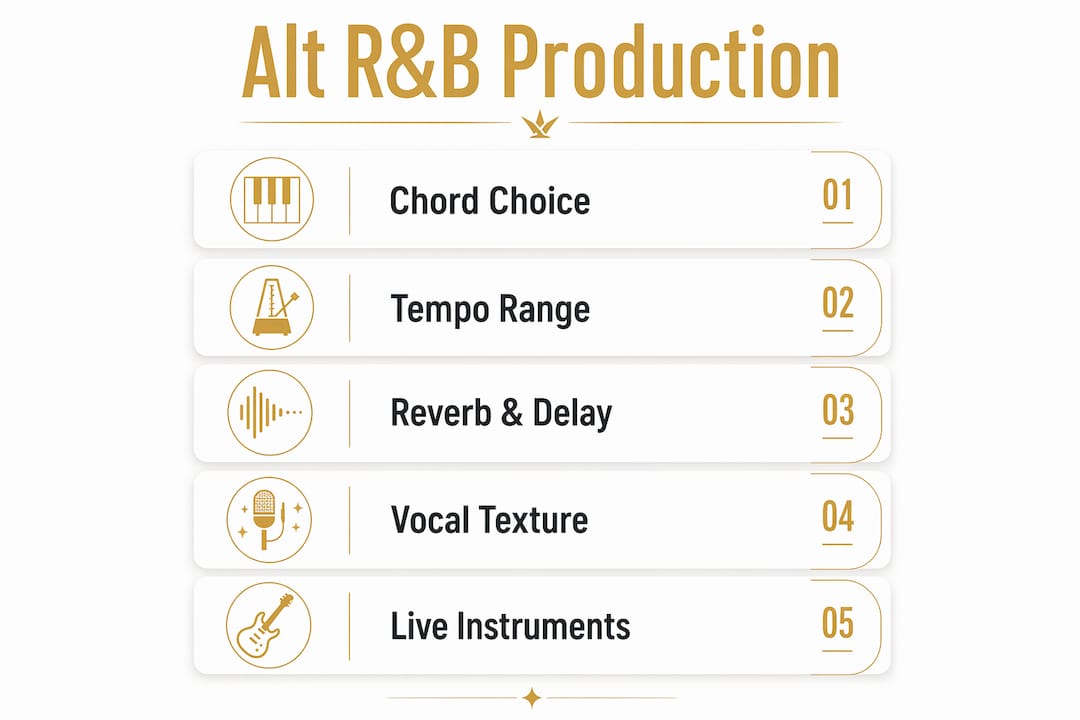
The role of bass in R&B production shifts in the alternative context. Rather than choosing between a live bass and an 808, producers layer both. Contrasting live bass with synthesized 808s creates a low-end texture that neither instrument achieves alone. The live bass adds organic movement and harmonic color. The 808 adds weight and sustain. Together, they give the track a floor that feels both warm and powerful.
Key production techniques used across the genre include:
- Non-quantized grooves: Drum and percussion patterns recorded or programmed slightly off the grid to create a human, breathing feel rather than mechanical precision.
- Granular synthesis: Stretching and fragmenting audio samples to create textural elements that sit beneath the main arrangement, adding atmosphere without competing with the vocal.
- Vinyl crackle and tape saturation: Lo-fi processing that adds warmth, age, and emotional weight to otherwise clean digital recordings.
- Extended chord voicings: Maj7, sus2, and Dorian mode progressions that create harmonic ambiguity and avoid predictable resolution.
- Pitch-shifted vocals: Subtle or dramatic pitch manipulation used as a stylistic choice rather than a correction tool.
Jazz-influenced extended chords and modal interplay are the harmonic engine of this sound. Dorian mode, in particular, gives melodies a minor feel with a raised sixth that sounds simultaneously melancholy and open. That quality is hard to achieve with standard minor scales.
Pro Tip:Run your snare or clap through a short reverb, then layer it with a vinyl crackle sample at very low volume. The result adds texture without muddying the mix, giving your drums a tactile, physical quality.
How is vocal production approached differently in alternative R&B?
Vocals in alternative R&B carry the emotional weight of the entire track. Producers treat vocals as emotional narration, building the production around what the voice communicates rather than correcting it to fit a predetermined sound. The voice leads. Everything else follows.
This means the recording process itself changes. Producers capture multiple raw takes and choose the one with the most emotional truth, not the most technical accuracy. A take where the singer’s voice cracks slightly on a high note may be more powerful than a clean version of the same phrase. That tension, that sense of something almost breaking, is exactly what this genre reaches for.
Specific vocal treatments common in alternative R&B include:
- Intentional breath retention: Breaths before phrases are kept in the mix, creating intimacy and the sense of a real person speaking directly to you.
- Pitch drift: Subtle variations in pitch that fall just outside perfect tuning, adding emotional instability that matches the lyrical content.
- Heavy reverb and delay: Long, washy effects that place the voice inside an atmospheric space rather than front and center in a dry mix.
- Falsetto layering: High vocal layers that add fragility and emotional openness above the main melody.
- Lo-fi vocal processing: Subtle distortion, tape saturation, or bitcrushing applied to vocal layers to create texture and distance.
Intentional vocal imperfections add narrative tension that polished mainstream production deliberately removes. The imperfection is the message. When a voice wavers, the listener feels the weight behind the words rather than simply hearing them.
Vocal layering in this genre also serves a structural purpose. Stacked harmonies, whispered doubles, and pitch-shifted shadows build the emotional architecture of the track. The lead vocal sits in a bed of its own reflections, creating the sense of a person surrounded by their own thoughts.
What recent trends are shaping alternative R&B production today?
The genre is moving fast. Dark R&B search interest surged 961% in Q2 2026, driven by mood-based streaming algorithms that surface emotionally specific music to listeners who seek it out. That number reflects a real cultural shift. Listeners want music that matches complex emotional states, not just background sound.
Dark R&B is one substyle within a much broader field. Alternative R&B substyles include Neo-Psychedelic, Electronic, Confessional, Bedroom, and Post-R&B, each with distinct production traits and emotional intentions. Treating them all as the same thing is a mistake that limits your creative range.
Current production trends shaping the future R&B sound include:
- Emotional minimalism: Stripping arrangements down to only what serves the vocal, removing anything that competes with the emotional core of the track.
- Organic and electronic blending: Live guitar, bass, and piano layered with synths, 808s, and digital effects to create warmth inside electronic production.
- Mood-curated playlist targeting: Producers designing tracks specifically for the emotional context of streaming playlists, which now function as the primary discovery channel for niche subgenres.
- Structural restraint: European avant-garde alt R&B favors patience and ambiguity over high-intensity drops, influencing producers globally to resist the urge to resolve tension too quickly.
The Bedroom R&B substyle deserves specific attention. It uses intimate recording environments, close-mic’d vocals, and minimal arrangements to create the sense of music made in private. That intimacy is a production choice, not a budget limitation. It reflects a deliberate philosophy about what music should feel like.
Dark R&B, despite its rapid growth, is a broad label that obscures distinct structural and emotional production styles. Producers who chase the label without understanding the underlying techniques end up making music that sounds like a mood board rather than a genuine artistic statement.
Key Takeaways
Alternative R&B production style builds emotional depth through harmonic ambiguity, atmospheric textures, and intentionally imperfect vocal treatment rather than polished mainstream techniques.
| Point | Details |
|---|---|
| Harmonic language defines the genre | Use maj7, sus2, and Dorian mode chords to create tension and avoid predictable resolution. |
| Vocals lead the production | Capture raw emotional takes and build the arrangement around what the voice communicates. |
| Tempo and space shape the feel | Work in the 70–105 BPM range and use reverb and delay as structural tools, not just effects. |
| Layer organic and electronic elements | Combine live bass with 808s to create low-end texture that neither instrument achieves alone. |
| Substyles require specific intent | Dark R&B, Bedroom, and Neo-Psychedelic each have distinct production traits. Know which one you are making. |
What I’ve learned from building inside this sound
The hardest thing to accept when you start making alternative R&B is that restraint is a skill. Every instinct trained by mainstream production tells you to add more, fill the space, make it bigger. This genre asks you to do the opposite. The silence between notes carries as much weight as the notes themselves.
I’ve found that the most powerful tracks I’ve worked on started with a single chord and a vocal idea, nothing else. The production grew around the emotion in the voice, not the other way around. When you let the vocal tell you what the track needs, you stop forcing the music into a shape it was never meant to take.
The other lesson is about identity. Dark R&B is a useful reference point, but it’s a dangerous destination. If you build your sound around a label, you’ll always be chasing someone else’s definition. The producers who create something genuinely lasting in this space are the ones who know exactly what feeling they are trying to put into the room, and they build every production decision around that feeling. The genre label follows the work. It never leads it.
At Drvvynsound, the approach has always been to let emotional honesty shape the production. That means choosing the vocal take that feels true over the one that sounds clean, and building arrangements that serve the story rather than the format. That philosophy is what this genre is built on.
— DRVVYN
Drvvynsound and the alternative R&B production approach
Drvvynsound was built around the same philosophy this genre demands: emotional honesty over technical perfection, atmosphere over polish, and storytelling over formula.
DRVVYN Essentials brings that philosophy into a practical resource for producers. The collection includes presets, samples, and atmospheric textures built specifically for the alternative R&B space, covering jazz-inflected chord voicings, ambient pads, lo-fi drum textures, and vocal effect chains. Every sound is designed to serve emotional storytelling rather than generic production. Producers looking for a starting point that already speaks this genre’s language can explore the full DRVVYN Essentials collection and find tools that match the depth and intention this style requires.
FAQ
What is alternative R&B production style?
Alternative R&B production style is defined by atmospheric soundscapes, jazz-derived harmonic language, lo-fi textures, and experimental vocal treatment that prioritize emotional depth over mainstream polish. It typically uses tempos between 70–105 BPM with reverb-heavy arrangements and non-traditional song structures.
How does Dark R&B differ from other alternative R&B substyles?
Dark R&B emphasizes moody, tension-driven atmospheres and minimal arrangements, but it is one substyle within a broader field that includes Neo-Psychedelic, Bedroom, Confessional, and Post-R&B, each with distinct production traits and emotional intentions.
What chords are most common in alternative R&B production?
Maj7, sus2, and Dorian mode progressions are the harmonic foundation of alternative R&B. These extended chord voicings create harmonic ambiguity that avoids predictable resolution and gives the music its characteristic emotional tension.
What is the role of bass in alternative R&B?
Bass in alternative R&B works best when live bass guitar layers beneath synthesized 808s, creating a low-end texture that combines organic warmth with electronic weight. Neither element alone achieves the same depth as the two combined.
Why do alternative R&B producers keep vocal imperfections?
Producers retain breaths, pitch drifts, and timing nuances because those imperfections add narrative tension and emotional credibility that polished vocal production removes. The imperfection communicates authenticity, which is central to the genre’s emotional impact.