

Listening & Culture
Discover Streaming Music After Dark: 2026 Guide
Discover streaming music after dark with curated playlists and shows. Find the perfect sounds for your nighttime vibe in our 2026 guide.
By DRVVYN · · 9 min read

Discovering streaming music after dark is the practice of finding and enjoying music specifically curated for nighttime listening, using playlists, radio shows, and adaptive streams that match the mood after midnight. The night changes how music lands. Silence sharpens every note, and the pressure of the day finally starts to lift. Programs like BBC Radio 3 Night Tracks and Insomniac Radio have built entire formats around this truth. Whether you want something reflective and slow or a continuous pulse to carry you through the small hours, the right late night music streaming experience is out there. You just need to know where to look.
What are the best sources for streaming music after dark?
The strongest platforms for after-dark listening share one quality: they were built with the night in mind, not retrofitted from daytime programming.
BBC Radio 3 Night Tracks is the gold standard for curated nighttime listening. Each episode runs 89–90 minutes, blending composers from Chopin and Mozart through to contemporary artists like Blood Orange. The result is an immersive, meditative soundtrack that holds its mood from start to finish. Nothing spikes. Nothing jars. It moves like moonlight through a window.
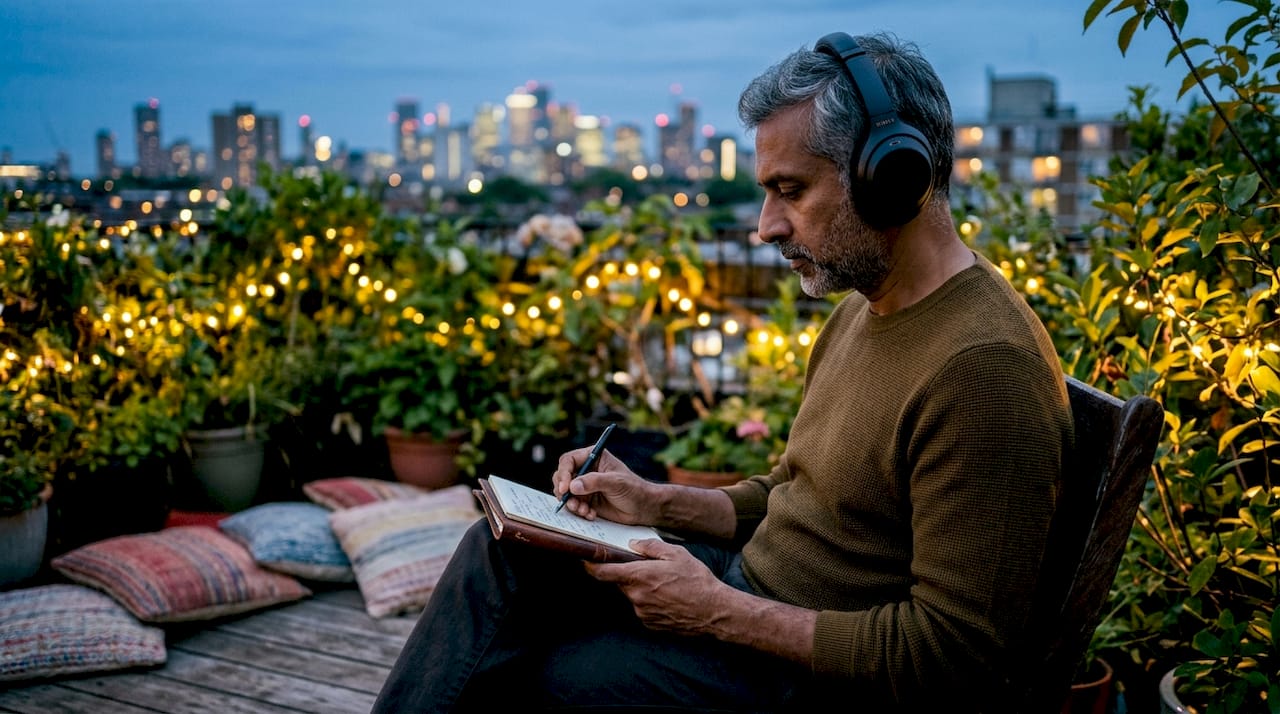
Audilous takes a different approach with dedicated overnight programming. Shows like The Sound Nightscape and The Late Night Pour run between midnight and 6:00 AM EST, pulling from 90s, 2000s, and current hits in continuous six-hour streams. That sustained format matters because it removes the friction of choosing what comes next. You settle in, and the music carries you.
For listeners who want energy without chaos, Insomniac Radio offers four dedicated genre channels running 24/7 with over 100 exclusive artists. The channels stay genre-consistent, so the vibe never collapses into something that feels wrong at 2:00 AM.
Here is what to look for when evaluating any platform for nighttime use:
- Continuous play with no gaps. Silence at night feels sharp. A platform that buffers or pauses breaks the spell.
- Mood or time-based curation. The best nighttime playlists are organized by feeling, not just genre.
- Minimal ad interruptions. A loud ad at 1:00 AM undoes everything the music built.
- Offline or cache capability. Dropped connections at night are more common than people expect.
Pro Tip:Search for radio-style programs rather than static playlists when you want to stream music after midnight. Radio formats are sequenced by a human or adaptive system, so the transitions feel intentional rather than random.
How can you find mood-focused nighttime playlists and streams?
Genre labels are a poor map for the night. “R&B” can mean a slow, aching ballad or an uptempo club record. Both are R&B. Only one belongs at 2:00 AM.
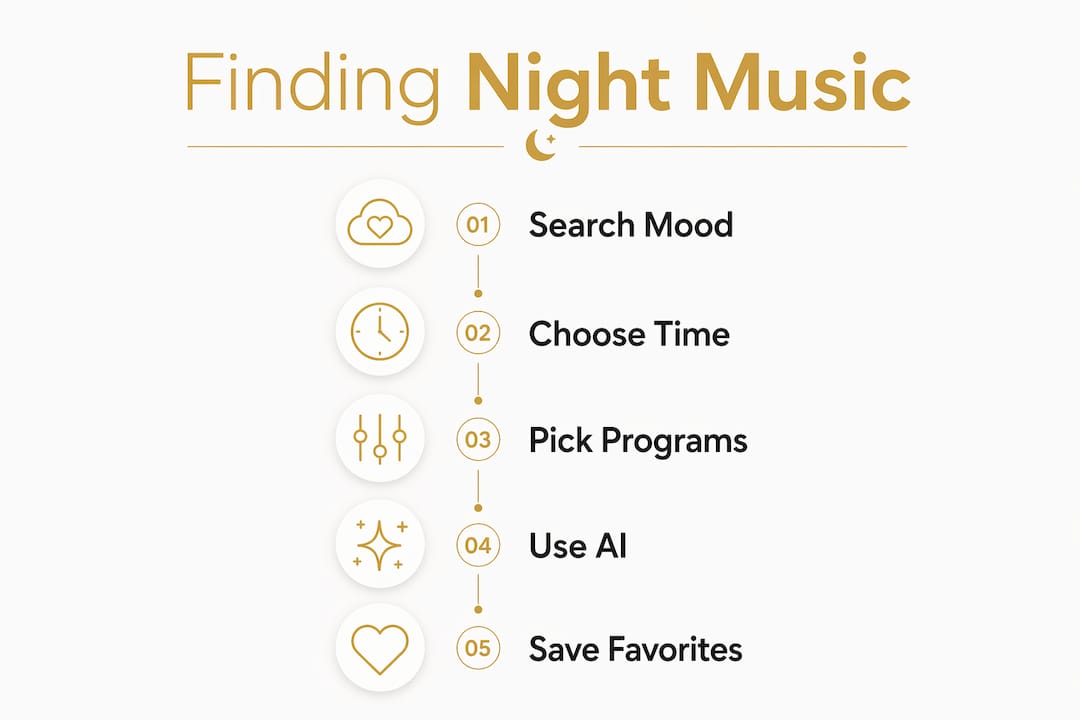
Searching by mood or time of night consistently delivers better results than genre-based searches. Terms like “2 AM,” “chill after dark,” “late night drive,” or “music to relax at night” filter out the energy spikes that genre tags miss entirely. The search intent signals the atmosphere, and the results follow. This is one of the most underused techniques in nighttime music discovery.
Adaptive streaming services take this further. Platforms built around AI-curated continuous streams adapt dynamically to your listening habits without requiring you to build or manage playlists manually. The music evolves as the night deepens. You do not have to touch anything. That hands-free quality is exactly what the night calls for.
The best nighttime listening experiences prioritize passive, low-interaction flows that let you zone out without playlist management pulling you back to a screen. This is sometimes called a “low friction” listening experience, and it is the single most important feature to look for when you find music for evenings.
Follow these steps to build a mood-focused discovery habit:
- Start with a time-based search. Type the hour into your streaming platform’s search bar. “3 AM playlist” or “late night R&B” will surface results tuned to that specific energy.
- Follow the rabbit trail. When a track lands right, check the playlist it came from. That playlist likely has ten more tracks that fit the same mood.
- Note the artists who appear repeatedly. Night-focused playlists tend to cluster around a consistent set of artists. Those names become your personal map of the genre.
- Switch to radio mode after discovery. Once you find a track or artist that fits, activate the radio or autoplay feature. Let the algorithm extend the mood without your input.
Pro Tip:Avoid playlists with more than 200 tracks for bedtime streaming. Larger playlists often mix moods to appeal to a broad audience, which means energy inconsistencies that can pull you out of the night’s atmosphere.
What tools and setup do you need for after-dark music discovery?
A smooth nighttime listening setup does not require expensive gear. It requires the right structure.
The most effective approach uses a three-tiered stack: one broad streaming service for library access, one community or radio discovery source for finding new music, and one dedicated save location for capturing what you love. Each tier serves a different function. Together, they prevent the two most common problems in late night music streaming: running out of music and losing tracks you meant to revisit.
| Tier | Purpose | Example type |
|---|---|---|
| Broad streaming service | Access to a wide catalog | Major subscription platform |
| Community or radio source | Discovery and new finds | Curated radio programs, adaptive streams |
| Save or archive location | Capture and revisit | Personal playlist or saved library |
Headphone listening transforms the nighttime experience in a way speakers rarely match. At night, the world goes quiet, and headphones fill that space completely. The music does not compete with ambient noise. It becomes the environment.
A few practical setup details make a real difference:
- Enable offline caching before bed. Download your core playlists so a weak signal at 1:00 AM does not interrupt the mood.
- Set a sleep timer. Most streaming apps include one. It prevents hours of unintended playback and battery drain.
- Lower screen brightness or use a dark mode interface. The visual environment affects how the music feels. A bright screen at midnight works against the atmosphere you are building.
- Keep your save playlist short and specific. A focused playlist of 20–30 tracks holds its mood better than a sprawling archive.
How do you build a personalized nighttime music collection over time?
The best nighttime music collections are not built in one session. They grow slowly, track by track, the way a relationship deepens over time.
The process starts with capture. When a song stops you mid-thought at midnight, save it immediately. The feeling that made it land will fade by morning, but the track will still be there waiting. Most streaming platforms offer a quick-save function. Use it without hesitation. The cost of saving a track you later remove is zero. The cost of losing one you loved is real.
Follow these steps to build and maintain your collection without burning out on it:
- Create mood-specific playlists, not one giant archive. Separate “late night drive” from “music to relax at night” from “streaming tunes for bedtime.” Each serves a different state, and mixing them dilutes all three.
- Review and prune monthly. Tastes shift. A track that felt perfect in january may feel wrong by march. A monthly review keeps your playlists honest.
- Use community sources for fresh input. Late-night radio programs, online music communities, and curated editorial playlists surface artists you would never find through algorithm alone. Ambient nocturnal soundscapes are a particularly rich vein that most listeners overlook.
- Rotate playlists seasonally. The music that fits a summer night at 2:00 AM often feels wrong in december. Building seasonal versions of your core playlists keeps the experience fresh.
- Avoid playlist burnout by keeping a discovery playlist separate. New finds go into a staging playlist first. Only the tracks that survive three listens move into your permanent collection.
Passive listening habits are worth developing deliberately. The night rewards listeners who stop managing and start receiving. The music does its best work when you are not watching it.
Why the night changes everything about how you hear music
There is something I keep coming back to after years of building playlists and producing music under the DRVVYN name. The night is not just a time of day. It is a different emotional frequency.
During the day, music competes with everything. Notifications, conversations, the weight of what needs doing. At night, that competition falls away. The silence around the music becomes part of the music. A chord that felt ordinary at noon can feel like it opens something in your chest at midnight. That is not imagination. That is why music feels better at night in a way that is almost physiological.
My honest advice is this: stop trying to find the perfect playlist before you start listening. The best nighttime discoveries happen when you follow one thread. One song leads to one artist leads to one album that changes how you hear everything else. The night has its own logic. Trust it.
The trend toward adaptive, AI-curated streams is real, and it matters. Industry experts predict adaptive audio streams will reshape late-night listening by removing the burden of manual curation entirely. That is good news for anyone who has ever lost the mood because they had to stop and choose the next track. The best streaming experiences after dark are the ones where you forget you are streaming at all.
— DRVVYN
Drvvynsound and the music built for your late nights
Drvvynsound was built for exactly this kind of listening. The music, the playlists, and the visual experiences that come out of DRVVYN Sound LLC are designed for the hours when the world goes quiet and feeling takes over.

The DRVVYN Essentials collection brings together R&B tracks, curated playlists, and mood-focused streaming content built around themes of reflection, healing, and late-night honesty. Every release is crafted with the nighttime listener in mind. If you have been searching for streaming tunes for bedtime or a late-night soundtrack that actually holds its mood, this is where to start. The music is waiting.
Key Takeaways
The most effective way to discover streaming music after dark combines mood-based search techniques, curated radio programs, and a three-tiered setup that captures what you find.
| Point | Details |
|---|---|
| Search by mood, not genre | Use time-based terms like “2 AM” or “late night” for more consistent nighttime results. |
| Use dedicated radio programs | BBC Radio 3 Night Tracks and Audilous overnight streams offer expert-curated, mood-consistent listening. |
| Build a three-tiered stack | Combine a broad streaming service, a discovery source, and a dedicated save location. |
| Prioritize low-friction listening | Autoplay, offline caching, and sleep timers keep the night uninterrupted. |
| Grow your collection slowly | Save tracks immediately, prune monthly, and keep mood-specific playlists separate. |
FAQ
What is late night music streaming?
Late night music streaming is the practice of listening to curated playlists, radio programs, or adaptive streams specifically designed for nighttime moods and hours. Programs like BBC Radio 3 Night Tracks and Audilous overnight shows are built for this purpose.
Why does mood-based search work better than genre search at night?
Genre labels cover a wide energy range, which means results can include tracks that feel wrong for the late-night atmosphere. Searching by mood or time, such as “2 AM” or “chill after dark,” filters for energy consistency.
What is the best setup for streaming music after midnight?
A three-tiered setup works best: one broad streaming service for catalog access, one curated radio or discovery source for new finds, and one dedicated playlist for saving tracks you want to keep.
How do I avoid losing tracks I discover at night?
Save tracks immediately using your platform’s quick-save function. Create a staging playlist for new finds and move only the tracks that hold up across three listens into your permanent collection.
Are AI-curated streams good for nighttime listening?
Adaptive AI-curated streams build continuous playlists from real music catalogs and adjust to your listening habits without manual input. That hands-free quality makes them well suited for late-night listening.