

Creative Process
How Darkness Shapes Meaning and Emotion in Music
How Darkness Shapes Meaning and Emotion in Music
! Hand adjusting mixer knob in dim studio
Darkness in music is a compositional and production strategy that shapes mood, meaning, and listener identity across every genre from Baroque ombra to contemporary dark pop.
By DRVVYN · · 15 min read
How Darkness Shapes Meaning and Emotion in Music
Darkness in music is a compositional and production strategy that shapes mood, meaning, and listener identity across every genre from Baroque ombra to contemporary dark pop. It matters because it gives both creators and listeners a structured way to process grief, isolation, and existential weight — not by wallowing, but by transforming pressure into something from which you can actually feel release. The role of darkness themes in music operates through at least four distinct channels: timbre (tone color), harmony and modality, lyrical narrative, and structural form. Genres like Gothic rock, darkwave, and black metal have made these channels central to their identity, while musicologists use concepts like indexicality to explain how darkness is signaled rather than literally sounded.
Key Takeaways
Darkness in music works because it operates simultaneously as a timbral, harmonic, lyrical, and structural strategy — and each dimension requires a different creative and analytical toolkit.
| Point | Details |
|---|---|
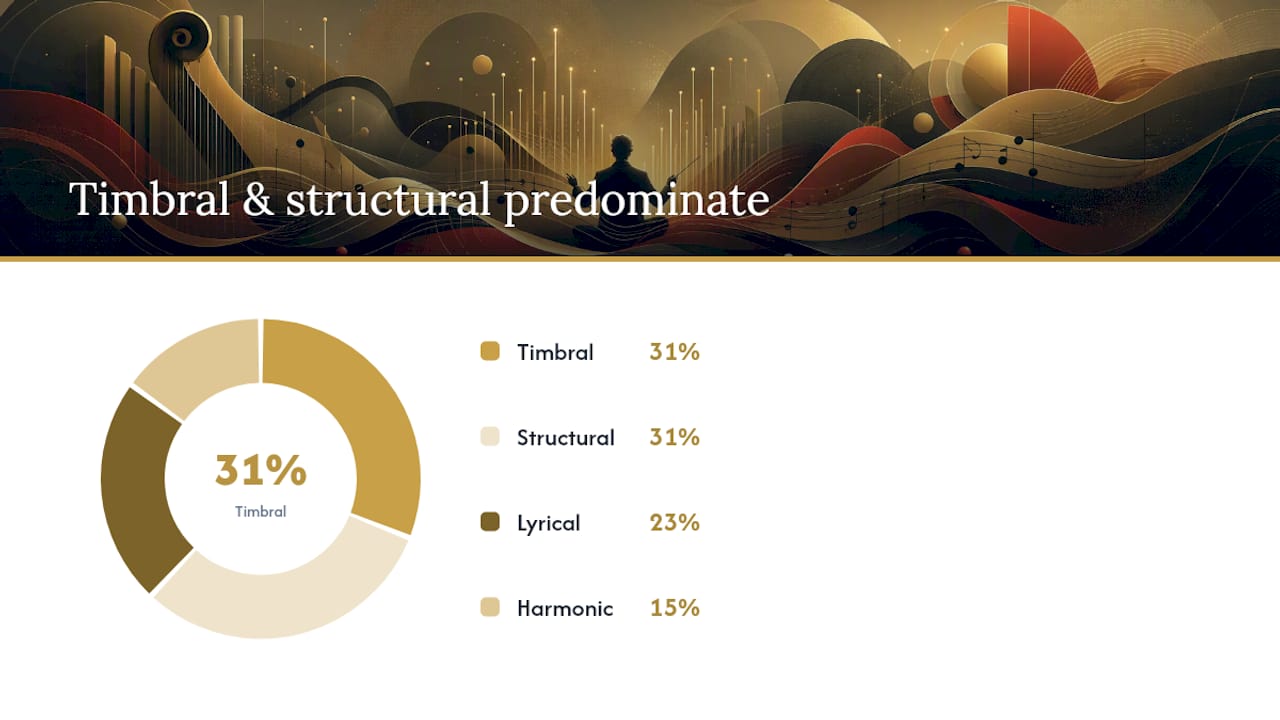
| Four senses of darkness | Dark music operates through timbre, harmony, lyrics, and structure — not minor keys alone. |
| Timbre is the primary tool | Production choices like low-mid emphasis, reverb, and distortion create dark tone color more reliably than chord choices. |
| Tension needs contrast | Sustained darkness without release causes fatigue; cycles of tension and resolution keep dark music emotionally effective. |
| Listeners use darkness purposefully | Catharsis, mood regulation, identity formation, and philosophical processing are all documented functions of dark music. |
| Creators carry ethical responsibility | Commercialized darkness risks aestheticizing trauma; consent, context, and intention keep dark themes meaningful. |
Table of Contents
- What does ‘dark’ actually mean in music?
- How darkness has moved through musical history and genres
- What production techniques actually build a dark sound?
- How do dark lyrics work as storytelling?
- Why do listeners seek out music that feels dark?
- A cross-genre listening guide to dark music
- How can creators use darkness without losing the listener?
- What are the real criticisms of darkness in music?
- Why darkness in music still matters — a perspective from DRVVYN
- Sources
What does ‘dark’ actually mean in music?
“Dark” is one of those words everyone uses and almost nobody defines precisely. In practice, it describes four separate but overlapping dimensions of a piece of music.
Lyrical darkness lives in the words: themes of death, isolation, and nihilism; diction that leans toward shadow, absence, and decay; narrators who are unreliable or already lost. A lyric can be dark even over a major-key guitar strum.
Timbral darkness is about tone color and production. Goth music, for example, privileges tone color as an aesthetic strategy, using instrumentation, vocal technique, and studio processing to create what scholars call “dark timbre” — a quality that feels both tangible and disembodied at once. This is why a heavily reverbed baritone voice over a clean guitar can feel heavier than a distorted riff.

Harmonic and modal darkness covers the chord choices, scale selections, and register decisions that create tension. Phrygian and Locrian modes, unresolved dissonances, and a center of gravity in the low register all contribute. But minor keys alone don’t guarantee darkness — context and timbre shape perception just as much.
Structural darkness is the least discussed and arguably the most powerful. It describes how a piece manages tension and release over time: whether disorder is prolonged, whether resolution is withheld, whether the form cycles back without closure. A song that ends where it began, unresolved, can feel more unsettling than any diminished chord.
Day and night topics in music are primarily indexical and symbolic: composers use instrumental color, texture, and formal devices to evoke darkness rather than relying on any single sonic icon. A lone oboe at low dynamic, a sustained string tremolo, a bass pedal tone — none of these are darkness, but all of them point toward it through cultural convention and perceptual association.
| Sense of Darkness | Audible Markers | Quick Example |
|---|---|---|
| Lyrical | Death imagery, absence, unreliable narrator | Nick Cave, “The Mercy Seat” |
| Timbral | Reverbed baritone, distorted low-mid, disembodied texture | The Cure, “A Forest” |
| Harmonic/Modal | Phrygian mode, unresolved dissonance, low-register emphasis | Portishead, “Wandering Star” |
| Structural | Withheld resolution, cyclical form, prolonged tension | Xasthur, “Telepathic with the Deceased” |
Pro Tip:When you want to signal darkness without resorting to minor-key clichés, start with timbre. A single production choice — a low-passed vocal, a room mic on a snare — can shift the emotional register of an entire track before a single chord is played.
How darkness has moved through musical history and genres
Darkness has a long trajectory in musical topics, and its presence has only intensified as the entertainment industry has built symbolic architecture around it.
- Baroque ombra topics (c. 1600–1750): Composers used specific rhetorical figures — slow tempos, low strings, flat keys, chromatic descents — to represent the underworld and death. Monteverdi’s “Lamento della Ninfa” and Purcell’s “Dido’s Lament” are early anchors.
- Romantic and symbolist night music (c. 1820–1900): Chopin’s nocturnes, Schubert’s “Der Erlkönig,” and later Mahler’s Kindertotenlieder turned night and grief into sustained compositional projects. Darkness became a vehicle for interiority.
- 20th-century noir and jazz (1930s–1950s): Film noir soundtracks and cool jazz used minor modality, sparse arrangement, and late-night recording ambience to create a distinctly urban, shadowed mood. Miles Davis’s Kind of Blue sits at the edge of this tradition.
- Industrial and dark ambient (1970s–1990s): Throbbing Gristle and later Brian Eno’s ambient work opened space for ominous droning, gloomy monumental atmospheres, and industrial-influenced textures as primary aesthetic goals rather than supporting elements.
- Goth and darkwave (1980s–present): Bands like Bauhaus, Siouxsie and the Banshees, and later Clan of Xymox operationalized darkness through synth textures, minor harmonic color, and a visual-sonic identity built around mortality and the uncanny.
- Black metal (1990s–present):Misanthropy, pessimism, and negation function as active thematic and aesthetic tools in black metal. Sparse tremolo picking, harsh timbre, and lo-fi production aren’t accidents — they are philosophical statements about alienation and finitude.
- Dark pop and alternative R&B (2010s–present): Artists like Billie Eilish, Banks, and The Weeknd brought dark themes into mainstream streaming, using whispered vocals, trap-influenced low end, and lyrical vulnerability to reach audiences who had never heard of darkwave.
Romanticism gave darkness cultural prestige. Modernism gave it formal permission. The entertainment industry gave it a market.
Pro Tip:If you’re researching a specific subgenre’s dark aesthetic, start with its production conventions before its lyrical content. The timbre tells you more about the genre’s emotional philosophy than the words do.
What production techniques actually build a dark sound?
Darkness is engineered, not inherited. The most common misconception is that a minor key does the work. In practice, darkness is often built through tone color and production rather than harmonic choices alone — and the result is a paradoxical feeling of presence and absence simultaneously.
Timbre and studio technique
Producers create dark timbre by emphasizing low-mid frequencies and suppressing the upper harmonics that give sound its brightness and clarity. Mic placement close to the source with a large-diaphragm condenser captures body over air. A gentle high-shelf cut above 8 kHz on a vocal removes the “presence” that makes voices feel close and alive — which, counterintuitively, makes them feel more intimate and more unsettling. Distortion applied subtly to synth pads adds harmonic density without obvious grit. Layering and texture strategies — stacking slightly detuned synth voices, for example — create a sense of unease that no single sound achieves alone.
Harmony, mode, and register
Phrygian mode (with its characteristic flat second degree) and Locrian mode (with its diminished fifth) both carry strong cultural associations with menace and the uncanny. Cluster chords — two or more adjacent semitones sounding together — create unresolved tension that the ear wants to escape. Keeping the harmonic center of gravity in the bass register, below 200 Hz, makes the music feel heavy and grounded in a way that resists uplift.
Rhythm, tempo, and arrangement
Slow tempos below 80 BPM create space that the listener fills with their own anxiety. Irregular rhythmic patterns — a snare that lands slightly late, a kick that drops out unexpectedly — introduce a low-level instability that keeps the body alert. Subtractive orchestration (removing instruments rather than adding them) is one of the most underused tools: a track that strips to a single bass note and a distant reverbed vocal creates more tension than one that layers in more elements.
Long reverb tails on percussion push sounds into the distance, creating a sense of vast, empty space. Delay set to a dotted eighth note at slow tempos creates a hypnotic, slightly off-kilter pulse. Both techniques contribute to what you might call the “present absence” quality — sound that feels like it’s disappearing even as you hear it.
Pro Tip:For alternative R&B production, try high-passing your lead vocal at 120 Hz and adding a long plate reverb with a pre-delay of 30–40 ms. The result sits the voice in a room that doesn’t quite exist — which is exactly the feeling dark pop reaches for.
How do dark lyrics work as storytelling?
Dark lyrics don’t just describe suffering. They construct a world where suffering has weight, texture, and meaning. The most effective dark songwriting uses specific devices to make that world feel real without making it feel gratuitous.
Common lyrical themes in dark songs include:
- Death and mortality, often personified or addressed directly
- Isolation and the failure of connection — not just loneliness, but the specific ache of being unreachable
- Nihilism and the collapse of meaning, sometimes expressed as exhaustion rather than anger
- The uncanny: familiar things made strange, domestic spaces that feel threatening
- Nocturnal imagery — night as both setting and emotional state
- Nature as lament: storms, winter, decay, the sea at night
- Occult symbolism, used more often as atmosphere than literal belief
Devices that make dark lyrics land:
- Allegory — letting a concrete image (a burning house, a sinking ship) carry the emotional weight so the lyric never has to state its grief directly
- Negative-capacity phrasing — describing what is absent rather than what is present (“no one left to call,” “the room where you used to be”)
- Ellipsis and silence — lines that end before they finish, leaving the listener to complete the thought
- Unreliable narrators — speakers who may be lying to themselves, which creates dramatic irony and unease
- Spatial metaphors — tunnels, caves, corridors, and night as containers for psychological states
Pro Tip:The most memorable dark lyrics tend to be specific rather than grand. “The smell of your hair on the pillow” lands harder than “I am consumed by grief.” Specificity makes the abstract feel physical, and physical detail is what stays with a listener after the song ends.
Why do listeners seek out music that feels dark?
The short answer: dark music gives you somewhere to put feelings that have no other container. Catharsis, mood regulation, identity formation, and philosophical processing are all genuine functions that late-night listening contexts tend to amplify.
This distinction matters. Mainstream pop operates primarily at the level of affect: it makes you feel something quickly and moves on. Gothic and deliberately dark musical architectures do something slower and deeper. They create space for what philosopher Olivier Boether calls ontological interrogation — a sustained engagement with questions about existence, mortality, and meaning that most entertainment deliberately avoids.
For listeners, this plays out in several recognizable ways:
- Catharsis: Grief and anger that feel too large to express directly find a channel. The music holds the feeling so you don’t have to hold it alone.
- Mood regulation: Some listeners use dark music to match and then gradually shift a difficult emotional state, rather than bypassing it with something cheerful.
- Identity formation: Subcultures built around dark music — goth, black metal, darkwave — offer belonging precisely because they take suffering seriously rather than asking you to perform happiness.
- Philosophical processing: Sitting with a track that refuses easy resolution can be a way of practicing tolerance for uncertainty, which is a genuine psychological skill.
The indexical and symbolic mechanisms described in musical semiotics explain how this works technically: composers and producers build networks of cultural signs that point toward darkness without literally representing it, and listeners decode those signs through a combination of cultural learning and embodied response.
A cross-genre listening guide to dark music
The tracks below illustrate how the four senses of darkness — timbral, harmonic, lyrical, structural — appear across genres. Each entry points to a specific section worth close listening.
| Track | Genre | Timestamp to Focus On | Why It Feels Dark |
|---|---|---|---|
| Bauhaus, “Bela Lugosi’s Dead” | Goth rock | opening bass and drum texture | Timbral: sparse, reverbed bass and whispered vocal create disembodied presence |
| Portishead, “Wandering Star” | Trip-hop | vocal entry | Harmonic: flat-two chord movement and low-register emphasis; lyrical isolation |
| Nick Cave & the Bad Seeds, “The Mercy Seat” | Dark folk/post-punk | 3:30–4:30 (spoken confession) | Lyrical: unreliable narrator, death personified; structural tension without release |
| Chopin, Nocturne in C-sharp minor, Op. posth. | Romantic classical | opening phrase | Harmonic/structural: unresolved phrases, modal ambiguity, nocturnal indexicality |
| Xasthur, “Telepathic with the Deceased” | Black metal | Full track | Timbral + structural: lo-fi distortion, cyclical form, no resolution — misanthropy as aesthetic |
| Massive Attack, “Teardrop” | Trip-hop/dark ambient | intro | Timbral: harpsichord texture against electronic pulse; structural suspension |
| Billie Eilish, “bury a friend” | Dark pop | bass drop | Timbral + lyrical: sub-bass weight, whispered vocal, uncanny domestic imagery |
For listeners exploring dark ambient love songs and night-themed curation, the Guardian’s readers’ anthology of songs about night and darkness offers a wide cross-era pool of examples worth working through alongside this guide.
Pro Tip:Listen to each track on headphones in a quiet room. Dark music is engineered for close listening — the spatial cues, the low-level noise, the reverb tails all carry meaning that disappears on a phone speaker.
How can creators use darkness without losing the listener?
Darkness must be balanced with contrast to avoid listener fatigue. Sustained tension without release doesn’t feel dark — it feels monotonous. The most effective dark music cycles between disorder and resolution, using light to make the shadow visible.
Producer checklist
- Choose your harmonic anchor. Pick a mode (Phrygian, Aeolian, Locrian) and commit to it. Ambiguity is fine; inconsistency is not.
- Build your timbre first. Before writing a single chord, decide what the track should feel like sonically. Low-passed? Reverbed? Distorted? Timbre sets the emotional register.
- Design the low end deliberately. Sub-bass and low-mid energy carry the physical weight of darkness. Use a high-pass filter on everything that doesn’t need to live below 200 Hz, so the elements that do live there have room.
- Map your tension arc. Decide where the track’s darkest moment is and build toward it. A track that starts at maximum darkness has nowhere to go.
- Use subtractive arrangement. Strip elements away at key moments rather than always adding. Silence and near-silence are among the most powerful tools in dark production.
- Apply long reverb and pre-delay to key elements. This creates the spatial emptiness that dark music needs without muddying the mix.
- Master conservatively. Dark music often benefits from a slightly lower loudness ceiling — the dynamic range is part of the emotional experience.
Lyric writing: do and don’t
- Do use specific, physical images. Abstraction dilutes impact.
- Do leave space in the lyric. What you don’t say carries weight.
- Don’t explain the emotion. Show the scene and trust the listener.
- Don’t mistake bleakness for depth. A lyric that offers no perspective — not even a question — can feel empty rather than profound.
Pro Tip:Study how interludes function in dark albums. The best dark records use interludes as pressure valves — brief moments of near-silence or tonal shift that reset the listener’s nervous system before the next heavy section.
What are the real criticisms of darkness in music?
The central criticism is this: commercial exploitation has separated dark aesthetics from the genuine philosophical and emotional work they were built to do, turning suffering into a style.
Three specific critiques deserve attention. First, the commercialization problem: when darkness becomes a brand identity rather than an honest emotional position, it can glamorize suffering without offering any of the cathartic or philosophical value that makes dark music meaningful. A major-label dark pop release engineered to trend on social media is a different object than a black metal record made as a genuine philosophical and aesthetic statement about misanthropy and negation.
Second, the romanticization of nihilism: lyrics that present despair as the only honest response to existence, without any counterweight, can reinforce rather than process that despair in vulnerable listeners. The distinction between cathartic darkness and nihilistic darkness is real and worth making deliberately.
Third, the consent and context question: dark themes in music reach audiences who didn’t choose them — through playlists, sync licensing, and algorithmic recommendation. Creators have a responsibility to consider context, especially when themes touch on self-harm, suicide, or extreme violence.
Responsible practice comes down to three words: consent, context, and intention. Know why you’re using dark themes, know who will hear them, and make sure the darkness serves the music’s emotional purpose rather than substituting for one.
Pro Tip:Before releasing a track with heavy dark themes, listen to it in the context where your audience will most likely hear it — a late-night playlist, a commute, a gym session. Context changes everything about how darkness lands.
Why darkness in music still matters — a perspective from DRVVYN
The argument that dark music is somehow less legitimate than music about joy has always felt thin to me. Darkness isn’t the opposite of beauty. It’s often where beauty gets its sharpest edge.
What the research and the history both confirm is that exploring darkness in music is one of the most honest things a creator can do. It acknowledges that the full range of human experience — grief, alienation, the weight of 3 AM — deserves a sonic home. The impact of dark lyrics and dark sound design isn’t to make listeners feel worse. It’s to make them feel recognized. That recognition is what turns a song into something a person carries with them for years.
At Drvvynsound, the work sits at the intersection of emotional depth and contemporary production — alternative R&B that doesn’t flinch from the harder feelings. The techniques in this article are the same ones that shape every release: deliberate timbre choices, harmonic tension held long enough to mean something, lyrics that trust the listener to fill the silence. If you want to hear what that sounds like in practice, the late-night R&B listening guide is a good place to start.
Darkness in music isn’t a trend. It’s a permanent human need. The creators who understand that — who use it with intention rather than as decoration — are the ones whose work lasts.

If you’re ready to experience dark-mood music built with this kind of intentionality, the Alternative RnB Mood Playlist Guide at Drvvynsound curates exactly that — emotionally driven tracks for late-night listening, introspection, and the moments when you need music that meets you where you are.
Sources
The sources below span musicological theory, production analysis, genre scholarship, and curated listening — each one supports a different layer of what this article covers.
- Considerations about the darkness in music | Revista Música
- Black metal, melancology, misanthropy and negativity (Intellect Discover)