

Music Business
Songtrust vs Sentric for US Indies: Check the $100 Fee Before Switching
Compare Songtrust and Sentric for U.S. songwriters, including fees, territory coverage, contract terms, payout timing, and checks to make before switching.
By DRVVYN · · 9 min read

If your catalog leans global and you want broad, automated registration, Songtrust tends to fit best. If your collections are concentrated in the UK and Europe, Sentric’s society relationships carry more weight. If sync placements are your main income source, neither is the natural first stop, and we’ll show you why below, along with a checklist to vet any administrator before you sign.
TL;DR:
- Songtrust charges a one time $100 fee per writer, then takes 15% of performance royalties and 20% of worldwide mechanical royalties.
- Writers whose royalties come mainly from the UK and Europe may collect faster and more completely through Sentric’s local society relationships.
- Songtradr actively pitches catalogs for film, television, and advertising placements, while most administrators focus on royalty collection rather than sync opportunities.
- Before signing, check exclusivity, opt out rules for micro sync or YouTube claims, arbitration terms, and whether collection continues after termination.
- New royalty income may take nine to twelve months to appear, so register before release; Songtrust pays quarterly after accounts reach its minimum balance.
Comparing Songtrust, Sentric, and the Other Publishing Administrators
Independent songwriters rarely choose between just two names. The shortlist usually widens to include distribution-linked options and specialist firms, each built around a different priority: global reach, sync income, or bundled convenience.
Songtrust operates as a tech-driven global registration service built for independent and DIY songwriters. It charges a one-time $100 setup fee per writer, then takes 15% of performance royalties and 20% of worldwide mechanical royalties, according to Songtrust’s own FAQ. Its dashboard and self-serve registration flow are the standout, and the service is fully available to songwriters in the United States.
Sentric is a UK-based administrator frequently cited for deep UK and EU society relationships. Writers whose royalties originate mostly in the UK and Europe tend to see faster, more complete reciprocal collection here.
TuneCore Publishing bundles administration with the TuneCore distribution service, which makes sense mainly if you’re already releasing through that platform and want one invoice instead of two.
Songtradr takes a different angle entirely: it runs an active sync marketplace, pitching catalogs for film, TV, and ad placements rather than focusing purely on collection.
CD Baby Pro Publishing follows a similar bundling logic to TuneCore, folding publishing admin into the CD Baby distribution relationship for an all-in-one setup.
Kobalt serves a different tier of catalog altogether: higher-volume, often already-established writers and publishers who need enterprise-grade rights management and reporting rather than a starter dashboard.
Code Group Music shows up in comparative roundups as a boutique alternative, appealing to writers who want a smaller, more regionally focused relationship over a mass-market platform.
UniteSync and Dynamoi both surface in multi-vendor comparison lists as additional entrants worth checking when you’re scanning the market broadly, particularly for territory coverage and fee structure against the better-known names.
A few quick facts worth holding onto as you compare:
- Songtrust’s setup fee is a flat $100 per writer, not per song or per catalog.
- Songtrust’s mechanical commission (20%) runs higher than its performance commission (15%).
- Sentric’s reported commission range sits below Songtrust’s on the low end, though the spread varies by source.
- Bundled options (TuneCore, CD Baby) trade a lower standalone admin focus for convenience with distribution.
What the Fees, Coverage, and Contract Terms Actually Mean
A commission percentage only tells part of the story. What lands in your account depends on what happens before that percentage gets applied.
- Commission versus net income: societies and collection agencies often take their own cut before an admin applies its commission, so a lower headline rate doesn’t automatically mean more money reaches you.
- Territory coverage: direct registration with a local society collects faster and more completely than relying on reciprocal agreements between societies, which can lag or miss revenue entirely.
- Sync and pitching services: an admin that actively pitches your catalog for placements, the way Songtradr does, changes the math even when its base fee looks similar to a pure-administration service.
- Contract terms: exclusivity clauses, micro-sync or YouTube opt-out mechanics, arbitration requirements, and post-term collection rights all shape how much control you keep after signing, and for how long that control lasts even after you leave.
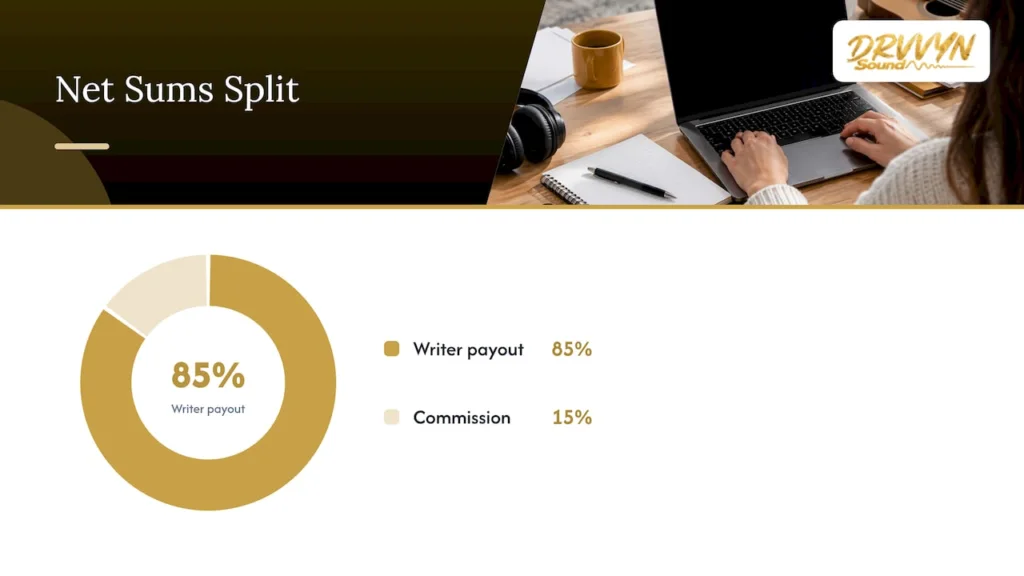
Songtrust’s own terms of service illustrate this well: the agreement grants worldwide administration rights during the term, pays out 85% of net sums collected (consistent with its 15% performance commission), and includes an arbitration clause along with post-term collection provisions that let the administrator continue collecting certain royalties after you leave. These are the clauses that matter more than the headline percentage once you’re actually comparing offers side by side.
For U.S.-based writers specifically, it’s worth confirming how an administrator routes mechanical royalties through the MLC versus relying on reciprocal agreements with foreign collection societies, since the second path is where delays most often creep in.
How to Choose the Right Administrator for Your Catalog
Match the decision to your actual catalog, not to whichever name ranks highest in a search result.
Rank your priorities roughly in this order: catalog size and growth plans, where your audience and royalties are geographically concentrated, how much sync income matters to you, how detailed your reporting needs are, and finally, price sensitivity.
Then take these questions into any sales call or demo:
- What’s the realistic timeline from sign-up to full global registration?
- Who handles mechanical royalty collection in my main territory, and through which society or agency?
- How does opt-out work for micro-sync and YouTube monetization claims?
- What’s the payout schedule and minimum threshold before I see money?
- What do the arbitration and dispute terms say if a disagreement comes up?
- What happens to royalties collected after I terminate the agreement?
Pro Tip:Email support with a specific, realistic question before you sign, then time how long the reply takes. That response speed is what you’ll actually experience when a royalty dispute or metadata error needs fixing.
Switching Administrators Without Losing Royalties
Moving a catalog between administrators is a logistics project, not a one-click decision. Global re-registration takes time, and your previous administrator may keep collecting royalties from certain territories for months after you’ve technically left, under standard post-term collection provisions.
Before switching, plan for:
- Notifying your PRO of the change so performance royalties route correctly going forward.
- Updating metadata and ownership splits across every platform and society where your catalog is registered.
- Keeping copies of every registration confirmation from both the old and new administrator.
- Reconciling statements across several quarters, since switching often requires manual follow-up to recover royalties still routing to the former administrator.
Budget real time for this. Reconciliation problems are common enough that treating the switch as instant is the single biggest avoidable income loss in this process.
How Payout Timing Affects Your Cash Flow
Registration speed and payout cadence matter as much as the commission rate when you’re planning around actual income.
- Full registration and the first royalty payment can take several months after sign-up for some royalty sources, according to Songtrust’s FAQ.
- Songtrust accounts quarterly and requires a minimum balance before it pays out, per the same source.
- Reciprocal collection through foreign societies can add further delay beyond your administrator’s own processing time, since intermediaries sometimes hold or deduct before funds ever reach your admin’s ledger.
Nine to twelve months is a long runway for new income to appear, which is why registering early, even before a release drops, protects against lost collection windows (Songtrust FAQ).
What Customers Actually Praise and Complain About
Reputation signals cluster around the same handful of themes across most administrators. The dashboard experience and registration flow draw consistent praise, while support responsiveness and identity verification friction draw consistent complaints.
- Trustpilot reviews of Songtrust commonly describe the registration process as smooth, while also reporting slow support turnaround and onboarding verification issues.
- Those complaints matter in practice: a slow support channel becomes a real problem the moment you need a split corrected or a claim disputed.
- Run your own quick test before committing: send a realistic question through the support channel and time the response, since that single data point predicts your experience far better than a star rating alone.
Why This Matters Beyond the Admin You Pick
Here’s the part most comparison guides skip: the administrator you choose only matters as much as the metadata behind it. A clean, correctly split registration is what makes a song findable and licensable later. A sloppy one buries a great track in a backlog no sync supervisor will ever dig through.
We think about this from the other side of the table. When we talk with artists who already use an administrator, the publishing admin relationship and the licensing conversation are separate tracks that need to stay in sync with each other, literally. Clean registration doesn’t replace licensing outreach, and licensing outreach can’t fix a catalog with broken metadata underneath it. The two have to work together.
Licensing Help When You’re Ready for Placements
Choosing the right administrator solves collection. It doesn’t solve placement, and that’s a different skill set entirely. If you’ve already registered your catalog and you’re now looking for the sync, brand, or media opportunities that turn a well-administered song into a well-placed one, that’s where our licensing services come in.
We work with artists who want direct help pitching original music for commercial use, brand partnerships, and media placements, rather than waiting for an administrator’s general sync tools to surface an opportunity. If you want to understand the licensing mechanics behind a placement before that conversation starts, our breakdown of a needle drop license is a useful place to start. When you’re ready to talk about your catalog specifically, reach out through our profile.
FAQ
Is Sentric Music any good?
Sentric is widely regarded as a solid option for songwriters whose royalties are concentrated in the UK and Europe, thanks to its society relationships in those regions. Its fit narrows for writers whose main audience and revenue sit outside the UK and EU.
Is Songtrust a legit company?
Yes, Songtrust is an established publishing administrator with a published fee structure, a standard terms of service agreement, and a long operating history in the independent songwriter space. Its FAQ page and terms of service lay out its fees, commission splits, and contractual rights in detail.
Should I use the MLC or Songtrust?
The MLC collects mechanical royalties specifically for U.S. streaming and digital use, while an administrator like Songtrust handles broader global registration and collection across multiple royalty types. Many U.S. songwriters use both: registering with the MLC directly for domestic mechanicals while relying on an administrator for worldwide performance and mechanical collection.
Is Sentric Music the same as PRS?
No, Sentric is a publishing administrator, while PRS for Music is a UK performing rights organization. An administrator like Sentric registers your songs and manages collection across societies, but it doesn’t replace your PRO membership, which is a separate relationship that still needs to be in place. Learn more about how PROs differ from administrators in our ASCAP vs BMI breakdown.
What’s the difference between mechanical and performance royalties?
Mechanical royalties come from the reproduction of a song, like a stream or download, while performance royalties come from a public performance or broadcast of that song. This breakdown of mechanical versus performance royalties walks through the distinction in plain terms if you want a deeper explanation before comparing admin commission structures.
Sources
- Songtrust | Frequently Asked Questions
- Terms of Service | Songtrust
- Songtrust Reviews | Read Customer Service Reviews of songtrust.com