

Listening & Culture
Apple Music vs Spotify Playlists
Apple Music vs Spotify playlists – a clear look at mood, discovery, curation, and control, so you can choose the platform that fits your listening.
By DRVVYN · · 7 min read
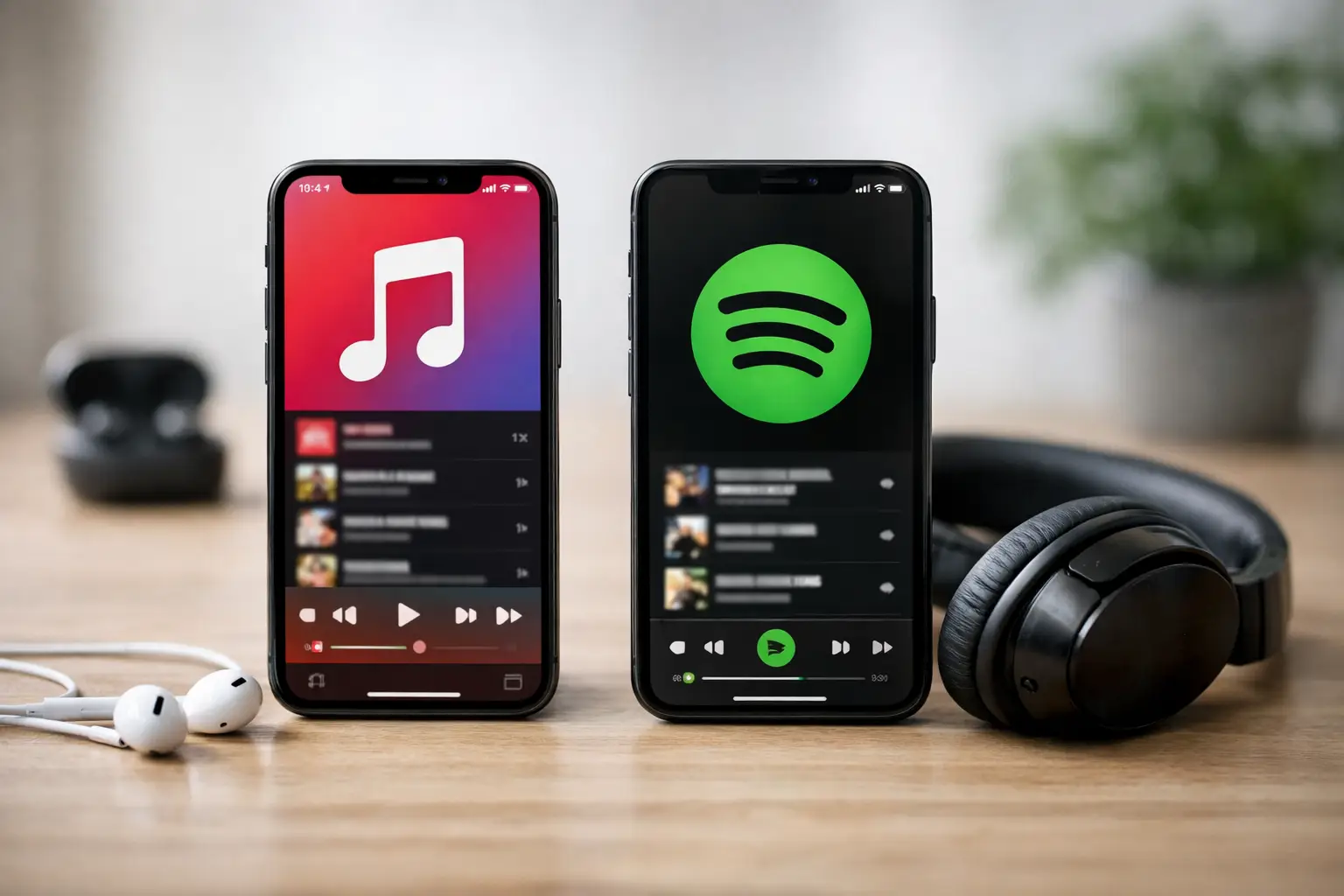
Some playlists feel like background. Others feel like a room you step into. That’s really what sits underneath apple music vs spotify playlists – not just which app has more lists or better buttons, but which one understands how you listen when the night gets quiet and the right song matters.
If you use playlists as emotional architecture, the differences are real. Apple Music and Spotify both offer endless curation, algorithmic recommendations, and editorial picks. But they shape the listening experience in very different ways. One feels more guided, more polished, more album-minded. The other feels quicker, more adaptive, more tied to discovery in motion.
Apple Music vs Spotify playlists: the real difference
Spotify is built for movement. Its playlists tend to meet you where you are, then keep shifting with you. Discover Weekly, Release Radar, Daily Mixes, AI-driven recommendations, genre blends – the platform is constantly reading your habits and feeding back variations of your taste. It can feel uncannily accurate, especially if you listen often and skip with intention.
Apple Music moves differently. Its playlist ecosystem feels more deliberate, less restless. The editorial voice is stronger. Human curation is easier to notice. Even personalized mixes often carry a more composed feeling, as if the platform wants to place songs in a cleaner emotional frame rather than flood you with options.
Neither approach is automatically better. It depends on whether you want your playlists to surprise you in real time or hold a more stable mood.
If mood matters, the platform matters
For listeners who use music as atmosphere, Spotify often wins on immediacy. You can type in almost any feeling, micro-genre, or niche phrase and find a playlist that gets close fast. Sad rap at 2 a.m. Neon synth drive. Soft dark pop. Rainy day indie. It’s strong at catching fragments of emotion and turning them into searchable experiences.
Apple Music is often better when you want that mood to feel more refined. Its editorial playlists tend to be less chaotic, less crowded with obvious algorithm bait. There’s usually more breathing room. More pacing. More sense that someone thought about how one track lands after another.
That difference matters if you care about sequence, tension, and emotional continuity. A playlist is not just a pile of songs. At its best, it has narrative. It opens one door, then another.
Spotify can absolutely deliver that. But its strongest instinct is responsiveness. Apple Music’s strongest instinct is presentation.
Spotify playlists feel alive
There’s a reason people stay loyal to Spotify playlists even when they complain about the app. Discovery is woven into everything. The platform keeps nudging you toward the next artist, the next subgenre, the next variation of your current mood. If your listening habits change week to week, Spotify tends to catch up faster.
That makes it good for people who are always in search mode. If you like building new worlds out of fragments, pulling from underground releases, viral moments, old catalog records, and niche mood tags, Spotify feels fluid. It rewards curiosity.
It also makes collaborative playlists easier to live with. They feel social by design, less formal, more open to mess. That can be a strength if your playlists are shared with friends, partners, or a wider online audience.
But there’s a trade-off. Sometimes Spotify knows your habits better than your intention. It can keep circling the same energy, feeding you what fits statistically instead of what deepens the moment. When that happens, playlists start to feel efficient rather than immersive.
Apple Music playlists feel composed
Apple Music has less of that restless energy. Its best playlists feel built rather than generated. Even when algorithms are involved, the overall environment leans curated, organized, and a little more restrained.
For some listeners, that restraint is the whole point. You don’t always want music to chase your behavior. Sometimes you want it to hold a tone. To let a mood stay still long enough to mean something.
Apple Music also tends to appeal to listeners who still care about albums, sequencing, and artist context. Its playlists often feel more connected to a broader idea of listening, where songs are not just isolated entries in a feed but part of a larger emotional catalog.
The downside is that discovery can feel less immediate. If Spotify feels like a fast current, Apple Music can feel more like a dimly lit room. Beautiful when it fits. Slightly slower when you want range fast.
Apple Music vs Spotify playlists for finding new music
This is where the gap becomes easiest to feel.
Spotify is usually stronger for active discovery. It tracks your habits closely, generates personalized playlists constantly, and makes music discovery feel almost frictionless. You listen, react, save, skip, and the machine keeps adjusting. For emerging artists, niche moods, and shifting trends, it often gets there first.
Apple Music still helps you find new music, but the journey feels less aggressive. Discovery happens through editorial playlists, radio-style programming, curated sections, and your personalized stations. It can lead to richer finds, but usually with less speed and less volume.
That means Spotify is better for listeners who want a steady stream of newness. Apple Music is better for listeners who want fewer interruptions and more trust in the curation itself.
There’s also a subtle emotional difference. Spotify often says, here’s more. Apple Music more often says, stay with this.
Which platform is better for your own playlists?
If you build playlists yourself, not just follow them, both platforms work. But they encourage different instincts.
Spotify makes playlist culture feel central. Organizing tracks, updating covers, sharing links, growing followers, blending public and private curation – it all feels native to the platform. If playlisting is part personal ritual and part self-expression, Spotify gives it more social oxygen.
Apple Music feels quieter. Better for private curation, personal libraries, and playlists that exist for your own space rather than public visibility. If you make playlists like journals, not broadcasts, Apple Music may feel more natural.
That distinction matters more than people admit. Some playlists are meant to be passed around. Others are meant to stay close.
For a brand or artist building a mood-based listening world, both can work. Spotify tends to support discovery and circulation. Apple Music often supports depth and atmosphere. DRVVYN Sound lives in that kind of tension – reaching people through platforms, but always returning to feeling, sequence, and state.
What the listening experience actually feels like
This part won’t show up on a spec sheet, but it’s usually what decides it.
Spotify feels faster. More modular. More responsive to fragmented listening. Great for people who move between moods quickly, chase new sounds, or want music to mirror their habits in real time.
Apple Music feels steadier. More immersive. Better for people who want to disappear into a playlist without feeling constantly redirected by the app itself.
That doesn’t mean one is emotional and the other isn’t. Both can soundtrack a life. Both can hold memories, late drives, breakups, parties, mornings, after-hours solitude. But the architecture around those moments is different.
Spotify says: we’ll keep feeding the feeling.
Apple Music says: we’ll hold the feeling here.
So which one should you choose?
Choose Spotify if discovery is your priority, if you like your playlists adaptive and in motion, and if you want the culture around playlists to feel social, fast, and alive. It’s especially strong for listeners who are always searching for the next sound before the current one fades.
Choose Apple Music if you care more about emotional continuity, cleaner curation, and a listening environment that feels more composed than reactive. It fits listeners who want to sit inside a mood, not just scroll through versions of it.
And if you already use both, that makes sense too. A lot of people discover on Spotify, then settle into Apple Music when they want less noise. Others do the reverse. The better platform is often the one that fits the hour.
The useful question isn’t which service is winning. It’s which one gets closer to the way you actually live with music. Because the right playlist doesn’t just fill silence. It names something you couldn’t quite say yet.