

Listening & Culture
Best Music for Introspection at Night
Find the best music for introspection with mood-first picks and listening cues that make quiet nights, deep thought, and reflection feel honest.
By DRVVYN · · 7 min read
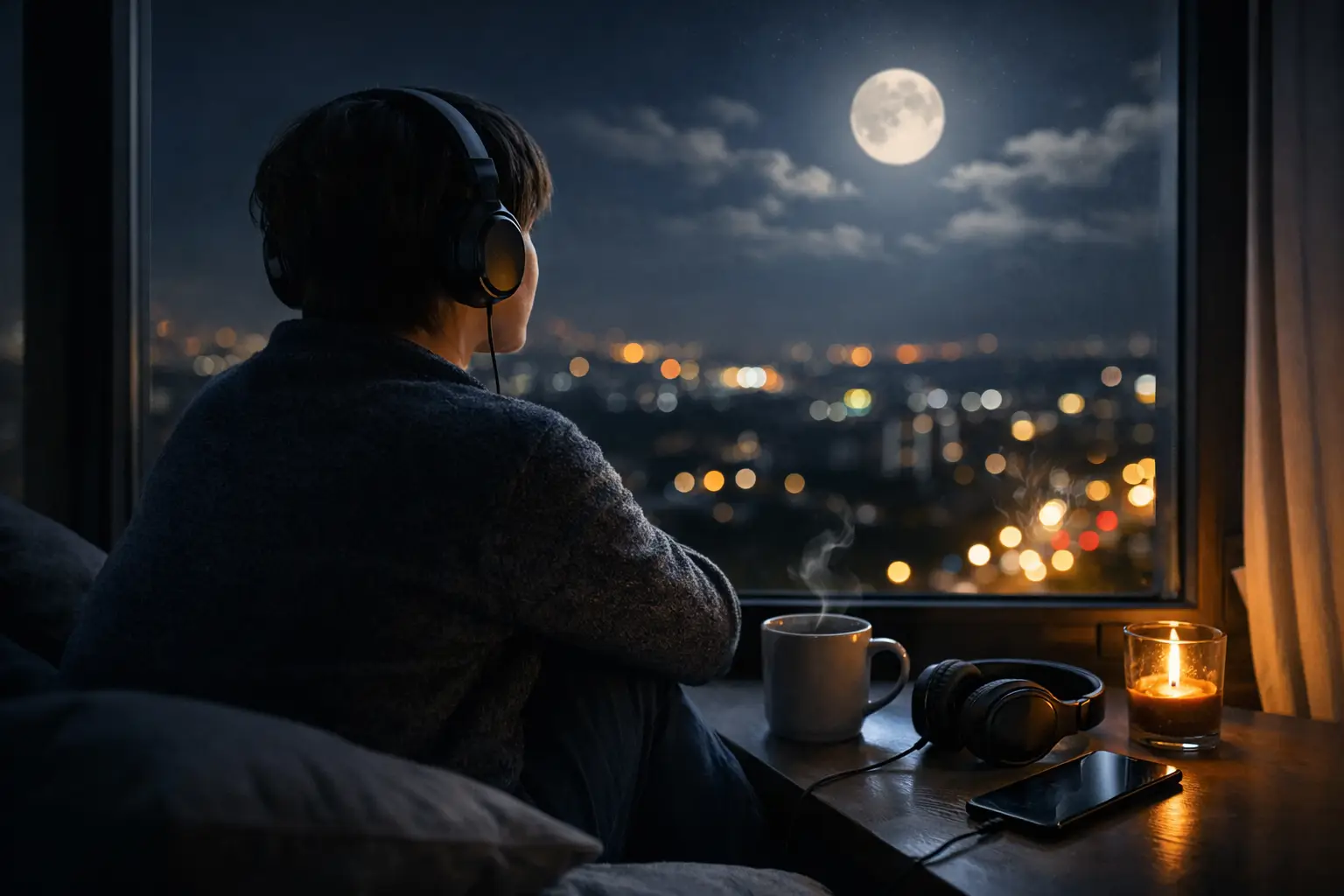
Some nights ask for more than background noise. You put something on because silence feels too sharp, but lyrics that say too much feel wrong too. That’s where the best music for introspection lives – in that narrow space between comfort and confrontation.
Not every quiet song belongs there. Introspective music doesn’t just sound calm. It creates enough room for your own thoughts to rise without crowding them out. It can feel ambient, soulful, cinematic, minimal, or even slightly unsettling. The point isn’t genre. The point is whether the music leaves space for honesty.
What makes the best music for introspection?
Usually, it starts with restraint. A song built for reflection doesn’t need to announce itself. It lingers. It moves slowly enough for you to notice what your mind is doing. Maybe it’s a sparse piano line, a vocal that sounds half-confession and half prayer, or a low synth bed that makes the room feel wider than it is.
Tempo matters, but not in an obvious way. Slower tracks often help because they don’t rush your thoughts. Still, introspection is not always soft. Sometimes the right song carries tension. Sometimes it loops a feeling you have not fully named yet. The best choices meet you where you are, not where a playlist title thinks you should be.
That is the trade-off. Music that is too pretty can blur into decor. Music that is too emotionally direct can start telling you what to feel. The sweet spot is music with gravity – enough emotion to hold your attention, enough openness to let your own story stay in the center.
Start with mood, not genre
People often search by style first. Ambient. Neo-soul. Lo-fi. Classical. Indie. That can help, but introspection tends to work better when you think in emotional textures.
If your mind feels heavy and overfull, you may need music that thins the air out. Long instrumentals, soft repetition, and tracks with a lot of negative space can help slow the internal noise. This is where ambient music, modern classical, and stripped-down electronic production often land best.
If you are trying to process something specific – heartbreak, distance, regret, relief – vocals may matter more. Not dense storytelling. Just enough human presence to make you feel less alone. A restrained R&B record, a fragile indie vocal, or a gospel-tinged harmony can do more than a purely instrumental track when the emotion is close to the surface.
And if you are restless, don’t force yourself into stillness too fast. Sometimes the best music for introspection has motion in it. Mid-tempo songs with a pulse can hold you while your thoughts settle. Reflection does not always begin in silence. Sometimes it begins in repetition.
The strongest sounds for reflective listening
Ambient music is the obvious starting point, but for good reason. Good ambient music lowers the temperature of the room. It removes the need to follow a hook or wait for a chorus. That makes it useful for journaling, late-night walks, or staring at the ceiling when your mind refuses to land anywhere stable. The risk is that some ambient tracks are so shapeless they disappear. When that happens, they stop supporting reflection and turn into wallpaper.
Minimal piano and modern classical work differently. They give your thoughts contour. A few well-placed notes can feel almost conversational, like the song is listening back. This is often the best fit when you want emotional clarity without language. It feels private, but not empty.
Soulful, low-lit R&B belongs here too. Not the polished kind built for momentum – the quieter records with space in the mix, breath in the vocal, and a sense that the singer is close enough to whisper. These tracks are powerful because they keep intimacy intact. They do not just soundtrack emotion. They mirror it.
Indie folk and acoustic songwriting can be a fit, though it depends on the writing. The wrong lyric can close the door by being too specific or too clever. But when the words are simple and lived-in, acoustic music can feel grounding in a way electronic music sometimes cannot.
Then there is cinematic instrumental music – slow-building synths, distant textures, songs that feel like they belong to a scene you have not watched yet. This kind of music is especially strong when you are not trying to solve anything. You just want to sit inside the feeling long enough for it to shift.
When lyrics help, and when they get in the way
Lyrics can guide reflection, but they can also hijack it.
If you are deep in your own head, highly narrative songwriting may pull you out of yourself and into someone else’s plot. That is not always bad. Sometimes you need that distance. But if you are trying to hear your own thoughts more clearly, look for lyrics that suggest rather than explain.
Repetition helps. So does ambiguity. A line that leaves room can stay with you longer than one that resolves too neatly. The best introspective songs often circle a feeling instead of pinning it down. They leave edges untouched.
Instrumentals, on the other hand, let memory do more of the speaking. That can be useful if you are reflecting on something you cannot quite say yet. But pure instrumental listening can also feel too open when your mind is scattered. In those moments, a quiet voice in the mix can act like a hand on your shoulder.
It depends on what kind of truth you are trying to reach.
Build your own introspective listening ritual
The music matters, but so does the way you meet it.
If you want a playlist that actually works, keep it narrower than you think. Too many shifts in energy break the spell. Stay inside one emotional temperature for a while. Let the songs speak to each other. A playlist for introspection should feel sequenced, not just collected.
Start with tracks that open the room gently. Do not lead with the heaviest song unless you already know that is where you need to go. Give yourself an entry point. Then let the playlist deepen. Save the most exposed, emotionally weighty tracks for the middle, when you are settled enough to hear them fully.
The ending matters too. Do not leave yourself stranded. The last few songs should soften the landing, even if they stay honest. Reflection hits harder when the music knows how to release tension.
This is part of why mood-based curation matters so much. A good sequence can carry you somewhere a random shuffle never will. That is the difference between hearing songs and entering a space.
Best music for introspection in real life moments
Late at night, stripped-down music usually hits hardest. The world is quieter, and anything overproduced can feel intrusive. This is the hour for low light, slow burn, and records that feel almost private.
On a walk, rhythm matters more. You need movement, but not pressure. Gentle electronic grooves, hazy alt-R&B, and cinematic instrumentals tend to hold that balance well.
If you are journaling, simplicity wins. Too much lyrical detail competes with your own language. Piano, ambient textures, and sparse vocal loops give you room to think in full sentences.
If you are processing heartbreak or emotional fallout, be careful with songs that indulge the wound without moving through it. Sometimes you need that mirror. Sometimes it keeps you circling. Honest music should deepen reflection, not trap you there.
A note on choosing what feels true
There is no universal answer to the best music for introspection because introspection itself changes shape. Some nights you want stillness. Some nights you want ache. Some nights you want music that feels like a shadow walking beside you until your thoughts settle into something clearer.
Trust the songs that make you more honest, not more performative. The ones that do not push too hard. The ones that stay with you after they end.
That kind of listening is rare now, which is exactly why it matters. When music is organized around feeling instead of noise, it becomes more than a track list. It becomes a place you return to. DRVVYN Sound was built around that idea – not just songs, but states of mind you can step into when the night gets quiet enough to hear yourself.
If you are searching for the right sound, do not ask what is most popular. Ask what leaves space. Then press play and let the room tell the truth.