

Listening & Culture
Spiritual Cinematic Music Playlist Guide
Build a spiritual cinematic music playlist that feels immersive, intimate, and emotionally true for late nights, reflection, and inner movement.
By DRVVYN · · 7 min read
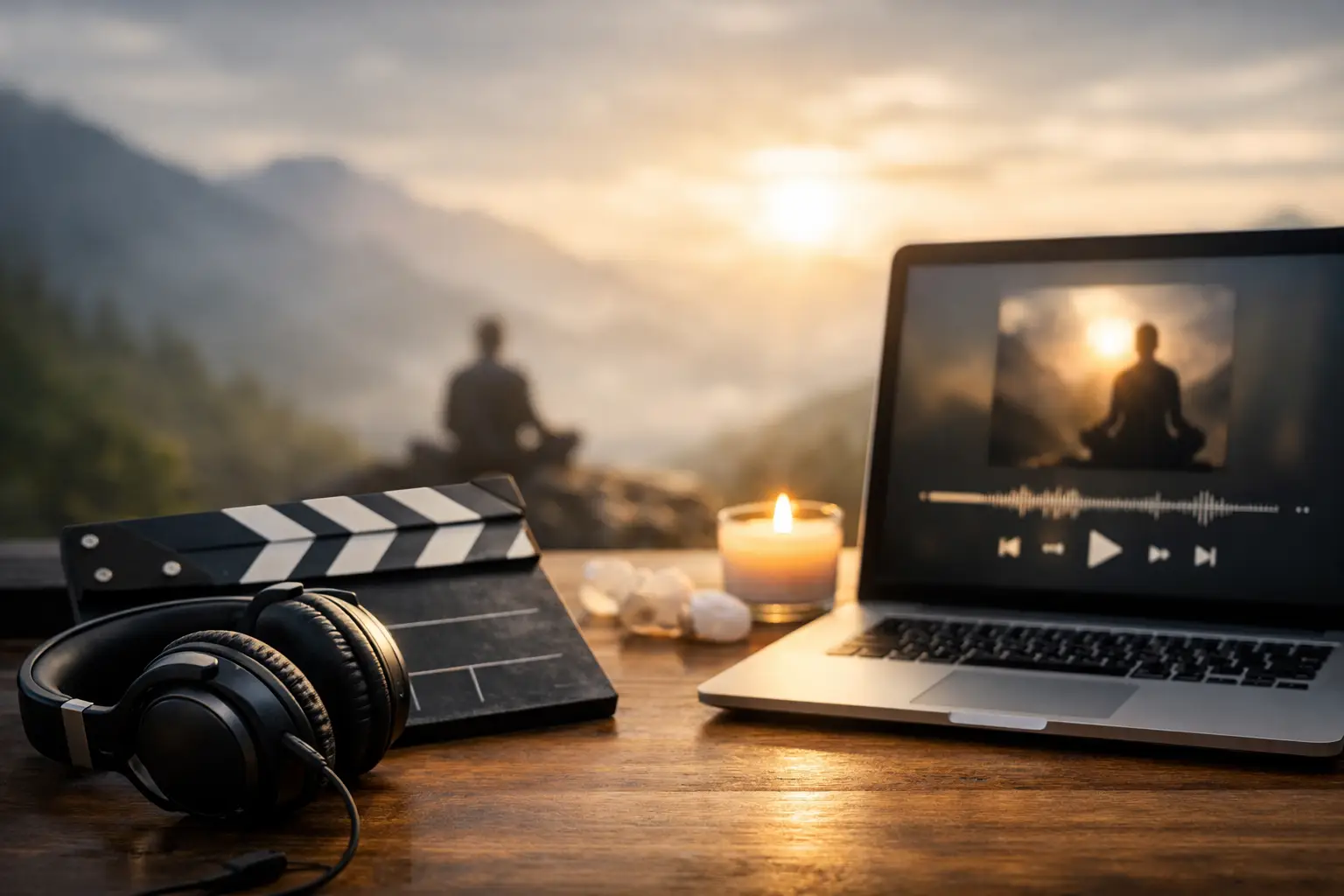
Some playlists fill the room. A spiritual cinematic music playlist does something quieter. It changes the air. It gives shape to thoughts you could not name a minute ago, and suddenly the night feels wider, heavier, more alive.
That kind of playlist is not built by throwing in every slow song with strings. It needs tension. Space. A sense that each track is carrying you somewhere just beyond language. The feeling is spiritual, but not always soft. The feeling is cinematic, but never hollow. It should feel like memory, prayer, longing, and motion living in the same sequence.
What makes a spiritual cinematic music playlist work
The center of it is emotional truth. Not genre purity. Not algorithm logic. A track can come from ambient, neo-classical, electronic, orchestral trap, dark pop, post-rock, or choral sound design and still belong, as long as it holds the same inner gravity.
A real spiritual cinematic music playlist usually lives in contrast. Light against shadow. Stillness against impact. Intimacy against scale. If everything sounds celestial, the playlist starts to blur. If everything hits too hard, it loses the sense of transcendence. What you want is movement between those states.
Think about the songs that make you stop looking at your phone. The ones that feel suspended, almost sacred, but still human. Breath in the mix. Reverb that feels like distance. Drums that arrive like a pulse instead of a command. Vocals that sound revealed rather than performed. That is usually where this kind of listening begins.
Start with mood, not genre
Most people build playlists by category. That works when the goal is consistency. It fails when the goal is immersion.
Start with a scene instead. Maybe it is a long drive after midnight. Maybe it is a slow walk with too much on your mind. Maybe it is the feeling right before a major shift in your life, when nothing is settled but everything feels charged. That scene matters more than whether the song is technically ambient or cinematic electronic.
Once you know the emotional setting, the choices get clearer. A playlist for deep reflection can hold more negative space and slower builds. A playlist for spiritual intensity may want bigger percussion, choral textures, and a stronger rise. A playlist for grief and release might stay fragile longer before it opens up.
It depends on what kind of spiritual experience you mean. For some people, spiritual means peaceful. For others, it means confronting something real. Both can work. The mistake is treating the word like one fixed mood.
The sound palette matters more than the label
There are certain sonic cues that tend to pull listeners into this space. Piano that feels distant instead of decorative. Strings that swell without turning sentimental. Deep low-end that creates weight without crowding the track. Vocal layers that feel ghosted into the background. Sound design that suggests atmosphere, weather, empty architecture, or open sky.
But none of those elements are enough on their own. A song can have choir pads and still feel flat. Another can use almost nothing but a pulse and a single vocal line and feel enormous. The difference is intention.
Look for songs that leave room for your own inner life. That is what separates immersive music from dramatic wallpaper. If a track tells you exactly what to feel, it usually burns out fast. If it invites you in, it stays with you.
How to sequence a playlist so it actually feels cinematic
Cinematic does not just describe sound. It describes progression.
A strong playlist opens with restraint. Not because it needs to be sleepy, but because it needs to create an entrance. The first track should feel like a threshold. Something with atmosphere, a little mystery, and enough emotional detail to pull the listener inward.
From there, build gradually. Let the second and third tracks deepen the tone before you widen the scale. If you peak too early, the rest of the playlist feels like a long descent. Save your most expansive moments for the middle, where the listener is fully inside it.
Then give the playlist a turn. This matters. Even the most meditative sequence needs a point where the emotional color shifts. A darker texture. A heavier rhythm. A sudden moment of lift. That turn is what keeps the playlist from feeling static.
The ending should not feel like an outro slapped on for closure. It should feel like the air after the storm. Not necessarily calm, but resolved enough to let the final note linger. Sometimes the best last track is the quietest one. Sometimes it is the most open.
Pacing is everything
A playlist can have beautiful songs and still miss the feeling because the pacing is off.
If every track blooms the same way, the experience flattens. If every song is sparse and reverent, the listener may drift out instead of deeper in. You need variation in density, tempo, and emotional weight. Just enough to keep the body engaged while the mind wanders.
One useful test is to listen without skipping while doing nothing else. If you feel the urge to reach for a different song, do not ignore it. That usually means the transition broke the spell. Maybe the energy jumped too hard. Maybe two tracks carried the same emotional temperature back to back. Maybe one song was good on its own but wrong for the sequence.
That kind of editing matters more than adding more songs. A spiritual cinematic playlist is rarely improved by excess. It gets stronger when every track earns its place.
Lyrics or no lyrics?
Either can work. The question is whether the words deepen the space or narrow it.
Instrumentals are often easier because they leave more room for projection. They can feel expansive, private, and almost ritualistic. But lyrics can be powerful when they are spare enough to function like fragments of thought rather than full explanation.
A vocal that sounds intimate, cracked, or distant can bring a human center to an otherwise atmospheric sequence. Too many lyrically dense tracks in a row, though, and the playlist starts pulling attention outward. You stop feeling and start processing.
If you use songs with lyrics, place them carefully. One well-timed vocal track can feel like revelation. Five in a row can break the trance.
Keep the playlist honest
This is where most mood playlists fall apart. They reach for aesthetic before feeling.
It is easy to pick songs that sound expensive, polished, and dramatic. It is harder to pick songs that feel exposed. Spiritual music, even at its most cinematic, should carry some kind of sincerity. A pulse of grief. Awe. Hunger. Peace that had to be earned.
If a track feels like it is imitating depth, it usually shows. The mix may be huge. The arrangement may be beautiful. But if there is no emotional center, it will sit on the surface.
That is why the best playlists in this space often mix the grand with the bare. A towering orchestral build means more after a nearly silent piano piece. A dark electronic swell hits deeper after a moment of stillness. Contrast creates belief.
When to rebuild instead of keep adding
Some playlists are meant to grow. Others lose themselves when they get too long.
If your spiritual cinematic music playlist starts feeling inconsistent, the answer may not be more curation. It may be separation. One playlist for ascent. One for mourning. One for night driving. One for inner reset.
There is no prize for fitting every emotional shade into one sequence. In fact, tighter playlists often feel more personal because they protect a specific state. They do not try to be useful for every moment. They are accurate to one.
That is part of what makes curated listening feel different from passive listening. It asks for intention. It gives something back.
A playlist should feel like a place
The best ones do. You return to them not just because the songs are good, but because the atmosphere is consistent enough to hold you. That is where a platform like DRVVYN Sound understands the assignment. The point is not just to collect tracks. It is to create a space people recognize as soon as they enter it.
If you are building your own playlist, think beyond selection. Think about emotional architecture. What does the first minute promise? What does the middle reveal? What does the last track leave behind?
A spiritual cinematic music playlist is not background music for having a vague feeling. It is a sequence for people who want to stay with the feeling long enough to hear what is underneath it.
Build it like that. Patiently. Honestly. Leave some room in it. Let the silence between tracks do part of the work.
Sometimes the right playlist does not give you answers. It just makes your inner world sound clear enough to face.