

Listening & Culture
How to Find Emotional Music for Your Night Drive
Discover how to find emotional music for your night drive. Create the perfect playlist to enhance your journey with reflective melodies.
By DRVVYN · · 10 min read
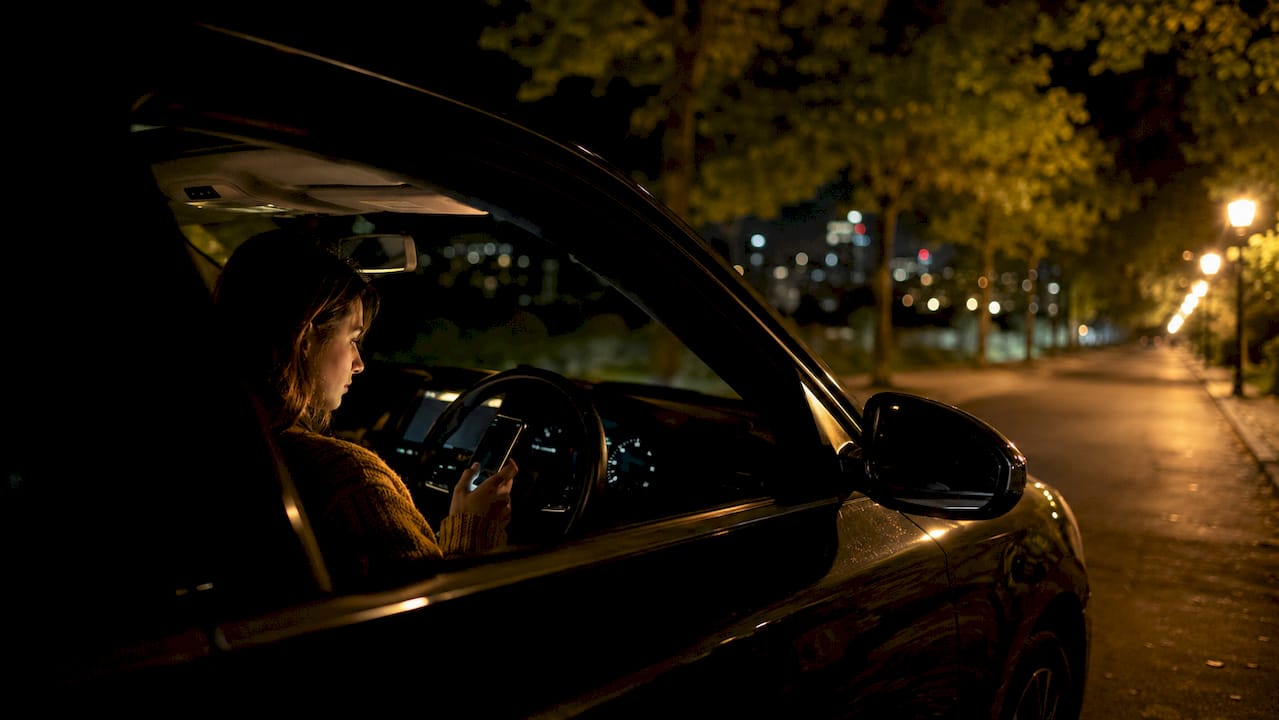
The right emotional music for a night drive is defined by three qualities: reflective mood, controlled tempo, and deliberate sequencing. These are not preferences. They are the difference between a drive that feels cinematic and one that feels scattered. Whether you are processing something heavy or simply want the city lights to blur into something beautiful, the music you choose shapes how that drive feels in your chest. This guide breaks down exactly how to find emotional music for a night drive, build a playlist that holds together, and avoid the mistakes that kill the mood before you hit the highway.
What makes music emotionally resonant for night driving?
Emotional resonance in music is the quality that makes a song feel like it understands you. For night driving specifically, that quality lives in a narrow band of sound: calm, melancholic, atmospheric, and reflective. These are not just aesthetic choices. Music’s emotional tone significantly influences driving errors and physiological arousal, affecting both your safety and your mental state behind the wheel.
The musical elements that carry this weight are specific. Smooth percussion that breathes instead of pounds. Luminous synths that open space rather than fill it. Understated vocals that suggest feeling without demanding it. Genres like chill R&B, indie electronic, ambient pop, and melodic techno all carry these qualities naturally. Apple Music’s “Late Night Drive” playlist, which contains 131 songs across 8 hours and 25 minutes, is built almost entirely on this palette.

Tempo is the most measurable factor. Playlists filtered under 80 BPM promote calmer heart rates and faster response times, supporting safer and more controlled driving behavior. A European road safety campaign produced over 66,800 safer-driving playlists built on this exact principle. That number represents millions of minutes of calmer music exposure on real roads.
The emotional tone you choose also changes how your body responds. Simulator studies with 50 drivers found significant differences in driving errors and arousal levels across happy, sad, and anxiety-inducing music. Reflective music keeps arousal in a productive middle zone. It keeps you present without pushing your nervous system into overdrive.
- Calm and melancholic tones lower physiological tension without causing drowsiness
- Atmospheric instrumentation (pads, reverb, sparse percussion) creates space for thought
- Tempo under 80 BPM is the measurable threshold for calmer driving behavior
- Understated vocals support emotional processing without demanding active attention
- Familiar tracks reduce cognitive load, especially for experienced drivers
Pro Tip:Build your night drive playlist around a BPM ceiling of 80, then sort tracks by energy level from low to medium. This gives you a natural arc without requiring you to manually sequence every song.
How do you build a night drive playlist that actually flows?
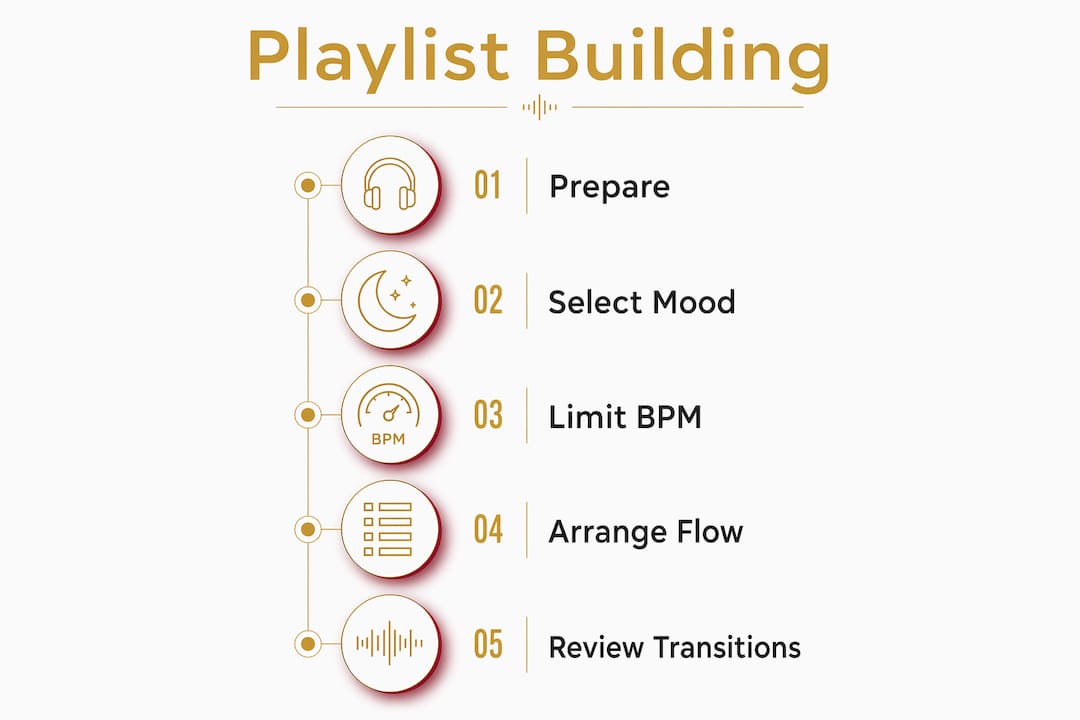
Sequencing is the skill most drivers skip. They drop songs they love into a queue and wonder why the mood collapses after four tracks. Effective night drive playlists rely on sequencing songs to set mood, maintain steady transitions, include quieter tracks for breathing, and end with an arrival feeling rather than an abrupt stop.
Here is a structure that works:
- Open with three mood-setting songs. These tracks establish the emotional temperature. Choose songs that feel like the first exhale after a long day. They should be familiar enough to feel safe but atmospheric enough to signal a shift in headspace.
- Build gradual momentum through the middle. Do not spike the energy. Let each song carry a little more weight than the last. Transitions between tracks should feel like one thought flowing into the next, not a channel change.
- Insert one or two quieter tracks as breathing space. These are not filler. They are the emotional pause that makes the surrounding songs hit harder. Think of them as the silence between sentences.
- End with an arrival song. This track should feel like resolution. Not sad, not triumphant. Just settled. The drive is over, and something has shifted.
- Test the playlist on a real drive and edit ruthlessly. What sounds good in your living room may feel wrong at 1 a.m. on an empty road. Trust the road test over the preview.
The genre mix matters less than the mood arc. Indie electronic, chill R&B, moody pop, and ambient tracks can all coexist in one playlist if the emotional thread stays consistent. Night drive playlists should focus more on sequencing and mood atmosphere than on any single genre.
One critical rule: slow songs must still move. A track that is emotionally flat or sonically static will stall the entire playlist. The best night drive playlists contain motion even in their quietest moments. Constant peaks cause fatigue. Constant stillness causes disconnection. The goal is a current, not a pond.
| Playlist Phase | Mood Target | Example Genres |
|---|---|---|
| Opening (tracks 1–3) | Grounding, familiar, exhale | Chill R&B, ambient pop |
| Middle build (tracks 4–8) | Reflective, steady, present | Indie electronic, moody pop |
| Breathing space (1–2 tracks) | Quiet, sparse, open | Ambient, instrumental |
| Arrival (final track) | Resolved, settled, complete | Melodic techno, soft R&B |
Pro Tip:After building your playlist, listen to the transitions between every consecutive pair of songs. The gap between tracks is where mood breaks. Fix the transitions first, then adjust the song order.
What tools and platforms help you find emotional night drive music?
The fastest way to find chill music for night drives is to start with a curated playlist and customize from there. Apple Music’s “Late Night Drive” playlist is one of the most complete references available. It spans deep house, melodic techno, and ambient tracks, all sequenced for reflective night driving. It is updated regularly and runs over eight hours, which means it covers drives of almost any length.
Spotify offers a different approach. Its API allows filtering by tempo, energy, and valence (the musical measure of emotional positivity or negativity). You can use third-party tools built on the Spotify API to search for tracks under 80 BPM with low energy and low valence. This gives you a data-filtered pool of emotionally resonant songs to pull from.
Self-selected music is less distracting and creates better mood regulation than music chosen for you. Experienced drivers are distracted less by familiar music. New drivers are more disrupted by upbeat or unfamiliar tracks. This means your personal library is not just a comfort choice. It is a safety choice.
- Apple Music “Late Night Drive”: 131 songs, 8+ hours, deep house and ambient focus
- Spotify mood filters: Search by BPM, energy, and valence for custom curation
- Personal library: Familiar tracks reduce cognitive load and support emotional regulation
- YouTube playlists: Search “night drive mix” or “chill R&B night” for community-curated options
- Drvvynsound: Original R&B and cinematic music built specifically for emotional, reflective listening
What mistakes ruin an emotional night drive playlist?
The most common mistake is choosing songs you love in isolation without considering how they function in sequence. A song that wrecked you emotionally at home may feel jarring at 70 miles per hour because the energy does not match the road. Emotional songs for night travel need to fit the context of driving, not just your personal history with them.
Tempo errors are the second most frequent problem. High-arousal music when you are tired or navigating a complex environment is a measurable safety risk. Music tempo and volume act as safety variables, and driving errors increase significantly when the emotional tone of music conflicts with the demands of the road.
“Music boosts alertness on monotonous drives, but only for about 15–25 minutes. After that, the alertness benefit fades. Plan your playlist with arc and silence breaks rather than relying on one continuous soundtrack.”
Volume is the overlooked variable. High or medium volume nudges driving speed upward. Low volume leads to slower driving. Neither extreme is ideal for a reflective night drive. Moderate volume keeps you present without pushing your arousal level into distraction.
Overloading a playlist with emotionally heavy or sad tracks is another trap. One or two deeply melancholic songs create depth. Eight in a row create fatigue. The emotional weight needs contrast to land. Without lighter or more neutral tracks in between, the heaviness becomes background noise rather than something you actually feel.
Key Takeaways
The most effective emotional night drive playlist combines a tempo ceiling of 80 BPM, deliberate mood sequencing, and self-selected familiar tracks to support both emotional resonance and driving safety.
| Point | Details |
|---|---|
| Tempo under 80 BPM | Tracks below this threshold promote calmer heart rates and safer driving behavior. |
| Sequencing over song selection | How songs flow together matters more than any individual track choice. |
| Familiar music reduces distraction | Self-selected tracks lower cognitive load and support better mood regulation while driving. |
| Avoid emotional overload | Mix heavy tracks with quieter or neutral songs to prevent fatigue and maintain feeling. |
| Music alertness fades fast | Alertness benefits from music last only 15–25 minutes; plan playlist arcs with breaks. |
What I have learned from driving with the right music
Night drives taught me something that no studio session ever did. The road strips away performance. You are not listening to impress anyone. You are listening to feel something, or to let something go. That is a different relationship with music entirely.
I have found that the most effective playlists for late night drives are not the ones with the most emotional songs. They are the ones with the most emotional space. A track that breathes, that leaves room for the city lights and the silence between thoughts, does more work than a song that demands your full attention. The pressure leaves your chest not because the music is sad, but because it gives your feelings somewhere to go.
My personal approach is to treat the first song as a door. It has to feel like permission. Permission to be wherever you are emotionally, without judgment. From there, the playlist builds its own logic. I adjust based on drive length and mood. A 20-minute drive gets a tighter arc. A long highway stretch gets more breathing room and a few instrumental tracks where the music blurs into the road itself.
The artists I return to most for this kind of listening are those who write from a place of reflection rather than performance. Chill R&B, cinematic instrumentals, and moody electronic music all carry that quality. Drvvynsound was built around exactly this kind of emotional honesty. The music is made for the moments when you need sound that understands the weight you are carrying.
Experiment. Test playlists on real drives. Trust what opens something in you and cut what closes it down.
— DRVVYN
Drvvynsound and the music your night drive has been waiting for
Some drives need a soundtrack that was made with intention. Not shuffled, not algorithmic. Built for the specific feeling of moving through the dark with something on your mind.
Drvvynsound creates original R&B and cinematic music designed for exactly this kind of listening. The music lives in the space between reflection and release, built around themes of love, healing, and personal growth. Every track is produced to carry emotional weight without overwhelming the moment. You can find curated playlists and original music on the Drvvynsound platform, available across major streaming services. If your night drives need music that meets you where you are, this is where to start.
FAQ
What tempo is best for emotional night drive music?
Tracks under 80 BPM are the most effective for reflective night driving. This tempo range promotes calmer heart rates and supports safer, more controlled driving behavior.
How do I find emotional music for a night drive on Spotify?
Use Spotify’s mood and audio feature filters to search for tracks with low energy, low valence, and a BPM below 80. Start with curated playlists like “Late Night Drive” on Apple Music as a reference, then build your own from familiar tracks.
Does familiar music make night driving safer?
Self-selected and familiar music is less distracting than unfamiliar or imposed music. Experienced drivers show lower distraction levels with familiar tracks, making your personal library a practical safety tool.
How long does music actually boost alertness while driving?
Music boosts alertness on monotonous drives for approximately 15–25 minutes before the effect fades. Plan your playlist with intentional arcs and occasional quieter breaks rather than relying on continuous music.
What genres work best for emotional night drive playlists?
Chill R&B, indie electronic, ambient pop, melodic techno, and moody pop all carry the atmospheric and reflective qualities that work best for late night drives. The genre matters less than the mood arc and tempo consistency across the playlist.