

Listening & Culture
Discover Music for Insomnia Relief: A Science-Backed Guide
Music for insomnia relief is defined as a structured auditory intervention that uses specific tempos, instrumentation, and sound textures to reduce sleep.
By DRVVYN · · 10 min read

Music for insomnia relief is defined as a structured auditory intervention that uses specific tempos, instrumentation, and sound textures to reduce sleep onset time and improve overall sleep quality. You can discover music for insomnia relief through a clear set of scientific principles, not just personal taste. Research confirms that the right music slows your heart rate, quiets anxious thoughts, and signals your nervous system that it is safe to rest. Tracks like Marconi Union’s “Weightless” have been engineered for relaxation, starting at 60 BPM and gradually slowing to 50 BPM over eight minutes. That kind of intentional design is what separates sleep music from ordinary background sound.
What characteristics make music effective for insomnia relief?
The most effective music for insomnia relief shares a specific set of traits. Understanding those traits lets you evaluate any track before you press play.
Tempo is the foundation
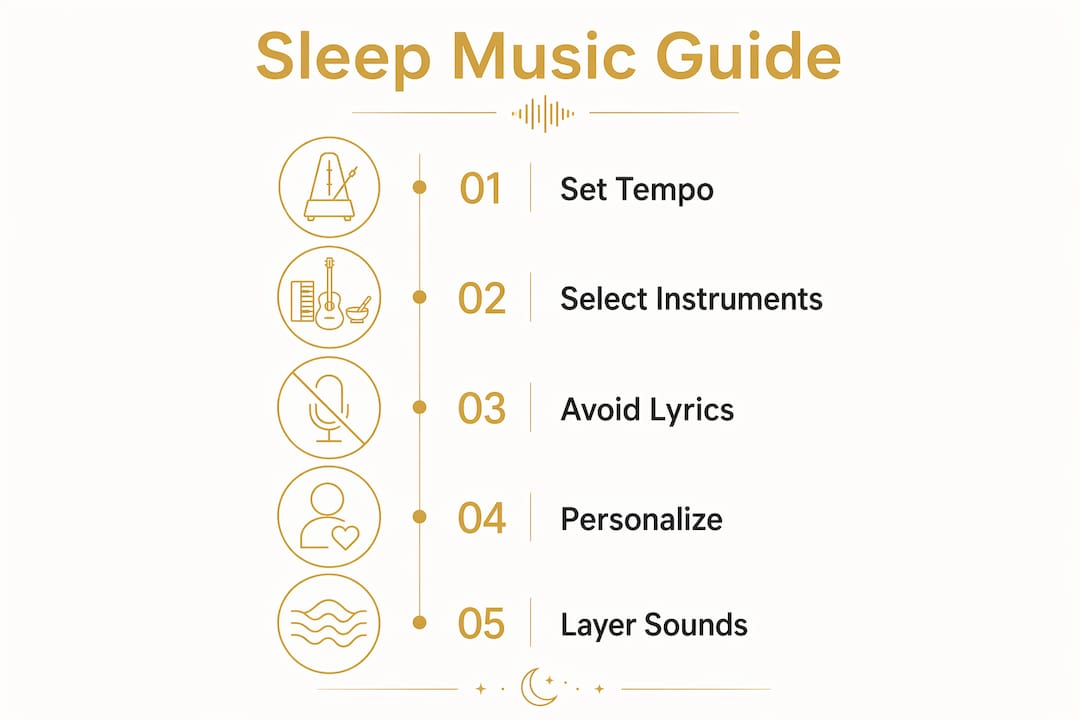
Optimal sleep music tempo sits between 60 and 80 beats per minute. That range mirrors a resting heart rate, which tells your body to slow down rather than stay alert. A 2020 meta-analysis found that solo piano within 60–70 BPM consistently produces the strongest sleep-inducing effects across age groups. Piano’s clean, sustained tones carry the tempo without adding rhythmic complexity that could keep your mind engaged.
Instrumentation and sound texture
The instruments in a track shape how your nervous system responds. Strings, soft synthesizers, and solo piano create smooth, sustained tones that feel like a slow exhale. Brass and percussion rarely support deep rest and can disrupt sleep entirely. That is not a stylistic preference. It is a physiological response to sharp, attack-heavy sounds that trigger alertness.
Low-frequency sounds also matter more than most people realize. Deep, low-frequency depth activates the parasympathetic nervous system, the part of your body responsible for rest and recovery. Think distant thunder, deep cello, or a soft bass pad in ambient electronic music. High-pitched sounds do the opposite.
Why lyrics work against you
Instrumental tracks without lyrics reduce cognitive processing, the mental activity that keeps you awake. When you hear words, your brain automatically tries to decode meaning. That process is the opposite of winding down. Soothing sounds for insomnia work best when there is nothing for your mind to latch onto and analyze.
Here is a quick checklist of what to look for and what to avoid:
Choose tracks that have:
- Tempo between 60 and 80 BPM
- Solo piano, strings, or soft synthesizers
- Minimal or no lyrics
- Smooth, gradual dynamic changes
- Low-frequency depth (cello, bass tones, deep pads)
Avoid tracks that include:
- Brass or percussion instruments
- Abrupt volume shifts or sudden rhythm changes
- Complex, layered rhythms that demand attention
- Lyrics or spoken word elements
Pro Tip:Use a free BPM counter app to check the tempo of any track before adding it to your sleep playlist. A song that feels slow may still clock in above 80 BPM.
How do you find and personalize music for your sleep needs?
Personalization is what turns good sleep music into your sleep music. The science here is clear: familiar music accelerates sleep onset because novelty triggers brain alertness. A track you have never heard before keeps part of your mind awake, waiting to see what comes next. A track you know well removes that tension entirely.
Types of music worth exploring
The types of music for sleepless nights span a wider range than most people expect. Each category has different strengths depending on your sensitivity and environment.
- Solo piano. The most research-supported category for sleep. Tracks in the 60–70 BPM range with minimal ornamentation work best. Composers like Erik Satie wrote pieces that naturally fall into this zone.
- Ambient electronic. Slow synthesizer pads with no discernible beat create a floating, suspended quality. Brian Eno’s ambient work pioneered this approach, and the genre has grown significantly since.
- Nature sounds. Rain, ocean waves, and forest ambience provide a consistent, low-stimulation soundscape. They work especially well for people who find complete silence too sharp and unsettling.
- Pink noise and brown noise. These are not music in the traditional sense, but they function similarly. Pink noise balances high and low frequencies. Brown noise leans deeper and heavier, closer to a waterfall or strong wind. Both mask environmental sound effectively.
- Lo-fi beats. Slow, looping instrumental tracks with a warm, slightly muffled quality. The repetitive structure reduces novelty and keeps your mind from chasing new stimuli.
Layering for a richer soundscape
Combining two sound types often works better than one alone. A soft piano track layered under gentle rain creates both the melodic structure your brain can follow and the consistent noise masking that blocks out environmental disruption. Many curated sleep playlists on streaming platforms already build this layering in. Look for playlists labeled “sleep,” “deep rest,” or “ambient study” as a starting point.
Pro Tip:Keep your listening volume low enough that you can still hear someone speak in the next room. Music that is too loud shifts your brain from passive listening to active monitoring.
How to build a nightly music routine for better sleep
Consistency is what makes music for sleep actually work over time. A one-off listen helps. A nightly habit changes your sleep architecture.
- Start 30 to 45 minutes before you intend to sleep. This timing allows your heart rate and cortisol levels to adjust before you lie down. Think of it as a signal, not a soundtrack. You are telling your body that the day is over.
- Set a sleep timer for 30 to 60 minutes. Music volume should fade out after about an hour to avoid disrupting deep sleep stages. Most streaming apps and phones have a built-in sleep timer. Use it every night.
- Keep the volume at background level. You should barely notice the music after a few minutes. If you are actively listening, it is too loud.
- Choose speakers over earbuds when possible. Earbuds create pressure in the ear canal and can become uncomfortable as you shift positions. A small bedside speaker at low volume fills the room without the physical intrusion.
- Use the same selections each night. Repetition builds a conditioned response. Over time, your brain begins to associate those specific sounds with sleep, which shortens the time it takes to drift off.
You can also layer brown or pink noise beneath a slow instrumental track. The noise floor masks sudden environmental sounds, like traffic or a neighbor’s door, that might otherwise pull you out of a light sleep.
What mistakes should you avoid when using music for sleep?
Even well-chosen music can work against you if you apply it incorrectly. These are the most common mistakes and how to fix them.
- Choosing music that is too slow. Tracks below 60 BPM can feel unsettling rather than calming. The rhythm becomes too sparse for your brain to follow, which can actually increase restlessness.
- Using music with lyrics. Even soft vocal tracks activate language processing in the brain. That cognitive load delays sleep onset, even when the music feels relaxing.
- Playing unfamiliar tracks every night. Novelty keeps the brain alert. Rotating through new playlists each night removes the conditioned response that makes music effective over time.
- Leaving music on all night. Music with slow tempo but complex rhythms can be too stimulating during lighter sleep stages. Playing music through the night risks pulling you out of deep sleep cycles.
- Ignoring abrupt endings. Sudden stops can awaken light sleepers. Always use a gradual fade-out setting rather than a hard stop on your timer.
- Choosing stimulating genres out of habit. If you normally listen to uptempo R&B or hip-hop during the day, switching to the same energy at night sends mixed signals. The types of music for winding down need to feel distinctly different from your daytime listening.
“Music provides a stable soundscape that masks environmental noise and distracts from anxious thoughts. When the mind has something gentle to rest on, it stops searching for things to worry about.”
Pro Tip:If you wake up in the middle of the night and cannot fall back asleep, restart your sleep music routine rather than reaching for your phone. The familiar sound cue can reset the process.
Key Takeaways
Music for insomnia relief works best when it combines the right tempo, instrumentation, and consistent nightly timing to create a conditioned sleep response.
| Point | Details |
|---|---|
| Tempo is non-negotiable | Keep tracks between 60 and 80 BPM to mirror a resting heart rate. |
| Avoid lyrics and percussion | Instrumental-only tracks reduce cognitive processing that delays sleep. |
| Familiarity accelerates sleep | Use the same selections nightly to build a conditioned relaxation response. |
| Time your listening carefully | Start 30 to 45 minutes before sleep and set a 30 to 60 minute fade-out timer. |
| Low-frequency sounds go deeper | Deep bass tones and brown noise activate the parasympathetic nervous system. |
What I have learned from using music to sleep
I have tried a lot of approaches to sleep over the years. White noise machines, podcasts, guided meditations. Music was the one that actually stuck, and I think I know why.
The difference was not finding the “perfect” track. It was building a ritual around the same tracks, night after night. The first week felt mechanical. By the third week, I noticed my body starting to relax the moment the first few notes played. That conditioned response is real, and it is more powerful than any single song.
What surprised me most was how much low-frequency sound mattered. I switched from earbuds to a small bedside speaker, lowered the volume significantly, and added a layer of brown noise beneath a slow piano track. The combination felt less like listening to music and more like being held inside a sound. The pressure in my chest would ease within minutes.
Music does not replace good sleep habits. You still need a consistent bedtime, a cool room, and a screen-free wind-down period. But music fills the gap that silence leaves open. Silence is too sharp for an anxious mind. Music gives that mind something soft to land on.
— DRVVYN
Drvvynsound: music crafted for the moments that need it most
Sleep is one of the most personal experiences you have. The music that carries you there should feel that way too.

Drvvynsound creates emotionally driven music built around themes of healing, reflection, and release. The catalog includes tracks designed to quiet the noise of the day and give your mind something gentle to rest on. Whether you are winding down after a long night or searching for relaxing melodies for sleep, Drvvynsound offers music that meets you where you are. Each release is crafted with intention, not just as background sound, but as an experience that honors what you are feeling. Visit Drvvynsound to find what your nights have been missing.
FAQ
What is music therapy for sleep?
Music therapy for sleep is the intentional use of music with specific tempo, instrumentation, and dynamic qualities to reduce sleep onset time and improve sleep depth. Tracks between 60 and 80 BPM with no lyrics are the most effective category.
How long should I listen to music before sleeping?
Listening 30 to 45 minutes before your intended sleep time produces the best results. This window allows your heart rate and cortisol levels to drop before you lie down.
Can music make insomnia worse?
Yes, if chosen incorrectly. Music with lyrics, abrupt volume changes, or tempos above 80 BPM can stimulate the brain rather than calm it. Tracks with complex rhythms are particularly likely to delay sleep onset.
What types of music work best for sleepless nights?
Solo piano, ambient electronic, nature sounds, and brown or pink noise are the most effective types of music for sleepless nights. Solo piano in the 60–70 BPM range shows the strongest and most consistent results across research.
Should I leave music on all night?
Set a sleep timer to fade music out after 30 to 60 minutes. Playing music through the night risks disrupting deep sleep stages, and sudden stops can wake light sleepers.