

Listening & Culture
Explore Your Bedroom Music Listening Setup
Discover how to optimize your space. Explore your bedroom music listening setup for immersive sound and superior audio experiences!
By DRVVYN · · 9 min read
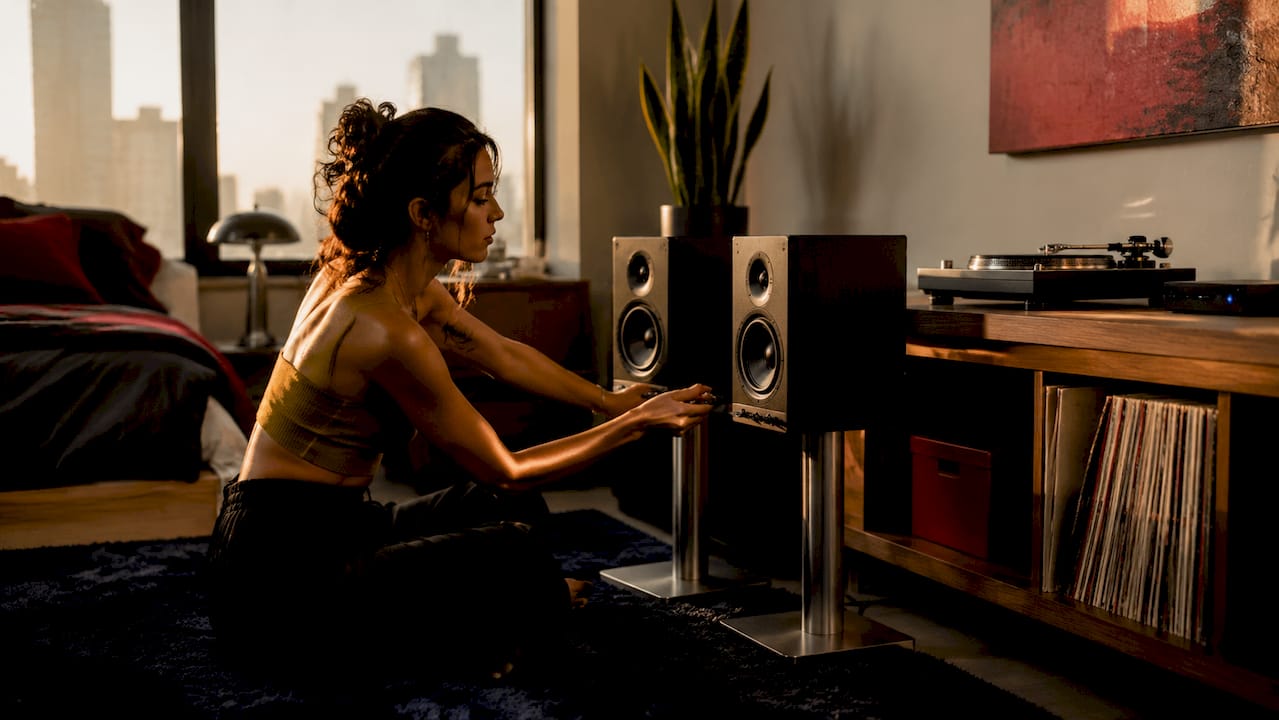
A bedroom music listening setup is defined as a dedicated audio environment within a personal sleep space, optimized for sound clarity, stereo imaging, and emotional immersion. Most audiophiles treat their bedroom as an afterthought, but the room itself shapes your sound as much as any speaker you buy. The right combination of equipment, placement, and acoustic treatment transforms four walls and a bed into a space where music feels alive. This guide covers every layer of that process, from choosing the right speakers to positioning your chair for the best stereo image your room can produce.
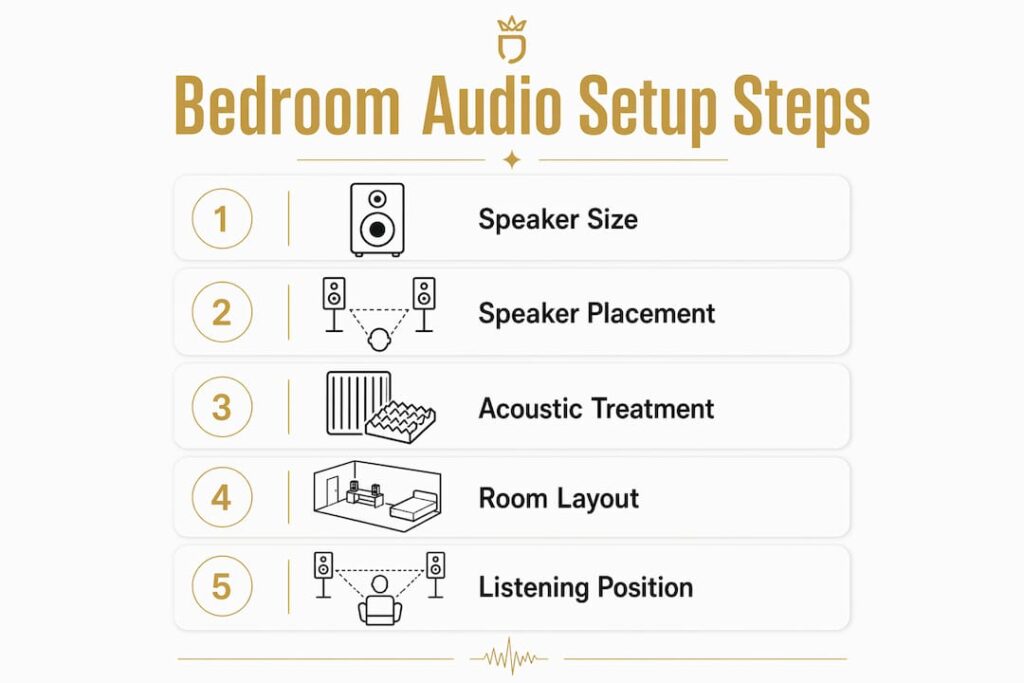
What equipment works best for a bedroom audio setup?
The best speakers for bedroom listening are 5-inch woofer monitors, which extend down to roughly 50Hz without triggering the room vibration issues that larger drivers create in small spaces. That low-end extension gives you full, warm bass without the muddiness that 8-inch woofers produce when a room cannot breathe around them.
You have two main speaker paths: powered monitors or passive speakers paired with an integrated amplifier. Powered monitors like the Yamaha HS5 or Adam Audio T5V have built-in amplification, which removes one variable and keeps your setup compact. Passive speakers paired with a dedicated amp, such as the KEF Q150 with a Rega Brio, give you more flexibility to upgrade components separately over time.
Your source matters too. Streaming devices like the WiiM Mini or Cambridge Audio MXN10 pull high-resolution audio from Tidal and Qobuz. A quality DAC (digital-to-analog converter) like the Schiit Modi or AudioQuest DragonFly Red converts digital files into the analog signal your amp needs. Vinyl turntables, such as the Pro-Ject Debut Carbon EVO, add warmth and ritual to a bedroom setup that streaming alone cannot replicate.
When space is genuinely limited, compact soundbars of 24–32 inches balance audio performance with a small footprint. They disperse sound well at short distances and avoid the bass overpressure that full-range speakers can create in tight rooms.
| Speaker Type | Best For | Typical Size | Key Advantage |
|---|---|---|---|
| Powered studio monitors | Near-field listening, music production | 5–8 inch woofer | Built-in amp, accurate sound |
| Passive bookshelf speakers | Hi-fi listening, upgradeable systems | 5–6 inch woofer | Amp flexibility, natural tone |
| Compact soundbars | Very small rooms, minimal clutter | 24–32 inches | Space saving, easy setup |
| Desktop speakers | Desk-based listening, casual use | 3–4 inch woofer | Compact, affordable |
How do you position speakers for ideal sound imaging?
Speaker placement is the single highest-impact decision in any bedroom audio setup. The isosceles triangle method places both speakers and your listening position at equal distances from each other, forming a stable stereo image where instruments lock into precise positions across the soundstage.
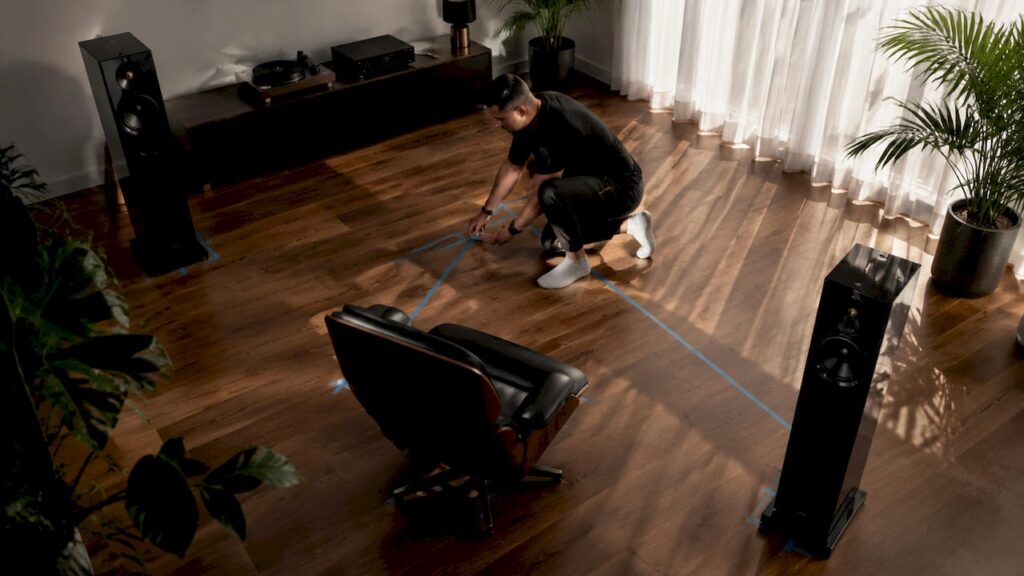
For larger bedrooms, the standard geometry calls for speakers 7–8 feet apart with your listening seat roughly 10 feet back. In smaller rooms, near-field placement at 3–5 feet from your ears keeps direct sound dominant before room reflections arrive, which improves clarity without requiring extensive acoustic treatment.
Follow these steps to dial in your speaker position:
- Measure your room. Note the width, length, and ceiling height before moving anything.
- Mark your listening position. Place your chair or bed headboard at the point where you spend most listening time.
- Set speaker distance symmetrically. Both speakers must be exactly the same distance from your listening position and from the side walls.
- Raise tweeters to ear level. Use speaker stands or furniture to align the tweeter with your ear height when seated.
- Apply slight toe-in. Angle each speaker inward by roughly 10–15 degrees so the tweeters point toward your ears, not straight ahead.
- Pull speakers away from the rear wall. At least 30cm of clearance from the back wall reduces bass buildup that muddies low frequencies.
- Listen and adjust. Play a familiar track with clear stereo content and shift speakers in small increments until the center image locks in.
Pro Tip:Use a tape measure and painter’s tape on the floor to mark speaker positions before committing. Symmetry is not something you can eyeball accurately, and even a two-inch difference between sides collapses the stereo image.
Avoid placing speakers parallel to side walls without any toe-in. That geometry creates comb filtering, where reflected sound cancels out specific frequencies and creates uneven tonal response across the room.
What acoustic treatments improve a bedroom listening experience?
Acoustic treatment is where most bedroom setups fail. People spend money on better speakers but ignore the room, which is the actual instrument shaping every frequency they hear. Treating first reflection points with acoustic panels on the side walls reduces low-mid frequency muddiness and brings out detail that was always in the recording but buried by reflected sound.
You do not need a professional studio build to treat a bedroom effectively. Soft furnishings like rugs, curtains, and upholstered furniture naturally absorb sound and reduce reflections. Materials like wool, heavy linen, and thick cotton absorb mid and high frequencies, which is where most listening fatigue originates.
Here are the most effective acoustic treatment materials for bedrooms:
- Area rugs: Place a large rug between your speakers and listening seat to absorb floor reflections and reduce bass muddiness.
- Heavy curtains: Thick drapes on windows kill flutter echo and tame high-frequency brightness from glass surfaces.
- Upholstered furniture: A fabric sofa or padded headboard behind your listening position absorbs rear-wall reflections.
- Acoustic panels: Mount 2-inch thick panels at the first reflection points on side walls, roughly at ear height.
- Bass traps: Place foam or rigid fiberglass corner treatments in room corners to reduce low-frequency buildup that makes bass sound boomy.
- Bookshelves with books: Irregular surfaces scatter sound rather than reflect it cleanly, which adds a natural diffusion effect.
For apartments with thin walls, structural vibration degrades sound clarity and bleeds audio into neighboring spaces. Decoupling your speakers from hard surfaces using isolation pads, such as those from Auralex or IsoAcoustics, reduces vibration transfer significantly.
Pro Tip:Do not over-treat your room. Over-damping creates an unnatural dead sound that makes music feel flat and lifeless. Aim for a balance where the room still has some natural liveliness, just without harsh reflections.
Balanced acoustic treatment also reduces listening fatigue during long sessions. A well-treated room lets you listen at lower volumes and still feel fully immersed, which protects your hearing and deepens your connection to the music.
How to build a cozy music corner with smart room layout
The physical arrangement of your room shapes both the sound and the feeling of your listening space. Cable management is where most setups look worse than they sound. Use cable sleeves, adhesive clips, or a cable raceway to route speaker wire and power cables along baseboards. Keep cable lengths accurate to your actual speaker distance rather than buying excess and coiling the rest, since coiled cables can introduce minor interference in analog signal paths.
Speaker stands are worth the investment even in a bedroom. Dedicated stands, like those from Atacama or Sound Anchors, isolate your speakers from floor vibration and let you set tweeter height precisely. If stands feel too formal for a bedroom, a solid wood shelf or a dense furniture surface works well, provided you add isolation pads underneath each speaker.
Your listening chair or bed position matters more than most people realize. The worst seat in any room is the exact center against the rear wall, where bass frequencies stack up and create an unnatural low-end peak. Move your listening position forward by even two feet and the bass response becomes noticeably more accurate.
Reflective surfaces like mirrors and uncovered windows are the quiet enemies of good sound. A mirror directly behind your listening position reflects high frequencies back at you and smears the stereo image. Cover it, angle it, or hang a fabric panel in front of it during listening sessions. The same logic applies to large windows: heavy curtains drawn during a listening session make a real difference.
Warm lighting and tactile materials complete the atmosphere. Comfort and atmosphere are as important as equipment for an immersive listening experience. A warm-toned lamp, a soft throw, and a well-placed speaker stand create a space that invites you to sit down and actually listen, rather than just have music playing in the background. The environment you create around the sound shapes how deeply you receive it.
Key takeaways
The most effective bedroom music listening setup combines appropriate speaker size, precise isosceles triangle placement, and targeted acoustic treatment to produce clear, immersive sound in a small space.
| Point | Details |
|---|---|
| Choose the right speaker size | 5-inch woofer monitors deliver full bass without overwhelming small bedroom acoustics. |
| Use the isosceles triangle method | Equal speaker-to-listener distances lock in stereo imaging and a stable soundstage. |
| Treat first reflection points | Acoustic panels on side walls reduce muddiness more than upgrading speakers alone. |
| Pull speakers from walls | At least 30cm of rear clearance prevents bass buildup that clouds low-frequency detail. |
| Balance absorption and liveliness | Over-damping kills the natural room energy that makes music feel alive and present. |
What i’ve learned from building bedroom listening spaces
Most people start with the gear and never get to the room. I understand that pull. A new pair of monitors feels like progress. Moving furniture and hanging panels feels like compromise. But the truth I keep returning to is this: simple first reflection treatments deliver more improvement per dollar than almost any speaker upgrade you can make.
The moment that shifted my thinking was placing a single acoustic panel at the first reflection point on my left wall. The center image on a track I had heard hundreds of times suddenly had weight and position it never had before. The speaker had not changed. The room had.
Atmosphere matters in ways that are hard to quantify but impossible to ignore. When the lighting is warm, the chair is comfortable, and the cables are out of sight, you settle into the music differently. You stop adjusting and start listening. That shift in attention is where music does its real work, where it reaches the parts of you that need it most.
Experiment without fear of getting it wrong. Move your speakers two inches. Hang a curtain. Try near-field listening at 3 feet instead of 8. Your room will tell you what it needs if you pay attention. The best bedroom audio setup is not the most expensive one. It is the one you keep returning to.
— DRVVYN
Build your space with Drvvynsound
Your bedroom deserves a listening experience that matches the music you love. Drvvynsound curates gear, playlists, and creative content built for listeners who take their space seriously.

Whether you are setting up your first pair of monitors or refining a space you have lived with for years, the DRVVYN essentials collection connects you to the tools and sounds that make a bedroom feel like a sanctuary. Drvvynsound was built on the belief that music is most powerful when the environment around it is intentional. Start building yours today.
FAQ
What size speakers work best for a bedroom?
5-inch woofer monitors are the ideal choice for most bedrooms, extending to roughly 50Hz without creating the room vibration problems that larger drivers cause in small spaces.
How far should speakers be from the listener in a small room?
Near-field placement at 3–5 feet from your ears keeps direct sound dominant before reflections arrive, which improves clarity in untreated bedrooms without requiring extensive acoustic work.
Do i need acoustic panels if i already have rugs and curtains?
Rugs and curtains handle mid and high-frequency reflections well, but acoustic panels at first reflection points on side walls address the low-mid muddiness that soft furnishings alone cannot fully resolve.
Can a soundbar replace stereo speakers in a bedroom?
A 24–32 inch compact soundbar works well in very small bedrooms where stereo speaker placement is not practical, offering balanced dispersion at short distances without the bass overpressure of full-range monitors.
How do i avoid bass buildup in a small bedroom?
Pull your speakers at least 30cm from the rear wall, place bass traps in room corners, and position your listening seat away from the exact center of the rear wall, where low frequencies naturally stack and peak.