

Listening & Culture
The Future of Direct to Fan Music
The future of direct to fan music is more intimate, immersive, and artist-led, shaped by mood, access, and deeper listener connection.
By DRVVYN · · 7 min read
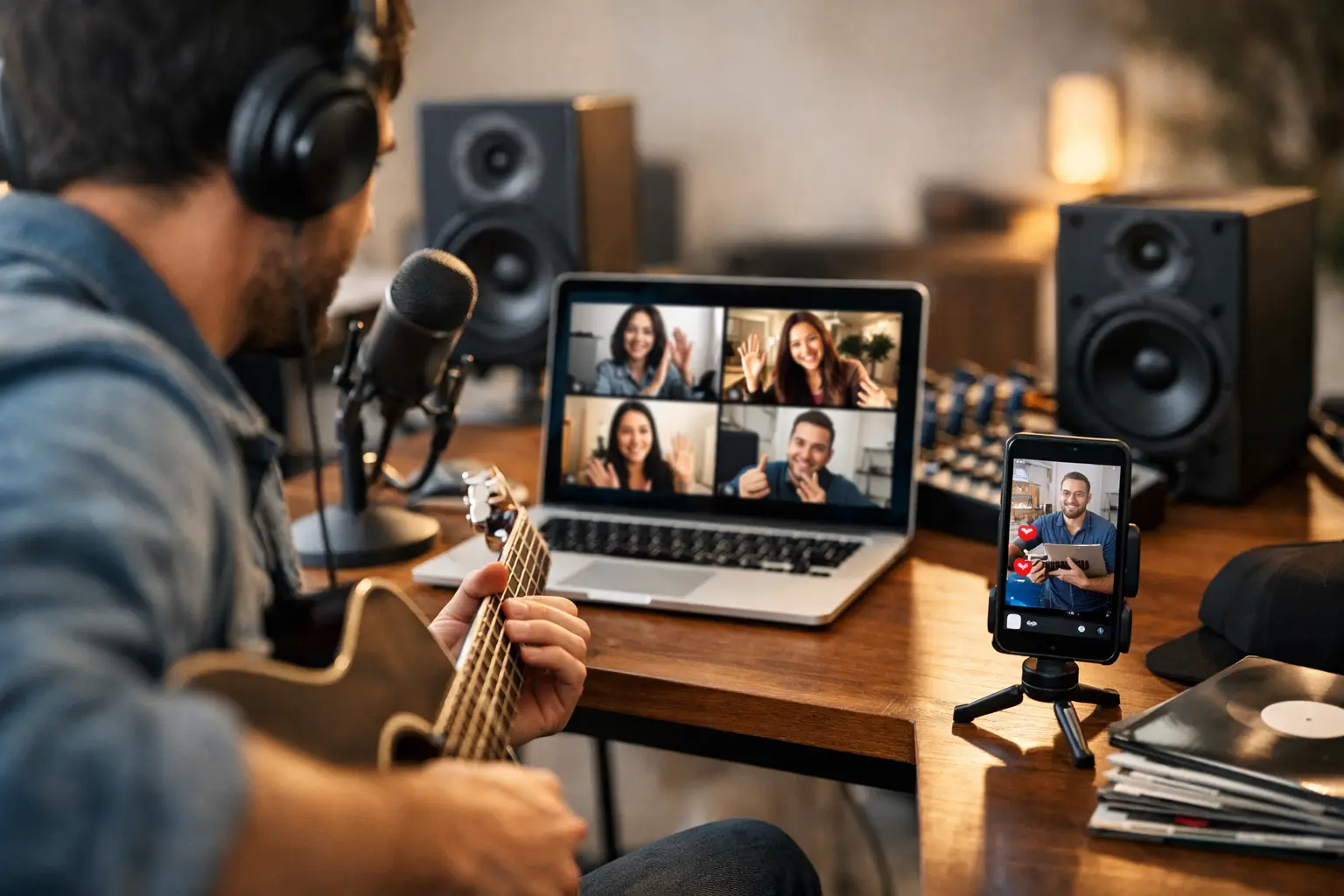
A song used to arrive like a broadcast. It dropped, you heard it, and maybe if it stayed with you, you came back. The future of direct to fan music feels different. Closer. Less like promotion, more like presence. Fans are not just waiting for a release anymore. They are looking for a world they can return to when the night gets quiet and the right sound matters.
That shift changes everything. It changes how artists release, how listeners discover, and what loyalty actually means. The old model was built around reach. The next one is being built around resonance.
Why the future of direct to fan music feels more personal
For a long time, direct-to-fan was treated like a sales channel. Email list. Merch drop. Exclusive vinyl. Early access. That still matters, but it is not the full picture now. People do not build real attachment just because a checkout page exists. They stay when the music feels like it knows where they are emotionally.
That is where direct-to-fan starts evolving into something deeper. The artist is not only delivering tracks. They are shaping an atmosphere, a rhythm, a relationship. Fans are not showing up for one moment of hype. They are entering a space with its own tone, visuals, timing, and emotional language.
This is why some independent artists quietly build stronger communities than louder names with bigger budgets. They understand that attention is easy to spike and hard to hold. Connection works the other way around. It grows slower, but it lasts.
Streaming will still matter, but ownership of the experience matters more
The future of direct to fan music is not about abandoning streaming. Most listeners still live on Spotify, Apple Music, YouTube, and whatever platform fits their routine. The smart move is not to fight that behavior. It is to meet people there, then give them a reason to go deeper.
Streaming is discovery, convenience, and habit. It is where a late-night recommendation turns into a first listen. It is where passive listeners become curious. But streaming platforms are crowded by design. Even when a song connects, the environment around it is constantly pulling the listener somewhere else.
That is why the real advantage moves to experience design. What happens after the first stream? Does the listener find a visual world that matches the record? A playlist that extends the feeling? A release cadence that feels intentional instead of random? A place where the music is organized around mood, not just metadata?
Artists who understand this are not trying to control every platform. They are building continuity across them. The song starts in one place, but the relationship continues elsewhere.
Curation will matter as much as creation
One of the clearest shifts ahead is that artists will not only be judged by what they make. They will be remembered for how they frame it.
That means sequencing matters. Context matters. The difference between dropping songs and building a body of work will become even more obvious. Listeners are overwhelmed. They do not need more noise. They need someone with taste, restraint, and a point of view.
In that environment, curation becomes part of the art. Mood-based playlists, visual storytelling, alternate versions, short-form clips that actually match the song’s emotional core – these are not side assets anymore. They are part of how fans understand the music.
This is especially true for artists whose work is immersive by nature. If a record feels nocturnal, reflective, or cinematic, everything around it should honor that feeling. The strongest direct-to-fan strategies will feel less like marketing funnels and more like carefully lit rooms.
Fans want access, but not all access feels meaningful
There is a lazy version of direct-to-fan that assumes more content automatically means more connection. Behind-the-scenes footage. Daily updates. Constant check-ins. Endless access. Sometimes that works. Often it just creates fatigue.
The future is not about flooding people with proximity. It is about offering the right kind of closeness.
For some artists, that might mean voice notes, journal-style updates, or rough demos that reveal the edges of a song before it fully arrives. For others, it may mean almost the opposite – very little personal exposure, but a stronger sense of mystery and intentionality. Both can work. It depends on the artist and on whether the form of access feels true.
Fans can feel the difference between intimacy and content obligation. One creates gravity. The other creates clutter.
The strongest communities will gather around feeling, not just fandom
This may be the most important shift. In the next phase of direct-to-fan music, community will form less around celebrity and more around emotional alignment.
People are already using music this way. They search for songs that sound like specific hours, specific moods, specific inner weather. They want sound that meets them where they are without forcing language onto it. When an artist consistently offers that kind of accuracy, loyalty becomes more than support. It becomes ritual.
That opens up a different kind of relationship. Fans do not only follow the artist. They recognize themselves inside the work. They return because the music has become part of how they process memory, longing, tension, release, desire. That kind of bond is difficult to manufacture and hard to break.
For a platform like DRVVYN Sound, that is not a trend. It is the foundation. The future belongs to artists and brands that understand music as a place people return to, not just a product they consume once.
Direct support will diversify
Money in music has always followed audience behavior, and audience behavior is splintering. Some listeners will keep supporting through streams. Some will buy limited merch. Some will pay for access to exclusive communities, early releases, private livestreams, or physical objects that feel collectible and personal.
There will not be one perfect model. That is the trade-off and the opportunity.
A smaller but deeply invested audience can be more valuable than a massive one with no attachment. But that only works if the offer fits the emotional weight of the music. If everything feels transactional, people pull back. If the offering feels like an extension of the world the artist already built, support feels natural.
This is why artists will need more than products. They will need discernment. Not every fan wants the same kind of access. Not every release needs a premium layer. Sometimes the smartest move is to keep the path simple and let trust build over time.
AI, automation, and the rising value of human signal
As more music, visuals, and promotional material get generated at speed, human signal becomes more valuable. Not polished. Not louder. Human.
The future of direct to fan music will be shaped in part by a simple question: can people feel a real presence behind the work? Not just in the song itself, but in the choices around it.
Automation can help with distribution, scheduling, segmentation, and scale. That part is useful. But if every message sounds optimized instead of felt, listeners notice. If every image looks technically perfect but emotionally vacant, they notice that too.
The artists who stand out will not be the ones who reject every new tool. They will be the ones who know what should stay untouched. Voice. Taste. Timing. The strange little imperfections that make a world believable.
What artists will need to do differently
The next era asks artists to think beyond release day. Not in a corporate way. In a narrative way.
What feeling does this song hold? What visual language carries it forward? Where does the listener go next if it lands? How does the catalog connect? Why should someone stay in this world after the first moment of discovery?
Those questions matter because direct-to-fan is no longer only about cutting out middlemen. It is about reducing distance. Emotional distance. Aesthetic distance. The gap between hearing something and belonging to it.
That does not mean every artist needs to become a full-scale media brand. Some should stay minimal. Some should stay elusive. But even restraint can be strategic when it feels intentional. The point is not to do more. The point is to create a clearer path into the music.
The artists who move people over the next few years will likely be the ones who understand this balance. Wide distribution, but a distinct center. Accessibility, but not overexposure. Consistency, but not repetition.
The future of direct to fan music is not about replacing platforms with personality. It is about making sure personality survives the platforms.
And maybe that is the real shift underneath all of it. Fans do not need constant noise from the artists they love. They need something they can trust when they press play. Something that feels considered. Something that feels like it was made for the version of them nobody else sees.
Build that, and the audience does more than listen. They return.