

Listening & Culture
Immersive Listening Experience Music
Immersive listening experience music turns songs into atmosphere, memory, and mood. Here’s why it hits deeper and stays with you longer.
By DRVVYN · · 7 min read
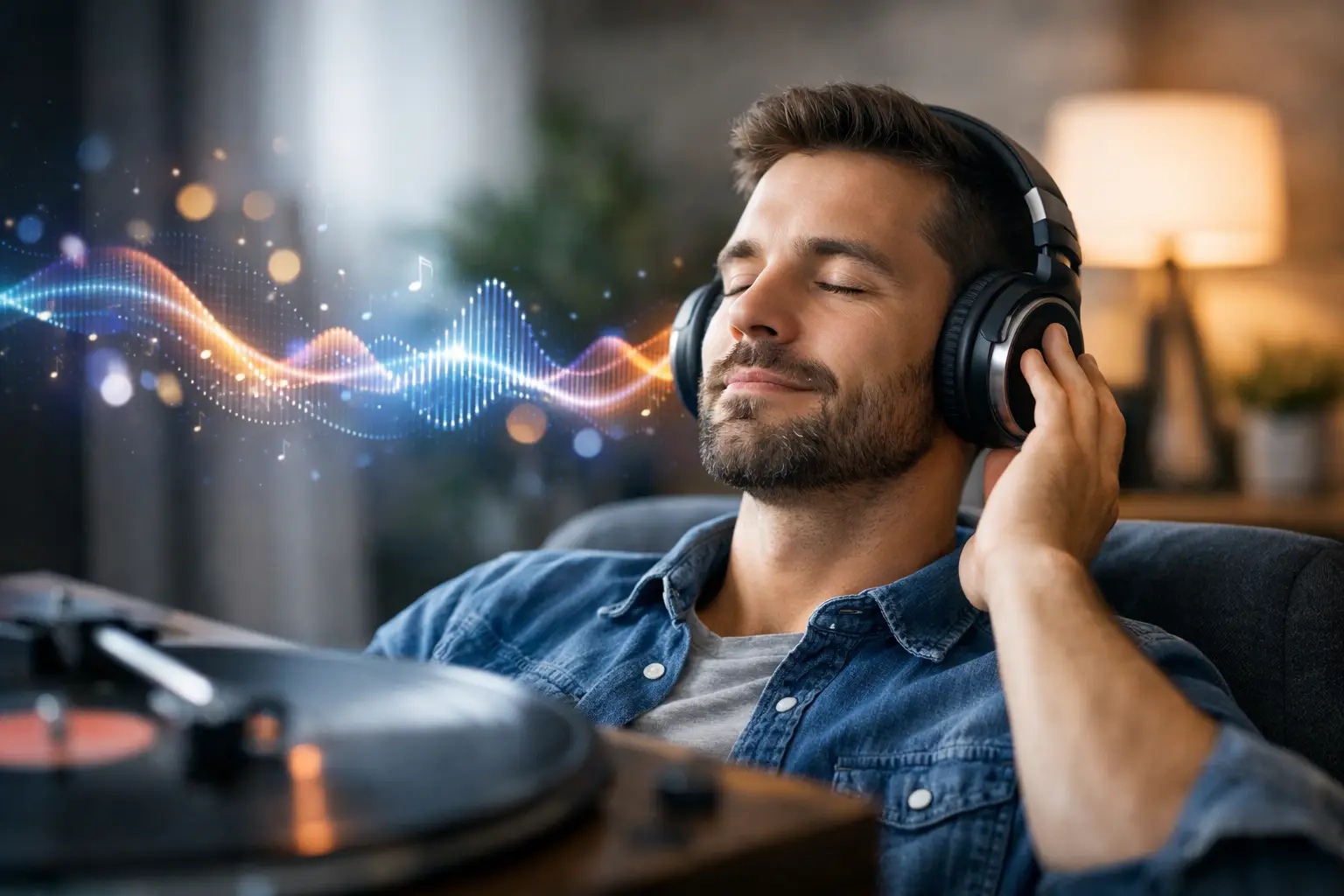
Some songs pass through you. Others change the temperature of the room.
That difference is the heart of immersive listening experience music. It is not just a track you queue up to fill silence. It is music that creates a state. It holds a mood long enough for you to step inside it, stay there, and feel something more honest than distraction.
For listeners who reach for music at 1:12 a.m., during long drives, after hard conversations, or in the strange quiet before sleep, that distinction matters. You are not always looking for a hit. Sometimes you are looking for a place.
What immersive listening experience music really means
At its best, immersive listening experience music does not ask for half your attention. It pulls you into a full emotional frame. The production, pacing, tone, and sequencing all move together, so the music feels less like content and more like an environment.
That environment can be intimate or massive. It can feel weightless, haunted, romantic, or scorched. What matters is intention. Every sound seems placed for a reason. Nothing breaks the spell too early.
This is why some songs feel larger than their runtime. They leave residue. You finish listening, but the atmosphere stays on your skin a little longer.
Immersion is not about making everything cinematic in the obvious sense. Bigger is not always deeper. Sometimes the most immersive track is the one that barely raises its voice, but knows exactly where to leave space.
Why some music feels immersive and some doesn’t
A lot of music is built for quick recognition. Catch the hook. Make the point fast. Keep moving.
There is nothing wrong with that. Not every song needs to become a universe. But immersive music works differently. It trusts repetition. It lets textures breathe. It understands that emotion often arrives slower than stimulation.
That can mean layered vocals that feel like memory instead of performance. It can mean drums that pulse like a distant signal rather than dominate the front of the mix. It can mean a song structure that unfolds in shadows instead of announcing every turn.
The trade-off is real. Music built for immersion is not always immediate. It may not reveal itself in fifteen seconds. It may ask for the kind of patience that streaming culture does not always reward.
But when it lands, it lands deeper. It gives you something replay value alone cannot explain.
The role of mood in an immersive listening experience music journey
Mood is where immersion begins.
Most listeners do not search for songs only by genre anymore. They search by feeling, even when they do not say it out loud. Late night. Reflective. Dark pop. Rainy drive. Healing. Focused but emotional. Music has become one of the fastest ways to find emotional accuracy.
That is why mood-based curation matters. A strong listening experience is not just about one powerful song. It is about what happens when tracks speak to each other. The right sequence can turn separate records into one continuous feeling.
This is where immersive listening experience music becomes more than a playlist category. It becomes narrative. One song opens the door. Another deepens the room. A third changes the light completely.
When that arc is intentional, the listener stops skipping ahead. They trust the next moment.
Listening with intention changes the music
The same track can feel flat in one setting and devastating in another.
Immersion depends partly on the music itself, and partly on how you meet it. Headphones help. So does darkness. So does choosing not to multitask for a while. Not because listening needs rules, but because attention changes what you hear.
This is easy to forget when music is always available. Convenience is beautiful, but it can thin out the experience. If every song lives between texts, tabs, and notifications, even great records can start to feel disposable.
Intentional listening pushes back against that. It says this moment matters enough to stay with. It lets the song reveal details that casual listening misses – a breath in the vocal, a distant layer, the way the final seconds dissolve instead of end.
You do not have to sit perfectly still and study the mix. This is not about performance. It is about presence.
Immersion is built through world, not just sound
The strongest artists understand that listeners often hear with their eyes, memory, and mood at the same time.
Cover art matters. Visual tone matters. Titles matter. The way a release is introduced matters. None of this replaces the music. It frames it. It gives the listener a door into the emotional world before the first note even lands.
That is part of why some independent artists build such devoted audiences. They are not just dropping singles into the feed. They are shaping a consistent atmosphere across releases, visuals, playlists, and videos. You begin to recognize the feeling before you press play.
Done well, this creates trust. The listener returns not just for a song, but for a state they know the artist can deliver.
DRVVYN Sound lives in that space. Not as a page to scroll through, but as a destination built around mood, continuity, and emotional return.
Why immersive music stays with people longer
People replay immersive music for different reasons than they replay catchy music.
Catchy music often wins through instant recall. You remember the line, the rhythm, the moment it peaks. Immersive music often wins through emotional gravity. You go back because it felt like it understood something you could not phrase yet.
That kind of connection tends to last. Not always because the song is more complex, but because it became attached to a real internal moment. A season. A person. A drive home you can still see in your head.
This is where immersion and memory start to overlap. Music becomes a container. When you return to it, you do not just hear the track again. You revisit a version of yourself.
Of course, there is a risk here too. Music that leans too hard on atmosphere can become vague. It can sound beautiful without actually saying much. Immersion works best when mood and meaning move together. The feeling has to be held by substance, even if that substance is subtle.
How to find music that actually feels immersive
The fastest way is to stop chasing only genre labels and start noticing patterns in what you already love.
Ask yourself what draws you back. Is it spacious production, soft tension, layered vocals, slow builds, emotional ambiguity, or songs that feel nocturnal without saying so directly? Once you know the pattern, your listening gets more precise.
Albums and carefully shaped playlists usually work better than random shuffle if you want immersion. Sequencing matters. So does context. A song can feel stronger when it arrives after the right one.
It also helps to let certain tracks have time. Some records are immediate. Others bloom on the third or fourth listen, when your ear stops waiting for a chorus and starts noticing atmosphere.
And yes, your setup matters a little. Good headphones can reveal more detail. But expensive gear is not the point. Emotional availability matters more than equipment. A cheap pair of earbuds in the right moment can still break your heart.
The future of immersive listening experience music
More artists are realizing that listeners are exhausted by noise. Not silence – noise. Constant release cycles. Constant visibility. Constant pressure to make every song perform instantly.
Immersive music offers another path. Slower. More intentional. Less interested in chasing every passing trend. It asks what kind of world a song creates, not just how fast it spreads.
That does not mean the future belongs only to ambient records or low-tempo confessionals. Immersion can live in electronic music, alt-pop, rap, R&B, experimental sound, and everything in between. The form changes. The principle stays the same. Build a feeling people can enter and return to.
For listeners, that shift feels personal. It means music can still be more than background. It can still hold weight. It can still meet you where language starts failing.
And maybe that is why this kind of listening keeps growing. Not because it is niche. Because it answers a real need.
When life gets loud, people remember the artists and songs that know how to create depth without asking for permission. The ones that do not just play beside your life, but move with it.
Find more of that. Protect space for it. Let a song become a room sometimes.
You do not always need music that speaks louder. Sometimes you need music that stays longer.