

Listening & Culture
Music for Lonely Evenings That Stays With You
Music for lonely evenings can hold the silence without asking you to fix it. Build a soundtrack for reflection, release, and the slow return to yourself.
By DRVVYN · · 7 min read
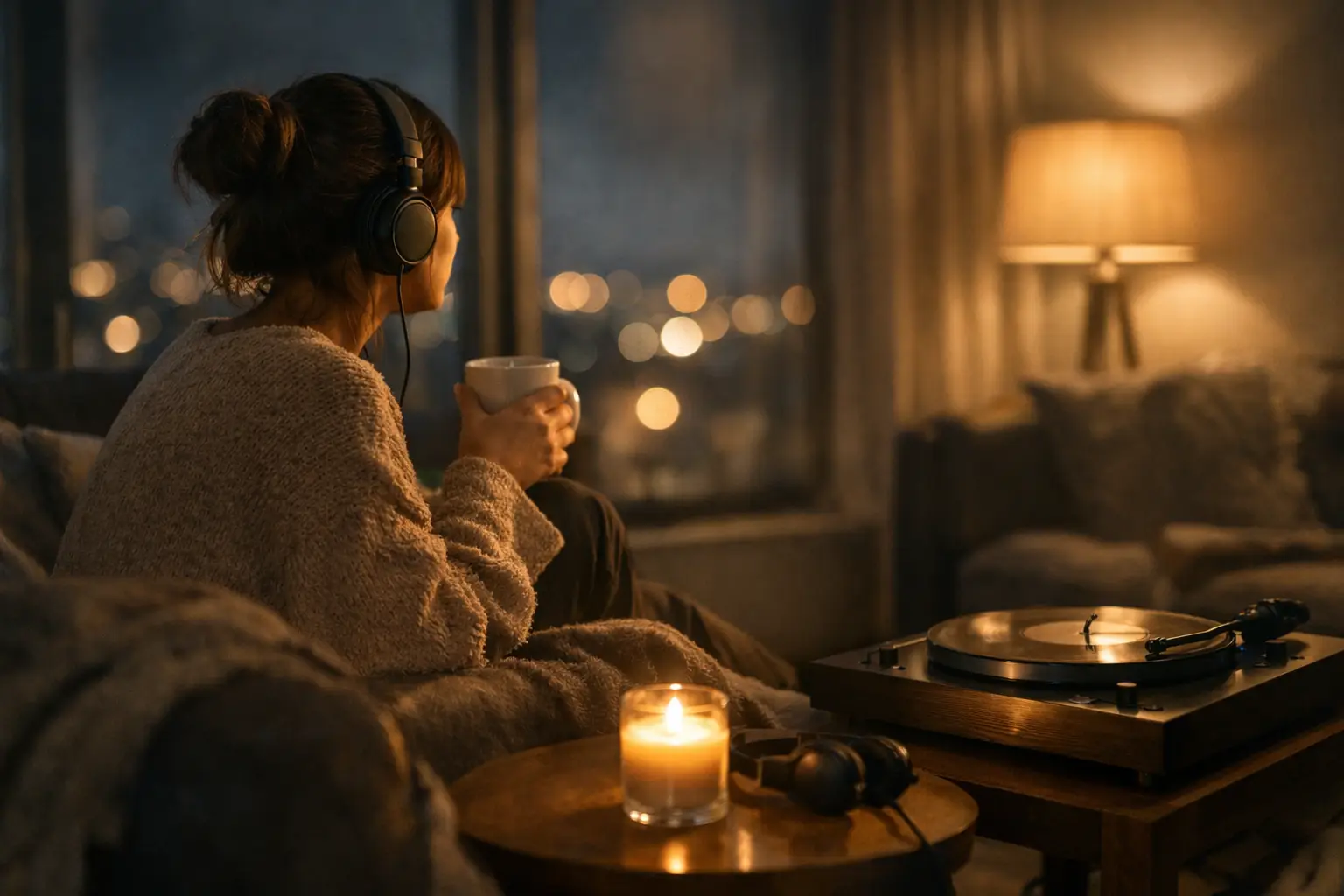
The room gets quieter after midnight. Notifications slow down. The day stops asking anything from you, but your mind may not. That is where music for lonely evenings belongs – not as a distraction from the silence, but as something that knows how to sit inside it.
Loneliness is not always dramatic. Sometimes it is a familiar apartment after a long day. Sometimes it is being surrounded by people and still feeling slightly out of reach. Sometimes it is missing someone without wanting to reopen the conversation. The right song does not rush to repair any of that. It gives the feeling a shape.
Why lonely evenings need their own sound
There is a difference between being alone and feeling alone. A bright, high-energy playlist can make that difference feel sharper when the night calls for something more grounded. Music has a way of changing the temperature of a room. A low bass line, distant keys, a voice that sounds almost private – these details can turn empty space into atmosphere.
The goal is not to make loneliness feel beautiful for the sake of it. Some nights are heavy, and pretending otherwise only makes the disconnect louder. The goal is accuracy. You want sound that meets the moment where it is: tender, unresolved, restless, warm, or all of it at once.
That is why one perfect song can matter more than an endless queue. It tells you that the feeling has existed outside your own chest. Someone heard it clearly enough to leave a trace.
Start with the feeling, not the genre
Genre can help, but it is not the whole answer. R&B can feel like soft light or like a locked door. Ambient music can calm the room or make it feel even more distant. Hip-hop can carry confidence, grief, reflection, or the quiet pressure of trying to keep moving.
Before you press play, name the version of loneliness you are carrying. You do not have to write it down or explain it to anyone. Just be honest for a second. Are you looking for company? Are you trying to let something go? Do you need a little motion so the night does not become too still?
If the feeling is raw, look for sparse production and vocals that leave room to breathe. If your thoughts are circling, a steady rhythm can give them somewhere to land. If you feel numb, music with texture – layered harmonies, worn drums, guitar that sounds close enough to touch – may bring you back without demanding too much.
The best choice is rarely the one that tells you how to feel. It is the one that makes your current feeling less lonely.
When you need to be held, not lifted
Some evenings do not need a comeback story. They need patience. Choose songs that move slowly and do not crowd every second with sound. Piano, soft synths, brushed percussion, and unhurried vocals can make the room feel less exposed.
This is music for sitting by the window, letting a meal go cold for a few minutes, or lying on the floor because the couch feels too formal. It works when you want the night to soften around you.
Avoid forcing an emotional breakthrough. If a song makes you cry, let it. If it only helps you stare at the ceiling without feeling quite as alone, that counts too.
When the silence is getting too loud
Other nights need more pulse. Not a party, not necessarily. Just movement. A bass-heavy track, a late-night groove, or a song with a confident vocal can interrupt the loop in your head without denying what put you there.
There is a trade-off here. Music that is too upbeat can feel like a command to cheer up. Music that is too heavy can deepen a mood you were already trying to survive. Look for the middle ground: songs with shadow in them, but also a forward motion.
Put them on while you shower, clean the kitchen, take a late drive, or walk one extra block before going home. Small movement changes the way a song enters the body. The same track that feels distant in bed can feel like momentum through headphones under streetlights.
Build a ritual around music for lonely evenings
A playlist becomes more powerful when it is attached to a ritual. Not a strict routine. Nothing that turns your private time into another task to complete. Just a few signals that tell your nervous system the day is changing shape.
Lower the lights. Leave one lamp on. Make tea, pour water over ice, or step outside for two minutes. Put your phone face down after choosing the music. Let the first few songs play without skipping.
Skipping is not wrong. Sometimes a song misses the exact nerve and you know it immediately. But giving the music a little room matters. Lonely evenings can make us restless, always searching for the next thing that might finally fix the feeling. A sequence of songs asks for a different kind of attention. Stay long enough to notice the shift between tracks, the way one lyric changes after a minute of silence, the way the room begins to feel inhabited.
Keep the playlist short at first. Forty-five minutes is enough. A long playlist can become background noise, especially when your mind is already elsewhere. A shorter one can feel like a place you return to on purpose.
Let the songs carry different parts of the night
Not every track needs to say the same thing. The most lasting late-night playlists have an arc. They begin close to the feeling, then move through it rather than circling it forever.
Open with something that matches your actual mood. If you are bruised, do not start with false sunlight. Let the first songs be honest. From there, bring in a track that widens the room – something cinematic, spacious, or quietly rhythmic. Near the end, choose music that does not insist on a resolution but leaves a little air around the ache.
Think of it less like a collection of favorites and more like a conversation you do not have to speak aloud. One song says, “I know.” Another says, “Stay here a while.” The last one says, “You can rest now.”
Instrumentals are especially useful in the final stretch. Lyrics can be too specific when you are carrying something unnamed. Without words, the mind gets to wander without being directed. A distant guitar line or a slow synth swell can hold more than a clear message sometimes can.
Do not confuse isolation with intimacy
There is a tender danger in lonely music: it can become a hiding place. The same songs that make you feel understood can also keep you from reaching for someone when you need to. That does not mean you should avoid them. It means pay attention to what happens after the playlist ends.
If you feel calmer, clearer, or more connected to yourself, the music did its work. If you feel smaller than when you began, change the setting. Put on a song with more warmth. Text a friend something simple. Step outside. Let a different voice enter the night.
Music is company, but it does not need to replace every kind of company. Sometimes it is the bridge that helps you cross back toward people. Sometimes it is simply the space where you remember what you want to say.
Make room for the songs that find you
The tracks that stay with you are not always the ones you expected. A song can arrive through a late-night recommendation, the end of a film, an old memory, or a playlist you almost skipped. Give yourself permission to keep a small private archive of those moments.
Do not organize it too perfectly. Let it remain personal. Add songs because of the hour you heard them, the drive they carried you through, or the way they made your chest loosen after a difficult call. Over time, that collection becomes more than a playlist. It becomes evidence that you have made it through other nights that once felt endless.
DRVVYN Sound lives in that space – where a track is not just played, but returned to when the room is quiet and something deeper needs language.
Tonight does not have to become meaningful all at once. Put on the song that feels closest. Let it fill only the next few minutes. Sometimes that is enough to make the silence feel less like an absence, and more like a place you can stay.