

Creative Process
Digital Art’s Role in Shaping How Music Is Heard and Felt
Digital Art's Role in Shaping How Music Is Heard and Felt
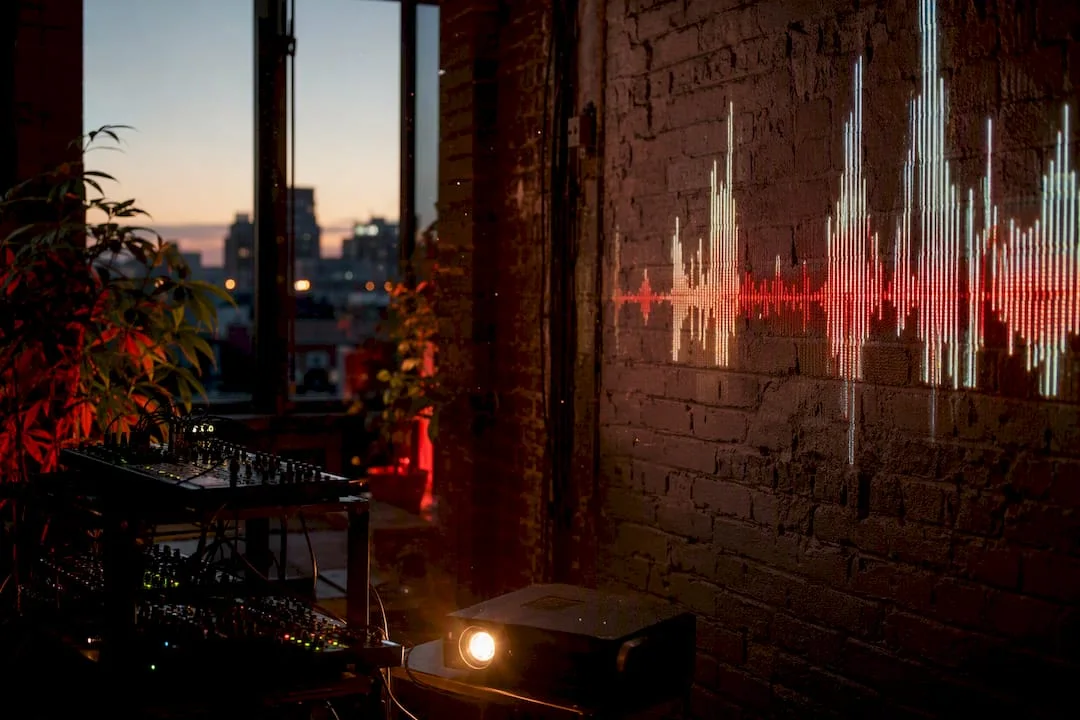
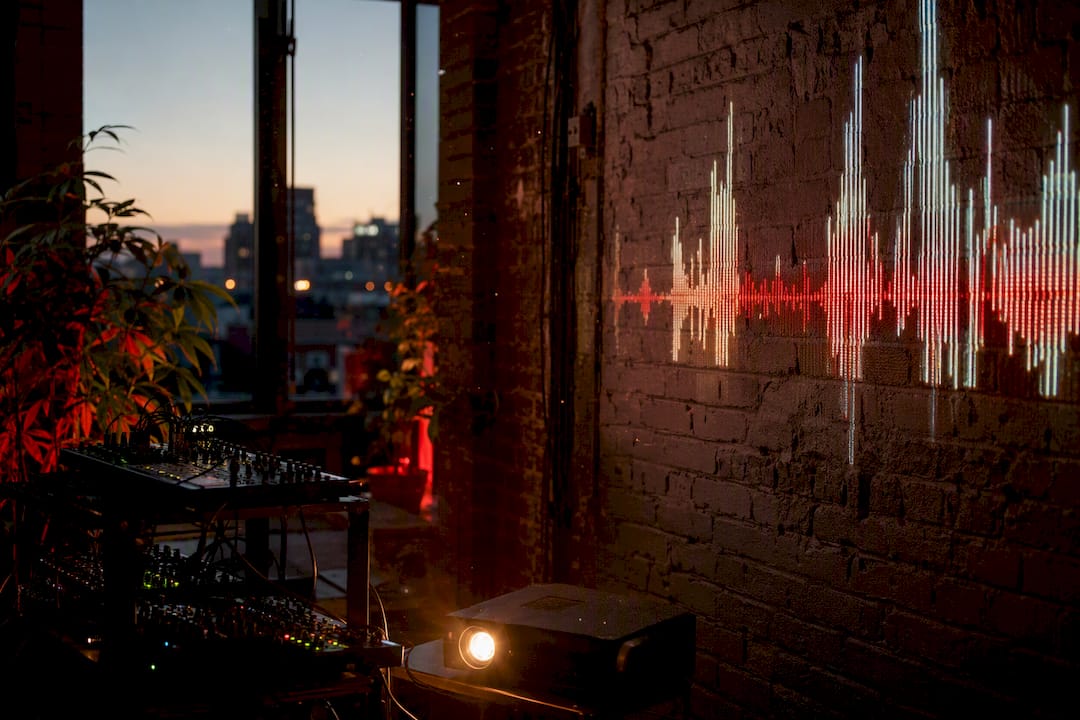
! Live audio visualizer projected in studio
Digital art now shapes how music gets discovered, felt, and remembered as much as the sound itself.
By DRVVYN · · 16 min read
Digital Art’s Role in Shaping How Music Is Heard and Felt
Digital art now shapes how music gets discovered, felt, and remembered as much as the sound itself. It works through three channels: audience-first presentation (cover art, visualizers, live projections), creative co-creation (human and AI artists building visuals from the same session data as the song), and commercial impact (licensing, branding, and immersive ticketed experiences). If you want the tools and workflows, skip to the technology and practical-steps sections below. If you want the reasoning first, keep reading.
Key Takeaways
Digital art determines whether a song gets discovered, how long a listener stays engaged, and where new revenue comes from, making it inseparable from modern music production.
| Point | Details |
|---|---|
| Visuals shape first impressions | Listeners judge cover art and clips before pressing play, so weak visuals cost plays before the algorithm engages. |
| OSC and DMX enable live AV | Audio-reactive visuals and lighting sync through Open Sound Control and DMX, the backbone of modern live AV rigs. |
| Consistency compounds discoverability | Matching cover art, video, and social assets to one visual identity improves recognition and saves across platforms. |
| Document AI provenance early | Log prompts, model versions, and licensing terms as you create, not after a partner asks for proof. |
| Start small and test live | A single visualizer tested across platforms for 48 hours reveals more than months of guessing. |
Table of Contents
- What Is the Role of Digital Art in Music, Exactly?
- How Did Digital Art and Music Become Intertwined?
- Where Does Digital Art Show Up in Music Today?
- Which Technologies Actually Power Audiovisual Integration?
- How Do Musicians and Visual Artists Actually Collaborate?
- Does Digital Art Actually Change How Fans Discover and Engage With Music?
- What Ethical and Authorship Issues Come With AI-Generated Visuals?
- What Do Real Audiovisual Music Projects Look Like in Practice?
- What’s Next for Digital Art and Music?
- How Can a Musician Start Adding Digital Art to Their Music?
- Why This Matters More Than Most Musicians Admit
- Where to Learn More About Digital Art and Music
- Sources
What Is the Role of Digital Art in Music, Exactly?
Digital art in music covers every visual element born from software rather than paint or film. That means cover art built in design software, audio-reactive visuals projected at a live show, generative video loops, and augmented reality layers fans access through their phones during a listening session. It is not decoration bolted onto a finished track. It is a second creative language running parallel to the sound.
Three things make this matter right now, not five years from now.
- First impressions happen visually before they happen sonically. A listener scrolling a feed sees your cover art or a three-second video clip before they hear a single note, and that split-second judgment decides whether they tap play at all.
- Engagement now extends past the runtime of the song. A visualizer, a behind-the-scenes AV clip, or an interactive AR filter keeps a listener inside your world after the track ends, which is exactly the kind of extended attention algorithms reward.
- New revenue lives inside the visual layer. Licensing a visualizer for sync placement, selling limited-run visual drops, or pricing an immersive show above a standard ticket are all monetization paths that did not exist for musicians a generation ago.
Each of these plays out in ordinary practice. Streaming platforms display your cover artwork before playback starts, so a flat or generic image quietly costs you plays before the algorithm even gets a chance. An audio-reactive visual layer at a live set turns a static performance into something a phone camera wants to capture and share. And a simple AR experience tied to a release, however modest, gives a fan a reason to linger rather than swipe past.
How Did Digital Art and Music Become Intertwined?
The relationship did not start with TikTok edits or AI image generators. It has been building for decades, and each stage left a permanent mark on how artists think about sound and image together.
- 1960s to 1980s: Early video synthesizers and light-organ performances treated visuals as an instrument in their own right, not an afterthought bolted onto a finished recording.
- 1990s: VJ culture emerges in club spaces, with live visual mixing running parallel to a DJ set, establishing the idea that visuals could be improvised in real time alongside sound.
- 2000s: Arena tours turn LED walls and choreographed projection into a core part of the spectacle, and the budget gap between musical production and visual production starts closing.
- 2010s: Digital audio workstations and visual software begin talking to each other directly, letting a bedroom producer sync a projection to a track without a touring rig.
- Post-2020: Generative AI tools and human-AI co-creative systems start producing visuals reactive to a performer’s live output in real time, a shift documented in research on collaborative human-AI musical creativity.
One thread runs through the entire timeline: the gap between “sound person” and “visual person” keeps narrowing. What used to require a touring production company now runs on a laptop, and audiences have absorbed that shift into their expectations. A single without a visual identity now reads as unfinished, not minimalist.
Where Does Digital Art Show Up in Music Today?
Digital art integrates with music across more formats than most artists realize, and each one serves a different goal. Picking the wrong one for your situation wastes effort; picking the right one compounds.
Music videos and visualizers. A visualizer is the low-cost entry point: a looping, audio-reactive video that accompanies a track on YouTube or streaming platforms. Artists use tools like Resolume or lightweight generative software to build these without a video crew. Placement is almost always YouTube, Spotify Canvas, or short-form social feeds, and the goal is usually retention and shareability rather than narrative storytelling. Drvvynsound’s own approach to this format is detailed in a piece on late-night music visualizer experiences, built specifically around mood and time-of-day listening.
Album art and branding. This is the oldest form and still the hardest working one. A cover image is the first visual contact a listener has with a release, and it doubles as the visual anchor for every social post, ad, and playlist pitch that follows. Consistency here compounds across a catalog rather than a single release.
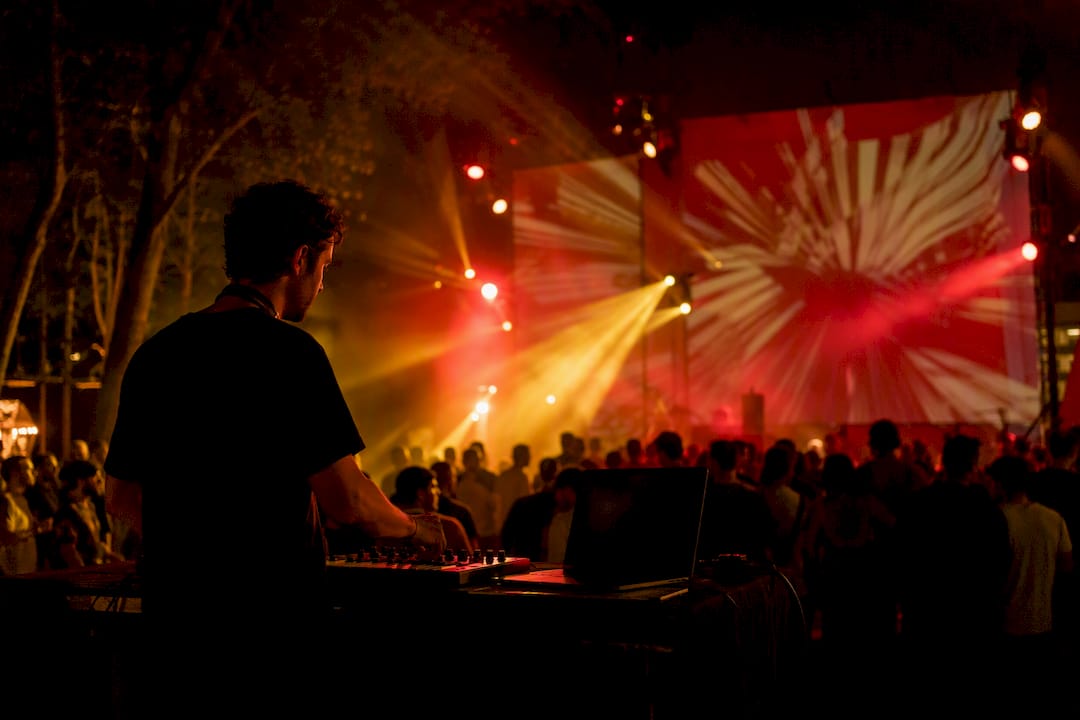
Live AV and VJing. This is real-time visual performance synced to a live set, ranging from a single laptop running Resolume to a full modular rig with projection mapping. Placement is the venue itself, and the goal is spectacle and shareability, the kind of moment that ends up on someone’s story within minutes.
Installations and gallery work. Sound and visual art combine in a fixed physical space, often without a traditional “performance” structure at all. This format serves artists building cultural credibility or exploring conceptual work, and it tends to attract the kind of institutional recognition that federal arts coverage increasingly validates as serious multimedia practice.
Games and interactive media. Music licensed into or composed for interactive environments where the listener’s actions shape what they see and hear. This is a smaller niche for most independent musicians but a growing one, especially as game soundtracks become a legitimate discovery channel.
VR/AR and immersive experiences. A fan puts on a headset or opens a phone camera and steps into a spatial version of a release. Placement is niche today, but it is the format most likely to command premium pricing because the novelty alone creates perceived value.
Social-first short-form visuals. Nine-second loops, lyric snippets over generative backgrounds, and quick AV edits built for TikTok and Reels. Placement is entirely algorithmic feeds, and the goal is pure discoverability.
Pro Tip:Match the form to the goal before you touch software. Touring visibility calls for live AV. Streaming discoverability calls for a strong visualizer and Canvas loop. Fan retention calls for AR or a companion visual world. Licensing calls for polished, ownable visual assets you can hand to a brand partner.
Which Technologies Actually Power Audiovisual Integration?
None of this works without a technical backbone, and the backbone is more accessible than most musicians assume. A handful of protocols and programs do almost all the heavy lifting.
- Ableton Live functions as the hub in most modern setups, sending timing and audio data outward to whatever visual engine is downstream.
- MIDI carries note and timing data between instruments and software, the oldest and most universal language in the chain.
- Open Sound Control (OSC) is the modern successor to MIDI for complex data, letting a DAW send granular audio-feature information (amplitude, frequency bands, onset detection) to a visual engine over a network in real time.
- DMX is the lighting-industry protocol that lets software control physical stage lights and fixtures, the same standard used in human-AI live performance research to sync generative visuals with real lighting rigs.
- TouchDesigner is the node-based visual programming environment most professional VJs and installation artists use to build reactive, generative visuals from scratch.
- Resolume is the more accessible live-visual mixing software, closer to a “VJ deck” than a programming environment, and a common starting point for touring artists.
- Stable Diffusion and similar generative AI image models now let musicians produce entire visual worlds from text prompts, either as static art or as source material fed into animation pipelines.
A typical pipeline looks like this: audio runs out of Ableton Live, an analyzer extracts features like amplitude and frequency, that data travels over OSC or UDP to a visual engine such as TouchDesigner or Resolume, and the visual engine renders output that reacts in real time. Some setups add DMX at the end of the chain to drive physical lighting alongside the screen visuals.
Newer post-creation frameworks skip live performance entirely. Tools built around deterministic architecture can take a finished audio session and generate synchronized visual content directly, meaning the same stems produce the same visual identity every time you run them, which matters enormously for branding consistency across a release cycle.
Interoperability is the real bottleneck, not creativity. OSC and MIDI are widely supported, but latency between audio analysis and visual rendering can introduce a noticeable lag if your rig is underpowered, and that lag is what separates a professional-feeling show from an amateur one. A lightweight setup (a laptop, Resolume, and a single projector) can produce excellent results for a small venue. Studio-grade work, the kind built in TouchDesigner with custom shaders and multiple DMX-controlled fixtures, demands more processing power and more setup time, but it scales to festival stages.
How Do Musicians and Visual Artists Actually Collaborate?
Four collaboration models cover most of what happens in practice, and each fits a different resource level.
- Musician-led with a visual collaborator. The musician defines the concept and brings in a dedicated visual artist or VJ to execute it, similar to hiring a mix engineer.
- Integrated producer-visual practice. One person handles both sound and visuals from the start, treating them as a single creative process rather than two separate jobs handed off sequentially.
- Human-AI co-creation. A musician works alongside a generative visual or musical AI agent in real time, a model documented in detail through research-creation methodologies exploring human-AI musical interaction, which stress iterative practice and careful data ethics over one-shot prompting.
- Research-creation residencies. Structured programs, often academic or institutionally funded, that give artists time and technical support to develop new audiovisual methods without commercial pressure.
Whichever model you pick, a few operational habits keep the work from falling apart under deadline pressure: consistent session naming across audio and visual files, clean stem exports before handing anything to a visual collaborator, documented OSC routing so a rig can be rebuilt if a laptop dies, and version control on visuals tied to the exact stem mix they were built against. Before any live show, test latency end to end and have a backup rig or a static visual fallback ready. Real-time systems fail; a fallback is not optional.
Pro Tip:When briefing a visual collaborator, hand them a structural map of the song, not just the audio file. Mark where the drop happens, where the bridge shifts mood, and where the track breathes. A visual artist working blind will sync to the beat; one working from your structure will sync to the emotion.
Does Digital Art Actually Change How Fans Discover and Engage With Music?
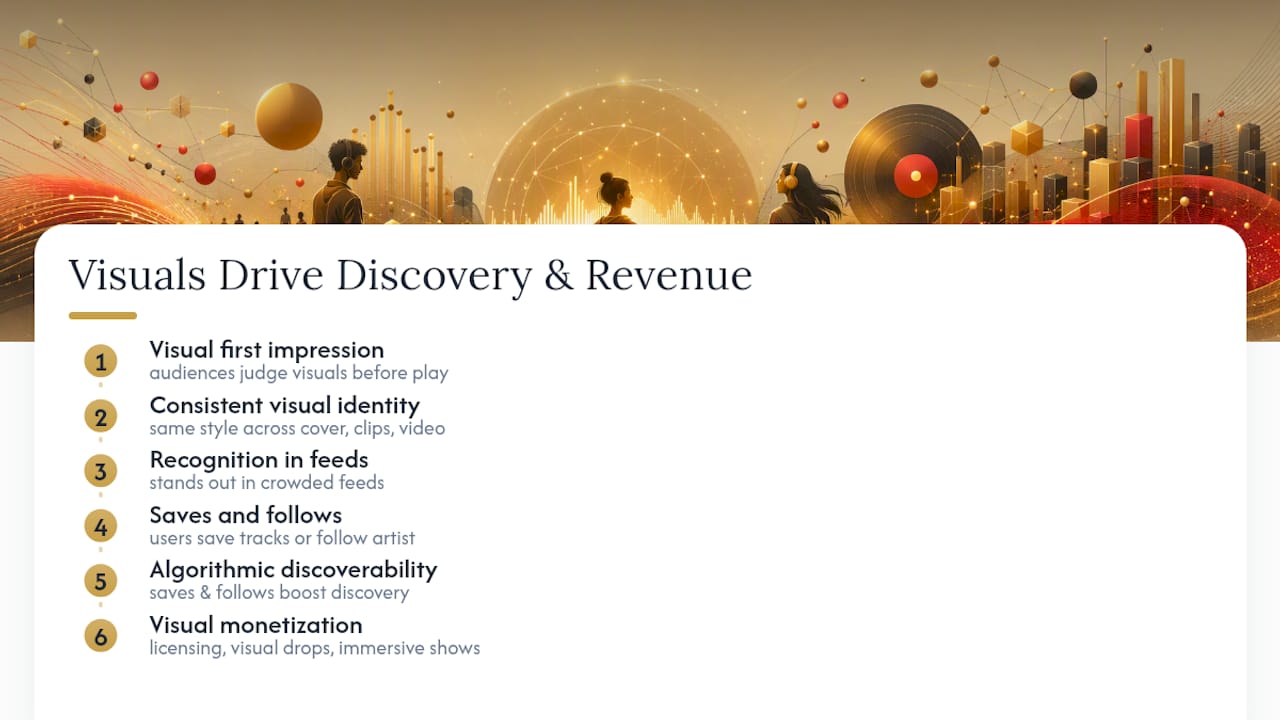
Yes, and the effect is measurable in behavior, not just anecdote. Weak visuals now function as a genuine competitive disadvantage, because audiences increasingly judge an artist’s visual identity before they press play, which means independent artists are now expected to manage design and branding alongside production, whether they trained for it or not.
Discoverability compounds when the visual identity stays consistent across every touchpoint. An artist whose cover art, social clips, and video content share a consistent visual style, which helps recognition in a crowded feed compared to assets lacking cohesive design. That consistency is also what turns a casual scroller into someone who saves a track or follows an artist, the two actions that most directly feed platform algorithms and improve future streaming discoverability.
Revenue opportunities sit directly inside this visual layer, not beside it. Licensing a visualizer or a set of generative visuals for a brand’s sync placement is now a real income stream. Limited visual drops tied to a release, similar in spirit to a collectible print, give superfans something tangible to buy. Immersive or AV-enhanced shows can command a higher ticket price than a standard set, because the audience is paying for an experience they cannot get from a streaming platform. Artists exploring direct-to-fan monetization increasingly find that visual assets, not just the music itself, are what fans are willing to pay a premium for.
What Ethical and Authorship Issues Come With AI-Generated Visuals?
Generative tools raise real questions the moment you use them commercially, and ignoring them now costs far more later than addressing them upfront.
- Provenance of training data. Know, or at least ask, what dataset trained the model you are using, since this affects both ethical standing and future licensing clarity.
- Licensing of generated assets. Confirm whether the platform grants you commercial rights to what it generates, because terms vary widely between tools and change often.
- Crediting collaborators. If a human visual artist worked alongside an AI tool, document their contribution clearly rather than letting the AI’s role obscure a real person’s creative labor.
- Prompt and asset logs. Keep a record of prompts, model versions, and generation dates, since this becomes your evidence of process if a licensor or partner ever asks how an asset was made.
Small-data training approaches, where a model learns from a narrow, artist-controlled dataset rather than broad web scraping, reduce both copyright exposure and environmental cost compared with big-data alternatives, and that distinction is becoming a genuine selling point when pitching visuals to brand partners who are increasingly wary of provenance questions.
Pro Tip:Store your prompt logs, model version numbers, and generation timestamps in the same folder as your final visual assets, not scattered across chat histories. A licensor asking “how was this made” wants an answer in minutes, not a week of digging.
What Do Real Audiovisual Music Projects Look Like in Practice?
Four working models show how this plays out beyond theory.
A touring artist running a modular AV rig favors simple, repeatable structures, like scaffolding cubes or minimal screen overlays, over elaborate custom sets. This keeps the scenic identity recognizable while cutting logistics and cost enough to make regional touring financially viable.
A research-creation project combining human musicians with an AI improvisation partner uses machine listening to extract live audio features and routes them through OSC to a visual synthesizer, with DMX driving stage lighting in sync, exactly the pipeline documented in recent human-AI creativity research.
An independent artist releasing a single alongside a generative visualizer builds the entire visual asset from a music-to-image system, where real-time image generation responded to and influenced the improvisation itself during the creative process, not just afterward as decoration.
A streaming-focused release unifies its cover art, video content, and social assets under one deterministic visual identity, all derived from the same session data, an approach to consistency gaining traction across independent releases precisely because it scales without a full production team.
What’s Next for Digital Art and Music?
A few directions are worth watching, and one of them is small enough to test this weekend.
- Lighter, modular touring kits. Expect more artists adopting minimal, reusable scenic elements over custom builds, following the same logic driving modular AV touring today.
- Deterministic, session-linked visuals. Visual identity generated directly from the same stems and session data as the mix, guaranteeing consistency across every asset without manual rebuilding.
- Deeper AI co-creation. Real-time generative partners that respond to a live performance rather than simply decorating a finished track.
- Personalized immersive fan experiences. AR and VR layers tailored to an individual listener’s history with an artist, not a one-size-fits-all experience.
- Ethical, low-data training methods. Smaller, artist-controlled datasets that reduce both legal exposure and the environmental cost of large-scale model training.
Here is a weekend experiment worth running: take one unreleased track, generate multiple visualizer variations using a free tool, and post each to different platforms for a short test period. Track saves and completion rate, not just views. That single data point tells you more about which visual direction resonates than a month of guessing.
How Can a Musician Start Adding Digital Art to Their Music?
You do not need a production company to begin. You need a clear goal and a willingness to prototype.
- Define your goal. Decide whether you’re solving for touring visibility, streaming discoverability, fan engagement, or licensing income, since each points to a different form.
- Pick one form. Choose a single format from the list above rather than trying to build a visualizer, an AR experience, and a live rig simultaneously.
- Prototype cheaply. Build a rough version with free or low-cost tools before investing in professional software or hardware.
- Test with a real audience. Post it, play it live, or share it with a small group and watch actual behavior, not just opinions.
- Document your rights. Log prompts, licenses, and collaborator credits from the start, not after a licensing opportunity appears.
Budget shapes what’s realistic. At the low tier, expect to spend little beyond time, using free visualizer generators and a phone camera for AV documentation. At the medium tier, budget for a Resolume license and a basic projector, enough for small-venue live shows. At the high tier, budget for TouchDesigner expertise, DMX-controlled lighting, and possibly a hired visual collaborator, the setup that scales to larger stages and brand licensing deals. Whatever your tier, a resource like Drvvynsound’s guide to combining sound and imagery is a useful starting map for how the pieces fit together.
Why This Matters More Than Most Musicians Admit
I care about audiovisual integration because I’ve watched too many strong songs disappear into a feed simply because nothing accompanying them gave a listener a reason to stop scrolling. Building a release inside Drvvynsound has meant treating the visual world around a track (the cover, the visualizer, the color language) as inseparable from the mix itself, not a marketing task bolted on afterward. Try the weekend visualizer experiment above on your next unreleased track. You’ll learn more from 48 hours of real audience behavior than from another month of second-guessing the artwork.
Where to Learn More About Digital Art and Music
- The Rise of Multimedia Creativity: Where Music, Design, and Digital Art Collide | Illustrate Magazine
- Music in Contemporary Digital Art | HACNUMedia
- Revival: Collaborative Artistic Creation through Human-AI Interactions in Musical Creativity
- Music-to-Image Inspiration Systems (arXiv paper)
- The Role of Cover Artwork in the Digital Music Landscape | Mixdown Magazine
- Pushing Boundaries: Visionary Approaches to the Arts | NEA
- The Intersection of Fine Arts and Digital Media
- Spotify Marketing Strategy for Independent Artists | Intonality
Sources
- Music in contemporary digital art – HACNUMedia
- Revival: Collaborative Artistic Creation through Human-AI Interactions in Musical Creativity
- Music-to-image inspiration systems (arXiv paper)
- The role of cover artwork in the digital music landscape | Mixdown Magazine
- Arts