

Listening & Culture
Slow-Tempo Late-Night Music: 9 Science-Backed Benefits
Slow-tempo late-night music is defined as music played at 60–80 beats per minute (BPM) during evening or nighttime hours, specifically chosen to guide.
By DRVVYN · · 10 min read
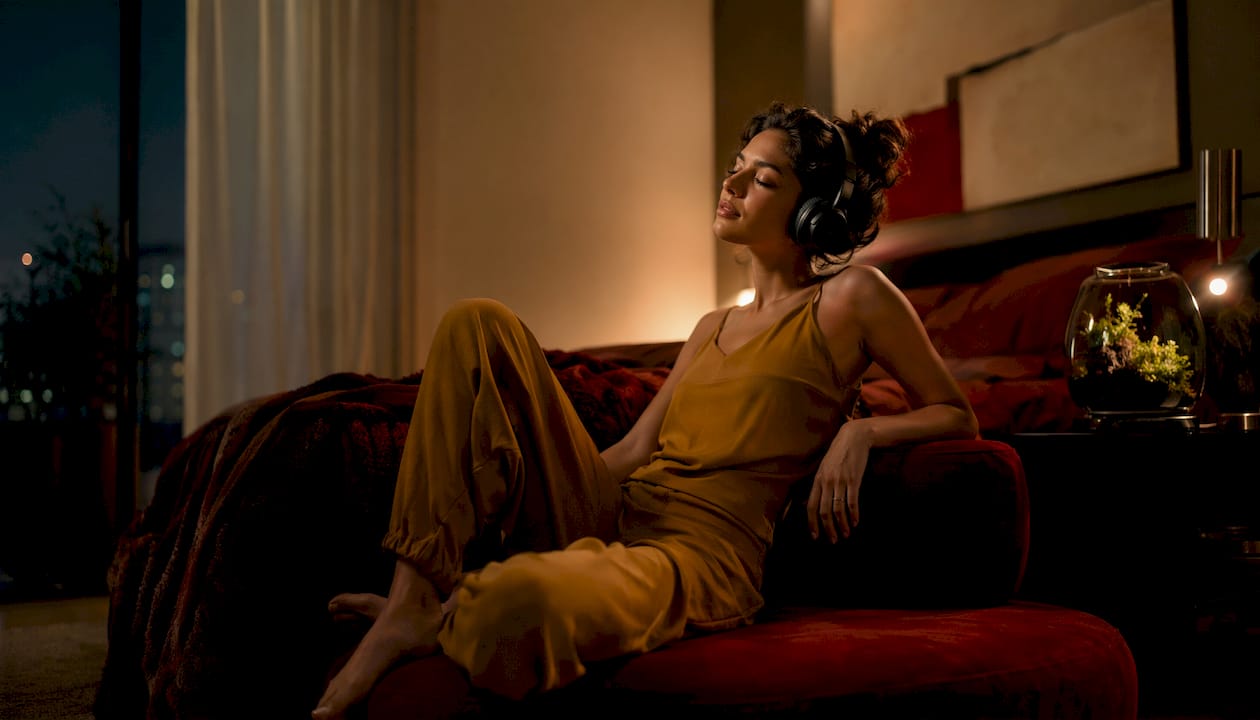
Slow-tempo late-night music is defined as music played at 60–80 beats per minute (BPM) during evening or nighttime hours, specifically chosen to guide your nervous system toward rest. The benefits of slow-tempo late-night music are well documented in music therapy and psychology research. Music therapy tracks at 60 BPM reduce anxiety by 65% and resting heart rates by 35% on average. That single finding tells you this is not passive background noise. It is a physiological tool, and when you use it correctly, the results are real.
1. What are the benefits of slow-tempo late-night music for your body?
The core mechanism behind calming late-night music is entrainment. Your heart rate, breathing, and brainwaves naturally synchronize to the tempo of music you hear. At 60–80 BPM, that synchronization pulls your body away from tension and toward stillness.
Slow music at 60 BPM shifts brainwaves from Beta frequencies, associated with active thinking, toward Alpha frequencies, associated with relaxed alertness. This shift does not knock you unconscious. It places you in the calm, open state where sleep becomes possible.
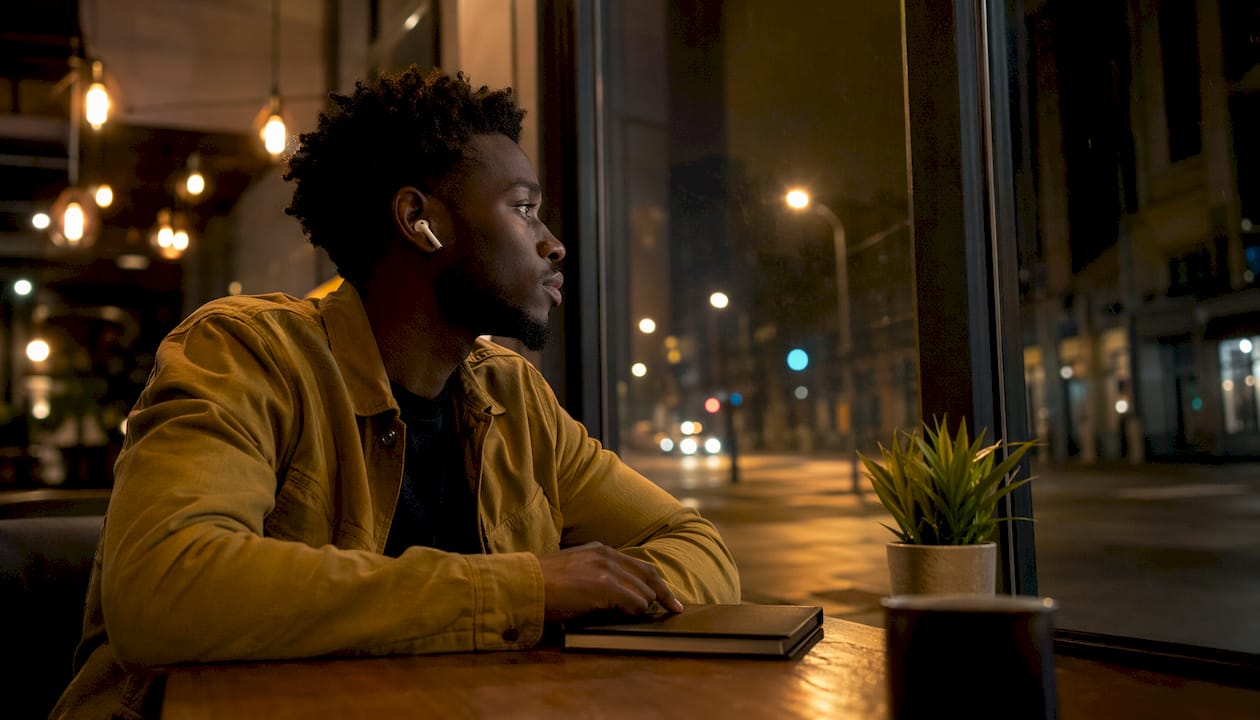
The parasympathetic nervous system, sometimes called the “rest and digest” system, activates in response to slow, predictable rhythms. Slow, repetitive rhythms suppress stress pathways and reduce cortisol, the hormone most directly tied to anxiety and poor sleep. Oxytocin levels rise. Emotional arousal drops. The pressure you carry from the day begins to leave your chest.
Pro Tip:Set your playlist to begin at 70 BPM and gradually slow toward 55 BPM over 30 minutes. Your body will follow the tempo down, making the transition to sleep feel natural rather than forced.
2. Anxiety and stress reduction
Music therapy at 60 BPM reduces anxiety by 65% in clinical settings. That number is striking because most people reach for screens, scrolling, or conversation to wind down. None of those activities reduce cortisol. Slow music does.
The reason is biological. Your nervous system reads rhythmic predictability as safety. When a melody moves at a steady, unhurried pace, your brain stops scanning for threats. The “fight or flight” response quiets. Tension releases from your shoulders, jaw, and chest before you even notice it happening.
This makes slow music benefits particularly valuable for listeners who carry anxiety into the night. You do not need to meditate or follow a script. You simply need the right tempo playing while you exist.
3. Lower heart rate and blood pressure
Music at 60 BPM lowers resting heart rates by 35% on average. A lower heart rate signals your cardiovascular system to ease off. Blood pressure follows. This is the same physiological state your doctor wants you in before sleep.
The effect is not subtle. A 35% drop in heart rate is the kind of change you can feel. Your pulse slows. Your breathing deepens. The silence inside your body gets softer, less sharp.
For music enthusiasts who already listen with intention, this is the moment where the music stops being entertainment and becomes something closer to medicine. You are not just enjoying a sound. You are changing your body’s chemistry.
4. Improved sleep quality and reduced sleep latency
Slow-tempo instrumental music at 60–80 BPM improves sleep efficiency and increases total sleep time in clinical trials. Sleep latency, the time it takes to fall asleep, decreases meaningfully. That gap between lying down and drifting off shrinks.
The mechanism connects directly to brainwave entrainment. As your brain shifts from Beta to Alpha and then toward Theta waves, the threshold between wakefulness and sleep becomes easier to cross. The music creates a kind of sonic runway.
“Slow, repetitive rhythms activate the brain’s sleep response by evoking safety and predictability, suppressing the very stress pathways that keep you awake at night.”
This is why peaceful nighttime playlists built around 60–80 BPM tracks outperform white noise for many listeners. White noise masks sound. Slow music actively changes your neurological state.
5. Mood regulation and emotional release
Relaxation with slow-tempo tunes does something that faster music cannot. It creates space. When the tempo drops, your emotional processing slows with it. Feelings that felt urgent and tangled during the day begin to settle.
This is not suppression. It is regulation. The music gives your nervous system permission to release what it has been holding. Grief softens. Frustration blurs at the edges. Numbness, if that is where you are, begins to thaw.
Music therapy research consistently links slow-tempo music to increased feelings of calm and reduced emotional arousal. For listeners processing difficult emotions, a 30-minute session of calming late-night music can function as a gentle reset that talk or distraction cannot replicate.
6. Enhanced focus and flow states
The Alpha brainwave state that slow music produces is the same state associated with creative flow and deep focus. This surprises many listeners who assume relaxation music is only useful for sleep. It is equally effective for late-night reading, writing, or reflection.
Music at 60 BPM acts as a gentle nudge for the nervous system, promoting relaxed alertness rather than unconsciousness. That distinction matters. You are not sedated. You are clear, calm, and present.
For music enthusiasts who use late-night hours for creative work, this is the sweet spot. The music holds your nervous system steady while your mind moves freely.
7. How to select and listen for maximum effect
The right music matters as much as the right tempo. Not every slow song produces the same result.
- Tempo: Stay within 60–80 BPM. Tracks that begin at 70 BPM and gradually slow toward 50 BPM optimize the transition to deep sleep, reflecting biological sleep transitions.
- Genre: Classical adagios, ambient, minimalist, and lo-fi with soft dynamics all work well. The common thread is predictability and gentle dynamics.
- Lyrics: Avoid complex lyrics at night. Familiar music without lyrics improves sleep quality more than unfamiliar or lyric-heavy tracks. Lyrics activate language processing in your brain, which keeps you alert.
- Duration: Aim for 30–45 minutes with a gradual fade-out. Entrainment requires 5–7 minutes to begin and at least 15 minutes for sustainable relaxation effects.
- Volume and dynamics: Avoid sudden volume spikes or rhythmic shifts. Consistency is what allows your nervous system to let go.
Pro Tip:Build a dedicated nightly playlist and use it at the same time each evening. Your brain will begin associating that music with sleep, conditioning a relaxation response that gets stronger over time.
8. Common misconceptions about slow music and relaxation
Several widely repeated ideas about music for sleep and relaxation do not hold up under scrutiny.
- “Healing frequencies like 432Hz or 528Hz are the key.”Rhythmic entrainment between 60–80 BPM is the actual mechanism for relaxation, not specific frequency pitches. Tempo is what your nervous system tracks, not tuning.
- “Any slow music works equally well.” Familiarity and lyric content both affect outcomes. Familiar, lyric-free music improves sleep quality more reliably than unfamiliar tracks, even at the same tempo.
- “Silence is always better than music for sleep.” For many listeners, silence is too sharp. The absence of sound can heighten awareness of intrusive thoughts. Slow music fills that space with something safe and predictable.
- “Gradual tempo slowing is unnecessary.” The biological rationale is clear. Progressive deceleration from 60 to 50 BPM mirrors the body’s own transition into deep sleep. Jumping straight to very slow music can feel jarring rather than calming.
| Misconception | What research actually shows |
|---|---|
| 432Hz frequency is the key to relaxation | Tempo entrainment at 60–80 BPM drives the effect, not pitch frequency |
| Any slow song works the same | Familiar, lyric-free tracks outperform unfamiliar or lyric-heavy ones |
| Silence is always superior to music | Slow music actively reduces cortisol; silence does not |
| Gradual tempo change is optional | Progressive slowing from 60 to 50 BPM optimizes deep sleep transition |
9. Building a nightly music ritual that actually sticks
A single session of slow music produces real physiological effects. A consistent nightly ritual produces something deeper. Your brain learns to associate the music with safety, and the relaxation response begins before the first note finishes.
Start with a playlist of 30–45 minutes. Choose tracks you already know and find comforting. Keep the volume low, the dynamics gentle, and the tempo within the 60–80 BPM range. Let the music play while you do something quiet: stretching, journaling, or simply lying still.
The ritual does not need to be elaborate. It needs to be consistent. Over time, the music becomes a signal your nervous system recognizes. The tension begins to release earlier. Sleep arrives more easily. The effects of night music compound the way any good habit does.
Key takeaways
Slow-tempo music at 60–80 BPM is the most evidence-supported, non-pharmaceutical tool for reducing nighttime anxiety, lowering heart rate, and improving sleep quality.
| Point | Details |
|---|---|
| Optimal tempo range | Stay within 60–80 BPM and gradually slow toward 50 BPM for best sleep transition. |
| Anxiety and heart rate | Music therapy at 60 BPM reduces anxiety by 65% and heart rate by 35% on average. |
| Lyrics and familiarity | Choose familiar, lyric-free tracks to avoid cognitive stimulation and improve sleep quality. |
| Session length | Listen for at least 15 minutes, with entrainment beginning after 5–7 minutes of exposure. |
| Consistency matters | A nightly music ritual conditions a relaxation response that strengthens over time. |
What I have learned from letting the music lead
I did not always trust slow music. For a long time, I thought stillness had to be earned through effort. Meditation. Breathwork. A deliberate practice. The idea that a playlist could do something real felt too simple.
What changed my thinking was paying attention to what actually happened in my body when I let a 60 BPM track play without interruption. The tension in my chest did not disappear dramatically. It just… loosened. The thoughts that felt urgent at 11 PM started to blur at the edges. That is not placebo. That is entrainment working exactly the way the research describes.
What I find most underrated is the role of familiarity. People spend hours searching for the “perfect” sleep playlist when the most effective track is often one they already know and love, stripped of lyrics. Your nervous system relaxes faster around sounds it recognizes as safe. That is not a small thing.
The music I create through Drvvynsound is built around exactly this understanding. Emotional resonance and deliberate tempo are not separate considerations. They are the same decision. When a track feels right at night, it is because the rhythm and the feeling are working together.
If you are someone who lies awake with the silence feeling too sharp, slow music is not a workaround. It is the answer.
— DRVVYN
Drvvynsound’s curated music for your nighttime wind-down
Some nights, you need music that already understands what you are carrying. Drvvynsound creates original R&B and ambient tracks built around the emotional and physiological principles covered here. Slow tempos, soft dynamics, and melodies designed to let the pressure leave your chest.

Every release from Drvvynsound is crafted with the listener’s emotional state in mind, from the tempo choices to the texture of each sound. Whether you are winding down after a long day or searching for music that holds space for reflection and healing, the catalog is built for exactly that moment. Visit Drvvynsound to find tracks and playlists that fit your nighttime ritual.
FAQ
What tempo is best for sleep and relaxation music?
Music at 60–80 BPM is the most effective range for relaxation and sleep. Tracks that gradually slow from 60 toward 50 BPM optimize the transition into deep sleep by mirroring the body’s own biological deceleration.
Do lyrics in nighttime music affect sleep quality?
Yes. Familiar music without lyrics improves sleep quality more reliably than lyric-heavy tracks. Lyrics activate language processing in the brain, which keeps you cognitively alert and delays sleep onset.
How long should I listen to slow music before bed?
A session of at least 15 minutes produces sustainable relaxation effects, with entrainment beginning after 5–7 minutes. A 30–45 minute session with a gradual fade-out is the most effective approach for music for better sleep.
Is slow music better than silence for falling asleep?
For many listeners, slow music outperforms silence. Silence can heighten awareness of intrusive thoughts, while slow, repetitive rhythms suppress stress pathways and actively reduce cortisol in ways that silence cannot.
Do healing frequencies like 432Hz actually improve sleep?
Research shows that rhythmic entrainment at 60–80 BPM drives relaxation, not specific pitch frequencies like 432Hz or 528Hz. Tempo is the mechanism your nervous system responds to most directly.