

Listening & Culture
Types of Immersive Audio Experiences: 2026 Guide
Discover the types of immersive audio experiences in 2026. Explore Dolby Atmos, Ambisonics, and more for a complete sound journey.
By DRVVYN · · 9 min read
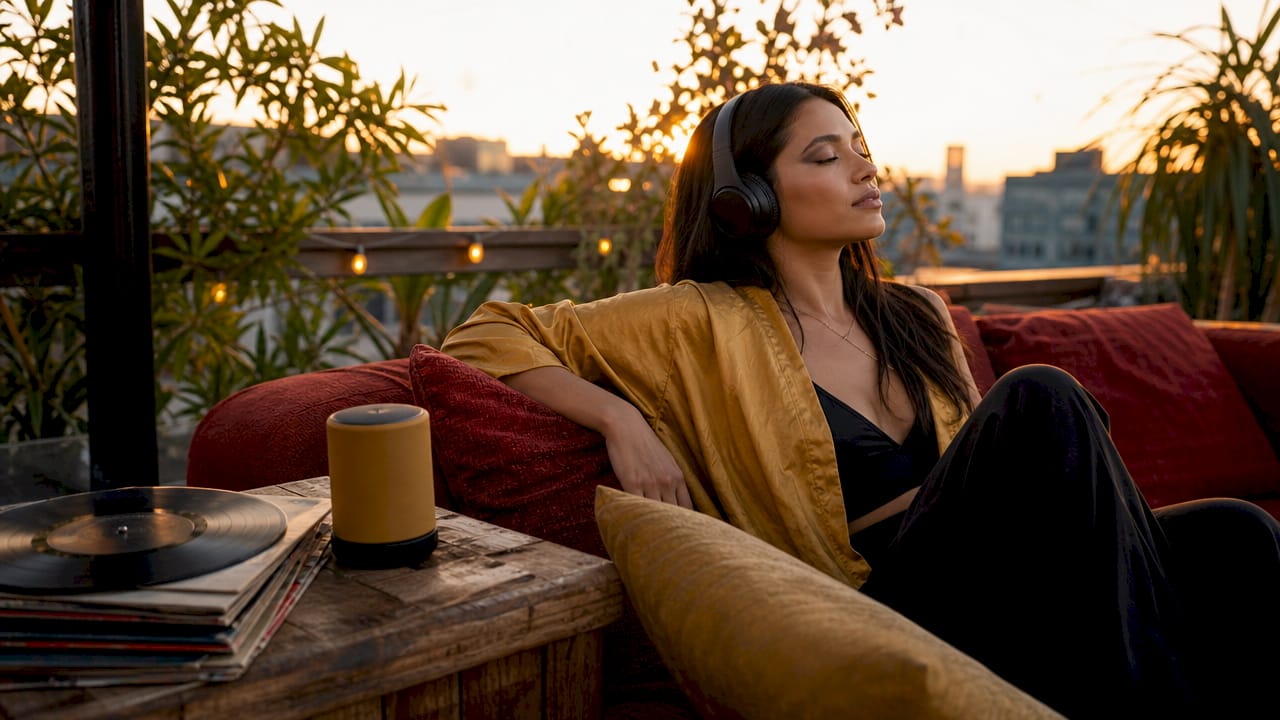
Immersive audio is defined as any sound format that places you inside a three-dimensional sound field rather than in front of a flat stereo image. The leading types of immersive audio experiences in 2026 include Dolby Atmos, Ambisonics, and binaural rendering, each built on distinct technical foundations. Dolby Atmos moves individual sound objects through three-dimensional space. Ambisonics captures a full 360-degree sound field using mathematical spherical encoding. Binaural audio uses Head-Related Transfer Functions (HRTFs) to simulate spatial depth through standard headphones. Platforms like Apple Music and Tidal now stream Dolby Atmos content natively, which means you no longer need a studio to feel what spatial sound does to a song.
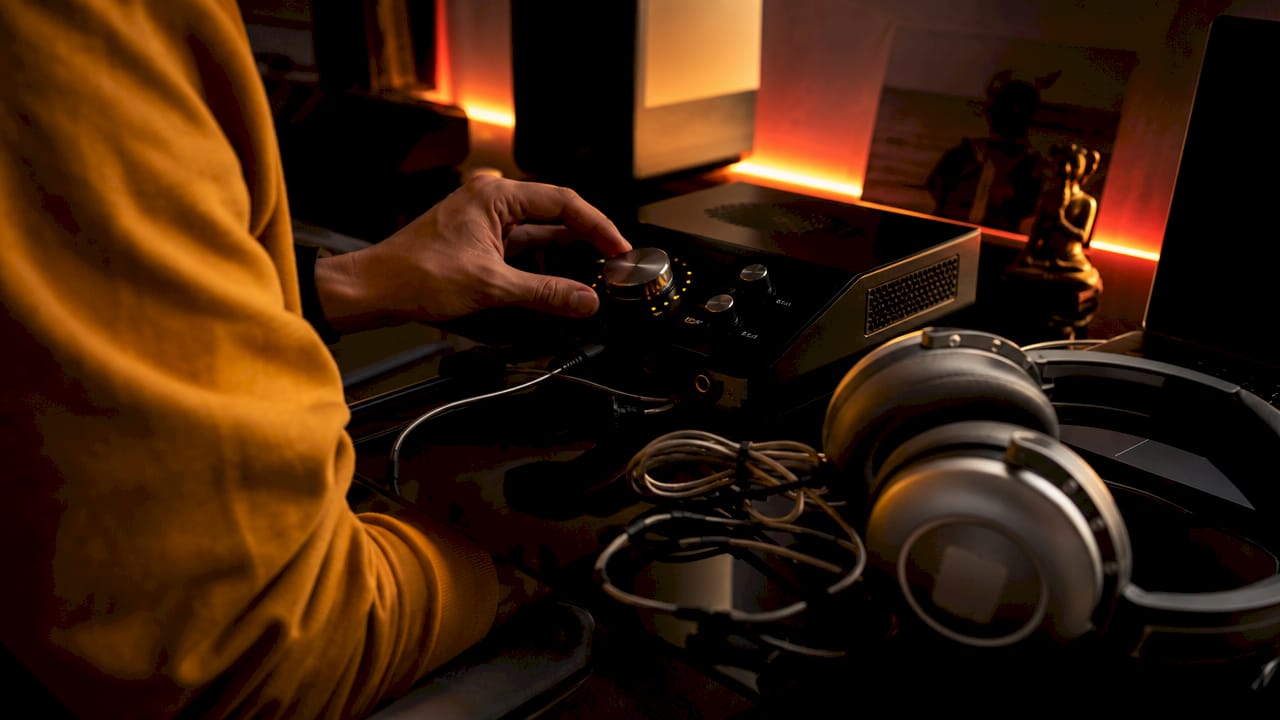
1. What are the key types of immersive audio experiences?
The three dominant spatial audio formats each solve the same problem differently: how to make sound feel like it exists around you, not just beside you.
- Dolby Atmos treats every sound as an independent object with X, Y, and Z coordinates. A renderer places those objects across whatever speaker layout or headphone system you use, from a 7.1.4 home theater to a pair of AirPods. This adaptiveness is what makes Dolby Atmos the most commercially widespread immersive format today.
- Ambisonics captures a complete spherical sound field and stores it as a mathematical representation. It decodes to any speaker configuration or VR headset, making it the preferred format for virtual reality and augmented reality applications where the listener can rotate freely.
- Binaural audio uses HRTF processing to simulate how your ears and skull shape incoming sound. The result is a convincing three-dimensional image through headphones alone, no special hardware required.
- Head-tracked spatial audio adds accelerometers and gyroscopes to the equation. Headphones like AirPods Pro sync sound with head movement, so the soundstage stays anchored in space rather than rotating with your head. This eliminates the “in-head” effect that makes static binaural mixes feel artificial.
Pro Tip:If you are new to immersive sound technologies, start with binaural audio through any quality headphones. You will hear the spatial difference immediately, with zero equipment investment beyond what you already own.
2. How immersive audio apps and tools enhance personalization
The app ecosystem for immersive music experiences has matured significantly. Most tools follow a freemium model, ranging from free basic versions to lifetime licenses priced around $99.99. That pricing range reflects a real split in the market: casual listeners want free access, while audio professionals need full parameter control.
- 3D Music Surround Audio Maker converts standard stereo tracks into spatialized mixes with adjustable panning and reverb depth. The free tier covers basic spatial placement. The premium tier unlocks multi-layer positioning.
- VoxAtmos offers subscription and lifetime license options. It gives you real-time control over sound object placement, reverb character, and spatial depth, which makes it useful for both listening and light production work.
- Web Audio API tools like Lucid use panner nodes and HRTFs to generate spatialized sound effects that move dynamically around your listening environment. These browser-based tools require no installation and produce genuinely convincing binaural results.
The learning curve for these apps is real. Spatial audio mixing is not the same skill as stereo mixing. Panning a sound to the left in stereo is one action. Placing it above and behind you in three-dimensional space requires understanding elevation, distance, and reverb tail behavior simultaneously.
Pro Tip:When using any immersive audio app for the first time, set one parameter at a time. Adjust only the azimuth (left-right angle) first, then add elevation, then reverb. Stacking all three at once makes it impossible to hear what each variable is doing.
3. Procedural and generative soundscapes as immersive environments
Procedural soundscape generators represent one of the most underrated types of immersive music experiences. These tools do not play back recorded loops. They synthesize sound in real time from mathematical rules, which means the audio never repeats exactly.
Procedural generators typically layer 10–15 ambient elements simultaneously, each with independently varying parameters. Rain, for example, is not a single rain recording. It is dozens of synthesized droplets with randomized pitch, timing, and spatial position. The result feels alive in a way that looped audio never does.
| Preset Category | Example Layers | Best Use Case |
|---|---|---|
| Nature | Rain, wind, birds, water | Sleep, relaxation |
| Cozy | Fireplace, low hum, soft tones | Focus, reading |
| Urban | Traffic, crowd murmur, distant music | Background ambiance |
| Mood: Subtle | Sparse, low-intensity elements | Light focus sessions |
| Mood: Rich | Dense, layered, high-intensity | Deep immersion, meditation |
Sleep timers in these tools typically run from 15–90 minutes, which covers most use cases from a short nap to a full night. The Soundscape Generator by InnoviCat offers mood selectors and intensity sliders that let you shape the density of the environment in real time.
- Non-looping audio removes the psychological “reset” that breaks immersion in recorded ambiance
- Intensity controls let you shift from background texture to foreground presence without switching tracks
- Spatial positioning within procedural tools places individual sound elements at distinct points around you
4. How immersive audio speaker systems compare for fixed environments
Multi-speaker surround sound remains the most spatially accurate option for a fixed listening room. A 7.1.4 configuration uses seven ear-level speakers, one subwoofer, and four height channels to place sound at any point in a full three-dimensional sphere. Nothing else matches it for precision.
| Hardware Type | Spatial Accuracy | Head Movement Support | Best For |
|---|---|---|---|
| 7.1.4 Speaker System | Highest | No (fixed room) | Home theater, studio |
| Headphones with Head-Tracking | High | Yes (dynamic) | Personal listening, travel |
| Smart Speakers (HomePod, Sonos Era 300) | Moderate | Limited | Casual room fill |
| Standard Headphones (binaural) | Moderate | No | Accessible entry point |
Smart speakers use computational audio for immersive effects but cannot match the precision of dedicated speaker arrays or head-tracked headphones. The HomePod and Sonos Era 300 both process spatial audio signals, but their single-unit or two-unit configurations cannot place sound above your head the way a 7.1.4 system does. They are excellent for room-filling ambiance. They are not the right tool for critical spatial listening.
Headphones with head-tracking occupy a compelling middle ground. They deliver high spatial accuracy and adapt dynamically to your movement, which makes them the most practical choice for listeners who want immersive 3D audio experiences without a dedicated room.
5. Practical tips for balanced and comfortable immersive audio mixes
The most common mistake in immersive audio mixing is overuse. Placing every sound element in a different spatial position creates confusion, not immersion. Best practice is to spatialize environmental sounds while keeping vocals and dialogue anchored at the front center.
“Immersive audio should be integrated from the very start of production. Sound designers who think spatially from day one deliver more authentic, engaging experiences than those who bolt on surround effects in post.” — FX Guide
- Keep lead vocals and primary melodic elements in the frontal sound field. Moving them to the sides or rear breaks listener focus and creates fatigue.
- Use spatial reverb to suggest environment rather than to place sound. A long reverb tail implies a large room without requiring you to push the dry signal to the rear speakers.
- Apply restraint in surround panning as a creative discipline. Overuse of surround panning reduces immersion rather than increasing it.
- For headphone mixes, enable head-tracking wherever possible. Static binaural mixes feel artificial because your brain expects the soundstage to shift when you turn your head.
- Consider listener physiology. HRTFs vary between individuals, which means a mix that sounds perfectly placed to one listener may feel slightly off to another. Personalization options in tools like VoxAtmos address this directly.
Personalization is shaping immersive audio’s future, with research from Binaulab showing that adjustable voice placement, instrument positioning, and individual headphone correction produce the most satisfying listener experiences. The technology is moving toward mixes that adapt to you, not the other way around.
Key takeaways
The most effective immersive audio experiences combine spatial sound technology with deliberate creative restraint to produce depth that feels real, not manufactured.
| Point | Details |
|---|---|
| Three core formats | Dolby Atmos, Ambisonics, and binaural audio each create spatial sound through distinct technical methods. |
| Apps enable personalization | Tools like VoxAtmos and 3D Music Surround Audio Maker give listeners real-time control over spatial placement. |
| Procedural audio avoids repetition | Generators layering 10–15 synthesized elements create non-looping environments ideal for sleep and focus. |
| Hardware shapes the experience | A 7.1.4 speaker system delivers the highest spatial accuracy; head-tracked headphones offer the best portable alternative. |
| Restraint is the key mixing principle | Keeping vocals frontal and using reverb for environment rather than placement prevents listener fatigue. |
What I have learned from living inside immersive sound
Sound is not just something you hear. It is something you feel in your chest, in the space between your thoughts. When I started working with spatial audio at Drvvynsound, I expected the technology to be the revelation. What actually surprised me was how much the emotional weight of a song shifted when the sound moved around you rather than at you.
The formats matter less than most people think. Dolby Atmos is powerful, but a well-crafted binaural mix through a decent pair of headphones can stop you mid-breath. What changes everything is intention. Are you placing sound to show off the technology, or are you placing it to serve the feeling the music is trying to create? Those are two completely different decisions.
My honest recommendation: start with binaural audio and something you already love. Let the spatial depth of a familiar song feel new again. Then, when you are ready, build toward more complex setups. The technology will meet you where you are. The emotion was always already there.
— DRVVYN
Drvvynsound and the sounds worth living inside
Sound this intentional deserves a home worth returning to. At Drvvynsound, the music is built from the inside out, with spatial depth and emotional weight woven into every release, not added as an afterthought.
Whether you are a listener who wants to feel music differently or a creator studying how immersive sound works in practice, DRVVYN Essentials offers a curated entry point into that world. The catalog is built around the same principles covered here: restraint, spatial intention, and emotional honesty. If you want to hear what ambient nocturnal soundscapes sound like when they are crafted with care, the ambient nocturnal soundscape guide on the Drvvynsound blog is a strong place to begin.
FAQ
What is an immersive audio experience?
An immersive audio experience is a listening format that places sound in three-dimensional space around the listener rather than in a flat stereo field. Formats like Dolby Atmos, Ambisonics, and binaural audio each achieve this through different technical methods.
What is the difference between spatial audio and Dolby Atmos?
Spatial audio is the broad category covering any three-dimensional sound format. Dolby Atmos is one specific spatial audio format that uses object-based audio to place individual sounds at precise three-dimensional coordinates, adaptable to any playback system.
Do I need special equipment for immersive audio?
Binaural audio works through any standard headphones, making it the most accessible entry point. Dolby Atmos requires compatible headphones, speakers, or a streaming platform that supports the format, such as Apple Music or Tidal.
How do procedural soundscape generators differ from recorded ambient audio?
Procedural generators synthesize sound in real time from mathematical rules, producing non-looping audio environments with 10–15 layered elements. Recorded ambient audio loops at a fixed point, which breaks immersion when the listener notices the repeat.
Which immersive audio format is best for music listening?
Dolby Atmos is the most widely supported format for music on streaming platforms. Binaural audio is the most accessible for headphone listeners who want spatial depth without specialized hardware.