

Listening & Culture
Why Cinematic Playlists Stay With You
Cinematic playlists turn listening into atmosphere, memory, and motion. Here’s why they hit deeper and how to find the ones worth returning to.
By DRVVYN · · 7 min read
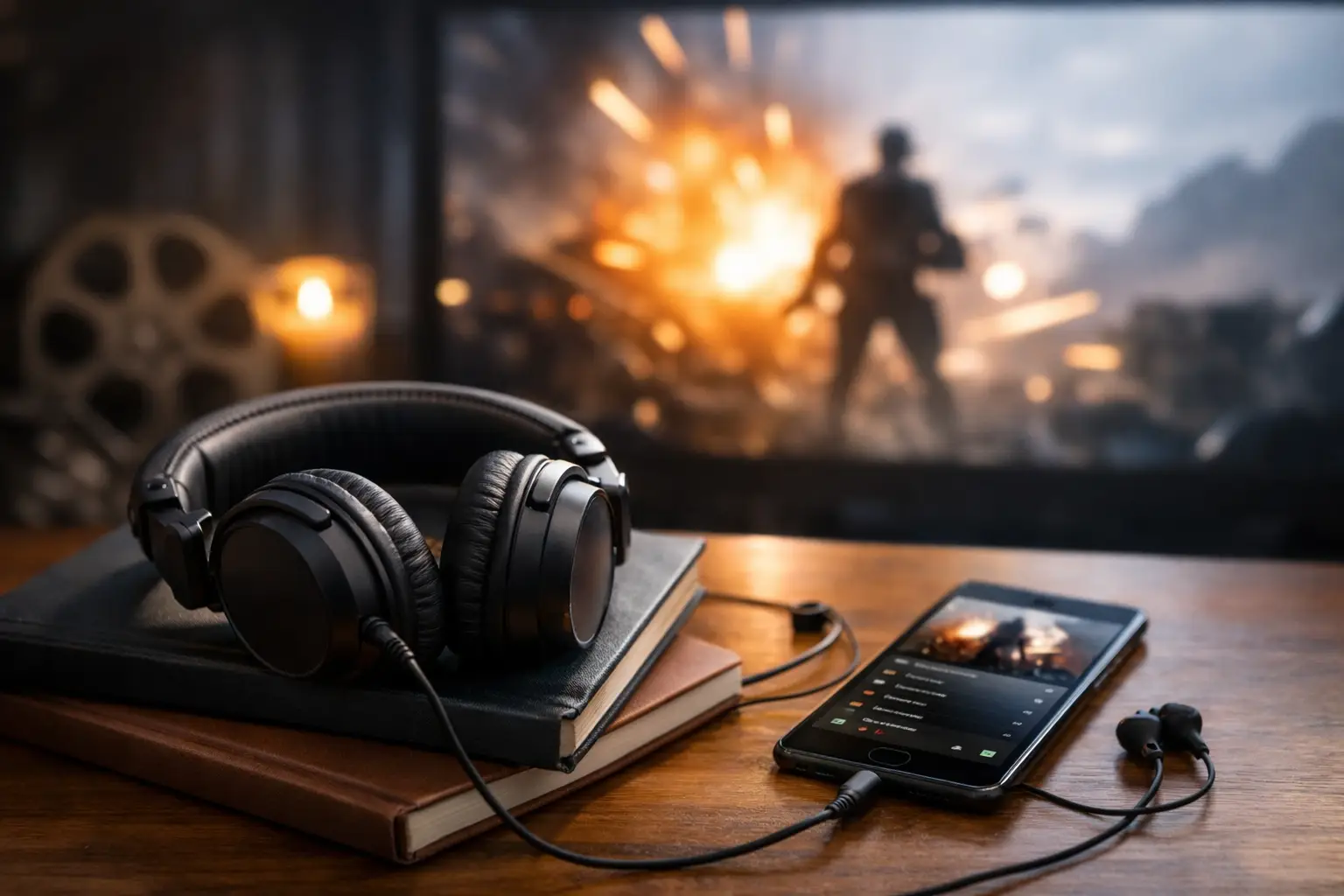
Some playlists pass through you. Others change the temperature of the room.
That’s the difference with cinematic playlists. They do more than line up songs that sound good together. They create a setting. A sense of movement. A quiet storyline you feel before you can name it. One track opens a door, the next one keeps you there, and somewhere in the middle your own thoughts start sounding like part of the score.
What makes cinematic playlists feel different
A cinematic playlist isn’t defined by one genre. It can live in ambient music, alt R&B, orchestral textures, electronic shadows, slow-burning hip-hop, or something harder to classify. The thread is emotional continuity.
The songs feel connected by tension, release, mood, and space. Not just tempo. Not just theme. There’s usually a sense that each track belongs to a larger frame, as if it was chosen for what it does to the scene around you.
That scene might be real. Night driving with the city blurred out beyond the windshield. Walking home too late, replaying a conversation. Sitting still when your mind won’t. Or it might be imagined, which is part of the point. Good cinematic listening gives your inner life somewhere to land.
A lot of playlists are built for function. Focus. Workout. Background. There’s nothing wrong with that. But cinematic playlists ask for a little more presence. They are less about productivity and more about atmosphere. Less utility, more immersion.
Cinematic playlists and emotional accuracy
People don’t always want cheerful music when they’re feeling heavy. They don’t always want intensity when they’re trying to feel alive. Most of the time, they want accuracy.
That’s why cinematic playlists hold people longer than more generic mood playlists. They tend to respect emotional complexity. They don’t flatten everything into one obvious feeling. Instead, they leave room for contradiction – longing next to calm, ache next to beauty, distance next to warmth.
That balance matters. Real life rarely arrives in one clean emotion at a time. The playlists that stay with you understand that. They let a track feel unresolved. They let silence matter. They let the moment breathe instead of constantly trying to peak.
This is also why some cinematic playlists feel deeply personal even when thousands of people stream them. They mirror internal states that are hard to explain out loud. Not everyone needs language for what they’re carrying. Sometimes they just need the right sequence of sound.
The sequencing is the story
If a single song is a scene, sequencing is the edit.
This is where a lot of playlists lose their grip. They may include strong individual tracks, but the emotional line breaks every few minutes. A song arrives too loud, too bright, too literal, or too early. The mood resets instead of deepening.
The best cinematic playlists understand pacing. They know when to hold back and when to widen the frame. They don’t rush into the biggest moment. They build toward it, then know how to come down without making the whole thing collapse.
There’s an art to that restraint. A playlist can be beautiful and still feel exhausting if every song asks for the same level of emotional attention. What makes cinematic listening work is contrast. Dense tracks need air around them. Lyrics-heavy moments often hit harder after something more atmospheric. A darker section can make the warm song that follows feel almost physical.
You can hear intention when a playlist moves like this. It feels less like a collection and more like a world.
Why people return to cinematic playlists
Some music gets replayed because it’s catchy. Some gets replayed because it’s familiar. Cinematic playlists often get replayed because they become attached to memory.
A certain run of songs starts to belong to a season. A version of you. A room. A drive. The feeling of almost texting someone and deciding not to. The low glow of a weekend that didn’t need much. Over time, the playlist stops being just sound and starts behaving like a place.
That kind of connection is hard to fake. It usually happens when curation is intentional enough to hold shape, but open enough for the listener to project themselves into it. Too specific, and it feels closed off. Too broad, and it disappears into the background.
The playlists that last tend to sit in the middle. They suggest a mood without overexplaining it. They offer a frame, then let you fill in what belongs there.
Not every cinematic playlist is quiet
There’s a common assumption that cinematic means soft, ambient, or orchestral. Sometimes it does. Sometimes it doesn’t.
A cinematic playlist can be sharp-edged. It can be tense, nocturnal, heavy with bass, restless in its rhythm. The point isn’t softness. The point is scale and feeling. Does it make the moment feel larger, clearer, more vivid? Does it pull ordinary life into sharper contrast?
That depends on the listener too. One person’s cinematic escape is all washed-out piano and reverb. Another person wants pulse, darkness, and a sense of pursuit. Neither is wrong.
What matters is coherence. If the playlist commits to an emotional space and carries it well, it can be cinematic at almost any volume.
How to tell when a playlist is built with intention
Usually, you know within the first three songs.
The transition feels considered. Nothing sounds dropped in just because it’s popular or adjacent. The energy is controlled. Even when the sound shifts, the emotional world stays intact.
Titles and artwork can shape the experience too, though they shouldn’t have to do all the work. A strong title gives the listener a frame. Good visual language deepens the mood before the first note starts. But if the sequencing is weak, aesthetics won’t save it.
You can also feel when a playlist trusts the listener. It doesn’t overperform. It doesn’t need every song to announce itself. It leaves space for atmosphere, which is harder to do than stacking obvious high points.
That kind of curation often reflects a bigger creative philosophy. The strongest platforms and artists understand that songs don’t live alone. They gain meaning through placement, repetition, visual context, and the moods they keep company with. DRVVYN Sound is built around that idea – not just releasing music, but shaping an experience people return to when they want to feel something specific.
The trade-off with cinematic playlists
They are not always casual listening.
That’s part of the appeal, but it’s also the trade-off. A truly immersive playlist can ask more of you than background music does. If you’re trying to multitask, some cinematic playlists may feel too present. Too emotionally charged. Too immersive for the wrong moment.
And sometimes the label gets used too loosely. A playlist can be slow and moody without actually feeling cinematic. Without narrative shape, mood alone can turn flat. The atmosphere is there, but the movement isn’t.
So it depends on what you want from music that day. If you need something to disappear behind your tasks, cinematic curation might feel too intentional. But if you want music that meets you where you are, and maybe takes you somewhere a little deeper, it lands differently.
Why this kind of listening matters now
People are overstimulated, but emotionally underfed. There’s sound everywhere and not much of it stays.
Cinematic playlists cut against that. They ask for slower attention. They reward repeat listens. They don’t just fill silence – they shape it. In a culture that moves fast and forgets faster, that kind of listening can feel almost intimate.
Maybe that’s why so many people keep searching for playlists that feel like a film, a memory, or a dream they can step back into. Not because they want drama. Because they want resonance.
The right playlist won’t solve anything. It won’t explain your life back to you in neat language. But it can hold a mood without breaking it. It can make a familiar night feel charged with meaning. It can give your thoughts a horizon.
And sometimes that’s enough. Sometimes the right sequence of songs doesn’t need to tell you what to feel. It just stays with you long enough for the feeling to surface on its own.