

Listening & Culture
Soundscape Explained: A Complete Guide for Artists
Discover what is soundscape explained in this complete guide for artists. Learn how to enhance your creativity and connection through sound.
By DRVVYN · · 9 min read

A soundscape is defined as the acoustic environment as perceived and experienced by a person, shaped by the relationship among sound sources, place, and context. This is not just background noise. It is the full sonic world you inhabit at any given moment, filtered through your senses, your mood, and your surroundings. ISO 12913-1 formalized this definition in 2014, establishing that soundscape meaning goes beyond physical sound measurement to include human experience. For artists and music enthusiasts, understanding soundscapes unlocks a richer way to hear, create, and connect with the world through sound.
What is soundscape explained through its three core elements?
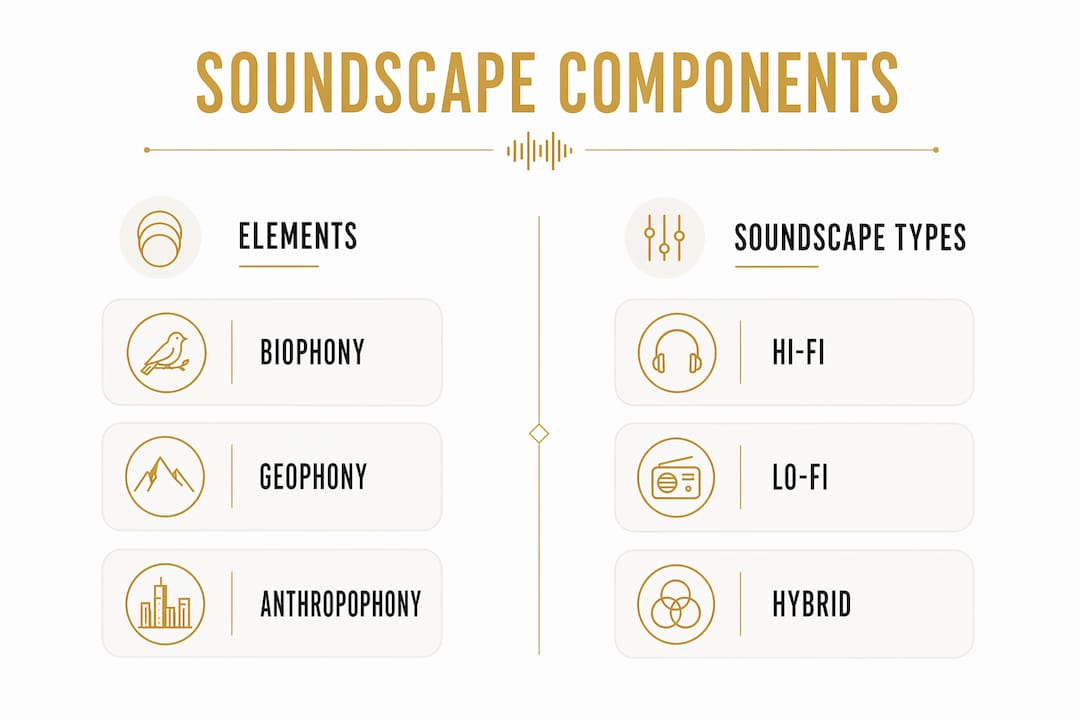
Every soundscape is built from three categories of sound, and knowing them changes how you listen. Soundscape ecology identifies these as biophony, geophony, and anthropophony. Together, they form the architecture of any acoustic environment you step into.
- Biophony covers all sounds produced by living organisms. Birdsong at dawn, frog calls near a pond, insects buzzing through tall grass. These sounds carry biological information and shift with seasons, time of day, and habitat health. A forest rich in biophony signals a thriving ecosystem.
- Geophony covers natural, non-biological sounds. Wind moving through trees, rain hitting a rooftop, waves breaking on a shore, thunder rolling across an open field. These sounds are ancient. They predate human presence and carry a weight that listeners feel instinctively.
- Anthropophony covers all human-made sounds. This category splits into two types: controlled sound, which includes music, speech, and intentional sound design, and noise, which includes traffic, machinery, and construction. Both shape the character of any environment where people live and work.
These three layers do not exist in isolation. They overlap, compete, and complement each other constantly. A city park at noon might hold birdsong (biophony) layered over wind in the leaves (geophony) with distant traffic and a street musician playing nearby (anthropophony). The way these layers interact defines the texture and emotional tone of that specific moment in that specific place.
Pro Tip:Record a single location at three different times of day. You will hear how the balance between biophony, geophony, and anthropophony shifts dramatically, giving you three distinct soundscapes from one spot.
Why does subjective perception matter in soundscape assessment?
The acoustic environment is objective. Soundscape is not. This distinction is the most important concept in understanding soundscapes, and it separates a noise reading from a real human experience.
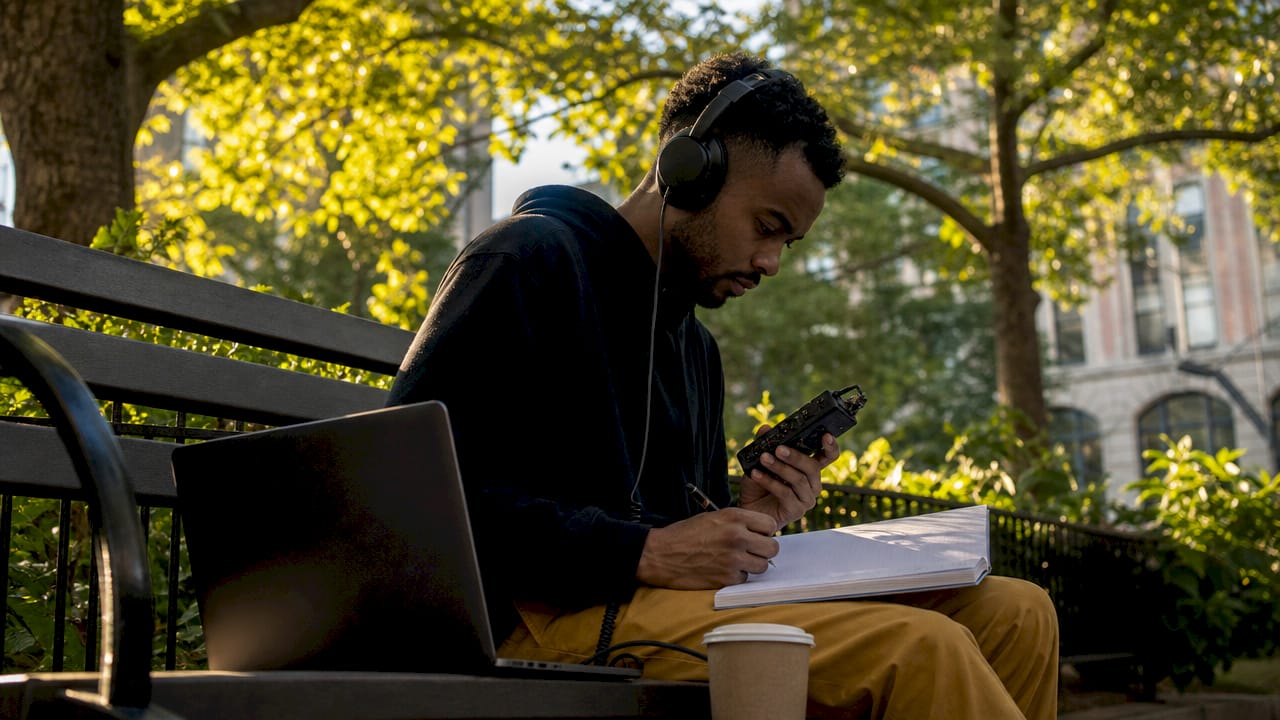
Two people standing in the same subway station hear the same decibels. One is a commuter running late, and the sound feels sharp and pressing. The other is a field recordist with headphones around their neck, and the same roar feels alive and textured. The sound pressure level is identical. The soundscape experience is completely different.
- Context shapes everything. The person, the activity, the time of day, and the place all filter how sound is received. A lawnmower on a Saturday morning reads differently than the same sound during a quiet Tuesday afternoon.
- Decibel levels alone miss the point. Soundwalk methodology combines questionnaire data with sound pressure level readings to capture both the physical and experiential dimensions of a soundscape. This dual approach gives a fuller picture.
- Noise reduction is not always the answer. Research shows that simply lowering noise in urban environments does not automatically improve how people experience those spaces. Balance and integration of sound types matter more than silence.
- Emotional state alters perception. Grief makes silence feel sharp. Excitement makes a crowd feel electric. The same acoustic environment carries different weight depending on what you bring into it.
Soundscape assessment methods now account for this complexity. Researchers use soundwalks, where participants move through an environment and report their experience in real time, alongside acoustic measurements. This approach treats the listener as part of the data, not just a passive receiver.
Pro Tip:Keep a sound journal for one week. Note not just what you hear but how it makes you feel and what you were doing at the time. Patterns in your perception will reveal your personal soundscape sensitivities.
What are hi-fi and lo-fi soundscapes, and why do they matter to artists?
R. Murray Schafer and the World Soundscape Project gave artists two of the most useful concepts in sound design: hi-fi and lo-fi soundscapes. These terms describe the clarity and density of a sonic environment, and they translate directly into mixing and composition decisions.
| Concept | Characteristics | Artistic Implication |
|---|---|---|
| Hi-fi soundscape | Low ambient noise, discrete sounds clearly audible | Supports detailed listening; ideal for layered, nuanced compositions |
| Lo-fi soundscape | High ambient noise, sounds blend and saturate | Creates density and texture; requires careful frequency management |
A quiet forest at 5:00 AM is a hi-fi soundscape. Every bird call sits in its own space. You can track individual sounds without effort. A busy intersection in downtown Chicago is a lo-fi soundscape. Sounds pile on top of each other, and individual elements blur into a wall of noise.
The acoustic niche hypothesis adds another layer to this. In natural environments, species evolve to occupy distinct frequency bands and time slots to avoid masking each other. Birdsong clusters in certain frequency ranges. Insects fill others. Frogs call at dusk when birds go quiet. This is not coincidence. It is acoustic negotiation refined over millions of years.
Artists who understand this principle apply it deliberately:
- Place low-frequency elements like bass and kick drum in their own frequency space.
- Reserve midrange frequencies for melodic content and vocals.
- Use high frequencies for texture, air, and detail.
- Consider timing and rhythm as a form of acoustic niche management, letting elements breathe rather than compete.
The acoustic niche hypothesis is not just ecology. It is a blueprint for mix clarity that nature has been testing for a very long time.
How do soundscapes enhance artistic creation and music production?
Soundscape knowledge transforms how you build audio experiences. The three-category framework of biophony, geophony, and anthropophony gives you a practical vocabulary for layering sounds with intention and emotional depth.
- Use biophony to ground a listener in place. A distant bird call or the rustle of leaves signals “natural world” to the brain immediately. Artists use these sounds to create a sense of location without a single word of narration.
- Use geophony to add emotional weight. Rain, wind, and water carry primal associations. A slow rain bed under a quiet R&B vocal creates tension and intimacy simultaneously. The sound does emotional work that no instrument can fully replicate.
- Use anthropophony to add human presence. Controlled sound, including music, voice, and intentional sound design, places the listener inside a human story. Incidental anthropophony, like a distant siren or a passing car, adds realism and grounds abstract music in a recognizable world.
- Layer across frequency bands. Applying the acoustic niche principle means each sound element occupies its own space. The result is a mix that feels full without feeling cluttered. Every element is audible because every element has room.
- Record real environments. Field recording captures the authentic interaction of all three sound categories. These recordings carry a truth that synthesized sounds rarely match. Even a short ambient bed from a real location adds texture and life to a production.
Soundscapes carry cultural and environmental identity that shapes community well-being. When artists draw from real acoustic environments, they tap into that identity. The result is music that feels rooted, specific, and emotionally honest.
Key Takeaways
A soundscape is the subjective perception of an acoustic environment, shaped by biophony, geophony, and anthropophony, and assessed through both physical measurement and human experience.
| Point | Details |
|---|---|
| Soundscape definition | ISO 12913-1 defines soundscape as an acoustic environment perceived within context, not just measured sound. |
| Three sound categories | Biophony, geophony, and anthropophony form the building blocks of every soundscape. |
| Perception over decibels | Soundwalk methodology combines subjective reports with acoustic data for accurate soundscape assessment. |
| Hi-fi vs. lo-fi | Hi-fi soundscapes offer clarity; lo-fi environments create density, each requiring different creative approaches. |
| Acoustic niche principle | Natural frequency partitioning guides artists toward balanced, clear mixes where every element has space. |
What I’ve learned from listening to the world as a sound source
Most people treat the sounds around them as interference. Something to block out, to cancel, to escape. I used to do the same thing. Then I started paying attention, and everything shifted.
The moment you stop filtering out the world and start actually listening, you realize that every environment is already a composition. The hum of a city at 2:00 AM, the silence between notes in a quiet room, the way rain changes the character of a street. These are not distractions. They are raw material.
What strikes me most is how the World Soundscape Project’s core insight still holds: soundscapes carry identity. The sounds of a neighborhood tell you who lives there, what they value, how they move through time. When I bring those sounds into a production, I am not just adding texture. I am bringing a piece of someone’s lived experience into the music.
The hardest part is resisting the urge to clean everything up. Lo-fi environments feel messy. But that mess is often where the emotional truth lives. A perfectly clean mix can feel cold. A mix that breathes, that has room for imperfection and ambient life, feels human. That tension between clarity and texture is where the most interesting creative decisions happen.
Pay attention to what you hear before you press record. The world is already composing around you.
— DRVVYN
Drvvynsound and the sounds that shape your creative world
Drvvynsound was built on the belief that sound is more than production. It is feeling, memory, and identity pressed into audio form. Every release from DRVVYN carries that philosophy, drawing from real emotional environments and translating them into music that sits with you long after the song ends.

If you are an artist or music enthusiast ready to deepen your relationship with sound, explore the full catalog at Drvvynsound. From original R&B releases to cinematic visual content, every project reflects the same principles that make soundscapes powerful: intention, layering, and emotional honesty. The sounds you choose define the world you create. Start building that world with intention.
FAQ
What is the definition of a soundscape?
A soundscape is the acoustic environment as perceived and experienced by a person within a specific context. ISO 12913-1 defines it as the relationship among sound, person, activity, and place.
What are the three main components of a soundscape?
The three components are biophony (sounds from living organisms), geophony (natural non-biological sounds), and anthropophony (human-made sounds including music and noise).
Why are soundscapes important for music artists?
Soundscapes give artists a framework for layering sounds with intention, using principles like the acoustic niche hypothesis to create mixes where every element has frequency space and emotional clarity.
What is the difference between a hi-fi and lo-fi soundscape?
A hi-fi soundscape has low ambient noise and discrete, clearly audible sounds. A lo-fi soundscape is noise-saturated, where individual sounds blend together. Schafer’s distinction helps artists choose the right sonic density for their creative goals.
How do researchers assess soundscape quality?
Soundscape assessment combines acoustic measurements with subjective listener reports through methods like soundwalks. Decibel levels alone do not capture how a person actually experiences a sonic environment.