

Listening & Culture
Why People Listen Alone at Night: The Real Reason
Discover why people listen alone at night. Understand the brain's unique responses for deeper emotional connections to music after dark.
By DRVVYN · · 8 min read
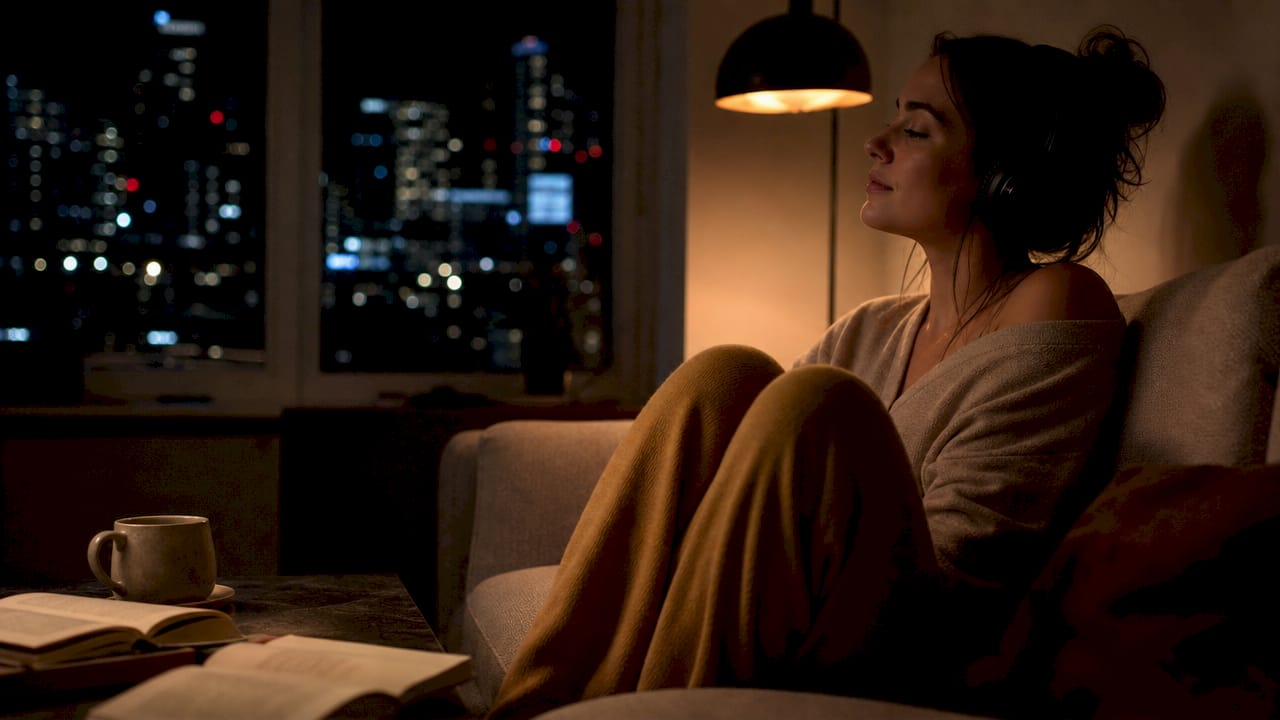
Nighttime solitary listening is defined as the practice of engaging with music in private, after dark, without social presence. This is one of the most emotionally charged listening habits humans practice, and science explains exactly why. When the day ends and the silence settles, your brain shifts into a state that makes music land differently. Melatonin rises, the prefrontal cortex steps back, and the limbic system takes over. The result is a deeper, more personal connection to sound. Understanding why people listen alone at night means understanding how your brain, your emotions, and your need for quiet time all converge after dark.
Why people listen alone at night: the brain chemistry behind it
The single most important reason nighttime listening feels different is a shift in brain activity. Melatonin production increases sensitivity to acoustic stimuli, moving your brain’s center of gravity from the analytical prefrontal cortex to the emotional limbic system. That shift means music stops being something you evaluate and starts being something you feel.
The limbic system governs emotion and memory. When it takes the lead, music triggers stronger emotional responses and pulls up memories with more force. A song you have heard a hundred times can suddenly feel new at midnight, not because the song changed, but because you did.
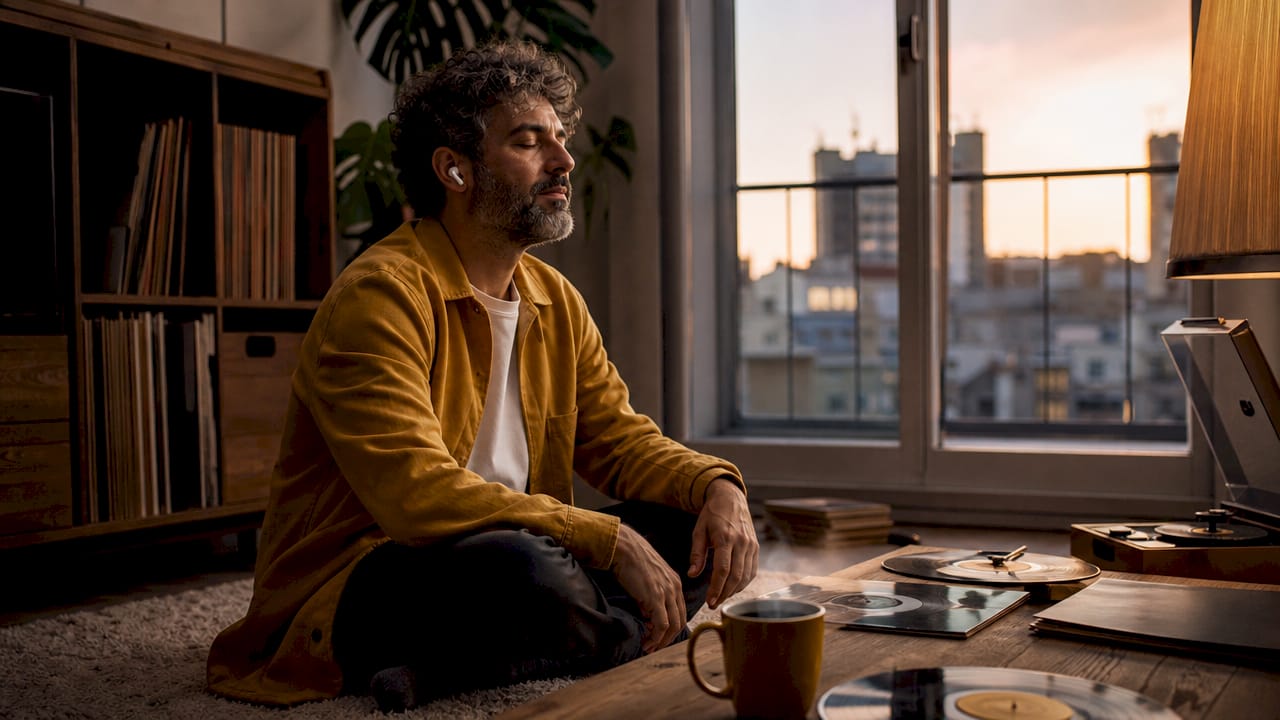
This also explains why nighttime listeners perceive subtle nuances and emotional peaks without needing louder volume. Your brain is simply more receptive. The quiet of the room and the chemistry of the hour combine to make the music feel fuller, richer, and more present.
Pro Tip:Lower your volume by 20–30 percent when listening at night. Your brain’s heightened receptivity means you will hear more detail, not less, and your ears will thank you in the morning.
How the environment amplifies what your brain already does
The perception of richer sound at night comes mostly from listener receptivity, not from any change in the music itself. External noise drops. Distractions fade. Your auditory system gets a cleaner signal. The music has not improved. You have.
| Daytime listening | Nighttime listening |
|---|---|
| Prefrontal cortex active | Limbic system dominant |
| Higher external noise floor | Quieter acoustic environment |
| Analytical, evaluative listening | Emotional, immersive listening |
| Social monitoring competes for attention | Full cognitive bandwidth on music |
| Lower emotional sensitivity | Heightened sensitivity to nuance |
How solitude removes the noise between you and the music
Social environments demand a constant background process called social monitoring. Your brain tracks facial expressions, manages your own reactions, and anticipates what others think. That process consumes real cognitive resources. Social presence lowers attention for music by pulling bandwidth away from auditory processing.
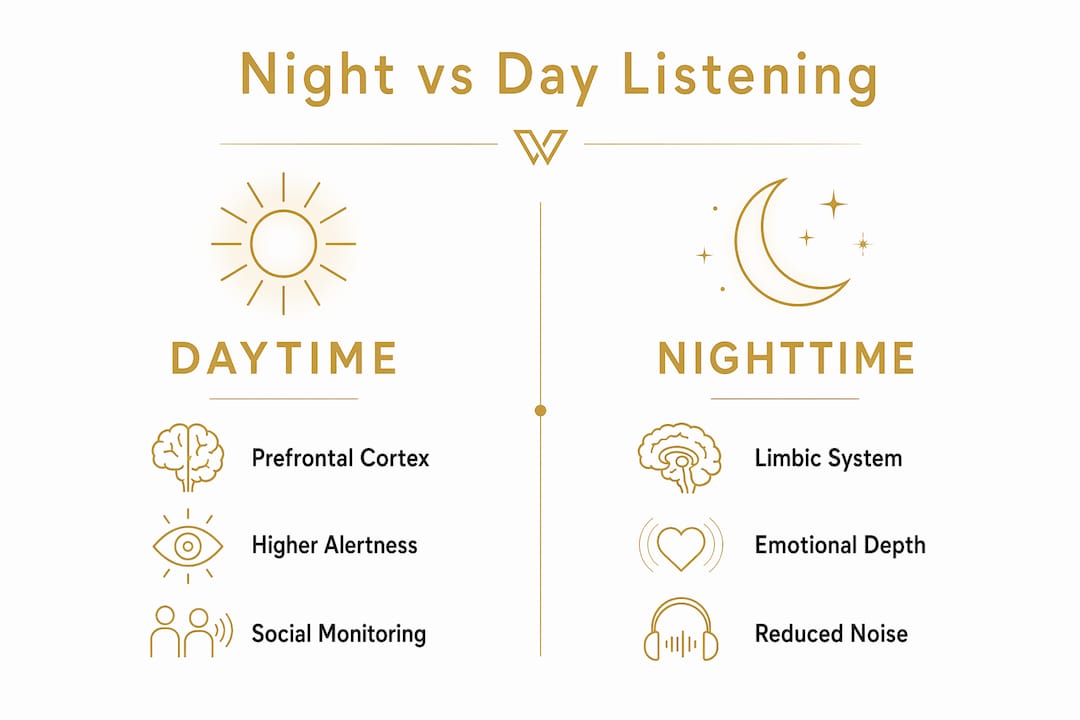
When you are alone at night, that background process shuts down. The cognitive signal-to-noise ratio improves. You stop managing how you look while listening and start actually listening. The music fills the space that social vigilance used to occupy.
This is why the same song can feel hollow at a party and devastating in your bedroom at 1 a.m. The song is identical. The cognitive environment is not.
Solitude also removes the pressure to perform your emotional reactions. In social settings, you manage expressions. You moderate your response. Alone, you let the music move you without editing yourself. That freedom is not a small thing. It is the difference between hearing music and being inside it.
- Social monitoring consumes cognitive resources that would otherwise go to auditory attention.
- Alone at night, your full cognitive bandwidth focuses on musical texture and dynamics.
- Releasing social performance enables honest, unfiltered emotional reactions to music.
- The absence of an audience removes the need to curate your emotional response.
- Solitude creates the psychological safety that deep listening requires.
Why nighttime rituals of listening alone support emotional health
Nighttime solitary listening functions as emotional self-regulation. The day accumulates pressure. Conversations, decisions, and obligations stack up. By the time night arrives, many people carry emotions they never had space to process. Music becomes the release valve.
Listeners engage in 30–60 minute sessions at night to process emotions suppressed during daytime social demands. That duration is not random. It reflects how long the nervous system needs to decompress when given the right conditions. Music provides those conditions.
The mental health and nighttime listening connection is real. Music acts as what researchers describe as an emotional anchor, calming internal mental chatter more effectively than white noise or silence. Sonic self-control is the term for this practice. You choose the sound. You shape the emotional environment. That sense of agency matters when the rest of the day felt out of your hands.
Pro Tip:Build a consistent nighttime listening ritual. Same time, same playlist style, same environment. Ritual signals to your nervous system that it is safe to decompress. The emotional benefits compound over time.
Nighttime listening also supports identity exploration. Without an audience, you gravitate toward music that reflects who you actually are, not who you perform being. That honesty is part of why solitary music experiences feel so significant. The music you choose alone at night often reveals more about you than the music you share.
- Set aside 30–60 minutes after your last obligation of the day for dedicated listening.
- Choose music that matches your emotional state, not the mood you wish you were in.
- Sit or lie in a comfortable position with minimal visual stimulation.
- Let the music run without skipping. Resistance to a song often signals something worth sitting with.
- After the session, notice what shifted. Emotional processing leaves traces you can learn from.
How to get the most from your nighttime listening experience
Optimizing your nighttime listening is less about gear and more about choices. The right music, the right timing, and the right environment determine whether you wake up rested or groggy.
Instrumental music facilitates relaxation and falling asleep faster because familiar lyrics activate language centers and keep the brain alert. If your goal is sleep, choose music without words. If your goal is emotional processing, familiar lyrical music works well, but stop it before you drift off.
Using a sleep timer set for 30–45 minutes avoids disrupting deep sleep cycles. Continuous audio playback can interfere with restorative sleep even when it helps you fall asleep initially. The timer protects your sleep architecture while preserving the relaxation benefit.
| Goal | Music type | Session length | Environment |
|---|---|---|---|
| Emotional processing | Lyrical, emotionally resonant | 30–60 minutes | Dim light, comfortable position |
| Relaxation and wind-down | Instrumental, slow tempo | 20–40 minutes | Dark room, low volume |
| Sleep onset | Instrumental, minimal dynamics | Until sleep timer cuts off | Completely dark, cool temperature |
| Reflection and clarity | Familiar songs, varied tempo | 30–45 minutes | Quiet space, no phone notifications |
Create a quiet, comfortable environment before you press play. Silence notifications. Dim or kill the lights. These steps are not optional extras. They remove the final layer of social and cognitive noise that stands between you and the music.
Key Takeaways
Nighttime solitary listening deepens emotional engagement because brain chemistry, reduced social load, and environmental quiet all align to make music feel more personal and more powerful.
| Point | Details |
|---|---|
| Brain chemistry shifts at night | Melatonin moves brain activity toward the limbic system, heightening emotional sensitivity to music. |
| Solitude frees cognitive bandwidth | Without social monitoring, full attention goes to musical texture, dynamics, and emotional content. |
| Nighttime listening regulates emotions | Sessions of 30–60 minutes help process suppressed emotions and reduce stress accumulated during the day. |
| Music choice determines the outcome | Instrumental music aids sleep; lyrical music supports emotional processing before a sleep timer cuts off. |
| Ritual amplifies the benefit | Consistent nighttime listening conditions train the nervous system to decompress on cue. |
What I have learned from listening alone after midnight
There is a version of a song you only hear when no one is watching. I found that out the hard way, years of listening in rooms full of people before I realized I was never actually hearing the music. I was performing my reaction to it.
The first time I sat alone with a track at 2 a.m., no phone, no context, just the sound, something cracked open. Music at night creates a therapeutic space focused on emotional truth rather than technical perfection. That is exactly what I experienced. The song was not better produced than it was at noon. I was just finally present enough to receive it.
What I know now is that the silence before a song matters as much as the song itself. The quiet is not empty. It is pressure leaving your chest. It is the day releasing its grip. When the music starts in that space, it does not fill the room. It fills you.
Nighttime listening taught me that solitude is not loneliness. It is the condition under which you become honest with yourself. The music you choose when no one is watching tells you something true. Pay attention to it.
— DRVVYN
Music built for the moments when the night gets quiet
Some music is made for background. Some music is made for the moments when you finally stop moving and let yourself feel something.

Drvvynsound creates music for the second kind of moment. The DRVVYN Essentials playlist is built for nighttime listening experiences that support emotional release, quiet reflection, and the kind of clarity that only comes when the world goes still. Every track is chosen to meet you where you are, not where you think you should be. If you have been searching for music that holds space for the real version of what you are feeling, this is where you start.
FAQ
Why does music sound better when I listen alone at night?
Environmental quiet and physiological receptivity combine at night to make music feel richer. Your brain is more emotionally open, and the absence of social monitoring frees your full attention for the sound.
Is listening to music alone at night good for mental health?
Nighttime solitary listening supports stress decompression and emotional processing. Music acts as an emotional anchor that calms mental chatter and helps regulate feelings suppressed during the day.
What kind of music is best for nighttime listening?
Instrumental music is best for sleep because lyrics activate language centers and keep the brain alert. For emotional processing, familiar lyrical music works well before you use a sleep timer to protect your rest.
How long should a nighttime listening session last?
Research points to 30–60 minutes as the effective range for emotional decompression. A sleep timer set for 30–45 minutes balances relaxation benefits with protection of deep sleep cycles.
Why do people crave quiet time and music at night specifically?
Nighttime removes the social performance demands of the day. Alone after dark, you stop managing how you appear and start processing how you actually feel. Music fills that space with something that meets you honestly.