
Creative Process
Music Sampling Explained: A Beginner’s Guide
Music Sampling Explained: A Beginner's Guide
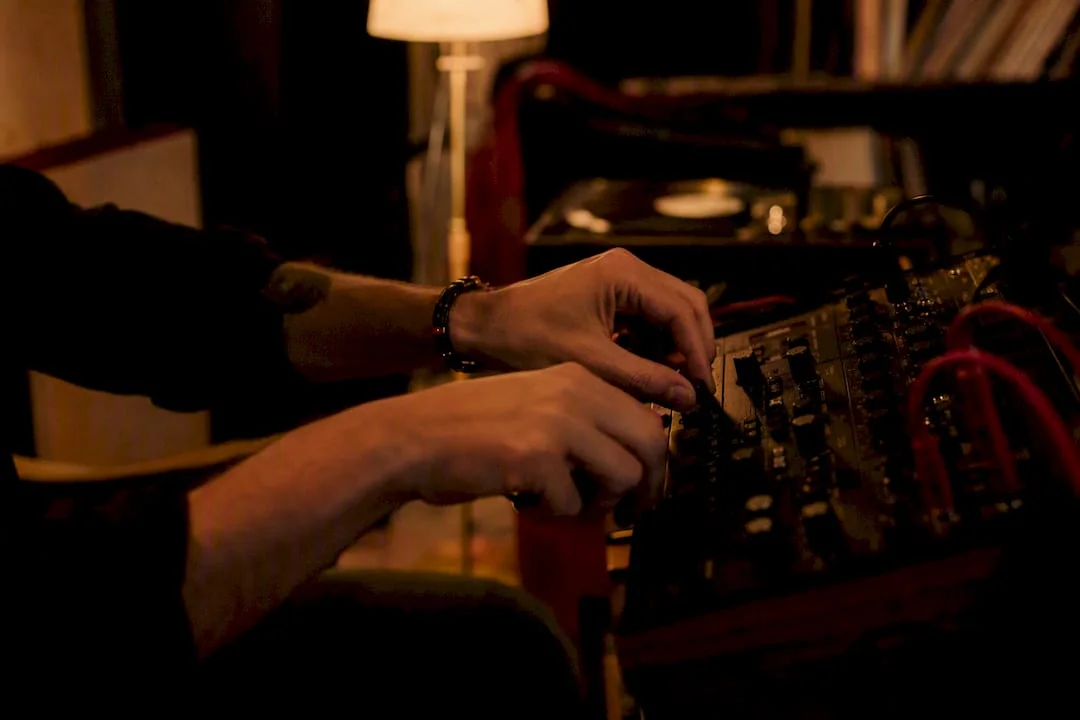
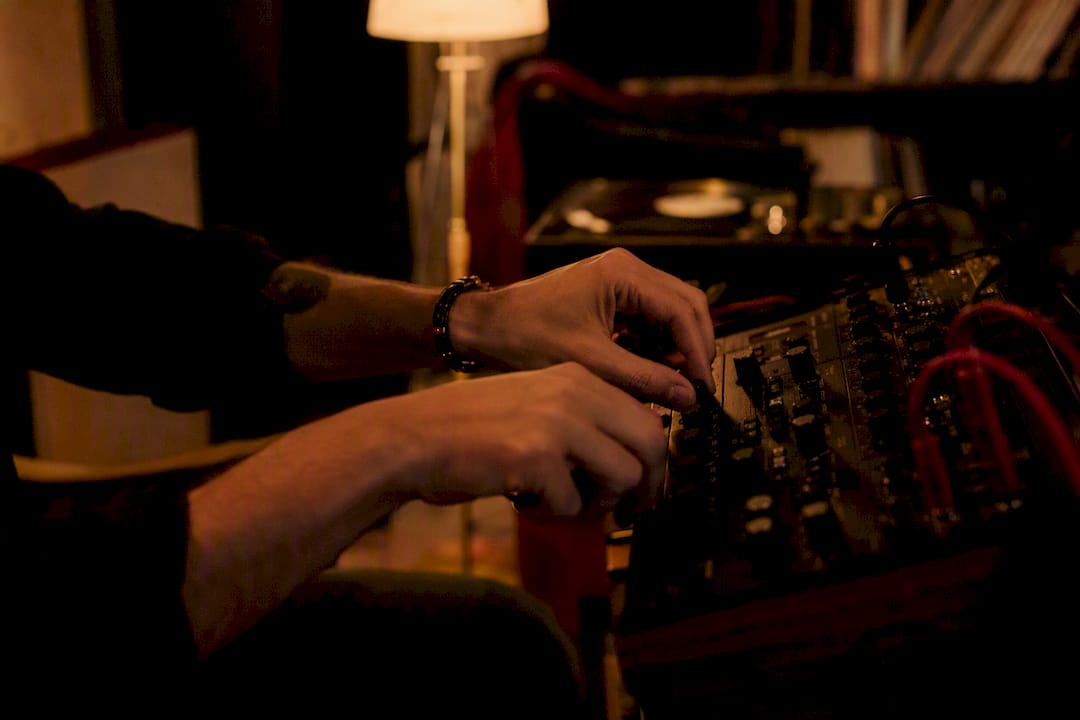
! Hands cuing vinyl record on turntable
Music sampling is the act of taking a piece of an existing sound recording, a drum hit, a vocal phrase, a string swell, and reusing it inside a new song.
By DRVVYN · · 17 min read
Music Sampling Explained: A Beginner’s Guide
Music sampling is the act of taking a piece of an existing sound recording, a drum hit, a vocal phrase, a string swell, and reusing it inside a new song. That’s the whole concept in one sentence. The catch is legal, not creative: a sample can implicate two separate copyrights at once, the sound recording itself (the master) and the underlying musical composition, and both may need clearance before you release anything commercially. The U.S. Copyright Office draws this exact line, and it’s the first thing every producer should understand before touching a chopped loop.
Key Takeaways
Music sampling always touches two separate copyrights, the master recording and the underlying composition, and clearing both is the only reliable way to release sampled material commercially.
| Point | Details |
|---|---|
| Sampling vs. interpolation | Sampling reuses the actual recording; interpolation re-performs a melody and usually only involves the composition. |
| Two copyrights apply | The sound recording (master) and the musical composition can each require separate clearance. |
| No six-second safe harbor | Short samples still require clearance under U.S. copyright practice, regardless of clip length. |
| Resampling builds original texture | Bouncing processed audio and reusing it as a new source creates distinctive sounds and creative distance from the original. |
| Start with safe sources | Royalty-free packs and self-recorded audio let beginners practice technique without early legal risk. |
Table of Contents
- What Is Music Sampling, Really?
- Where Did Sampling Come From?
- What Techniques and Tools Do Producers Actually Use?
- How Do You Actually Sample a Sound Inside a DAW?
- Where Can You Legally Find Samples to Use?
- What Are the Legal Rules for Sampling in the U.S.?
- Which Famous Samples Shaped Modern Music?
- How Should You Handle Credit and Ethics When Sampling?
- What Production Tips Actually Work for Sampling?
- Ready to Put These Sampling Techniques Into Practice?
- What Should Beginners Actually Prioritize With Sampling?
- Sources
What Is Music Sampling, Really?
Sampling means capturing an actual recorded sound and dropping it into a new piece of music, unchanged or transformed. That’s different from an interpolation, where a musician re-plays or re-sings a melody instead of lifting the original audio. It’s also different from a cover, which re-records an entire song, or a remake, which reimagines a track’s structure without touching the original master at all. The distinction matters because it decides whose permission you need. Sample the actual recording and you’re dealing with both the label (who usually owns the master) and the publisher (who owns the composition). Interpolate the melody by re-performing it, and you typically only owe the publisher.
Nearly anything captured on tape or disk can become a sample: a kick drum hit, a horn stab, a spoken word clip, a vinyl crackle, a whole eight-bar loop, even ambient street noise from a field recording. Native Instruments frames this well: producers increasingly treat samples as instruments in their own right, something to sculpt and reshape rather than simply paste in. A snare from a 1970s soul record becomes the backbone of a trap beat. A single word from an old interview becomes a hook. A vinyl hiss becomes texture under a piano line.
Three quick examples show how different this looks in practice:
- A one-shot drum hit pulled from a break and reprogrammed across a new pattern is sampling.
- Rewriting a melody in your own voice because you liked the shape of an old hook is interpolation, not sampling.
- Recreating a full track note for note with new performers is a cover, legally distinct from either.
Boundary cases trip up a lot of beginners:
- A single drum hit, even one hit, is still legally a sample if it’s audibly recognizable and lifted from the original recording.
- A four-bar loop chopped from a breakbeat counts as sampling even if you stretch, reverse, or pitch it beyond recognition.
- A “type beat” inspired by an artist’s sound, with no audio actually lifted, is not sampling at all.
Where Did Sampling Come From?
Sampling didn’t start with hip-hop, though hip-hop is what made it a household concept. The lineage runs through decades of experimentation with recorded sound as raw material:
- Late 1940s: Musique concrète emerges in France, composers splice and manipulate tape recordings of real-world sounds instead of writing for traditional instruments.
- 1963: The Mellotron arrives, a keyboard that plays back pre-recorded tape loops of instruments, essentially a mechanical sampler decades before digital audio existed.
- 1979: The Fairlight CMI launches, one of the first machines to let musicians record, digitize, and play back any sound from a keyboard. Wikipedia’s overview) credits it with popularizing on-board sampling as a workflow rather than a novelty.
- Early 1980s: Akai and E-mu release affordable hardware samplers, putting Fairlight-level capability within reach of working producers.
- Late 1980s to 1990s: Hip-hop producers turn crate-digging and sampling into a defining creative practice, building entire genres out of chopped breaks and looped soul records.
- 2000s onward: Digital audio workstations absorb sampling into standard software, and what once required a dedicated machine now runs inside a laptop.
Each step lowered the barrier between “hearing a sound” and “using that sound,” and hip-hop is the genre that proved just how far that barrier-lowering could go creatively.
What Techniques and Tools Do Producers Actually Use?
Sampling isn’t one technique. It’s a toolkit, and most professional tracks combine several methods on the same sample.
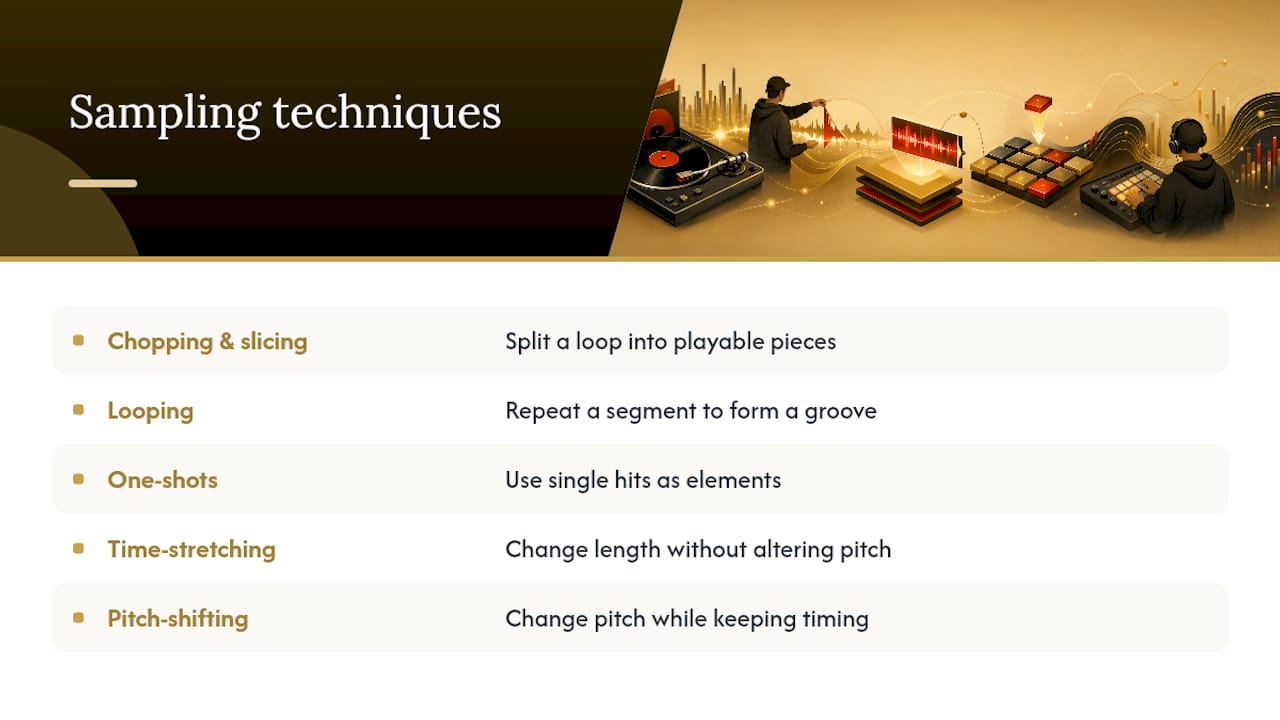
Chopping and slicing breaks a longer sample into individual pieces, usually triggered by pads or keys, so a single loop becomes a playable instrument. Looping repeats a segment continuously, often the backbone of a beat’s groove. One-shots use a single isolated hit, a snare, a vocal “hey,” a synth stab, as a standalone element rather than a repeating pattern. Time-stretching changes a sample’s length without altering its pitch, useful for matching a loop to your song’s tempo. Pitch-shifting does the reverse, changing pitch while holding timing steady, which is how producers key a sample into their chord progression. Granular synthesis breaks audio into tiny “grains” and reassembles them, producing textures that barely resemble the source. Layering stacks multiple samples or a sample plus synthesized elements to thicken a sound. Resampling takes audio you’ve already processed, bounces it to a new file, and treats that file as a fresh source for further manipulation, a technique the overview from Allard Law’s IP blog describes as central to how modern producers build complex textures.
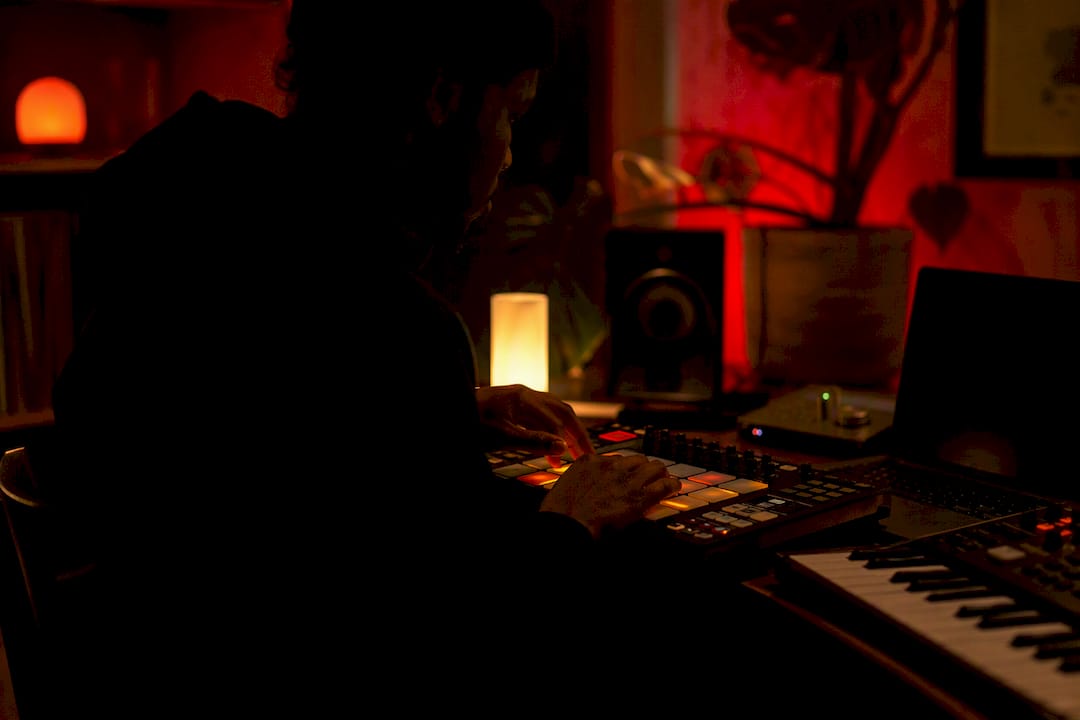
Most of this work happens inside a DAW. Ableton Live and its Simpler and Sampler devices are popular for chopping and warping audio on the fly. Pro Tools remains a standard in professional studios for editing and arranging sampled material with sample-accurate precision. Logic Pro offers a comparable built-in sampler for producers on Mac. On the hardware side, the Akai MPC line carries a direct lineage back to the machines that made sampling accessible to hip-hop producers in the first place, and plenty of working artists still prefer its pad-based workflow over a mouse and screen. Historical instruments like the Fairlight CMI and Mellotron aren’t in daily studio use anymore, but their DNA, playing back recorded sound from a keyboard, is baked into every modern sampler plugin.
Pro Tip:Raw samples almost always carry unwanted low-end rumble or muddiness. A simple high-pass filter around 80 to 120 Hz, paired with a modest EQ cut where the sample clashes with your bass or kick, is often the single change that makes a lifted sound sit inside a mix instead of fighting it.Berklee’s guide to EQ makes the same point: processing isn’t an afterthought, it’s part of the craft.
Don’t treat processing as cleanup work you rush through. The choice of how you filter, stretch, or layer a sample is often more creatively significant than which sample you picked in the first place. Two producers can start with the identical drum break and end up with completely different records because of what they did to it after the fact.
How Do You Actually Sample a Sound Inside a DAW?
Here’s a workflow that works whether you’re on Ableton, Logic, or Pro Tools:
- Choose your source. Pick a sound with character, a texture, tone, or rhythm you can’t easily replicate with a plugin.
- Import it into your session. Drag the audio file onto a track or load it into a sampler instrument.
- Isolate and chop. Trim silence, cut out the section you want, and slice longer loops into usable segments.
- Tune and time-match. Use pitch-shifting to key the sample to your song and time-stretching to lock it to your tempo grid.
- Process it. Apply EQ, compression, and saturation until the sample feels like it belongs in your mix, not bolted onto it.
- Program playback. Trigger the sample via MIDI on pads or a piano roll, or place it directly on the timeline if it’s a static loop.
- Arrange, then resample if needed. Once a chain of processing sounds right, bounce it down and treat that bounce as a brand-new source for further layering, exactly the resampling approach Avid’s production guide recommends for building complex, playable sampler instruments.
Before you move on from any sample, keep a short paper trail:
- Source file name and where it came from (pack, vinyl rip, personal recording).
- Timestamp of the exact section used, in case you need to reference it later.
- Any notes on whether the source is royalty-free, cleared, or still pending permission.
A few practical habits pay off down the line. Always keep your original, unprocessed stem separate from the processed version, you’ll want to revisit it. Use a dedicated sampler instrument (like Simpler or a Kontakt-based sampler) rather than just pasting audio onto a track, since it gives you pitch and time controls you’ll need later. And don’t be afraid to resample twice or three times in a row.
Pro Tip:Try turning a vocal chop into an ambient pad by running it through granular processing, then bouncing that result and running it through a second round of reverb and pitch-shifting. Each resample pass adds distance from the original source, both sonically and, often, legally.
Pro Tip:Fidelity loss from repeated processing isn’t always a problem. Some of the most distinctive textures in modern production come from intentionally degrading a sample through multiple resample passes rather than trying to preserve pristine audio.
Where Can You Legally Find Samples to Use?
Not every sound source carries the same risk, and beginners benefit from knowing the tradeoffs before they start building a track around a lifted loop.
- Royalty-free sample libraries and paid packs offer cleared, ready-to-use audio with no clearance chase required, ideal for beginners still learning the technique side.
- Public-domain or explicitly cleared archives give access to older recordings whose copyright has expired or been released for reuse.
- Vinyl digging remains a classic source for rare breaks and textures, but anything you pull from a record still carries full copyright protection unless proven otherwise.
- Film and dialogue clips add character but usually require permission from the studio or rights holder, especially for commercial releases.
- Field recordings, ambient city noise, rain, a door creak, you make yourself carry zero clearance risk and add a genuinely original texture.
- Self-recorded material (your own vocal takes, instrument hits, foley) is the safest and most flexible option, since you own it outright.
For anyone just starting out, Producer Gang’s sampling guide makes a sensible recommendation: lean on royalty-free packs and your own recordings while you’re still learning to chop, tune, and process. Save the vinyl-digging and dialogue-lifting for once you understand what clearance actually involves.
What Are the Legal Rules for Sampling in the U.S.?
Two separate copyrights sit inside every commercial recording, and sampling can trigger both. The sound recording, often called the master, belongs to whoever recorded and produced that specific performance, usually a record label. The musical composition, the underlying melody, chords, and lyrics, belongs to the songwriter and their publisher. Sample the actual audio of a song and you may owe both parties. Interpolate the melody by re-performing it and you typically owe only the composition side. This split is exactly what the U.S. Copyright Office’s guidance lays out for musicians working with preexisting music.
Here’s the myth that refuses to die: the idea that sampling six seconds or less is automatically safe. It isn’t, and it never has been.
There is no legal “six-second rule” in U.S. copyright law. Short samples can still require clearance for commercial use, and rights holders can pursue claims regardless of how brief the clip is.
That framing comes directly from the Allard Law IP overview of sampling, and it’s worth internalizing before you release anything built around a lifted sound, no matter how short.
A basic clearance process looks like this:
- Identify the copyright owners of both the master and the composition, usually the label and publisher listed in databases like the Copyright Office’s own records or performing rights organizations.
- Contact the rights holders directly, or work through a licensing agent who specializes in sample clearance.
- Negotiate license terms, which can include an upfront fee, a percentage of royalties, or a combination of both.
- Get everything in writing before you release the track commercially, verbal agreements offer no protection if a dispute arises later.
A few myths deserve direct correction, since they cause more legal trouble than genuine ignorance does:
- “It’s a free release, so clearance doesn’t apply” is false. Distribution without profit can still constitute infringement.
- “I changed it enough that it’s not recognizable” doesn’t guarantee legal safety, courts look at what was taken, not just how it sounds afterward.
- “Everyone samples this, so it must be fine” ignores that plenty of widely sampled tracks have generated real lawsuits.
Two cases come up constantly in sampling discussions, and they’re worth knowing as context rather than as legal advice. Grand Upright Music v. Warner Bros. (1991) involved an unauthorized sample and produced a ruling that pushed the industry toward formal clearance as standard practice. Bridgeport Music v. Dimension Films (2005) went further, with the court famously stating that sampling requires a license “or don’t sample,” a position that hardened how labels and publishers approach even brief, altered samples. Neither case is a substitute for reading your own situation carefully, but both explain why clearance culture became the industry norm rather than the exception.
If you’re planning a commercial release built around a recognizable sample, loop, or vocal phrase, talk to a music lawyer or a licensing agent before you finalize the track. Resources like Twisby Records’ overview of music copyright and royalties are a solid starting point for understanding the broader rights landscape before that conversation.
Which Famous Samples Shaped Modern Music?
A handful of sampled recordings show up across decades of music, and each one illustrates a different reason sampling works.
- The Amen break, a drum solo from The Winstons’ 1969 track “Amen, Brother,” became the rhythmic backbone of jungle, drum and bass, and countless hip-hop records. Its appeal is almost entirely about groove: the syncopation feels human in a way drum machines struggled to replicate for years.
- James Brown’s “Funky Drummer” drum break, played by Clyde Stubblefield, has appeared in thousands of tracks since the late 1980s. It works because the pocket is impossibly tight, producers loop it and the groove carries the entire track’s energy on its own.
- Vocal hooks lifted from soul and disco records power a huge share of golden-era hip-hop. The appeal here is emotional shorthand: a familiar vocal phrase carries cultural memory the new track can build on instantly.
- Orchestral stabs and string swells from older film scores and records show up constantly in modern R&B and trap production, prized for the cinematic weight they add without requiring a live string section.
Some of these samples came with real legal fallout once labels started tracking usage more aggressively; others were cleared quietly through publishing deals long before mainstream audiences noticed. Either way, the pattern holds: the samples that endure usually nail either timing, tone, or cultural resonance, sometimes all three at once.
How Should You Handle Credit and Ethics When Sampling?
Legal clearance and ethical credit aren’t the same thing, and beginners sometimes assume clearing a sample settles every obligation. It doesn’t. A signed license makes usage legal; crediting the original songwriter and performer is a separate, additional step that respects the creative debt your track owes.
A few practices are worth building into your habits from day one:
- Credit the original songwriter and performer in your liner notes or streaming metadata, even after you’ve secured clearance.
- Document every source you sample, including packs and self-recordings, so you have a paper trail if questions arise later.
- Reach out for permission early, well before a release date, rather than treating clearance as a last-minute formality.
- Consider proposing a revenue share on tracks built heavily around one recognizable sample, since it reflects how much creative weight that sample carries.
- If you’re collaborating, agree in writing on who handles clearance responsibilities before the track is finished, not after.
Respecting the source material isn’t just about avoiding a lawsuit. It’s about acknowledging that someone else’s creative work gave your track its foundation.
What Production Tips Actually Work for Sampling?
A few habits separate sample-based tracks that sound professional from ones that sound like someone hit “loop” and called it a day.
- EQ aggressively before you do anything else. Cut the low end that clashes with your kick, and notch out any frequency where the sample fights your other elements.
- Use resampling to escape the “obvious loop” trap. Bounce a chopped sample through a reverb or delay chain, then resample that result and chop it again for something that no longer sounds like the source.
- Build playable instruments from static loops. Slice a loop into individual hits and map them across a sampler’s keys, suddenly a fixed loop becomes an instrument you can play melodically.
- Layer selectively, not constantly. Stack a sample with a synthesized layer only when it solves a specific problem, thinness, lack of low end, missing brightness, not by default.
- Organize your sample folders by source and clearance status now. Future you, staring down a release deadline, will thank present you for knowing exactly where a sound came from.
Pro Tip:A quick workflow worth trying: chop a vocal phrase into individual syllables, run it through a granular synthesizer to stretch it into a pad, then bounce that pad and resample it a second time with a subtle chorus effect. The result rarely resembles the original vocal, but it carries the emotional texture that made you want to sample it in the first place.
Everything here reflects the kind of hands-on decision-making that shapes Drvvynsound’s own production approach, treating a sampled sound as raw material to sculpt rather than a shortcut to lean on. Techniques like layering and resampling connect directly to the layering methods Drvvynsound uses across its releases.
Ready to Put These Sampling Techniques Into Practice?
Understanding sampling on paper is one thing. Hearing how chopped loops, layered textures, and resampled vocals actually come together inside a finished record is another. Drvvynsound’s alternative R&B production style leans heavily on the exact techniques covered here, sample-based layering, granular textures, and carefully processed loops, built into original, emotionally driven songs rather than borrowed hooks. If you want to hear where these ideas land in a finished track, start with the Alternative R&B genre explained for a sense of how sampling and modern production intersect in DRVVYN’s catalog.
What Should Beginners Actually Prioritize With Sampling?
Most explainers spend too much time on gear and not enough on judgment. The tools matter less than most beginners assume, an Akai MPC and a laptop running Ableton can produce equally compelling work, because the real skill is knowing what to do to a sample once you’ve grabbed it. Conventional advice tends to treat legal clearance as a footnote tacked onto the end of a tutorial. That’s backward. Clearance uncertainty, not technical difficulty, is what actually derails new producers, exactly what the research on sampling myths consistently shows.
If you’re starting out, prioritize two things in this order: learn to process a sample until it sounds intentional, not lifted, and learn the legal basics before you release anything built around someone else’s recording. Everything else, granular synthesis, resampling chains, MPC workflows, is craft you build over time. The legal literacy either protects your work or it doesn’t, and that’s not a skill you can retrofit after a release goes out.
This article is general information, not a substitute for advice from a qualified lawyer. Consult a qualified legal professional about your own circumstances before acting on anything here.
Sources
- Sampling, Interpolations, Beat Stores and More: An Introduction for Musicians Using Preexisting Music
- An overview of sampling
- What is sampling in music? | Native Instruments Blog
- Guide to Using Samples in Music & Digital Audio Production