

Listening & Culture
Emotional Soundscapes That Stay With You
Emotional soundscapes turn songs into places you can return to – built for reflection, intensity, and the quiet moments that need the right sound.
By DRVVYN · · 7 min read
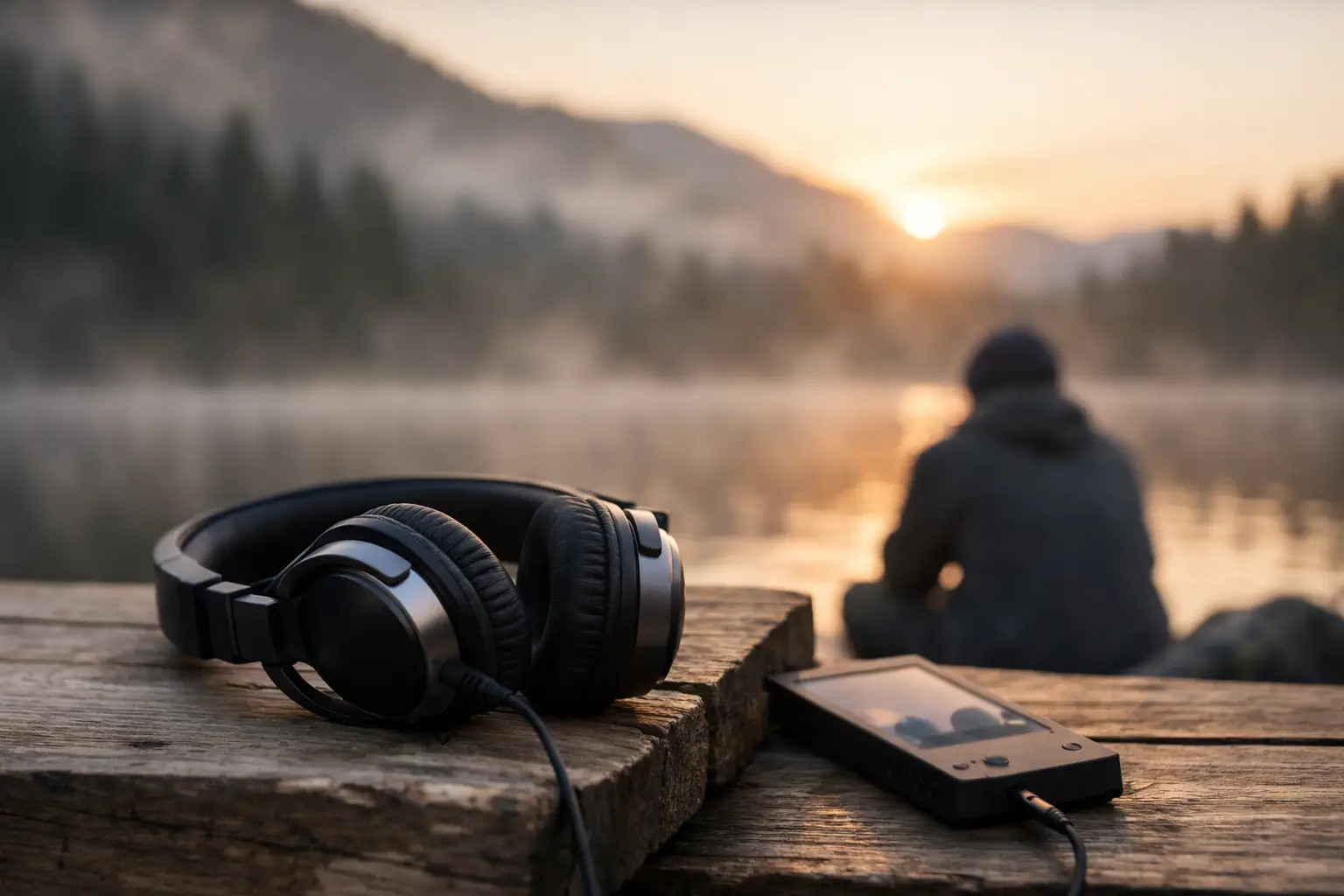
Some songs pass through you. Others change the temperature of the room.
That difference is where emotional soundscapes live. Not in volume. Not in genre. In feeling. In the way a track can hold your late-night thoughts without crowding them, or sharpen a moment that already feels heavy, beautiful, unclear, or close to breaking. When music does more than play in the background, it becomes a place.
For listeners who live inside their playlists, that distinction matters. You are not always looking for a hook, a trend, or something to fill silence. Sometimes you need music that understands the shape of the moment before you do. Something atmospheric enough to let you disappear into it, but emotionally precise enough to feel seen.
What emotional soundscapes actually do
An emotional soundscape is less about a song’s structure and more about the space it creates around you. It can feel cinematic, intimate, distant, warm, hollow, spiritual, or unresolved. The point is not just that it sounds good. The point is that it rearranges your emotional environment.
That shift can happen through texture, pacing, repetition, restraint, or the tension between what is said and what is left open. A vocal that feels half-confession, half-memory. Drums that pulse like a thought you cannot shake. A synth line that feels like city lights through a windshield. None of that needs explanation when it lands. You feel it first.
This is why certain tracks become personal landmarks. You return to them when the night stretches out, when your mind is loud, when you want to remember someone, or when you need help naming a feeling that is still forming. The song becomes tied to an internal state. After that, it is never just audio again.
Why emotional soundscapes hit harder than playlists built on genre
Genre can tell you what a track is made from. It rarely tells you what a track does to you.
That is where mood-based listening changes everything. A reflective track and a romantic track might come from different corners of music, but if they create the same emotional pull, they belong in the same world. People who listen this way are not sorting their lives into neat categories. They are following atmosphere. They are building soundtracks for states of mind.
This is also why some of the most memorable listening experiences come from artists and platforms that think beyond singles. When songs are organized by mood, sequence, and emotional continuity, the listener does not have to do all the work alone. The experience starts to feel intentional. One track opens a door, the next one deepens it.
Still, there is a trade-off. Genre offers familiarity. Emotional curation asks for trust. It can take more patience to enter a sound world that is built on subtlety instead of instant payoff. But for the right listener, that patience is part of the reward.
The anatomy of emotional soundscapes
The strongest emotional soundscapes usually share one trait: they know what not to do.
They do not oversing. They do not crowd every second with detail. They leave room for projection, which is part of why they feel personal. If a song tells you exactly what to feel, it can lose its grip fast. If it suggests, lingers, and lets the edges stay soft, it tends to stay with you longer.
Atmosphere matters, but atmosphere alone is not enough. Plenty of music sounds moody without saying anything real. The tracks that last usually pair texture with emotional intent. There is a pulse underneath them. A tension. A quiet ache. Even beauty needs weight if it is going to mean something.
Pacing matters too. Emotional music does not always move slowly, but it does move deliberately. It understands buildup. It understands silence. It knows that a restrained moment can hit harder than a dramatic one if the timing is right.
And then there is repetition, which gets underestimated. A repeated phrase, chord, or pattern can become hypnotic when it mirrors the way emotion actually works. We do not process everything in straight lines. We loop. We revisit. We sit inside the same thought from different angles. Good sound design knows that.
Emotional soundscapes and memory
A lot of what makes music feel emotional is memory attaching itself to sound.
You hear a certain tone and you are back in a car after midnight. Back in an apartment with the lights low. Back in a version of yourself that was softer, more reckless, more hopeful, more hurt. Emotional soundscapes hold onto these fragments because they leave enough space for your life to settle into them.
That is part of their power. They do not just reflect emotion in real time. They archive it.
When a song becomes a world
The most immersive artists understand that one track can suggest a mood, but a body of work can build a full emotional landscape. That is the difference between hearing a song you like and entering a sonic identity you recognize.
When releases connect through tone, imagery, pacing, and emotional logic, listening starts to feel less casual. More like returning somewhere. You know what kind of darkness lives there. What kind of light. What kind of tension. Even surprise works better inside a world that already has emotional gravity.
This is where curation becomes part of the art. Not just making music, but arranging access to it in a way that respects mood. A late-night set should not feel like a random stack of tracks. A reflective sequence should not break its own spell. Listeners can feel when care has been taken. They can also feel when mood is being used as branding instead of truth.
Done right, emotional soundscapes give people something harder to replace than a favorite song. They give them a place to return to.
How to listen for emotional soundscapes
You do not need music theory for this. You just need honesty.
Start with your actual state, not the one you think you should be in. If you are restless, do not force yourself into something meditative because it looks refined. If you want intensity, find the kind that sharpens you instead of exhausting you. The right sound is not always the softest or the saddest. Sometimes it is the one that matches your internal weather with no translation needed.
Pay attention to what you replay without trying. Not what impresses you on first listen, but what pulls you back two nights later. That usually tells the truth. Emotional connection often reveals itself slowly.
It also helps to listen in full, at least sometimes. Not every mood asks for an album-length commitment. But when a project is built with sequence in mind, skipping around can flatten the experience. Context changes how a song lands. The track you would ignore on its own might become essential in the right order.
And protect certain songs from overuse. This part depends on who you are. Some listeners want a track to absorb every version of their life. Others know that too much repetition can wear the feeling down. Neither approach is wrong. But it is worth noticing when a song still holds a charge and when it has become furniture.
Building your own emotional soundscape
If you make playlists, think less like a collector and more like a filmmaker.
Do not just gather tracks with the same tag. Build movement. Let one song set the scene, another complicate it, another widen it. Contrast can work if the emotional thread stays intact. Too much sameness can make a mood collapse into blur.
This is one reason a platform like DRVVYN Sound resonates with certain listeners. It treats music as a world you enter, not just content you sample. That shift sounds small until you feel the difference.
The goal is not perfection. It is coherence. A playlist should feel like one night, one memory, one unanswered question.
Why emotional soundscapes matter now
People are overstimulated, overexplained, and constantly asked to react. Music can become one of the few spaces that does not demand performance back from you.
Emotional soundscapes matter because they let you stay close to what you feel without forcing language onto it too fast. They give shape to moods that are still moving. They let intensity be quiet. They let reflection feel alive instead of empty.
Not every song needs to do this. Sometimes you want release, distraction, noise, momentum. But when life gets harder to name, the right sound can make you feel less fragmented. Not fixed. Just less alone inside it.
And maybe that is enough. A track that does not solve your life but meets you honestly in it can be more useful than anything louder.
If a song leaves you feeling like you have returned to yourself, stay there a little longer.