
Listening & Culture
A Guide to Streaming Music Discovery That Feels Personal
A guide to streaming music discovery for listeners who want more than an algorithm: better late-night finds, deeper moods, and music that stays with you.
By DRVVYN · · 8 min read
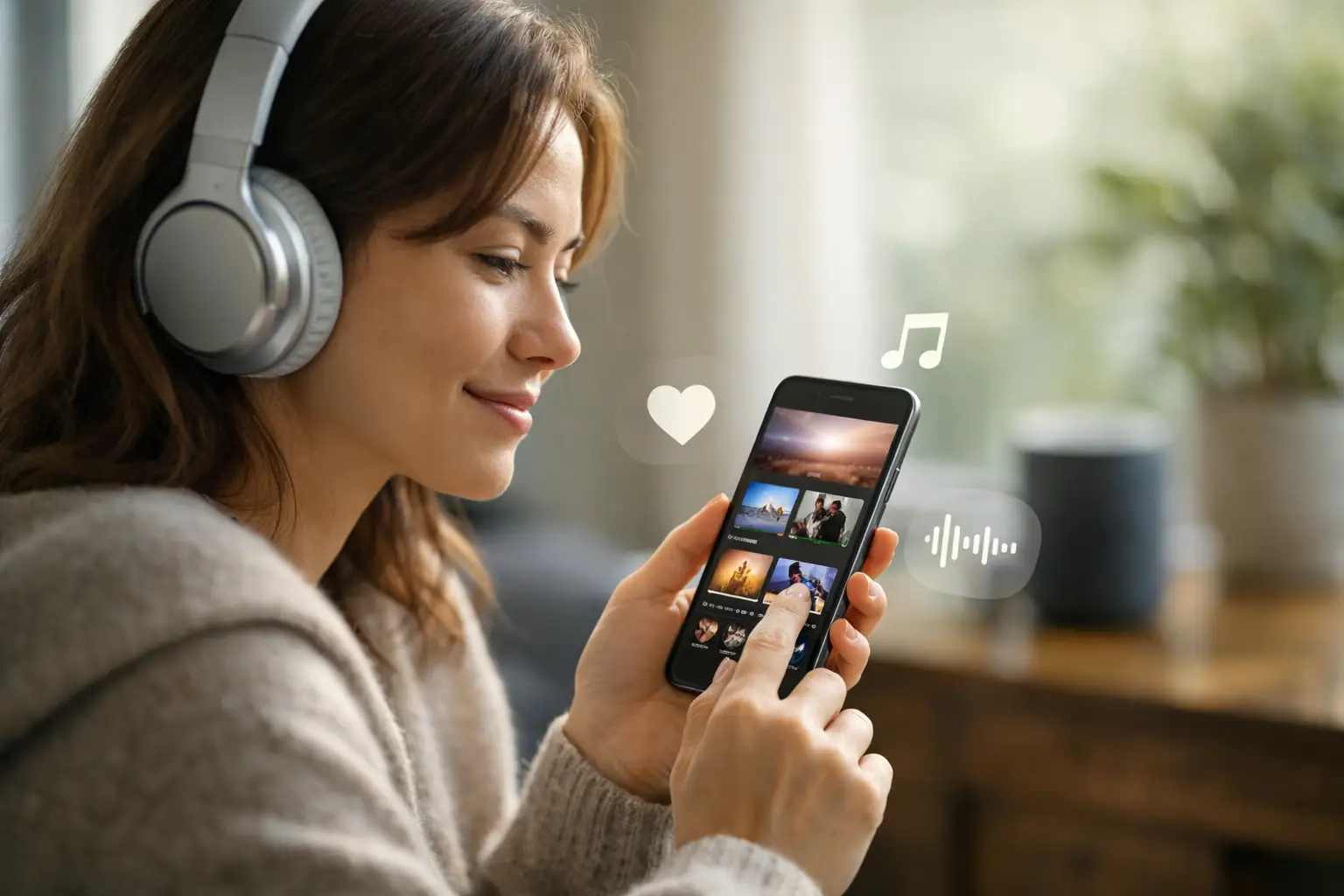
Some songs arrive exactly when the room gets quiet enough to hear them. Others pass through your feed, play for thirty seconds, and disappear before they have a chance to mean anything. This guide to streaming music discovery is for finding the difference.
The goal is not to collect more tracks. It is to build a listening life that feels closer to you – one that can hold a long drive, a hard truth, a slow morning, or the hour after midnight when your thoughts are louder than usual.
Start With the Feeling, Not the Genre
Genre is useful, but it can be too broad for a real moment. “R&B” does not tell you whether you need warm vocals and soft drums, a little tension, or something darker and more distant. “Electronic” cannot tell you if you are looking for motion, release, or somewhere to disappear for a while.
Before opening Spotify, Apple Music, YouTube, or another service, name the feeling in plain language. Try: restless but hopeful. Rain on glass. Quiet confidence. Missing someone without wanting to call them. The more honest the phrase, the better the search can become.
Then search that feeling alongside a sound, a scene, or an artist you already trust. Use phrases such as “late-night alternative R&B,” “cinematic ambient for studying,” or “melancholy songs like [artist].” You are not asking an app to define your taste. You are giving it a doorway.
This matters because streaming platforms tend to reward clear signals. A vague search returns the biggest possible version of a category. A specific emotional prompt can lead somewhere less obvious.
Train the Algorithm Like It Knows Your Night
Algorithms are not curators with a secret understanding of your inner life. They are pattern readers. They learn from what you finish, replay, save, skip, add to playlists, and return to weeks later.
That means your habits shape what comes next. If you leave a song playing only because you are distracted, that is still a signal. If you skip halfway through every playlist after the first familiar track, the platform learns something from that too.
Be intentional for a few listening sessions. When something feels right, save it. Add it to a playlist with a real purpose. Replay it when the moment returns. When a recommendation misses, skip it without guilt. A useful algorithm is built through small acts of taste.
Do not force yourself to finish music you do not connect with just because it is new. Discovery should stretch your ear, not turn listening into homework. There is a difference between a song that needs one more minute and a song that simply is not for you.
Use Your Saves as a Compass
Your library can become a private record of where you have been emotionally. But only if you keep it from turning into a storage unit.
Make a habit of revisiting saved songs once a month. Some will still feel alive. Some belonged to a version of you that has already passed. Remove what no longer fits, or move it into an archive playlist if you want to keep the memory without hearing it every day.
The songs that survive this process are clues. Look at the producers, featured artists, labels, album artwork, release years, and related playlists around them. One song you love often carries a whole trail behind it.
Follow the Credits Beyond the Voice
A voice may pull you in, but the world around that voice is often built by producers, writers, engineers, and collaborators whose names keep appearing in the music you love.
When you find a track that feels unusually complete, check the credits. Search the producer’s name. Listen to other work they have touched. Follow a featured artist back to their own catalog instead of treating them as a passing moment.
This is where discovery starts to feel less random. You notice the same spacious drums across different artists, or a writer whose melodies keep landing in the same place in your chest. Your taste becomes more detailed. Not narrower – more precise.
Album credits are especially valuable when you want a sound with continuity. A single can be a bright flash. A recurring creative team can lead you into an entire atmosphere.
Let Playlists Open Doors, Not Choose the Whole Room
Mood playlists can be useful because they meet you where you are. A good one does not demand attention. It gives a late train ride, a dim apartment, or an early walk a little more shape.
But playlists are also built for flow, and flow can flatten the edges. The song that catches you may be surrounded by tracks that only work in that sequence. Treat a playlist as a first encounter, not a final verdict.
When a track stands out, leave the playlist. Visit the artist page. Play the song’s radio station. Check the full project. Listen to the release before and after it. The best discovery often begins the moment you stop listening passively.
There is a trade-off here. Algorithmic playlists offer speed and breadth. Human-curated playlists may have a stronger point of view, but they can reflect one person’s taste more than your own. Use both. Let one introduce the room. Let the other show you who is really inside it.
A Guide to Streaming Music Discovery Across Platforms
Every platform hears differently. Spotify can be strong for recommendation loops, radio, and collaborative playlist culture. Apple Music often suits listeners who want to move through albums, editorial selections, and a carefully held library. YouTube can reveal live performances, unofficial edits, visual worlds, and songs that have not yet found their place in formal playlists.
Amazon Music and other services can offer their own catalog paths and mood stations. The best platform is not always the one with the most features. It is the one you will return to with attention.
Try using more than one platform for different parts of discovery. Keep your everyday library in the service that feels natural. Use YouTube when you want context – a performance, a visual, a comment section full of listeners naming the feeling you could not quite name. Use another service’s playlists when your usual recommendations begin circling the same sounds.
The point is not to fragment your listening. It is to avoid letting one feed become the only window you look through.
Give Full Projects a Chance
Streaming has made it easy to live in singles. There is nothing wrong with that. A single can change the temperature of a whole day.
Still, some artists make music that asks for more than one track. The opening song sets the lighting. The middle reveals the fracture. The final song leaves a different version of the first feeling behind. When you only save the most immediate track, you may miss the place it came from.
Set aside one listening session each week for a full EP or album. No scrolling. No shuffle. Let the transitions happen. Notice which song you would have skipped if it appeared alone, and which one becomes necessary because of what came before it.
This is especially true for immersive, emotionally driven releases. At DRVVYN Sound, music is meant to connect across mood, movement, and the spaces between songs. The deeper cut may be the one that gives the first track its weight.
Build Playlists for Real Moments
A playlist called “Favorites” eventually becomes too large to say anything. More useful playlists have a time, place, or emotional temperature.
Make one for the walk home when you need to come back to yourself. Make another for creating without checking the clock. Keep one for songs that feel like a film scene you have never lived. Give each playlist enough room to breathe, but do not overfill it.
Ten songs can create a stronger world than one hundred. A smaller collection also makes it easier to hear when a new song belongs there.
Order matters when you want a playlist to feel like an experience rather than a pile. Start with an entry point. Let the middle deepen the mood. Leave the last song with a little space. You are not just organizing music. You are shaping a return route for a future version of yourself.
Look Past What Is Being Pushed
The most visible song is not always the one that will stay with you. Editorial playlists, viral clips, and release-day banners can lead to great music, but they are designed around attention. Your taste may live somewhere quieter.
Search an artist’s earlier releases. Listen to the track with fewer plays. Read the names in the comments under a live video. Follow the artist who opened a show, appeared on a remix, or made the cover art feel familiar.
Smaller artists can feel harder to find because they are not always placed in front of you. Yet this is where streaming discovery becomes personal. You are not waiting to be told what matters. You are noticing what calls you back.
Keep a note on your phone for songs that need another listen. Not every track reveals itself immediately, especially when you are hearing it in the wrong setting. Return to it on a walk, through headphones, or in the dark. Context changes the song. Sometimes it changes you, too.
The right music will not always announce itself. Let it take its time. Keep listening closely enough to recognize it when it does.