

Listening & Culture
How to Curate Vibe Playlists That Feel Right
Learn how to curate vibe playlists that feel immersive, cohesive, and honest, with simple tips for mood, flow, pacing, and emotional replay.
By DRVVYN · · 7 min read
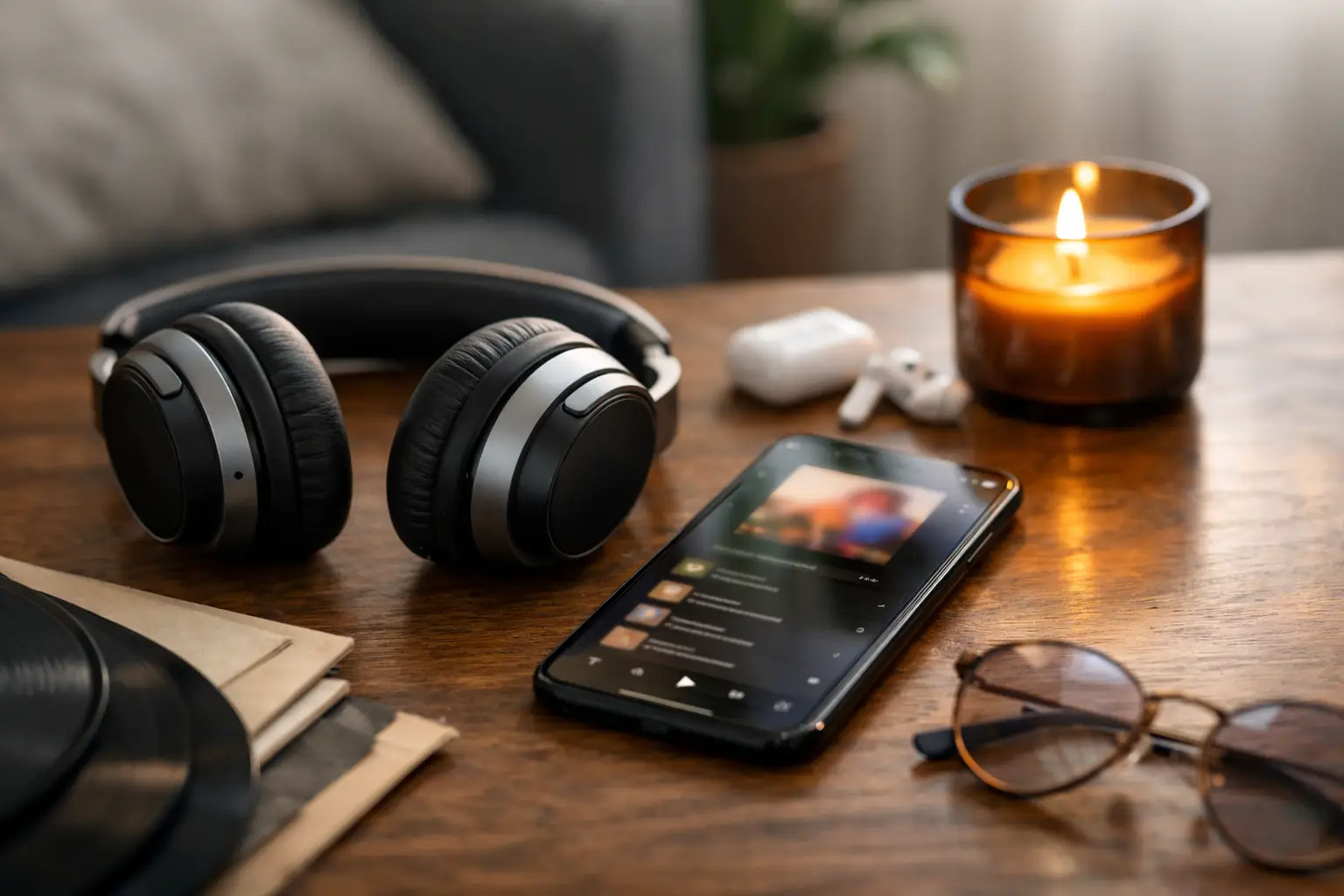
Some playlists sound like a folder. Others feel like a room.
That difference is the whole point of learning how to curate vibe playlists. You are not just stacking songs you like. You are shaping a mood people can step into and stay inside for a while. The best ones do not beg for attention. They hold a temperature. They create a setting. They make someone feel understood without saying much at all.
How to curate vibe playlists starts with one feeling
If your playlist is trying to cover everything, it usually says nothing.
Start smaller. Pick one emotional center and let it stay specific. Not just sad, happy, or chill. Think closer than that. Rainy city window at 1 a.m. Post-party silence. Romantic but detached. Restless drive with nowhere urgent to be. The more exact the feeling, the easier every song choice becomes.
This is where most playlists lose themselves. They chase genre before mood. Genre can help, but vibe comes first. A playlist can pull from R&B, ambient, alt-pop, electronic, indie soul, even instrumental work, and still feel unified if the emotional temperature stays consistent.
A good test is simple: if someone pressed play without seeing the tracklist, would they know what state they were entering by song two?
Build around atmosphere, not popularity
Popular songs are not the problem. Songs that pull focus are.
A track can be great on its own and still break the spell of a playlist. Sometimes it is too loud emotionally. Sometimes the hook is so familiar it shifts attention away from the feeling and toward recognition. That can work if you want a moment of release. It can also flatten everything around it.
When you curate for vibe, ask a different question than “Is this good?” Ask, “Does this belong here?”
Belonging has less to do with numbers and more to do with texture. Pay attention to the things that live underneath the melody: the air in the production, the weight of the drums, the amount of space in the vocal, the tension in the synths, the grain in the mix. Those details are often what make two very different songs feel like they share the same night.
If a track sounds amazing but bends the room too far, save it for another playlist. Restraint matters.
The first three songs decide everything
People know fast when a playlist is real.
Your opening stretch sets trust. The first song should establish the world immediately. The second should deepen it. The third should confirm that this was intentional, not accidental. If those first three tracks feel scattered, most listeners will not stay around long enough to hear your vision settle in.
That does not mean the opener has to be the biggest song. Often it should not be. A strong first track is more like a camera pan than an explosion. It gives context. It lets the listener enter naturally.
Then the next songs can start tightening the emotional thread. Maybe the drums come in heavier. Maybe the vocals get closer. Maybe the mood darkens by a small degree. What matters is that the movement feels chosen.
Let the playlist move, but not too much
A vibe playlist needs shape. It also needs discipline.
The mistake is thinking cohesion means sameness. If every song lands at the same intensity, the playlist can blur into one long gray line. But if it swings too hard, it stops feeling immersive and starts feeling random. The balance lives in subtle motion.
Think in gradients. A playlist can move from distant to intimate, from numb to warm, from suspended to heavy. That movement keeps people inside it. It gives the experience a pulse without breaking the mood.
This is especially true for longer playlists. If you are building something over 20 tracks, small shifts matter more than big ones. Introduce a different texture at the right moment. Let one song breathe wider. Let another pull things inward again. Give the listener a sense that the night is changing, even if the lighting stays low.
Sequencing is where the feeling becomes real
Song selection matters. Order matters more.
A playlist with the right songs in the wrong order will always feel off. The transitions are what make it believable. You want each track to leave a trace that the next one can pick up.
Sometimes that comes from tempo. Sometimes from key, production style, vocal tone, or emotional posture. A bruised, half-whispered performance may sit better next to something minimal and low-lit than next to a polished anthem, even if both songs technically fit the same genre.
Listen for handoffs. How does one outro open the door for the next intro? Does the energy drop in an intentional way, or does it just disappear? Does a song arrive too early, before the mood has earned it?
If you are serious about curation, do not just drag songs into place and call it done. Walk through the sequence. Let it play while you are driving at night, cleaning your apartment, sitting in the dark, or doing nothing at all. Vibe playlists reveal themselves in real time.
How to curate vibe playlists without over-explaining them
Some of the strongest playlists say very little.
The title should set a mood, not write a paragraph. Cover art should feel aligned, not busy. Even the track count can shape perception. A tight 18-song set can feel more deliberate than a 63-song archive, unless the point is meant to be endless and drifting.
There is a difference between curation and decoration. You do not need to force a concept so hard that the music cannot breathe. Give the listener enough to understand the world, then let the songs finish the sentence.
This is where a lot of mood-based platforms miss the mark. They explain the vibe instead of delivering it. The stronger move is quieter. Let the atmosphere prove itself.
Leave room for one surprise
Predictable playlists get skipped.
Not because they are bad, but because they become too easy to read. A well-placed surprise can keep the experience alive. Maybe it is a left-field instrumental. Maybe it is a track with a slightly rougher edge. Maybe it is a song that shifts the emotional lens for two minutes before settling back into the larger mood.
The key is proportion. One surprise can deepen the world. Too many can collapse it.
If the playlist feels like twilight, the surprise should still belong to that hour. It can bring a new color into the frame, but it should not turn the lights all the way on.
Edit harder than you think you need to
Most playlists are one revision away from being much better.
After your first pass, cut the obvious picks and see if the mood gets stronger. Remove songs that repeat the same emotional note without adding anything new. Watch for tracks that are there because you love them personally, not because they serve the sequence.
This part can be uncomfortable. Personal taste and good curation are not always the same thing. Sometimes your favorite song belongs somewhere else.
The cleaner the playlist, the more the feeling comes through. That does not mean sterile. It means honest.
At DRVVYN Sound, that kind of honesty matters. Not just selecting tracks that sound good together, but building spaces people return to because the feeling stays intact.
Know what the playlist is for
A playlist made for background listening is different from one meant for emotional immersion.
That difference changes everything. If the goal is focus or studying, consistency matters more than narrative turns. If the goal is a late-night drive or reflective listening, emotional pacing becomes more important. If it is for a party with a distinct mood, rhythm may need to lead more than lyric content.
There is no single right way to curate. It depends on use, setting, and listener expectation. A great bedroom playlist might feel too internal for a rooftop night set. A cinematic slow-burn might be perfect alone and useless in a group.
Knowing the function keeps you from forcing the wrong kind of depth onto the wrong experience.
The best vibe playlists feel lived in
Perfection is not the goal. Recognition is.
When someone finds a playlist that mirrors a feeling they could not quite name, they stay with it. They replay it. They send it to one person who will get it. That kind of playlist usually is not built by chasing trends or stuffing in algorithms. It comes from listening closely enough to know what belongs in the room and what does not.
So if you are figuring out how to curate vibe playlists, start with honesty. Name the feeling more precisely. Sequence with care. Cut what breaks the spell. Leave enough space for the listener to bring their own life into it.
If it feels real, people can hear that before the second chorus ends.