
Creative Process
Music Layering Technique: A Producer’s Guide for 2026
Music layering technique is defined as the practice of combining multiple audio tracks, each assigned a specific role such as melody, harmony, texture, or.
By DRVVYN · · 10 min read

Music layering technique is defined as the practice of combining multiple audio tracks, each assigned a specific role such as melody, harmony, texture, or rhythm, to create a richer and more dynamic final sound. This is the standard industry term for what producers also call “sound stacking” or “track layering.” Most genres use 2–3 layers for drum hits and leads to avoid muddiness and phase issues. Understanding this technique is the foundation of professional music production. Whether you are building your first beat or refining a full arrangement, layering is the skill that separates flat mixes from full, breathing ones.
What is music layering technique and why does it matter?
Music layering technique is the process of assigning each audio track a distinct job within the frequency spectrum, then combining those tracks so the total sound feels bigger than any single element alone. The key word is “assigned.” Every layer must earn its place. Layering without purpose leads to phase cancellation and a muddy mix. Fewer well-chosen layers always yield better sonic clarity than a pile of unmanaged tracks.
The benefits of music layering go beyond volume. Layering adds width, depth, and emotional weight to a production. A single synthesizer pad feels thin. Two pads with distinct frequency roles, panned and EQ’d to complement each other, feel like a room filling with sound. That tension and release between layers is what makes a listener feel something before they can name it.
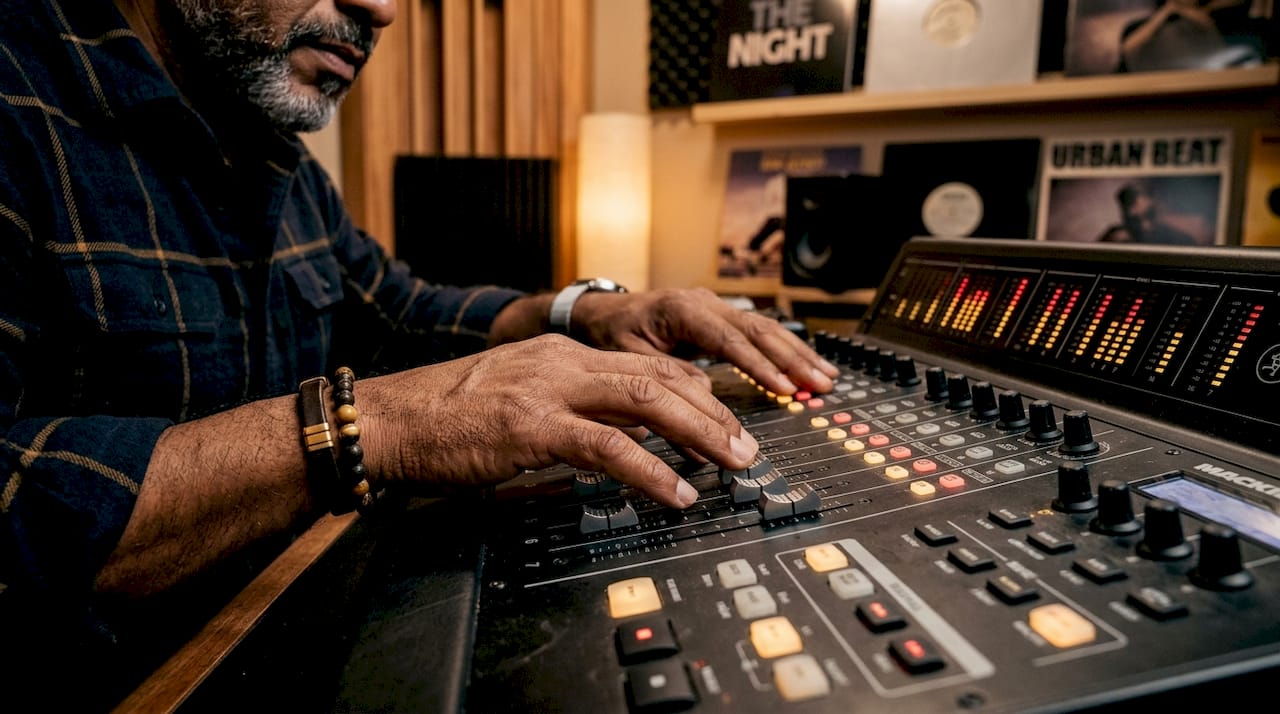
Layers in music production also give you control. When each element occupies its own frequency space, you can adjust one without disturbing the others. That separation is what makes mixing feel less like guessing and more like sculpting.
How do frequency roles work in layered sounds?
Frequency role assignment is the technical backbone of every successful layered mix. Spectral masking occurs when two layers compete for the same frequency space, causing one to cancel or blur the other. Avoiding this requires you to think of your mix as frequency architecture, with each layer occupying a specific zone.
The three core frequency zones are:
- Foundation (20–400Hz): This zone carries the weight and warmth of your mix. Kick drums, bass lines, and low synth pads live here. Only one or two elements should dominate this range at any time.
- Body/character (300Hz–3kHz): This is where most melodic and harmonic content sits. Vocals, guitars, lead synths, and snares all compete here. EQ carving is critical in this zone to prevent buildup.
- Attack/air (2kHz–16kHz): This zone carries brightness, presence, and definition. Hi-hats, vocal air, and synth shimmer belong here. It adds the feeling of space and openness to a mix.
Transient alignment matters just as much as EQ. Phase cancellation occurs when transients are misaligned, making layered sounds thinner or hollow. Aligning transients at the sample level keeps your layers locked together. You can also invert polarity on one layer to creatively shift where the frequency energy lands.
Pro Tip:Group your layered elements onto a shared bus and apply bus compression at a 3:1 ratio with a 10–30ms attack. This glues the layers into a single cohesive sound without flattening the dynamics.
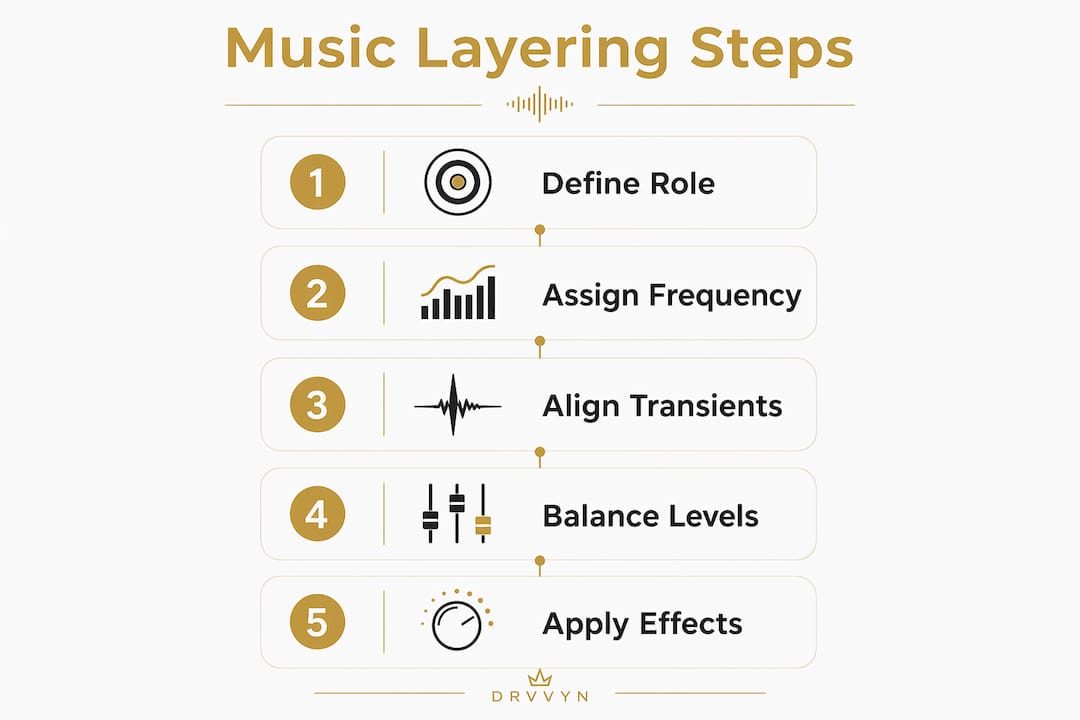
Stereo width is the final piece. Assign width based on frequency role. Low-frequency layers stay narrow or centered to preserve mono compatibility. Mid and high layers can spread wider to create a sense of space. Stereo width needs discipline to avoid mix problems and mono collapse.
How is music layering applied in vocal production?
Vocal layering is one of the most emotionally powerful applications of this technique. The goal is thickness and width, but the method matters. Simply duplicating a track for volume or width is ineffective. Recording new takes captures the natural micro-variations in pitch, timing, and breath that give a vocal stack its warmth and life.
A professional vocal layering workflow looks like this:
- Record the lead vocal centered. This is the anchor. Every other layer serves it.
- Record a double take. Sing the same line again without listening to the first take. The slight differences in timing and pitch create natural thickness.
- Pan the doubles hard left and right. Panning doubles hard-left and right, with the lead centered, enhances stereo depth without pulling attention from the main performance.
- Add harmonies above or below. A third above or a fifth below adds emotional color. These sit slightly lower in the mix than the lead.
- Consider an octave layer. An octave up adds air and excitement. An octave down adds gravity and weight. Use these sparingly so they support rather than compete.
Common mistakes in vocal layering include over-processing each layer individually before hearing them together, and panning harmonies too wide before the lead is settled. Always build your vocal stack from the center outward.
Pro Tip:Record your doubles in a single pass without stopping. Continuous takes feel more natural and capture the energy of the performance, which translates directly into the texture of the stack.
How do you layer synthesizers for a big, cohesive sound?
Synth layering is where music arrangement techniques become truly expressive. The goal is a sound that feels wide, evolving, and unified. The method is frequency discipline combined with deliberate detuning.
Start by assigning each synth layer a distinct frequency zone, just as you would with any other element. A common three-layer synth stack looks like this:
- Layer 1 (sub/low): A simple, clean sine or triangle wave that carries the fundamental pitch. No effects, no width. This layer stays mono and centered.
- Layer 2 (mid/body): A fuller pad or pluck that carries the harmonic character. This layer gets moderate stereo width and light EQ to cut the low end below 200Hz.
- Layer 3 (high/air): A bright, airy texture or shimmer. This layer gets the most width and a high-pass filter to keep it out of the mid-range.
Detuning creates natural movement and width. Detuning layers in opposite directions, for example +7 and -7 cents, while leaving one layer at center, creates natural width with a clear pitch center. The center layer anchors the pitch. The detuned layers add the shimmer and movement that make a synth feel alive.
One counterintuitive truth about synth layering: successful layers often sound thin in isolation because they are EQ’d deliberately for the mix, not for solo listening. Do not judge a layer by how it sounds alone. Judge it by what it adds to the full stack.
Pro Tip:After building your synth stack, check it in mono. If the sound collapses or loses definition, your stereo width is too aggressive. Pull back the width on the mid layer first.
What mistakes should you avoid when layering sounds?
The most common beginner mistake in layering is frequency crowding. Frequency crowding in the 200–600Hz range causes muddiness and is the leading cause of mixes that feel heavy and unclear. Every element you add to that range without EQ carving makes the problem worse.
The second mistake is adding layers without a clear purpose. Ask yourself what job each layer is doing. If you cannot answer that question in one sentence, the layer probably does not belong in the mix.
Layering is not about adding more. It is about adding the right thing in the right place. The best producers know that removing a layer at the right moment can release more tension and emotion than any new sound ever could.
The third mistake is ignoring the four-element rule. More than four competing elements in the same frequency register cause punch and clarity loss regardless of how much processing you apply. This limit holds across genres. Count your elements per register before you reach for another plugin.
Practical session habits that protect your layering work:
- Label every layer with its frequency role before you start mixing. “Kick sub,” “snare body,” and “hat air” tell you exactly what each track is doing.
- Solo your layers in pairs, not individually. Hearing two layers together reveals masking and phase issues faster than soloing one at a time.
- Check phase relationships every time you add a new layer. A simple polarity flip can recover punch that seemed lost.
- Set a layer limit per register. Three elements maximum in the low end, four in the mids, and three in the highs is a reliable starting point.
Pro Tip:Build a “layering template” session with pre-labeled buses for each frequency zone. Starting every project from this template forces intentional layering from the first note.
Key Takeaways
Music layering technique is the practice of assigning each audio track a distinct frequency role and combining those tracks so the total sound is fuller, wider, and more emotionally resonant than any single element alone.
| Point | Details |
|---|---|
| Define every layer’s role | Each layer must serve melody, harmony, texture, or rhythm before it enters the mix. |
| Use three frequency zones | Assign layers to foundation (20–400Hz), body (300Hz–3kHz), or air (2kHz–16kHz) to prevent masking. |
| Record new takes, not copies | Vocal and instrument doubles need real performances to capture natural variation and thickness. |
| Limit elements per register | No more than four elements should occupy the same frequency zone to preserve punch and clarity. |
| Check mono compatibility | Stereo width must be tested in mono to catch phase collapse before it reaches the final mix. |
What layering taught me about sound and restraint
The most honest thing I can tell you about layering is this: the technique is not about filling space. It is about knowing which spaces to leave open.
Early in my production work, I stacked layers the way some people stack plates, more felt like more. The mixes sounded full in headphones and hollow on speakers. The problem was not the layers themselves. It was that I had not given each one a reason to exist. Once I started thinking in frequency zones and asking what each layer was releasing into the mix rather than what it was adding, everything changed.
The detail most tutorials skip is emotional intention. A low-end foundation layer does not just carry bass frequencies. It carries weight, gravity, and presence. A high-air layer does not just add brightness. It adds the feeling of something opening up. When you assign those emotional roles alongside the technical ones, your layers stop competing and start breathing together.
Layering in R&B and cinematic production, which is the world Drvvynsound works in, demands this kind of care. The genre lives in the space between sounds. Too many layers and the silence disappears. Too few and the emotion thins out. The craft is in finding the balance where every layer feels necessary and nothing feels forced.
— DRVVYN
Drvvynsound and the sounds that shape your production
Knowing the technique is one thing. Having the right sounds to practice it is another.

Drvvynsound was built for producers and audio engineers who want to work with sounds that already carry emotional intention. Every release under the DRVVYN catalog reflects the same layering principles covered here: frequency discipline, intentional width, and sounds that serve the mix rather than crowd it. Whether you are studying how layered R&B production works or building your own sessions, Drvvynsound’s music and creative content give you a real-world reference point for what thoughtful layering sounds like in practice.
FAQ
What is the music layering technique in simple terms?
Music layering technique is the practice of combining multiple audio tracks, each with a specific role, to create a fuller and more complex sound. The key is assigning each layer a distinct frequency job so the tracks complement rather than compete with each other.
How many layers should a beginner use?
Most genres use 2–3 layers for drum hits and lead sounds to avoid muddiness and phase issues. Starting with fewer layers and adding only when a clear frequency gap exists is the most reliable approach for clean results.
Why does my layered mix sound muddy?
Muddiness usually comes from frequency crowding in the 200–600Hz range, where multiple elements compete without EQ separation. Carving space for each layer with a high-pass or low-pass filter resolves most buildup in that zone.
What is the difference between copying a track and recording a double?
Copying a track duplicates the exact waveform, which adds no new information and can cause phase issues. Recording a new take captures natural variations in timing and pitch that create the thickness and width a professional vocal or instrument stack needs.
How do I check if my layers are phase-aligned?
Sum your mix to mono and listen for any elements that thin out or disappear. If a layer loses body in mono, its transients are likely misaligned with the layer beneath it. Nudge the waveform forward or backward at the sample level until the sound fills out again.