

Listening & Culture
Songs Capturing Night-Time Nostalgia: A Deep-Dive Guide
Discover songs capturing night-time nostalgia that evoke memories and emotions. Explore diverse tracks perfect for late-night reflection.
By DRVVYN · · 9 min read
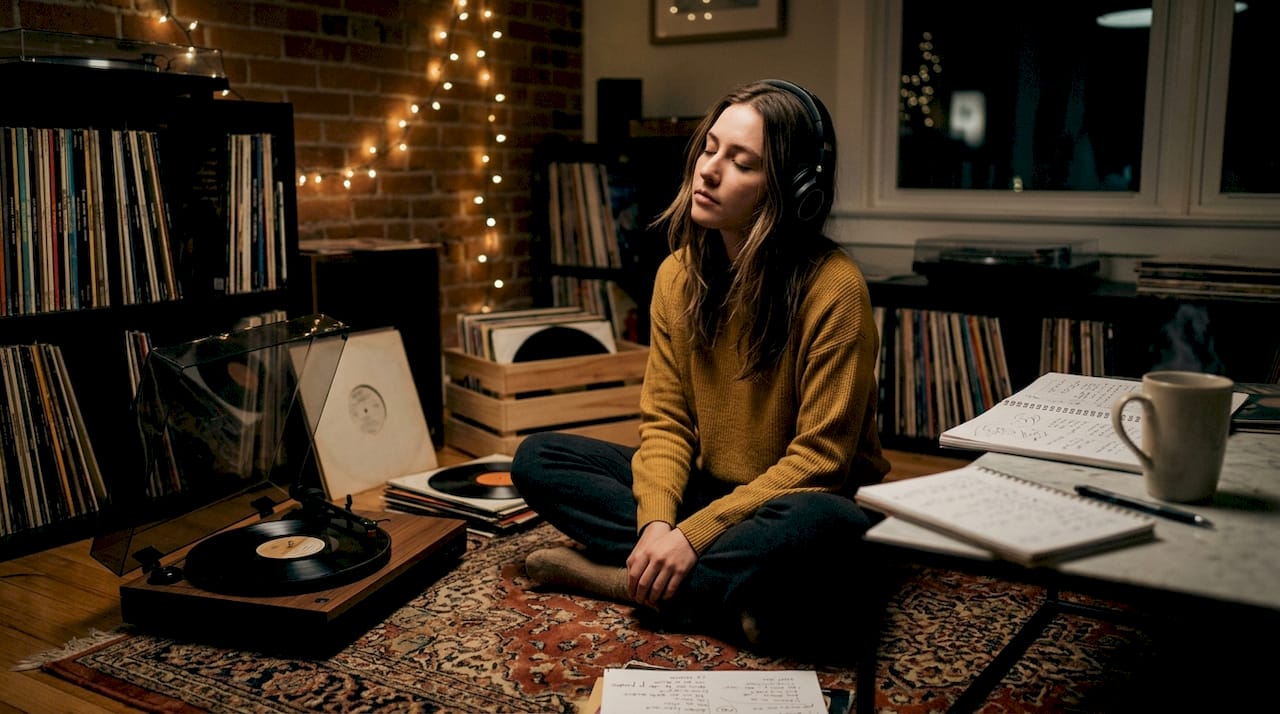
Songs capturing night-time nostalgia are defined by their ability to pull you back into a specific feeling, a memory suspended in the quiet hours when the world goes still. These tracks use lyrical imagery, mellow production, and emotional weight to recreate the texture of evenings you can almost touch. From the neon-lit synth sounds of City Pop to contemporary late-night reflection songs like Oryah’s “Night Shift,” the genre of nocturnal nostalgia spans decades and cultures. Music for night-time reflection works because silence sharpens everything, and the right song fills that silence with something true.
1. What makes songs capturing night-time nostalgia so powerful?
Night-time nostalgia in music functions as both emotional refuge and a meditation on identity and memory. Listeners use music to dwell in the melancholy of their mood rather than escape it, which makes nighttime the perfect hour for this kind of listening. The darkness removes distraction. What remains is you, the song, and whatever it brings back.
The psychological pull is real. Music tied to personal identity and familiar sounds triggers dopamine and emotional engagement, especially in reflective moods. That release of tension, that pressure leaving your chest when a melody hits just right, is not accidental. Songwriters and producers who understand nighttime listeners build that feeling deliberately into every arrangement choice.

2. Key characteristics of songs that evoke nighttime nostalgia
The best melodies for nighttime feelings share a recognizable set of qualities. Production choices matter as much as lyrics here.
Lyrical themes that anchor the mood:
- Evening, late hours, and the city at night
- Memory, longing, and the passage of time
- Solitude without loneliness, or loneliness without bitterness
- Reflection on love, loss, or a version of yourself you left behind
Production features that carry the feeling:
- Mellow tempos that breathe rather than drive
- Synthesizer textures, smooth bass lines, and soft percussion
- Reverb-heavy vocals that feel distant and close at the same time
- Jazz-influenced chord progressions that create harmonic tension and release
Pro Tip:When building a night-time nostalgia playlist, prioritize songs where the instrumentation feels like it has space around it. Crowded, busy production breaks the mood. You want sound that lets your mind wander.
Slower-paced songs that breathe rather than push momentum suit proposed moods of night-time nostalgia better than uptempo tracks. They allow your mind to settle into the feeling rather than chase it.
3. Iconic genres and songs that define the night-time nostalgia sound
City Pop is the clearest example of a genre built entirely around nocturnal nostalgia. It originated during Japan’s late 1970s and 1980s economic miracle and features jazz-fusion and synthesizer sounds that evoke reflective nighttime moods. The imagery is consistent: neon signs, rain-slicked streets, a car moving through a city that never fully sleeps.
Miki Matsubara’s “Mayonaka no Door (Stay with Me)” is the defining City Pop track for late-night listening. Its synth shimmer and vocal warmth create a feeling of being suspended between two moments. You are not quite in the past and not quite in the present. That suspended quality is what makes it one of the most shared songs about evening memories across streaming platforms.
“The song explores themes of hustle, exhaustion, and mental endurance during restless nights with polished lyricism.” — on Oryah’s “Night Shift”, 2026
Contemporary artists carry this tradition forward. Oryah’s 2026 single “Night Shift” captures the emotional weight of late-night reflection with cinematic, smooth production. It does not romanticize exhaustion. It validates it, which is a different and more honest thing.
Other touchstones for a night-themed music playlist include:
- R.E.M.’s “Drive,” which creates a cinematic late-night mood built on quiet introspection
- “Last Night When We Were Young,” cataloged among songs about nostalgia with explicit temporal language
- “Lost in the Fifties Tonight (In the Still of the Night),” which layers era-specific longing over a nighttime setting
4. How listening context shapes the night-time nostalgia experience
Where and how you listen changes everything. The same song hits differently in a parked car at 2 a.m. than it does through a laptop speaker at noon.
Effective night-time nostalgia playlists recognize distinct listener needs by time: some listeners need continuous, calming music for sleep, while others seek emotionally charged tracks for focused attention during late-night drives or contemplation. These are two separate listening modes, and they call for different song choices.
- Solo late-night driving. This context calls for cinematic tracks with forward momentum. Songs like R.E.M.’s “Drive” or City Pop classics create a mood where quiet thoughts feel natural rather than heavy. The road becomes a kind of permission to feel things you set aside during the day.
- Pre-sleep drift. Continuous overnight music, like extended acoustic guitar recordings designed for deep sleep, keeps the nervous system calm without demanding attention. The goal is not emotional engagement but gentle release.
- Late-night creative work. Writers, artists, and musicians often use emotional songs for night as a kind of ambient pressure. The music holds a mood steady while the mind works. Tracks with minimal lyrics work best here so words do not compete.
- Quiet reflection at home. This is the most personal context. You are not driving, not sleeping, not working. You are just sitting with something. This is where the most emotionally direct songs belong, the ones that name the feeling you have not said out loud yet.
Pro Tip:Structure your playlist by night phase rather than genre. Start with more energetic nostalgic tracks around 10 p.m., shift to slower, more introspective songs by midnight, and move into near-ambient territory by 2 a.m. The progression mirrors how your mind naturally settles.
5. Practical tips for building your own night-time nostalgia playlist
A great chill songs for nighttime collection does not happen by accident. These principles separate a playlist that holds together from one that falls apart after three songs.
Choose songs with explicit night or time-related language. Using temporal language and night-related titles in song selection grounds the nostalgic feeling uniquely for nighttime listening. Titles that reference midnight, evening, last night, or the still of the night prime your mind before the first note plays.
Balance production eras for textural variety. A playlist that moves from 1980s City Pop synth sheen to a 2026 R&B production like Oryah’s “Night Shift” creates contrast without breaking the mood. The common thread is not the decade. It is the emotional temperature.
Prioritize mood over energy. The soundtrack for midnight nostalgia is not about beats per minute. A song can have a slow tempo and still feel tense. Look for tracks where the arrangement creates space, where you can hear the room around the instruments.
Include songs from outside your usual listening habits. City Pop’s intercultural appeal proves that nostalgia can be constructed even for a time and place you never experienced. A Japanese City Pop track from 1982 can feel deeply personal to a listener in Atlanta in 2026. Emotional replayability crosses language and geography.
Use Wikipedia’s nostalgia song catalog as a sourcing tool. The category “Songs about nostalgia” on Wikipedia indexes hundreds of tracks with time-themed titles. It is an underused resource for listeners who want to move beyond algorithm-generated suggestions.
| Playlist element | What to look for |
|---|---|
| Opening track | Familiar, warm, slightly uptempo to ease you in |
| Mid-playlist anchor | Emotionally direct, slower, the song that holds the mood |
| Late-night closer | Near-ambient, minimal lyrics, lets the feeling settle |
| Wild card | A song from an unfamiliar genre or era that surprises you |
Key takeaways
The most effective night-time nostalgia playlists combine deliberate song selection, era-spanning production textures, and context-matched listening modes to create an experience that feels personal and immersive.
| Point | Details |
|---|---|
| Production defines the mood | Mellow tempos, synth textures, and reverb-heavy vocals create the nostalgic nighttime atmosphere. |
| City Pop is the genre benchmark | Its jazz-fusion and synthesizer sounds set the standard for nocturnal nostalgia across cultures. |
| Context shapes the experience | Solo drives, pre-sleep drift, and quiet reflection each call for different song choices. |
| Temporal language matters | Song titles and lyrics that reference night or time anchor the nostalgic feeling more deeply. |
| Playlist structure is intentional | Organizing by night phase, from energetic to ambient, mirrors how the mind naturally settles. |
Why night-time nostalgia songs hit differently after midnight
I have spent a lot of time with these songs, building playlists, writing to them, driving with them. What I keep coming back to is this: the songs that stay with you are not always the ones that sound the most polished. They are the ones that feel honest about what night actually is.
Night is not romantic by default. It is quiet in a way that can feel sharp. The best songs for late-night vibes understand that. They do not try to make the darkness pretty. They sit inside it with you. Miki Matsubara’s “Mayonaka no Door” does that. Oryah’s “Night Shift” does that. R.E.M.’s “Drive” does that in a completely different register.
What I find most interesting is how City Pop became a global phenomenon for listeners who have never been to Japan and were not alive in the 1980s. That tells you something important about how nostalgia works. It is not really about the past. It is about a feeling of longing that the music gives shape to. The era and the geography are just the container.
My honest advice: do not limit your night-time listening to what an algorithm hands you. Go looking. Pull from Wikipedia’s nostalgia catalog. Follow a City Pop thread until you find something that stops you. The song that becomes yours at 1 a.m. is rarely the one you expected.
— DRVVYN
Drvvynsound’s music for your late-night listening
If you are ready to let the music do the work, Drvvynsound creates original R&B and cinematic music built for exactly these hours. The emotional weight of late-night reflection is at the center of every release, from slow-burn ballads to atmospheric instrumentals that hold a mood without demanding your attention.

Drvvynsound’s curated night-time playlists on Spotify are designed to move with you through the night, from the first quiet hour to the last. The music is emotionally driven, production-conscious, and built around themes of love, reflection, and personal growth. If you have been searching for a soundtrack for midnight nostalgia that feels genuine rather than generic, this is where to start.
FAQ
What are songs capturing night-time nostalgia?
Songs capturing night-time nostalgia are tracks that use lyrical themes, mellow production, and emotional resonance to evoke memories and feelings tied to quiet evening hours. They typically feature slow tempos, synthesizer textures, and imagery centered on solitude, memory, and reflection.
What genre is best for late-night nostalgic listening?
City Pop, which originated in Japan during the late 1970s and 1980s, is the most recognized genre for late-night nostalgia. Its jazz-fusion instrumentation and synth-heavy production create a mood of reflective calm that translates across cultures and decades.
How do I structure a night-time nostalgia playlist?
Organize your playlist by night phase: start with warmer, slightly more energetic tracks, shift to slower and more introspective songs around midnight, and close with near-ambient music as the night deepens. This mirrors the natural rhythm of how your mind settles through the night.
Can nostalgia songs work as sleep music?
Continuous overnight music with soft instrumentation, like extended acoustic guitar recordings, supports sleep by keeping the nervous system calm. Emotionally charged nostalgia tracks are better suited for active listening contexts like solo drives or quiet reflection.
Why do night-time songs feel more emotional after midnight?
Silence sharpens emotional perception. Without daytime distraction, music connects more directly to memory and feeling. Listeners who use music to sit inside a mood rather than escape it find that the late hours amplify that connection significantly.