

Listening & Culture
The Role of Social Media Late Night in Music Culture
Discover the role of social media late night in shaping music culture, sleep quality, and emotional well-being. Engage and explore more!
By DRVVYN · · 10 min read
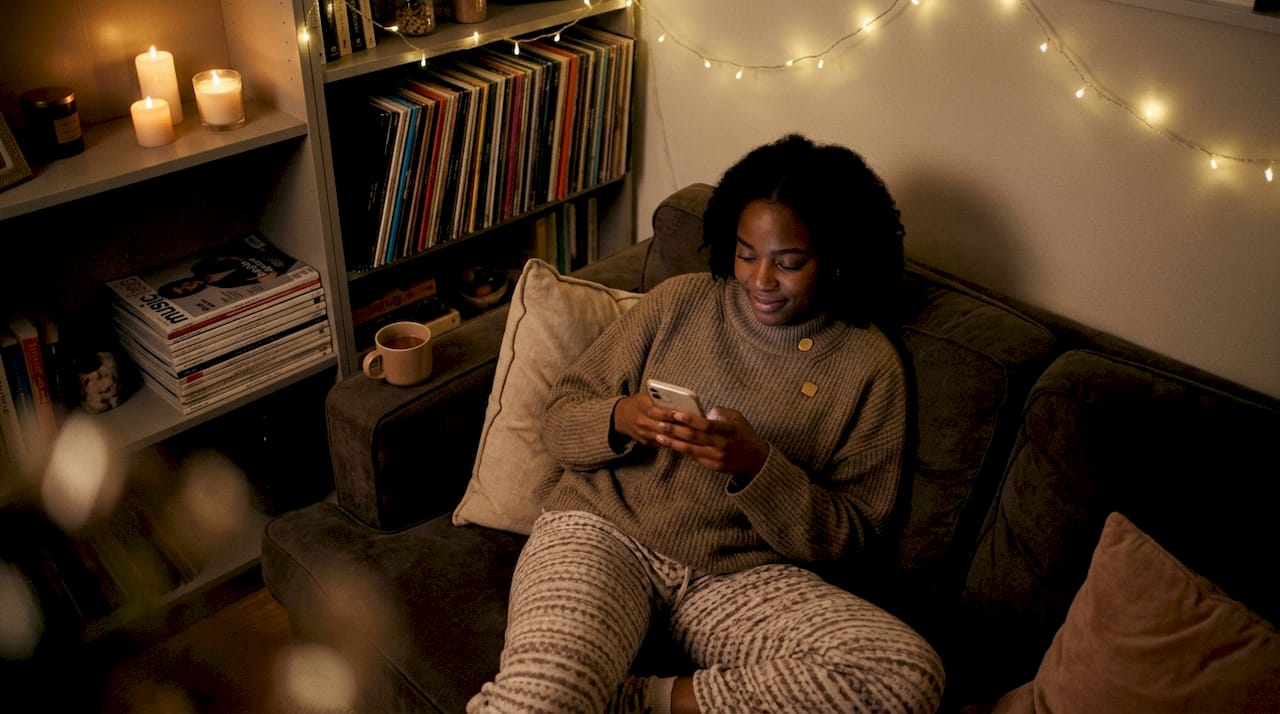
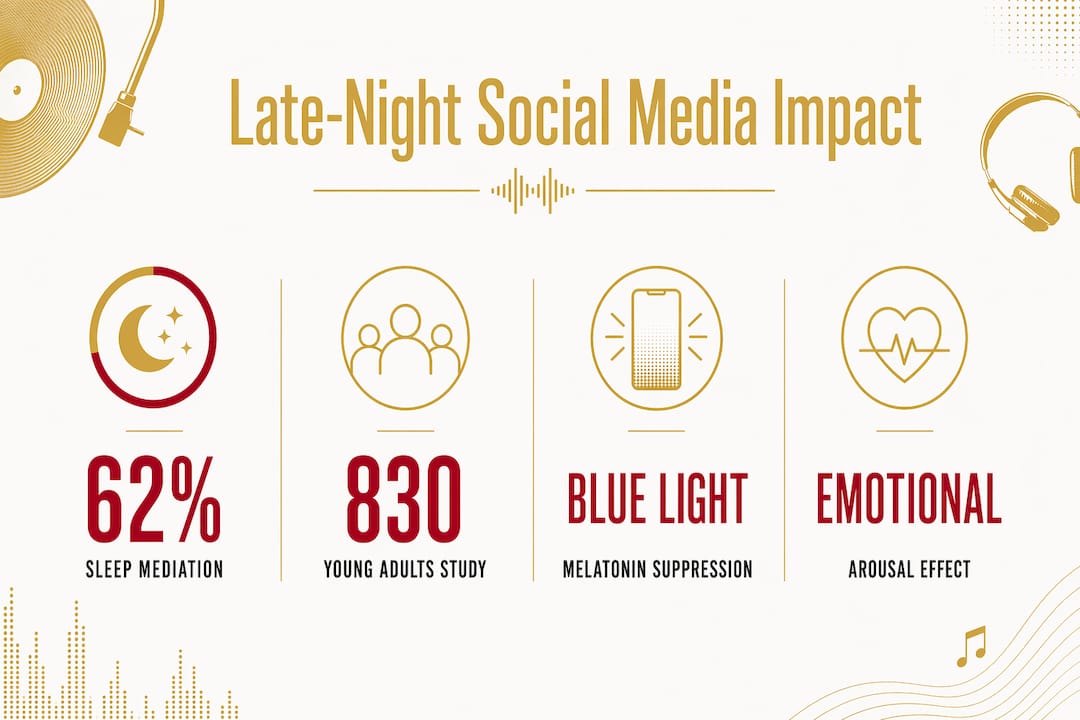
Late-night social media use is defined as the habitual engagement with platforms like Instagram, TikTok, and X during the hours when the body is biologically primed for sleep. The role of social media late night extends far beyond simple entertainment. It shapes sleep quality, emotional well-being, and the way entire generations discover and share music. Research shows that sleep quality mediates roughly 62% of the total effect between evening social media use and depressive symptoms in young adults. That single finding reframes the conversation. The phone in your hand at midnight is not just a distraction. It is a gateway to cultural participation, and the cost of that participation is written in the quality of your rest.
How does late-night social media use disrupt sleep?
The disruption is both physical and psychological. Blue light emitted from phone and tablet screens suppresses melatonin production, the hormone that signals to your brain that sleep is near. When melatonin drops, your circadian rhythm shifts later, making it harder to fall asleep and even harder to wake up feeling restored.
The psychological layer cuts deeper. Emotionally charged content triggers presleep arousal that delays sleep onset. Doomscrolling through conflict-heavy news or watching social comparison content activates the same stress response as a real-world threat. Your brain reads the tension on the screen as a signal to stay alert, not to rest.
Research involving 830 young adults found that emotional investment and visit frequency predict poor sleep more accurately than total screen time. That is a critical distinction. Spending two hours passively watching calming videos is less damaging than spending 20 minutes reading emotionally loaded comment threads. The content type matters more than the clock.
Among adolescents, the numbers are stark. 88.1% of adolescents with poor sleep quality were active social media users, compared to just 11.9% who were not. That gap shows how deeply platform habits are woven into the sleep crisis among young people.
The mechanisms behind this pattern include:
- Blue light suppression: Screen exposure after dark reduces melatonin, pushing sleep onset later into the night.
- Cognitive arousal: Emotionally charged posts, arguments, and viral drama keep the prefrontal cortex active when it should be winding down.
- Habitual checking:Conditioned neurological responses to notification sounds and visual cues make the urge to check feel automatic, not chosen.
- Shortened sleep windows: Habitual after-lights-out scrolling predicts both shorter total sleep and later bedtimes, compounding the deficit night after night.
Pro Tip:Switching your phone to grayscale mode after 9 p.m. reduces the visual reward of scrolling. Color is part of what makes feeds feel stimulating. Remove it, and the pull weakens.
Why do people engage with social media late at night despite knowing the effects?
The answer is not ignorance. Most people who scroll at midnight know they should stop. The behavior persists because it fulfills needs that daytime life leaves unmet.
Psychologists call this pattern “revenge bedtime procrastination.” You spend the day responding to demands from work, school, family, and obligations. By midnight, the phone feels like the one space that belongs entirely to you. Late-night scrolling is a psychological response to stress and fatigue, not a simple entertainment choice. The tired brain seeks to reclaim autonomy, and the feed is always ready to offer it.
Four psychological drivers sustain this behavior:
- Emotional regulation: Scrolling through music videos, memes, or fan communities provides a low-effort way to decompress after a hard day. The brain gets a dopamine reward without requiring much energy.
- FOMO and social pressure: Fear of missing out keeps people checking even when they feel tired. Missing a viral moment or a group conversation feels like a social cost.
- Reward-seeking loops: Platform algorithms are built to extend sessions. Every swipe delivers a variable reward, the same mechanism that makes slot machines hard to walk away from.
- Stress soothing: The “just one more video” feeling is the brain’s attempt to delay re-entering the silence where unresolved thoughts live.
“Late-night scrolling is less about entertainment and more about emotional survival. The phone becomes a pressure valve for everything the day compressed.”
This framing matters because it changes how you approach the habit. Willpower alone rarely works against a behavior rooted in emotional need. The solution requires addressing the need, not just the behavior.
What cultural trends in music and entertainment does late-night social media amplify?
Late-night audiences are not passive. They are among the most engaged, most vocal, and most culturally influential groups online. The hours between 10 p.m. and 2 a.m. have become a distinct cultural window, and entertainment brands have built entire strategies around it.
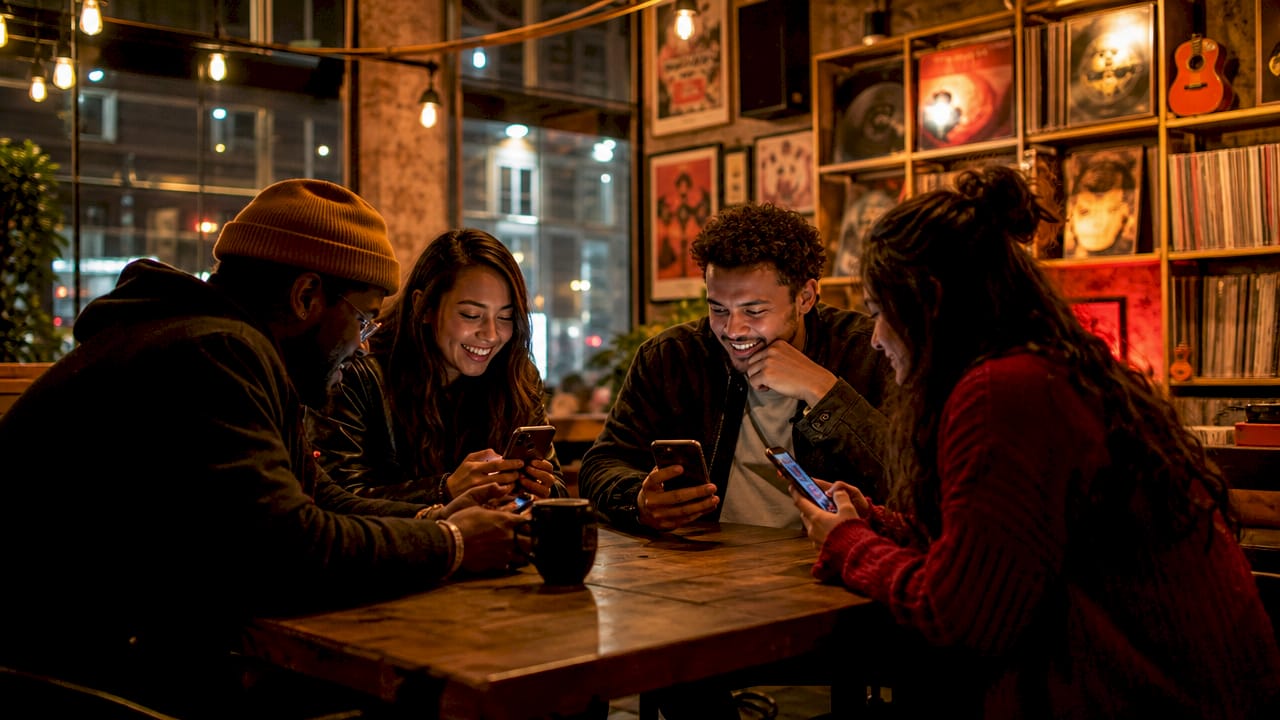
Entertainment brands now create viral late-night digital content that extends engagement far beyond traditional broadcast schedules. Clips from late-night programs reach millions of viewers on social platforms hours or days after the original air time. The broadcast moment is now just the seed. The social media spread is the actual harvest.
Music discovery follows the same rhythm. A song released at midnight on a Friday can trend globally by Saturday morning, driven entirely by nighttime social media engagement. Fan communities on platforms like Reddit, Discord, and TikTok treat late-night hours as prime time for listening parties, reaction threads, and deep-cut album discussions.
The cultural effects of nighttime social media engagement include:
- Viral music launches: Artists time releases for late-night drops because the audience is awake, emotional, and primed to share.
- Fan community building: Late-night hours produce some of the most intense fan interactions, from live-tweet sessions to collaborative playlist creation.
- Blended content formats: Traditional late-night TV segments are now designed as social media clips first, television moments second.
- Mood-driven discovery: Listeners at midnight are not looking for background music. They want songs that match the specific emotional weight of that hour, introspective, raw, and honest.
- Cultural participation: Nighttime social media use transforms passive listeners into active cultural participants who shape what trends and what fades.
Drvvynsound operates directly inside this cultural current. The brand creates R&B music and cinematic visual content built for the emotional texture of late-night listening. Songs rooted in themes of love, reflection, and healing land differently at midnight than they do at noon. That is not an accident. It is the design.
How can you reduce the negative effects of late-night social media use?
The goal is not to eliminate late-night engagement. That would mean cutting yourself off from a genuine cultural conversation. The goal is to protect your sleep without losing your connection to the music and communities you care about.
Disrupted sleep is the primary pathway linking problematic social media use to reduced well-being. Protecting that sleep is not a lifestyle luxury. It is a mental health strategy.
Practical steps that actually work:
- Remove devices from the bedroom. Environmental changes outperform willpower every time. If the phone is not within reach, the habit has no trigger.
- Set app timers with friction. A timer that requires a passcode to override creates a pause. That pause is often enough to break the automatic scroll.
- Manage notifications actively. Turn off all non-essential notifications after 9 p.m. The silence removes the conditioned cue that pulls you back in.
- Identify your emotional trigger. Ask yourself what you are actually feeling before you pick up the phone. Naming the emotion reduces its pull.
- Build a wind-down ritual. Replace the scroll with something that meets the same need. A curated playlist, a short journal entry, or even a calming visualizer can decompress the day without activating the stress response.
Pro Tip:Try a “soft stop” instead of a hard cutoff. At 10 p.m., switch from interactive content like comments and feeds to passive listening. A late-night playlist gives you the cultural connection without the cognitive arousal that delays sleep.
Late-night social media and the future of cultural engagement
The relationship between nighttime social media use and cultural life is not going to simplify. If anything, it will deepen. Platforms are building more immersive formats, longer video content, and audio-first spaces that feel designed for the quiet hours after dark. The question is not whether you will engage. The question is how you will engage without letting the feed decide that for you.
What strikes me most, after watching this space closely, is how little the conversation acknowledges the genuine value of late-night cultural participation. Yes, the sleep research is real and serious. But the person at midnight discovering a song that finally names what they have been carrying all week is also having a real experience. That moment of recognition, where music meets emotion in the dark, is not a symptom of a problem. It is one of the most human things social media can do.
The tension lives in the platform design, not in the desire to connect. Algorithms are built to extend sessions past the point of genuine enjoyment into compulsive territory. The fix is not to feel guilty for being awake and online. The fix is to be intentional about what you reach for and why. Music that was made to hold your emotional truth is a very different late-night companion than a comment section built to provoke you.
I believe the artists and brands who understand this distinction will define the next chapter of digital culture. Drvvynsound is building exactly that kind of music. Emotionally grounded, visually rich, and made for the hours when you finally have space to feel something.
— DRVVYN
Drvvynsound and the sound of late-night culture
Late-night hours carry a specific emotional weight. The day’s noise fades, and what remains is the part of you that needed space to breathe. That is exactly the space Drvvynsound was built for.
Drvvynsound creates original R&B music, cinematic visualizers, and curated playlists designed for the emotional depth of nighttime listening. Themes of love, reflection, healing, and personal growth are not just lyrical choices. They are the architecture of music that meets you where you actually are at midnight. If you are looking for a late-night sound that feels intentional rather than algorithmic, explore DRVVYN Essentials and find the music that fits the hour.
Key takeaways
Late-night social media use shapes both sleep quality and cultural engagement, and protecting sleep is the single most effective way to preserve well-being without abandoning the cultural conversation.
| Point | Details |
|---|---|
| Sleep quality is the key link | Sleep mediates roughly 62% of the effect between evening social media use and depressive symptoms. |
| Content type matters more than time | Emotional investment and visit frequency predict poor sleep better than total screen time. |
| Behavior is emotionally driven | Revenge bedtime procrastination is a stress response, not an entertainment habit. |
| Late-night culture is real and valuable | Music discovery and fan communities thrive during nighttime hours, shaping what trends globally. |
| Environment beats willpower | Removing devices from the bedroom is more effective than relying on self-control alone. |
FAQ
What is the role of social media late night for music fans?
Late-night social media use drives music discovery, fan community engagement, and viral song launches. Nighttime audiences are emotionally primed and highly active, making them the most influential group for shaping what music trends.
How does late-night social media use affect sleep quality?
Social media use after dark suppresses melatonin through blue light exposure and triggers cognitive arousal through emotionally charged content. Research shows that 88.1% of adolescents with poor sleep quality were active social media users.
What is revenge bedtime procrastination?
Revenge bedtime procrastination is the psychological pattern of staying up late on social media to reclaim personal time after a day of obligations. It is driven by emotional need, not entertainment, which is why willpower alone rarely stops it.
Does the type of content matter more than how long you scroll?
Yes. Emotional investment and frequency of visits predict poor sleep more accurately than total screen time. Watching emotionally charged content for 20 minutes causes more arousal than two hours of calm, passive viewing.
How can you engage with late-night social media without wrecking your sleep?
Remove your phone from the bedroom, set app timers with friction, and replace interactive scrolling with passive listening like a curated playlist. These environmental changes are more effective than relying on willpower.