

Creative Process
Types of Lo-Fi R&B for Nights: A Creator’s Guide
Explore the types of lo-fi R&B for nights, from Bedroom R&B to Ambient tunes, perfect for setting the right mood in your content.
By DRVVYN · · 11 min read
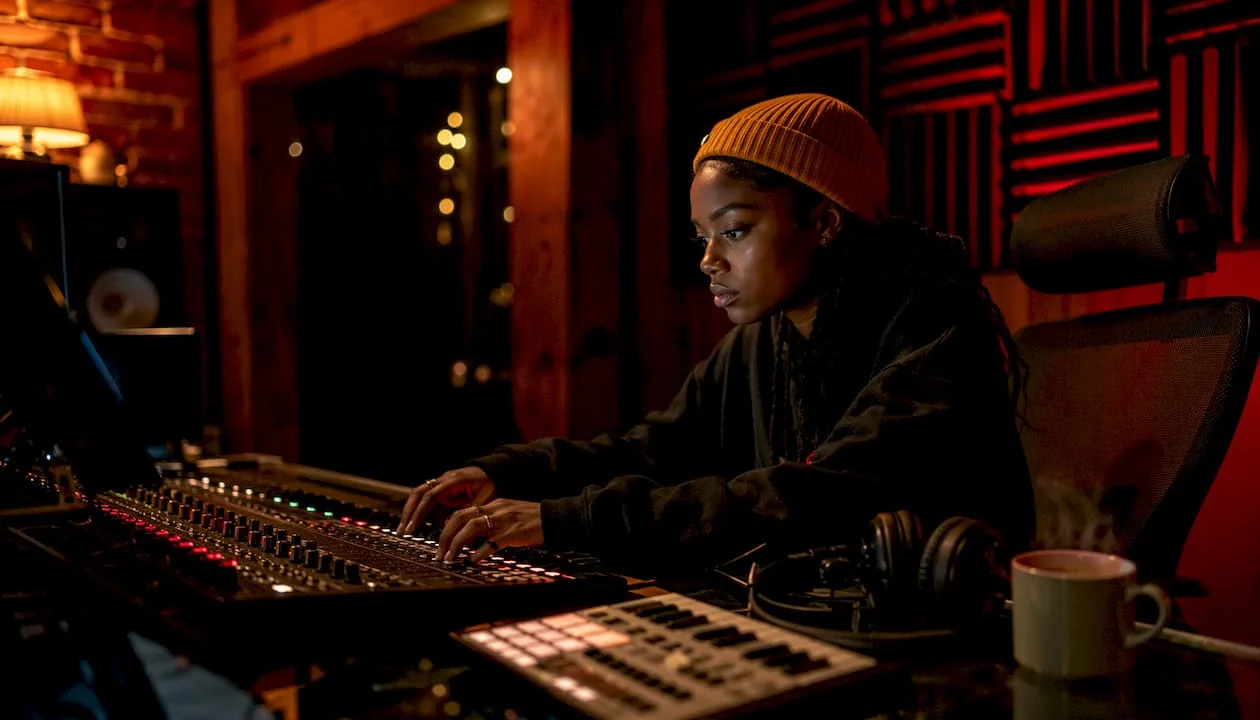
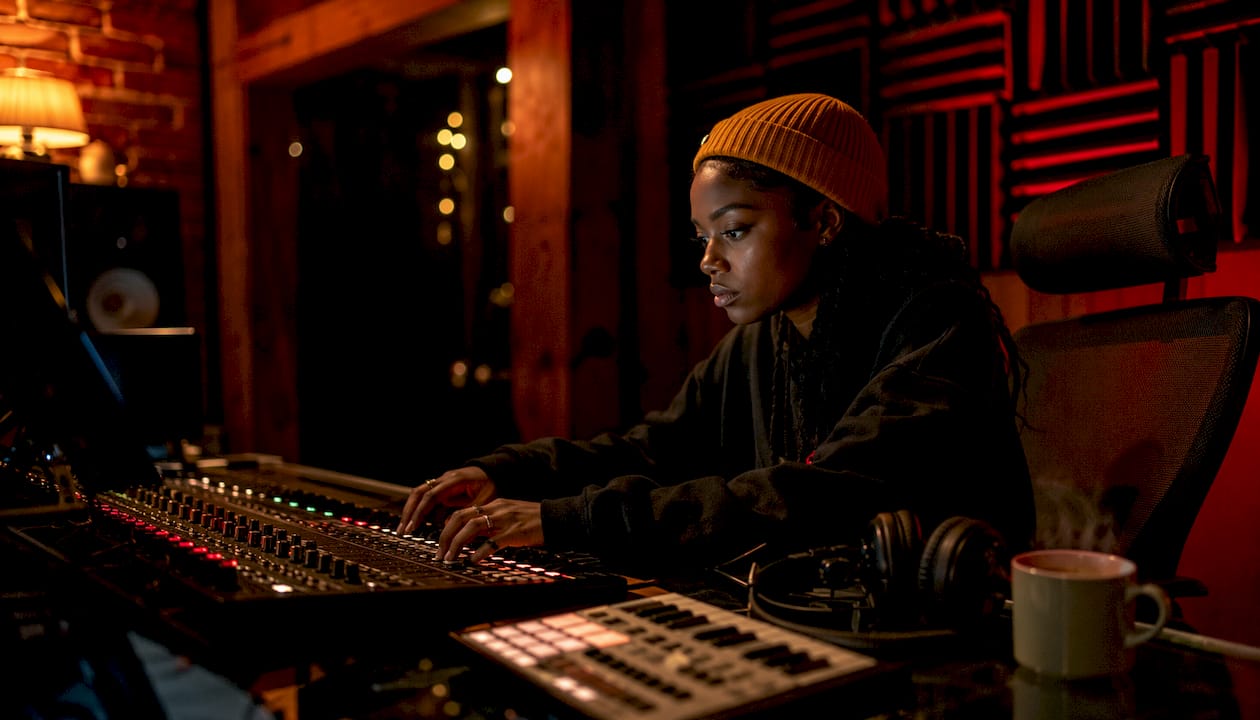
The four main types of lo-fi R&B built for nights are Bedroom R&B, Quiet Storm, Soft R&B, and Ambient/Nocturne R&B — each carrying a distinct emotional weight and a different job to do in your content. Pick the right one and the mood lands without effort. Pick the wrong one and the silence feels sharp in all the wrong ways.
Here’s how each maps to a real creative need:
- Bedroom R&B (70–85 BPM): Intimate, confession-style vocal delivery with reverb-drenched production. Choose this for late-night social shorts, intimate product testimonials, or any content where vulnerability is the point.
- Quiet Storm (65–80 BPM): Sensual, mellow, and smooth — luxurious pads and warm basslines built for romance. Best for long-form ads, branded content with a slow burn, or curated nighttime playlists.
- Soft R&B (60–90 BPM, half-time feel): Minimalist and atmospheric, evolved from 90s neo-soul. Use it for documentary beds, editorial content, or any scene where the music should breathe under narration. (Although trap-influenced hybrids can reach 130–150 BPM, these are almost always produced with a half-time feel to maintain a slow, nocturnal pace.)
- Ambient/Nocturne R&B (55–75 BPM): Near-formless, texture-first, and deeply spatial. The right call for film cues, meditation apps, sleep content, or background beds where the music should disappear into the scene.
DRVVYN Sound LLC produces original tracks across all four of these types, with full deliverables for sync and licensing.
Table of Contents
- What are the four types of lo-fi R&B for nights?
- What production choices make a track feel like it belongs at night?
- How do you match each lo-fi R&B type to your content format?
- What do U.S. creators need to know about licensing nighttime lo-fi R&B?
- How to brief a producer and select the right track
- How to build a reference playlist that actually communicates your night mood
- Key Takeaways
- The part most briefs get wrong about nocturnal R&B
- Original night-focused R&B, ready to license from Drvvynsound
What are the four types of lo-fi R&B for nights?
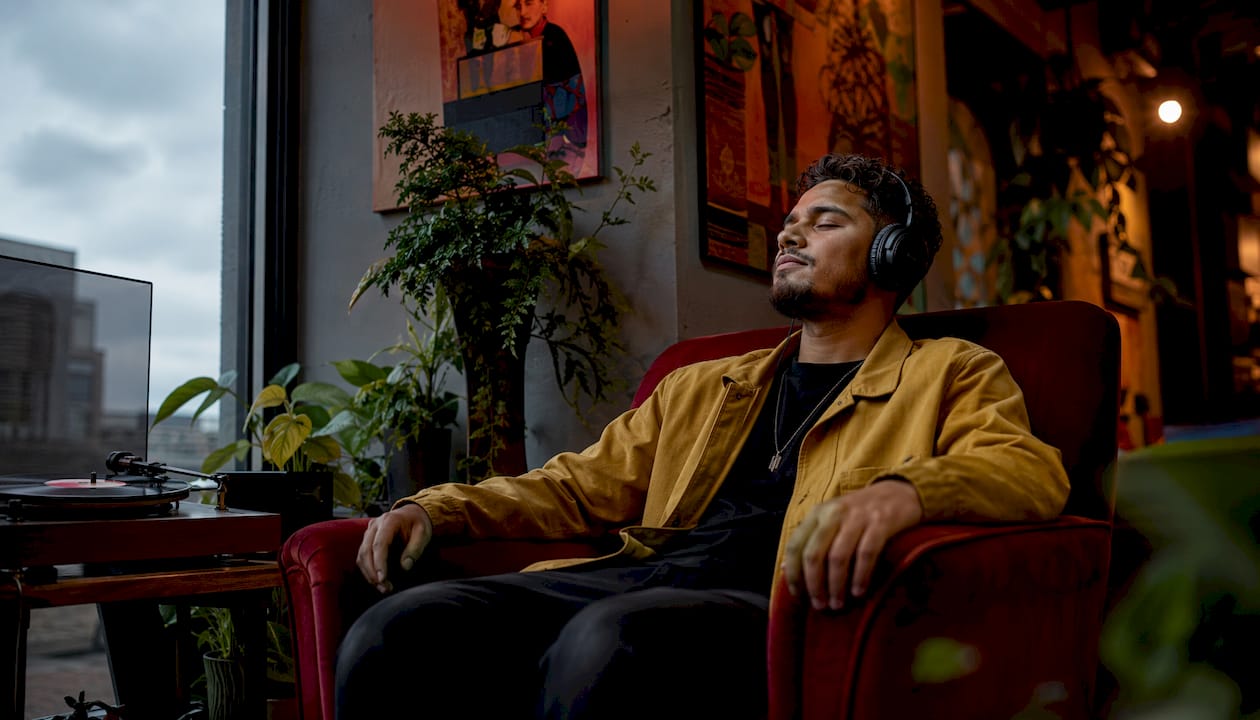
Each subtype has a distinct sonic fingerprint. The table below gives you the production essentials at a glance.
| Type | Tempo | Core Instrumentation | Vocal Style | Primary Use Case |
|---|---|---|---|---|
| Bedroom R&B | 70–85 BPM | Subdued drum machine, warm synth pads, jazzy guitar, close-miked vocals | Breathy, reverb-drenched, confessional | Social shorts, intimate ads, late-night playlists |
| Quiet Storm | 65–80 BPM | Rhodes/Wurlitzer, sax or smooth solos, soft percussion, warm bass | Smooth, sensual, mid-distance | Long-form ads, branded playlists, romance content |
| Soft R&B | 60–90 BPM (half-time) | Ethereal synths, lo-fi beats, reverb-drenched vocals, sparse arrangement | Airy, introspective, understated | Documentary beds, editorial, ambient playlist filler |
Soft R&B and its modern hybrids that draw from trap can reach tempos as high as 130–150 BPM, but these tracks are usually produced with a half-time feel so the groove still feels slow and appropriate for nighttime moods.
| Ambient/Nocturne R&B | 55–75 BPM | Synth pads, field recordings, minimal or no percussion, sub-bass drones | Whispered or absent | Film cues, sleep content, meditation, background beds |
Soft R&B and trap-influenced hybrids can push to higher tempos, but producers almost always apply a half-time feel to keep the emotional pace slow and nocturnal. The number on the tempo map is less important than how the groove sits in the body.
What production choices make a track feel like it belongs at night?
The difference between a track that feels nocturnal and one that just feels slow lives in the mix decisions, not the tempo. Nighttime lo-fi R&B creates what listeners experience as a sonic sanctuary — a consistent mood that lets the mind unwind rather than engage.
The production staples that create that feeling:
- Reverb: Long, dark plate or hall reverb on vocals and Rhodes; avoid bright, short rooms that feel daytime.
- Tape saturation and vinyl crackle: Adds warmth and softens transients so nothing feels sharp or clinical.
- Low-pass filtering: Roll off the top end on synths and pads to blur brightness and push the mix into the night.
- Sparse percussion: Soft hi-hats, brushed snares, or no snare at all. Over-complicated arrangements kill intimacy faster than any other mistake.
- Sub-bass behavior: Keep sub-bass present but controlled — felt more than heard, sitting under the mix like a slow exhale.
- Swung quantization: A loose, behind-the-beat feel (think 60–70% swing) makes the groove breathe instead of march.
- Harmonic voicings: 7ths, 9ths, and add9 chords on Rhodes or Wurlitzer give harmonic color without tension.
Pro Tip:Intentional imperfections — room noise, stray breaths, mic pops — are not mistakes to fix. They are the texture that makes a track feel lived-in and real. Leave them in deliberately, and your brief should say so explicitly.
Production checklist for night-focused lo-fi R&B briefs:
- Tempo confirmed within a suitable range for nighttime mood (or half-time feel if trap-influenced)
- Reverb type specified (plate, hall, or spring — no bright rooms)
- Tape saturation or vinyl crackle applied
- Top-end low-pass filter on pads and synths
- Sparse percussion confirmed (no busy drum fills)
- Sub-bass present and controlled below 80 Hz
- Swung quantization or loose groove applied
- Harmonic voicings use 7ths or 9ths
- Intentional imperfections preserved in final mix
- Reference tracks provided with timecodes highlighting target mood moments
How do you match each lo-fi R&B type to your content format?
Emotional intent is the first filter. Before tempo or instrumentation, ask what the viewer should feel in the first three seconds of your content.
| Type | Mood / Emotional Intent | Vocal Prominence | Licensing Suitability | Best Format |
|---|---|---|---|---|
| Bedroom R&B | Vulnerable, intimate, confessional | Foreground — vocal is the story | Sync with vocal; foreground use | 15–30s social reels, intimate ads |
| Quiet Storm | Romantic, sensual, warm | Mid-foreground | Sync or background; TV/streaming | Long-form ads (30–60s), branded playlists |
| Soft R&B | Melancholic, reflective, spacious | Background to mid | Background bed; documentary sync | Documentary, editorial, ambient playlist |
| Ambient/Nocturne R&B | Cinematic, meditative, dissolving | Absent or whispered | Background bed; in-app, film | Film cues, sleep apps, meditation content |
Nighttime R&B avoids high-energy daytime elements by design — which means every type in this list is built to support rather than compete with your message, reflecting how music-inspired fashion blends audio atmosphere with visual style. The practical split is between foreground use (Bedroom R&B, Quiet Storm) where the music carries emotional weight the viewer consciously registers, and background use (Soft R&B, Ambient/Nocturne) where the music holds the space without drawing attention to itself.
For social reels, 15–30 second cuts should preserve the core mood while landing on a natural edit point. For film or documentary, Soft R&B and Ambient/Nocturne R&B give editors the most flexibility because the sparse arrangements loop cleanly and sit under dialogue without masking it.
What do U.S. creators need to know about licensing nighttime lo-fi R&B?
Two separate rights govern every sync deal in the United States: the sync license (covers the musical composition — melody and lyrics, cleared through the publisher) and the master license (covers the specific recording, cleared through the label or artist). You need both. Missing either one exposes your project to a copyright claim regardless of how the other is cleared.
Standard deliverables checklist:
| Deliverable | Spec | Notes |
|---|---|---|
| Stems | Labeled WAV, 48kHz | Vocals, bass, drums, keys, pads separate |
| Instrumental bed | WAV, same spec | No lead vocal — essential for edit flexibility |
| Cue sheet | PDF or CSV | ISRC, writers, publishers, splits, duration |
| Full mix | WAV + MP3 (320kbps) | Both formats for format compatibility |
| Tempo and key | BPM + musical key | Required for edit matching and re-versioning |
| Loop points | Timecoded | For in-app or playlist looping use |
Key negotiation flags: exclusivity (a 6-month exclusive social license costs more than non-exclusive but protects your campaign), territory (U.S.-only vs. worldwide), term length, and usage type (TV, social, in-app, and film each carry different rate expectations). Night-use background beds typically command lower sync fees than foreground vocal tracks because the music’s role is less prominent in the final cut.
Pro Tip:Always request stems and an instrumental alongside the full mix. Labeled stems cut edit time significantly and prevent re-negotiation when your editor needs to pull the vocal for a specific scene.
How to brief a producer and select the right track
A tight brief saves everyone time and gets you a track that actually fits. Use these fields every time:
- Target mood: Name the emotional state (e.g., “vulnerable and warm, not sad”)
- Exact duration: 15s, 30s, 60s, or full-length with loop version
- Tempo/BPM: Specify range or reference a known track
- Vocal proximity: Foreground (audible lyrics), mid (felt but not followed), or absent
- Required deliverables: Full mix, instrumental, stems, cue sheet, loop version
- Exclusivity: Exclusive or non-exclusive; territory; term length
- Budget band: Approximate range so the producer can scope the project
Editor selection checklist — listen for these before approving a track:
- Vocal proximity matches the brief (foreground vs. background)
- Dynamic range leaves headroom for dialogue or voiceover
- Track loops cleanly at a natural phrase boundary
- Stems are available and labeled
- Noise artifacts (room tone, breath) are intentional, not distracting
- Mix targets approximately -14 LUFS for streaming and social platforms
Metadata to request: ISRC code, songwriter credits, publisher name and splits, and cue-sheet-ready credits. Missing metadata delays delivery and can block distribution on some platforms.
How to build a reference playlist that actually communicates your night mood
A reference playlist of 6–10 clips communicates more precisely than any written brief. The goal is not to find tracks you want to license — it’s to show the producer exactly where the emotional temperature should sit.
For each reference clip, label: type (Bedroom R&B, Quiet Storm, etc.), BPM, timecodes for the 8–12 second moments that capture the target mood, and one sentence explaining why that moment fits. That last field is the most valuable — it forces you to articulate the feeling, not just point at a sound.
Cue-edit guidance for editors: fade lengths of 2–4 seconds work for most social cuts; loop points should land on a downbeat or phrase boundary. Target -14 LUFS for streaming and social, -23 LUFS for broadcast. Export in WAV for delivery masters and MP3 (320kbps) for internal review. Check that your DAW or video editor accepts the sample rate (48kHz is the broadcast standard; 44.1kHz is common for streaming-only projects).
The DRVVYN Essentials catalog on Spotify is a practical starting point for building a night-mood reference reel — the tracks are labeled by mood and tempo, which speeds up the timecode-annotation step considerably.
Key Takeaways
Matching the right nighttime lo-fi R&B subtype to your content format — and securing the correct U.S. licenses with full deliverables — is what separates a brief that lands from one that stalls in revision.
| Point | Details |
|---|---|
| Four distinct night subtypes | Bedroom R&B, Quiet Storm, Soft R&B, and Ambient/Nocturne R&B each serve a different emotional and format need. |
| Tempo is secondary to feel | Most night-focused tracks sit between 60–85 BPM; half-time treatments matter more than the raw BPM number. |
| Two licenses, always | Every U.S. sync deal requires both a sync license (composition) and a master license (recording) — neither alone is sufficient. |
| Stems are non-negotiable | Request labeled stems and an instrumental bed with every track; they prevent re-negotiation and cut edit time. |
| Drvvynsound for night production | DRVVYN Sound LLC produces original night-focused lo-fi R&B with full deliverables, stems, and licensing support across all four subtypes. |
The part most briefs get wrong about nocturnal R&B
Most brands approach a nighttime music brief the way they approach a color palette — they describe what they want to see, not what they want the listener to feel. They’ll say “dark and moody” when what they actually mean is “the quiet after a long day, when the pressure finally leaves your chest.” Those are not the same instruction, and a producer can only respond to the second one.
The deeper issue is that nighttime lo-fi R&B is built on restraint. The silence between notes carries as much weight as the notes themselves. When a brand brief asks for “more energy” or “a fuller sound,” it’s usually asking the producer to undo the very thing that makes the track work at night. Sparse arrangements and dynamic headroom are not limitations — they are the craft.
Cultural context matters here too. The intimacy of bedroom lo-fi R&B resonates most with audiences who grew up consuming music as a private, late-night experience — on headphones, alone, in the dark. When brands use this sound in campaigns targeting younger urban audiences, the music signals something specific: we understand how you actually live. That signal breaks the moment the track feels overproduced or corporate. Authenticity in this genre is not a vibe. It’s a technical choice.
Original night-focused R&B, ready to license from Drvvynsound
If you’ve worked through this guide and you know the subtype, the mood, and the deliverables you need, the next step is straightforward. Drvvynsound produces original alternative R&B built specifically for the four night types covered here — Bedroom R&B, Quiet Storm, Soft R&B, and Ambient/Nocturne R&B — with full stems, instrumental beds, cue sheets, and licensing documentation included as standard.
The Nightscape Starter Pack gives brands and creators three custom 30–60 second clips, labeled stems, instrumental beds, and a 6-month social license — everything on the deliverables checklist above, ready for your edit. Custom productions are scoped from your brief, and the DRVVYN team handles sync clearance, cue sheet preparation, and format delivery so your content team doesn’t have to chase paperwork.
Browse the DRVVYN catalog to hear reference tracks across all four night subtypes, then submit your brief directly through the site to get a licensing quote or commission a custom production.