

Listening & Culture
Top Sleep Music Streaming Services for Better Rest
Discover the top sleep music streaming services that offer curated playlists, personalized audio, and features to enhance your rest tonight.
By DRVVYN · · 10 min read
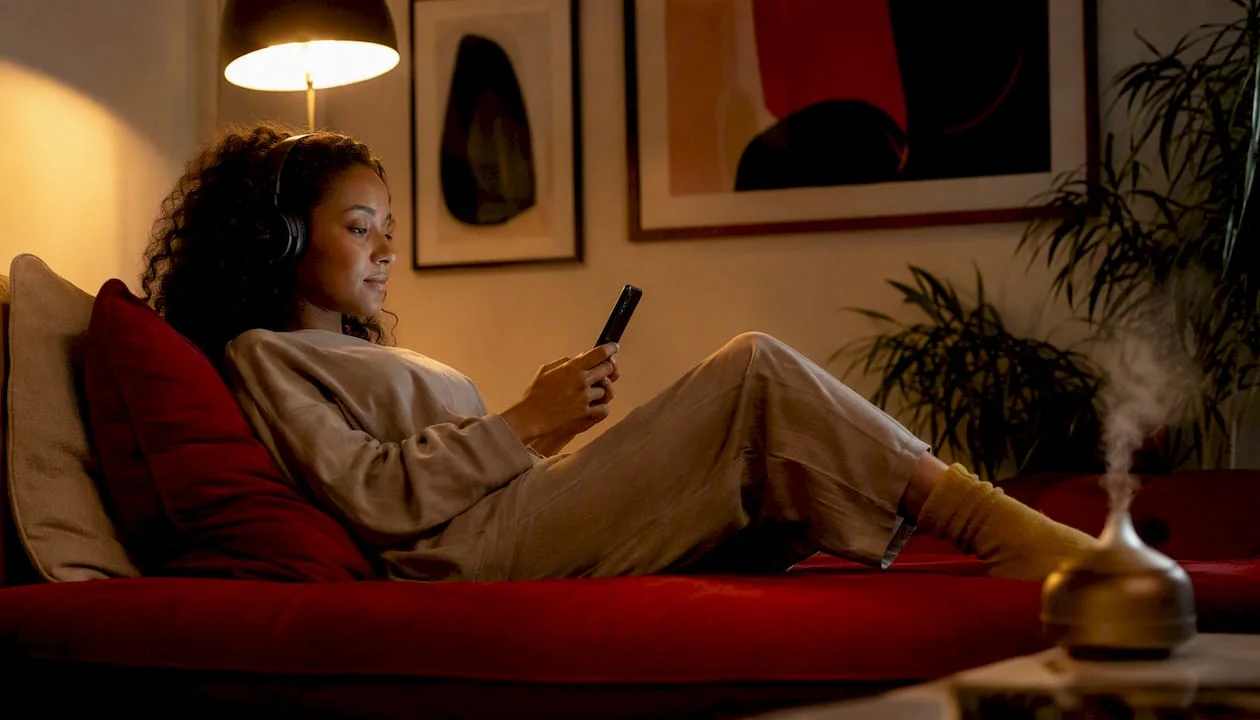
The best streaming options for sleep music are the ones with easy-to-find sleep playlists, sleep-focused features like timers and offline access, and at least one path to personalized or high-quality audio. Sleep Foundation research confirms that relaxing music before bed can meaningfully reduce sleep latency, including for people with insomnia. Start here:
- DRVVYN Essentials (Drvvynsound) — Best for artist-curated, mood-driven sleep playlists with binaural audio experiments and late-night atmosphere
- Endel — Best for adaptive, neuroscience-backed soundscapes that shift in real time
- Spotify — Best free tier with the broadest sleep playlist library and device support
- Tidal — Best for listeners who want high-fidelity audio as part of their wind-down
- BetterSleep — Best for experimenting with a large, varied library of sleep sounds
Each of these satisfies a different kind of need. The right pick depends on whether you want something curated with intention, something that adapts to you, or simply something free and familiar.
Table of Contents
- How do these sleep music services compare?
- What does each service actually do for your sleep?
- How do you set up sleep music for a better nightly routine?
- How we selected and tested these services
- Key Takeaways
- Why sleep music deserves more than a shuffle queue
- Sample DRVVYN Essentials on Spotify tonight
- Useful sources and further reading
How do these sleep music services compare?
The table below covers the features that actually matter at bedtime: what you pay, what sleep-specific content you get, whether the audio adapts, and how well it fits into your nightly setup.
| Service | Pricing | Sleep-Specific Content | Personalization / Adaptive | Audio Quality | Offline | Sleep Features | Best For |
|---|---|---|---|---|---|---|---|
| DRVVYN Essentials | Free (via Spotify) | Curated mood playlists, binaural-focused tracks | Artist-curated mood curation | Standard streaming | Via Spotify | Spotify sleep timer | Artist-curated, mood-driven playlists |
| Spotify | Free (ads) / — / — | Extensive sleep & ambient playlists | Algorithmic recommendations | Standard (up to 320 kbps) | Premium only | Sleep timer, smart-speaker integration | Large library, broad device support |
| Apple Music | — / — | Editorial sleep playlists | Algorithmic suggestions | Lossless & Dolby Atmos | Yes | Siri integration, sleep timer | Apple ecosystem listeners |
| Amazon Music | Free (ads) / Prime included / — | Nature sounds, ambient playlists | Limited | Standard / HD tiers | Prime / Unlimited | Echo/Alexa integration | Prime members, Echo device users |
| YouTube Music | Free (ads) / — | Long-form mixes, ambient streams | Limited | Standard | Premium only | — | Long-form ambient mixes |
| Tidal | — / — | Editorial sleep playlists | Limited | HiFi / Max (lossless) | Yes | — | High-fidelity audio listeners |
| Calm | Free trial / — | Sleep stories, meditations, nature sounds | Guided programs | Standard | Yes | Sleep timer, guided programs | Meditation + sleep music together |
| BetterSleep | Free / — | a wide range of sounds including ASMR, nature, and ambient | Sound mixing | Standard | Yes | Sleep timer, alarm | Large sound library, experimentation |
| Endel | Free tier / — | Adaptive soundscapes, focus/sleep/relax | Real-time adaptive algorithm | Standard | Yes | Sleep mode, smart-speaker support | Adaptive, algorithmic soundscapes |
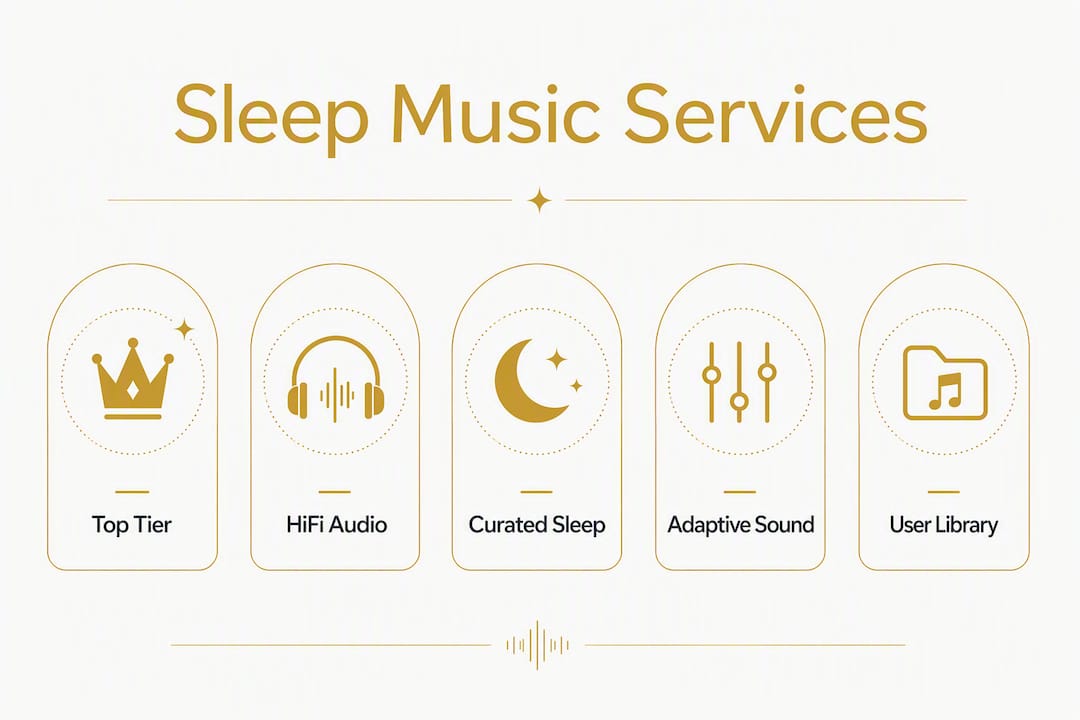
Pricing shown reflects publicly listed U.S. rates; always confirm current offers on each service’s site before subscribing.
What does each service actually do for your sleep?
DRVVYN Essentials (Drvvynsound)
The publisher-recommended pick. Drvvynsound’s DRVVYN Essentials is an artist-curated playlist collection built around late-night mood and emotional texture, not just background noise. Tracks employ binaural audio concepts and slow, atmospheric arrangements designed to help release tension gradually. Because it streams through Spotify, you can use Spotify’s sleep timer and offline features without a separate subscription.
- Mood-forward curation with a clear artistic perspective
- Binaural and ambient-adjacent tracks suited to the 60–80 BPM window that sleep research associates with relaxation
- Companion blog content on binaural audio and mood-setting at Drvvynsound
- No separate app required; works on any device Spotify supports
Spotify
Spotify’s depth is its real strength here. The sleep and relaxation playlist catalog is enormous, spanning editorial picks, user-created sets, and third-party curation. The free tier works, though ads can interrupt the quiet you’re building. Premium unlocks offline downloads and removes that disruption entirely.
- Thousands of sleep, ambient, and nature-sound playlists
- Smart-speaker integration with Amazon Echo, Google Nest, and Apple HomePod
- Sleep timer available via the app
- Standard audio quality (up to 320 kbps); no lossless option
Apple Music
Apple Music suits you best if your phone, watch, and speaker are all Apple. The editorial sleep playlists are well-curated, and lossless audio via Apple Digital Masters adds a warmth that standard streaming doesn’t quite reach. Siri makes hands-free control genuinely frictionless at bedtime.
- Lossless and Dolby Atmos tracks available
- Offline downloads included with subscription
- Siri voice control for screen-free operation
- No free tier beyond the trial period
Amazon Music
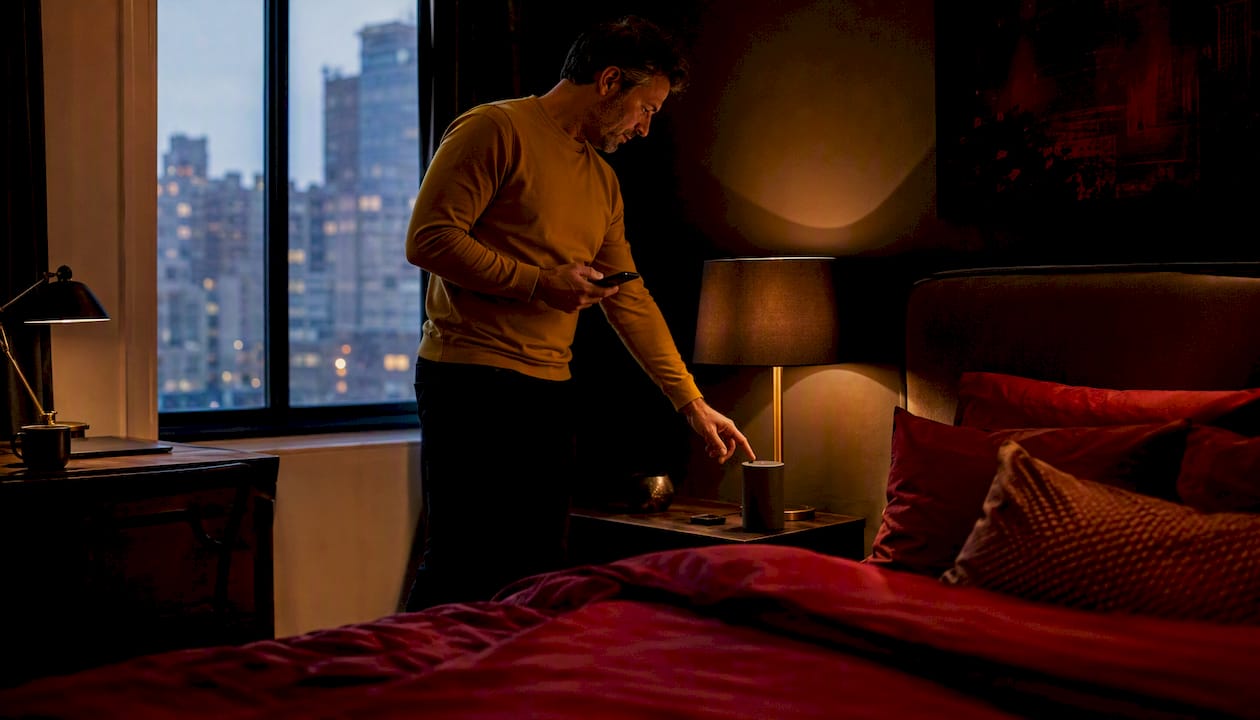
For Prime members, Amazon Music is already paid for. The Echo ecosystem integration is the standout: you can start a sleep playlist with a voice command and never touch your phone. The sleep-specific library is narrower than Spotify’s, but the ambient and nature-sound options cover the basics.
YouTube Music
YouTube Music’s edge is long-form content: eight-hour ambient streams, visual sleep sets, and user-uploaded mixes that no curated service replicates. The free tier runs ads, which breaks the spell. Premium removes them and adds offline access, making it a reasonable secondary option for listeners who want extended, uninterrupted soundscapes.
Tidal
If audio fidelity matters to you the way thread count matters to some people, Tidal’s HiFi and Max tiers deliver lossless audio that feels noticeably richer through good headphones or a speaker. The sleep playlist selection is solid, not exceptional. Think of Tidal as the right choice when the quality of the sound itself is part of how you relax.
Calm
Calm blends sleep music with guided sleep meditations, sleep stories, and nature soundscapes into one app. Calm’s own guidance identifies seven genre types that commonly support sleep, including instrumental, ambient, and classical. If you want a structured wind-down program rather than a playlist, Calm fits that need better than any general streaming service.
BetterSleep
Sleep Foundation testing notes BetterSleep’s extensive and varied sound library, which makes it the most flexible option for experimentation. You can layer sounds, set precise sleep timers, and work through ASMR, nature recordings, and ambient tracks. The interface is simple enough to navigate in the dark.
Endel
Endel’s adaptive algorithm generates soundscapes in real time, responding to time of day and your listening context rather than playing a fixed track. That distinction matters most for people who find static playlists too predictable. Endel also publishes non-adaptive albums on mainstream platforms, so you can sample the aesthetic before committing to the app.
Pro Tip:Test any new playlist during afternoon relaxation first, not at bedtime. Tracks that feel soothing at 3 PM but carry subtle tempo spikes or dynamic swells will interrupt sleep onset. Aim for 60–80 BPM and minimalist arrangements before you commit to a nightly routine.
How do you set up sleep music for a better nightly routine?
Consistency is what turns a pleasant playlist into a genuine sleep cue. Sleep Foundation notes that using the same music nightly trains the brain to associate those sounds with falling asleep, compounding the benefit over time. Here’s how to build that routine from scratch:
- Choose your device. A smart speaker (Echo, HomePod, Google Nest) keeps your phone face-down and out of reach. If you use headphones, choose a sleep-specific pair or keep volume low enough that you won’t wake when a track ends.
- Set volume before you lie down. Aim for a level where the music is present but not demanding. Sudden volume spikes are the most common reason sleep music backfires.
- Enable offline downloads. On Spotify Premium, Apple Music, or Tidal, download your sleep playlist before bed so a weak Wi-Fi signal doesn’t interrupt playback.
- Set a sleep timer. Most apps offer 15, 30, or 45-minute timers. Thirty minutes covers the average sleep-onset window for most people; extend to 45 if you tend to lie awake longer.
- Pick a consistent playlist. Rotate genres during the day, but keep one anchor playlist for sleep. Art of Living’s BPM guidance points to 60–80 BPM as the tempo range that best approximates a resting heart rate.
- Pair with a pre-sleep ritual. Dim lights 20 minutes before the music starts. The combination of light reduction and familiar sound cues the body more effectively than either alone.
Pro Tip:If you use an Echo or Google Nest, set a “sleep routine” in the Alexa or Google Home app that starts your playlist and dims compatible smart lights simultaneously. One voice command replaces three separate actions.
How we selected and tested these services
Every service on this list was evaluated against the same set of criteria, with no shortcuts for brand recognition.
- Sleep-specific content depth: Does the service have playlists, sounds, or programs built explicitly for sleep, not just “chill” or “lo-fi”?
- Personalization and adaptive audio: Does it offer algorithmic recommendations, real-time adaptive soundscapes, or artist-curated mood curation?
- Audio quality: Is lossless or high-bitrate audio available, and does it matter for the sleep use case?
- Offline access and timers: Can you use it without a live connection, and does it include a sleep timer?
- Device and smart-home integration: Does it work with the speakers and wearables people actually use at night?
- Price and trial access: Is there a free tier or trial that lets you test before committing?
Primary sources include Sleep Foundation research on music and sleep physiology, Endel’s published documentation on adaptive soundscapes, BetterSleep’s app feature disclosures, Calm’s editorial guidance on sleep-friendly genres, and Drvvynsound’s own playlist and blog content. Where app features were unclear, we relied on each service’s current U.S. App Store or web listing.
Key Takeaways
The most effective sleep music routine combines a consistent playlist in the 60–80 BPM range with a sleep timer, offline access, and a device that keeps your screen out of reach.
| Point | Details |
|---|---|
| Start with a free trial | Spotify’s free tier and Endel’s free tier let you test sleep playlists before paying anything. |
| Match tempo to rest | Tracks in the 60–80 BPM range approximate resting heart rate and ease sleep onset most reliably. |
| Consistency amplifies results | Using the same playlist nightly trains your brain to associate those sounds with sleep over time. |
| Adaptive vs. curated | Endel adapts in real time; DRVVYN Essentials offers intentional artist curation — different tools for different needs. |
| Drvvynsound’s pick | DRVVYN Essentials streams free via Spotify and pairs mood-driven curation with binaural audio concepts for late-night relaxation. |
Why sleep music deserves more than a shuffle queue
Most people treat sleep playlists the way they treat elevator music: something to fill silence without much thought. That’s a missed opportunity. The physiological case for intentional sleep music is real: music lowers cortisol, increases dopamine, and shifts the nervous system toward the parasympathetic state where sleep actually happens. That’s not ambient decoration. That’s a tool.
What I find underappreciated is the difference between music that’s quiet and music that’s designed. A lo-fi playlist with random tempo shifts can feel soothing at first and then subtly keep you alert. Tracks built with sleep in mind, whether through adaptive algorithms like Endel’s or through deliberate artistic curation like DRVVYN Essentials, carry a different kind of intention. You feel it in the way the pressure leaves your chest rather than just the room getting quieter.
The adaptive apps are genuinely impressive, but they’re not the only answer. Sometimes what you need is a human voice behind the curation, someone who chose these sounds because they understand what it feels like to need the night to soften. That’s the space Drvvynsound occupies, and it’s worth trying alongside the algorithmic options.
Sample DRVVYN Essentials on Spotify tonight
There are solid routes to sleep music: Endel’s algorithm, BetterSleep’s sound library, Calm’s guided programs. DRVVYN Essentials offers something those services don’t: a playlist shaped by an artist who understands mood, late-night solitude, and the specific emotional texture that lets the body finally let go.

Drvvynsound’s DRVVYN Essentials streams free on Spotify, no subscription required beyond what you already have. The playlist is built around slow, atmospheric tracks with binaural audio concepts woven in, and the companion blog at Drvvynsound explains the thinking behind each mood selection. Try it for seven nights as your anchor playlist, note whether sleep onset feels shorter or the room feels quieter, and adjust from there. Full disclosure: Drvvynsound is the publisher of this article and the creator of DRVVYN Essentials.
Useful sources and further reading
These are the primary references behind the claims in this article, organized by what they support:
- Music and Sleep | Sleep Foundation — Core evidence for music’s effect on sleep latency, cortisol, and dopamine; the most cited source in this article
- Best Sleep Apps | Sleep Foundation — App comparisons including BetterSleep’s 300+ sound library and guided program features
- Endel: Focus, Relax and Sleep — Endel’s documentation on adaptive soundscape design and neuroscience framing
- Best Music for Sleep | Calm Blog — Calm’s genre guidance covering seven types of sleep-supportive music
- Sleep Music Guide | Art of Living — BPM and tempo guidance for selecting sleep-friendly tracks
- DRVVYN Sound — Publisher’s landing page and blog for sampling DRVVYN Essentials and reading about binaural audio curation
- Sleep Classical Music Playlist | Intonality — Curated classical sleep playlist for readers who prefer that genre
- Ambient Playlist | Intonality — Genre-focused ambient collection for late-night listening