

Artist Strategy
How Music That Matches Your Mood Builds Fan Worlds
Music that matches your mood can do more than set a scene. For independent artists, it can shape a clearer fan journey from first listen onward, quietly.
By DRVVYN · · 6 min read
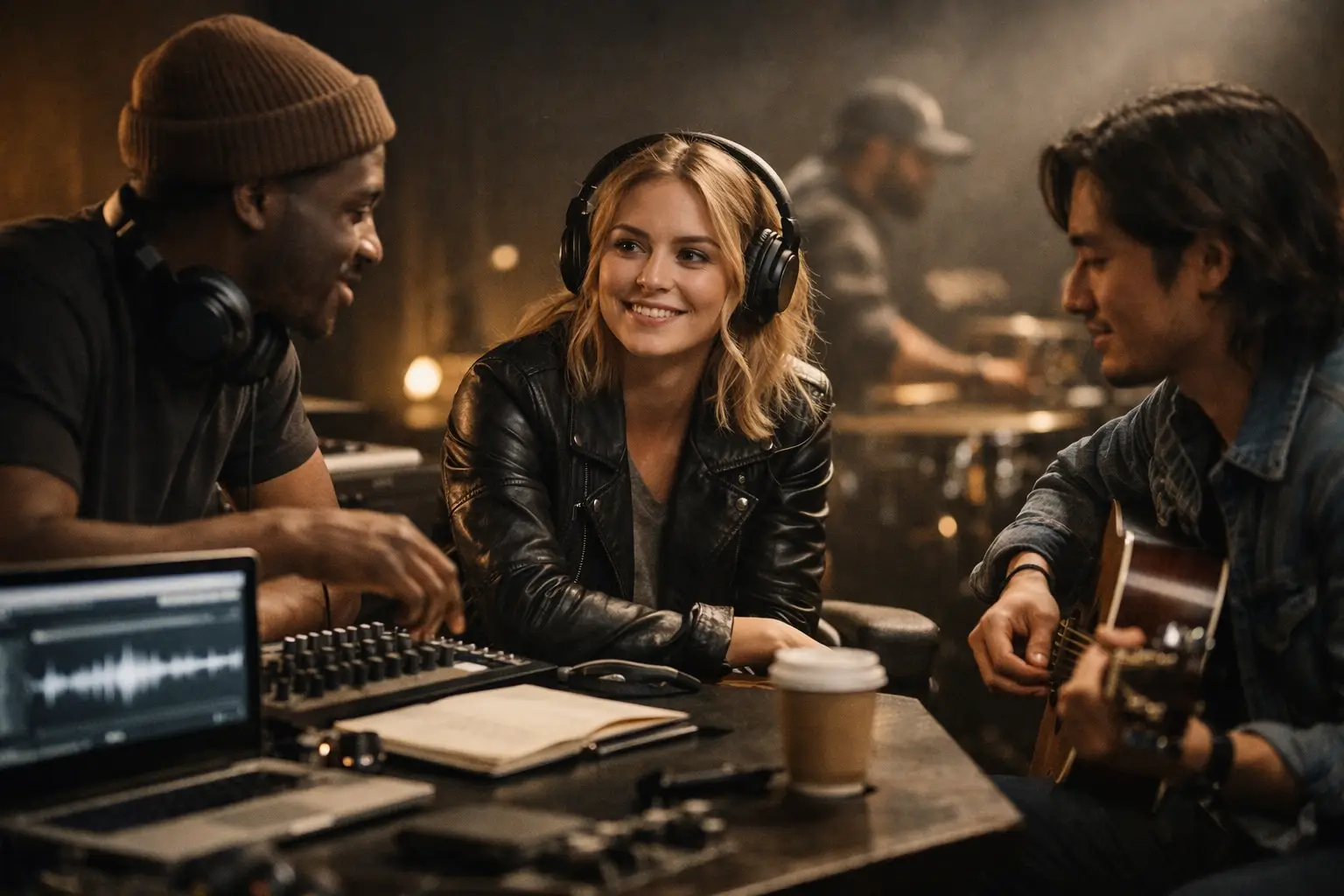
A listener rarely arrives with a genre request. They arrive carrying something: the long drive home, the hour after an argument, the quiet before they send a message they have rewritten three times. Music that matches your mood meets them there.
For an independent artist, that is more than a playlist idea. It is a way to make the work easier to enter, easier to remember, and more honest in how it is presented. The goal is not to flatten your catalog into a set of emotions. It is to give people a clear doorway into the feeling already inside the music.
The listener remembers the moment, not the metadata
A song can be technically impressive and still pass unnoticed if a listener cannot place it in their life. Mood gives the track a place to land.
That does not mean every release needs a label like “sad,” “chill,” or “hype.” Those words are broad enough to be useful, but often too broad to say much. A stronger mood is a scene with tension in it: 2 a.m. confidence, cold-air clarity, regret after the noise, movement without escape.
Think about the difference between describing a song as dark and describing it as the sound of leaving a party alone with the city still loud outside. The second description carries a point of view. It gives a listener something to recognize.
This is especially useful when you are asking someone to spend more than a few seconds with unfamiliar music. A mood-led phrase can guide the copy on a release page, the visual language around a single, the order of a short EP, and the clips you choose to share. It can also help you decide what not to post. Not every piece of content belongs in the same emotional room as the song.
Start with the emotional truth of the song
Before choosing artwork, captions, or promotional angles, sit with the track without trying to market it. Ask what changes from the first second to the last. Where does the vocal feel closest? Does the production create distance, pressure, warmth, or lift?
Then write one sentence that names the experience without selling it. Keep it private at first. You are not writing a slogan. You are finding the center.
For example: “This is for the part of the night when you stop pretending you are over it.” That line may never appear publicly. But it can shape better choices than a generic description ever will.
The mood should come from the music, not from whatever aesthetic is currently performing well online. A polished visual campaign cannot manufacture emotional alignment. If the song is intimate, let it be intimate. If it is restless, do not package it as calm just because calm content is easier to categorize.
There is a trade-off here. Clear language helps new listeners understand the entry point, but too much explanation removes the space they need to make the song their own. Give them a cue, not a full interpretation.
Build a small mood vocabulary
Choose three to five words or short phrases that repeatedly fit your body of work. They can be emotional, visual, physical, or cinematic. The point is consistency, not branding for its own sake.
An artist making nocturnal electronic pop might return to phrases like suspended, electric, after-hours, close-mic, and distant lights. A songwriter working in stripped-back folk might live closer to worn-in, open road, porch light, plainspoken, and unresolved.
Over time, these cues help you see patterns across releases. They can inform your photos, video treatments, show visuals, and the way you organize songs on your own site. More importantly, they help a listener understand what kind of space your music creates.
Let mood shape the release journey
Most independent release campaigns become fragmented because each asset is made in isolation. There is the cover art, then a teaser, then a random studio clip, then a link post. The song becomes a file surrounded by activity.
A mood gives the campaign a thread.
If the track feels like late-night motion, a visual clip might show headlights, a train window, or the texture of a room after midnight. If it feels exposed and still, a close performance clip may say more than a fast-cut montage. Neither choice is universally better. The right format depends on whether the song asks for intimacy, scale, tension, or release.
Keep the first message simple. A listener should be able to feel the world before they understand the backstory. The deeper story can come later for the people who stay.
This also changes how you sequence a release page or fan email. Lead with the song and its atmosphere. Follow with one useful context point: a lyric fragment, a production detail, a note about where the track began. Save the full making-of story for a moment when it has room to breathe.
Use mood as a catalog strategy, not a gimmick
A catalog gets more valuable when listeners can move through it with intention. Someone who connects with one track should have an obvious next place to go.
That might mean grouping songs into a few meaningful paths on your artist website: songs for the drive, songs for the comedown, songs for when the room gets quiet. These do not need to be public playlists on another platform. They can be simple editorial collections around your own work, with a short sentence explaining each one.
The benefit is practical. You are not asking a new listener to scan a long discography and guess what matters. You are making a considered recommendation. You also learn which emotional doors people choose when your website and audience data are under your control.
Do not force every song into one tidy category. Some of the best records resist that. A track can start fragile and end defiant. An EP can hold contradictions. In those cases, describe the movement rather than choosing a single mood: from isolation to resolve, from noise to stillness.
What this changes in your promotion
Mood-based framing does not replace release planning. You still need clean metadata, a reliable destination for listeners, thoughtful assets, and a way to follow up with people who opt in. But it gives those practical pieces a reason to belong together.
When you write a caption, avoid trying to explain the entire song. One precise line is usually stronger. When you create a visual, choose a moment that carries the emotional temperature of the record. When you build a landing page, make the next action feel natural: hear the song, watch the visual, save the release, join the mailing list for what comes next.
A direct fan relationship works best when the invitation respects the listener’s pace. They may only be ready to hear one track today. Let that be enough. If the work is specific, the right people will know where to return.
For artists building a more connected home for their music, this is part of the larger question behind Artist Engine: how can an artist present the work, understand their audience, and keep the journey from breaking across disconnected tools? The answer will not be one feature or one campaign. It begins with knowing what your music is actually asking people to feel.
The strongest mood is not a label you place on the song after it is finished. It is the atmosphere that remains after the last note, when the listener is alone again and chooses not to press skip.