

Creative Process
Indie Musicians: Choose a Music Producer for Fit and Written Rights
Practical checklist for indie musicians to choose a music producer who matches your sound, clarifies deliverables and rights, and avoids costly contract…
By DRVVYN · · 11 min read
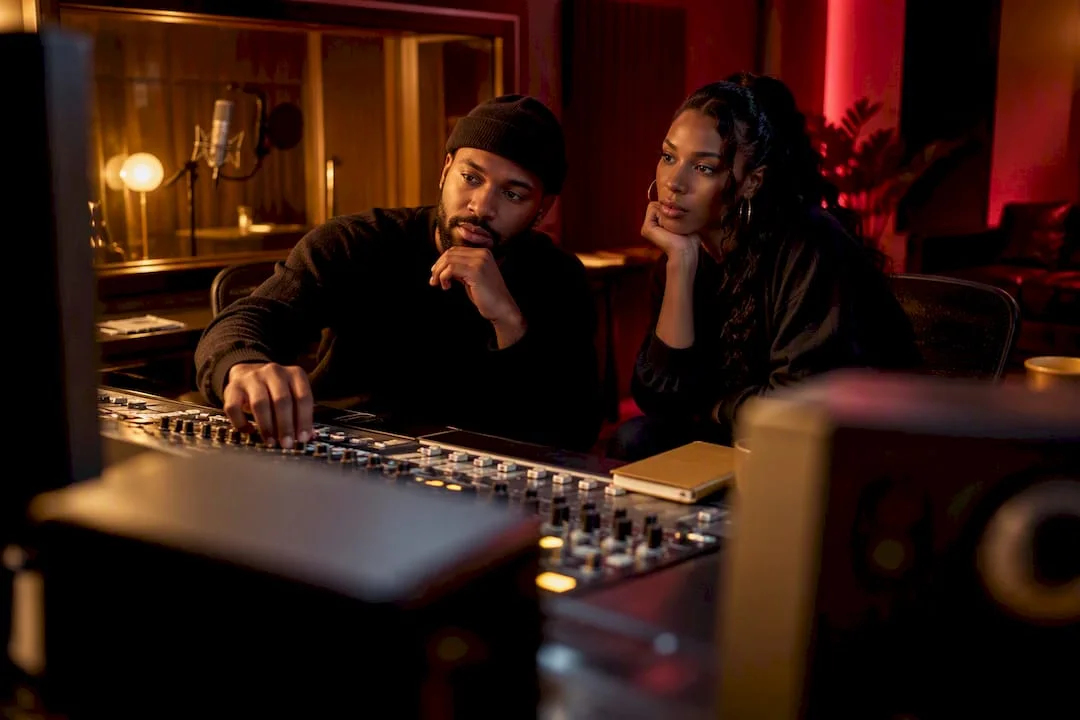
Pick a producer whose sound and working chemistry match your music, not their fame. Before you sign anything, listen to two or three finished tracks and confirm their actual role on those records, since a “producer” credit can mean anything from full arrangement to a single loop pack. Then book a short discovery call, fifteen to twenty minutes, to check working style and basic terms before you go any further.
TL;DR:
- Matching a producer’s recent work to your reference tracks ensures the sonic and genre fit before considering their credentials or fame.
- Many producers ask relevant questions and show curiosity during early conversations, which signals better teamwork and creative chemistry.
- Clarify whether the producer handles only production, or if they also provide mixing, mastering, and other services, to avoid unexpected costs.
- Verify a producer’s finished, released records and consistent quality across their catalog to assess their reliability and role transparency.
- Start your search through local referrals and trusted networks, then vet online marketplaces carefully by listening to full tracks with clear credits.
What Should You Look For When You Choose a Music Producer?
Every artist asks the wrong first question. They ask “who’s the best producer I can afford” instead of “who already makes music that sounds like the record living in my head.” Genre and sonic fit come first, ahead of credits, awards, or how many followers someone has. A producer’s catalog tells you more about your future record than their resume ever will, according to Berklee’s Take Note guide to finding a producer.
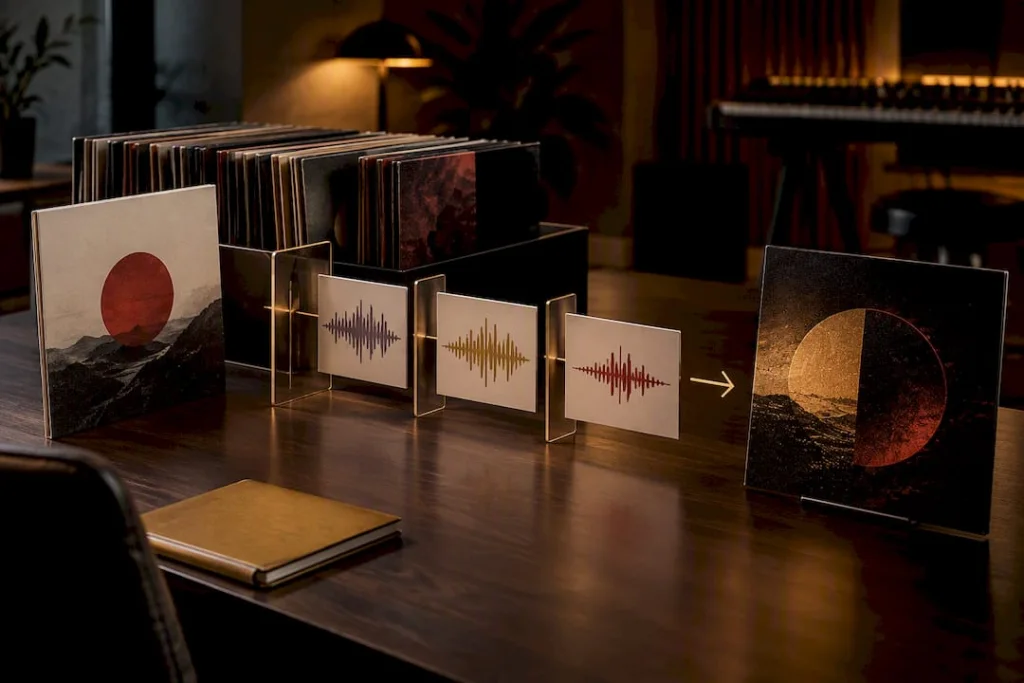
Chemistry runs a close second. Pull up a candidate’s last few releases and pay attention to whether they ask you questions, or just quote you a price. A producer who wants to understand your references before naming a number is signaling something real about how the sessions will go.
Here’s the fuller list of criteria worth running through before you commit:
- Genre and sonic fit: Match reference tracks against their recent work. Listen for similar arrangement choices, texture, and how much space they leave in a mix.
- Creative chemistry: Notice how they respond to your references. Curiosity is a good sign; a flat “sure, I can do that” is not.
- Role clarity: Confirm whether they produce (arrange, direct the session, shape the sound), engineer, or simply sell beats. These are different jobs with different price tags.
- Finish rate: Ask for finished, released records, not just stems or half-built demos. A pattern of completed work matters more than one impressive loop.
- Resources and network: Session players, a trusted mix engineer, mastering relationships, and publishing contacts all extend what a producer can actually deliver.
- Business clarity: Contract terms, revision limits, ownership of masters, and back-end expectations should be easy for them to explain in plain language.
Pro Tip:Ask a candidate to walk you through how they’d approach one of your unreleased demos. Their answer reveals more about fit than any playlist of past credits.
Where Do You Find a Music Producer Worth Hiring?
Referrals beat everything else. Ask musicians, engineers, and studio owners in your local scene who they’d hire for their own record, and you’ll get names filtered through real accountability, not marketing copy. Spotify for Artists points to referrals and local studio networks as the highest signal-to-noise channel available to unsigned artists, and it’s hard to argue otherwise once you’ve compared a friend’s recommendation to a cold platform search.
Online marketplaces still have a place, but treat every listing as a starting point, not a verdict. Marketplace rankings often reflect availability and marketing spend more than artistic judgment, so a top-of-search result can still be the wrong sonic match, a pattern documented in research on recommendation bias in online marketplaces. Vet every sample directly before you reach out.
Practical channels worth working through, roughly in order:
- Local studios and their staff, who usually know which producers actually finish projects on time.
- Musician friends and bandmates who’ve hired someone recently.
- Vetted marketplaces and beat sites, including platforms like Telling Beatzz for instrumental discovery, where you check full credits before messaging anyone.
- Social platforms such as Instagram, SoundCloud, and YouTube, useful only when you can hear complete tracks with visible credits, not thirty-second clips.
- Publishers, A&R contacts, or mentors, if you’re signed or working with a team that has existing relationships worth activating.
What Questions Should You Ask a Producer Before Hiring?
The right questions expose fit fast, and the wrong ones waste everyone’s time. Start with something open-ended: “How do you begin a session? Walk me through a recent example.” Their answer tells you whether they lead with sound design, chord structure, or your vocal performance, and that ordering says a lot about what kind of record you’ll end up with.
From there, move into the practical ground that protects you later.
- Ask about fee structure first. Flat per-song rate, hourly, or project-based, and get a number before you get attached to the idea of working together.
- Ask who handles mixing and mastering. Some producers include it, others hand you off to a separate engineer at extra cost.
- Ask how many revisions are included. Two rounds is common; unlimited revisions rarely exist without a higher fee attached.
- Ask about rights directly. Is this work-for-hire, or are they expecting producer points and a publishing split? Getting this answer in writing early avoids a painful conversation after the record is finished.
- Ask what you’ll actually receive. File formats, stems, and delivery milestones should all be specified before a note gets recorded.
Watch for evasive answers here. A producer who dodges questions about rights, gets vague about deliverables, or resists putting terms in an email is telling you something important. Industry consensus lists style fit, chemistry, experience, and budget as the four pillars of a good hire, but none of that matters if the paperwork falls apart later.
Pro Tip:Send your questions by email before the call, even if you plan to discuss them live. A producer’s written answers are easier to hold them to than a verbal promise.
How Do You Evaluate a Producer’s Portfolio Honestly?
Play their tracks next to your own reference songs, back to back, at the same volume. This A/B method exposes arrangement habits, vocal placement, and tonal balance faster than reading a bio ever will. Listen specifically for repeating fingerprints: how bright or warm the vocals sit, how much reverb they lean on, where the rhythmic emphasis falls. Those production habits repeat across a producer’s catalog, and Berklee’s guide notes they predict fit far better than a single standout credit.
Green flags and red flags tend to show up in the same places:
- Green flag: Repeated collaborators across multiple releases, meaning other artists trusted this producer enough to come back.
- Green flag: Transparent credits that clearly state their role, a pattern Spotify for Artists calls out as a sign of a reliable working relationship.
- Red flag: Inconsistent quality across their catalog, where one track sounds polished and the next sounds unfinished.
- Red flag: Vague role descriptions that never specify whether they wrote, engineered, or simply supplied a beat.
Listen on neutral headphones and again through cheap laptop speakers before you decide anything. A mix that only sounds good in a treated studio room can fall apart the moment a listener streams it on a phone.
What Does It Cost to Hire a Music Producer?
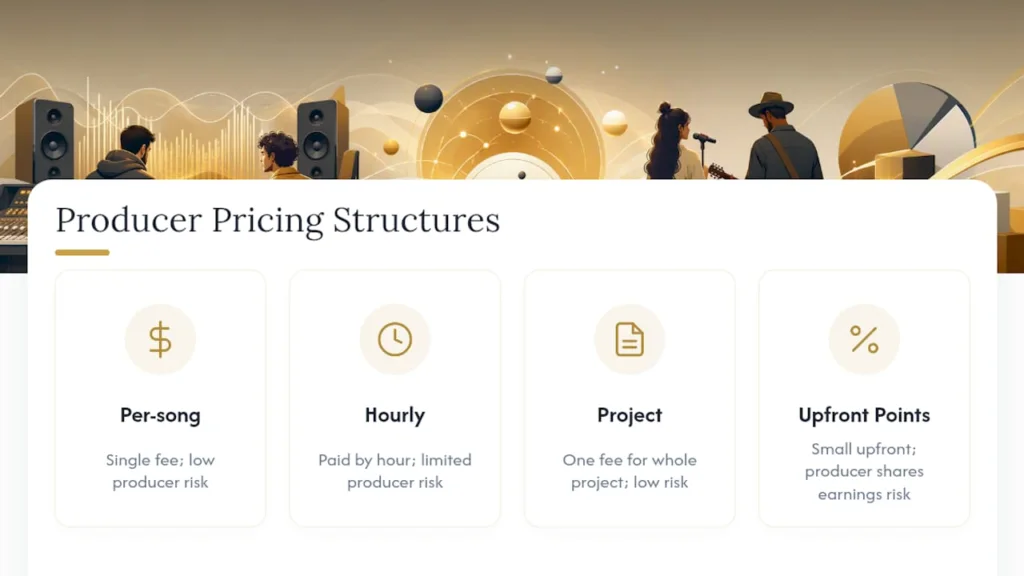
Pricing usually follows one of a few familiar shapes: a flat per-song fee, an hourly rate, a full project rate, or a reduced upfront fee combined with back-end points on future earnings. None of these is inherently better. It depends on your budget and how much risk you’re willing to share with the person shaping your record.
Most quoted fees cover the core production work, but session musicians, mixing, mastering, and sample clearance often sit outside the base price. Ask what’s included before you compare two quotes side by side, because a lower number sometimes hides a longer list of add-ons.
If your budget is tight, you still have real options. Common negotiating tactics include staged payments tied to milestones, limiting the scope to a single song instead of a full project, or offering a smaller upfront fee paired with modest points on the back end. What rarely works is chasing the cheapest possible rate on a record you actually care about. A rushed, underpaid session tends to cost more in re-records and lost momentum than paying fairly the first time.
What Does the Production Timeline Actually Look Like?
A finished record moves through five recognizable phases: pre-production, tracking, editing, mixing, and mastering. Each one deserves its own milestone and sign-off in writing, not a vague verbal “sounds good.”
- Pre-production: References, structure, and key decisions get locked before anyone hits record.
- Tracking: Vocals and instruments get recorded, ideally with a rough mix so you can judge direction early.
- Editing and mixing: Levels, balance, and effects get shaped into something close to final.
- Mastering: The final polish that prepares the track for streaming platforms.
Turnaround varies with project size, but working remotely adds its own demands: agree on file formats, consistent naming conventions, and a backup routine before the first session, so nothing gets lost between rounds of revisions. A clear project management approach keeps every milestone visible instead of buried in scattered texts.
The DRVVYN Sound Perspective on Choosing a Collaborator
We weigh sonic fit and chemistry before anything else when we take on a collaboration, because a technically skilled producer who doesn’t hear your emotional intent will flatten the record into something generic. Our discovery calls run through references, scope, timeline, and rights up front, no surprises later. Licensing and artist development engagements follow the same principle: clarity before commitment, every time.
What the Checklist Approach Gets Right, and Where It Falls Short
The checklist works, but only if you resist the urge to treat it as a scoring rubric where the highest total wins. Genre fit and chemistry matter more than every other line combined, and no amount of technical polish fixes a producer who doesn’t hear what you’re trying to say.
Conventional advice leans too hard on credentials, follower counts, and impressive-sounding session credits. Those signal opportunity, not compatibility. The real test is simpler and harder: does this person ask you questions, or do they just quote you a price? A producer who probes your references before naming a number is showing you exactly how the sessions will go.
Prioritize fit first, then chemistry, then business clarity, in that order. Budget and gear come last, not because they don’t matter, but because they’re the easiest problems to solve once you’ve found someone who actually hears your music the way you do.
— DRVVYN Sound
Want a Production Partner Instead of a Search?
Some producers handle original production, songwriting, licensing, and artist development for musicians chasing an emotionally driven, cinematic sound rather than a generic radio finish. If your project leans toward mood, reflection, or R&B that sits with a listener long after the track ends, that’s the lane where our catalog already lives. Hear the approach in motion on a track like Piece of Peace, then reach out through our licensing and profile page to talk through scope, rights, and timeline before anything gets scheduled. No platform search required, just a direct conversation about the record you’re trying to make.
Sources
Berklee’s Take Note guide on finding a producer and Spotify for Artists’ breakdown of producer fit cover the fundamentals in more depth. For discovery tactics and vetting marketplace leads, AirGigs’ guide to working with producers and Boombox Studios’ industry-producer perspective offer practical, field-tested advice.
- Beginning a beautiful friendship: finding the perfect producer – Berklee Online (Take Note)
- How to choose a producer that’s right for you – Spotify for Artists
- How to find and work with a professional music producer – AirGigs (2026)
- Marketplaces and recommendation biases (arXiv)
FAQ
How Do I Find a Producer for My Music?
Start with referrals from musicians and studios in your local scene, since that channel carries the highest signal-to-noise ratio. From there, vetted marketplaces and social platforms work well as long as you listen to full tracks and check credits before reaching out.
How Much Does It Cost to Hire a Music Producer?
Pricing typically follows a flat per-song fee, an hourly rate, a project rate, or a reduced fee paired with back-end points. DRVVYN Sound’s licensing services are priced on request, so reach out directly for current rates.
Who Are the Top Music Producers to Consider?
There’s no single ranked list that fits every artist, because the “best” producer depends entirely on whether their sound matches your creative vision. Judge candidates by genre fit, chemistry, finish rate, and credit transparency rather than name recognition alone.
Is It Too Late to Start Producing Music at 20?
No. Production careers commonly start in the twenties, thirties, and beyond, and technical skill develops with practice regardless of when you begin. What matters more than age is whether you’re actively finishing tracks and building a catalog other artists can actually hear.
What Are the Biggest Red Flags When Choosing a Producer?
Evasive answers about rights, vague deliverables, and reluctance to put terms in writing are the clearest warning signs. Inconsistent quality across a producer’s finished catalog, noted as a red flag by Spotify for Artists, is another sign worth taking seriously before you commit.