

Listening & Culture
Late-Night R&B Listening Essentials: Your Night Guide
Late-night R&B listening essentials are defined by atmospheric production, emotional intimacy, and deliberate curation that transforms music into an.
By DRVVYN · · 8 min read
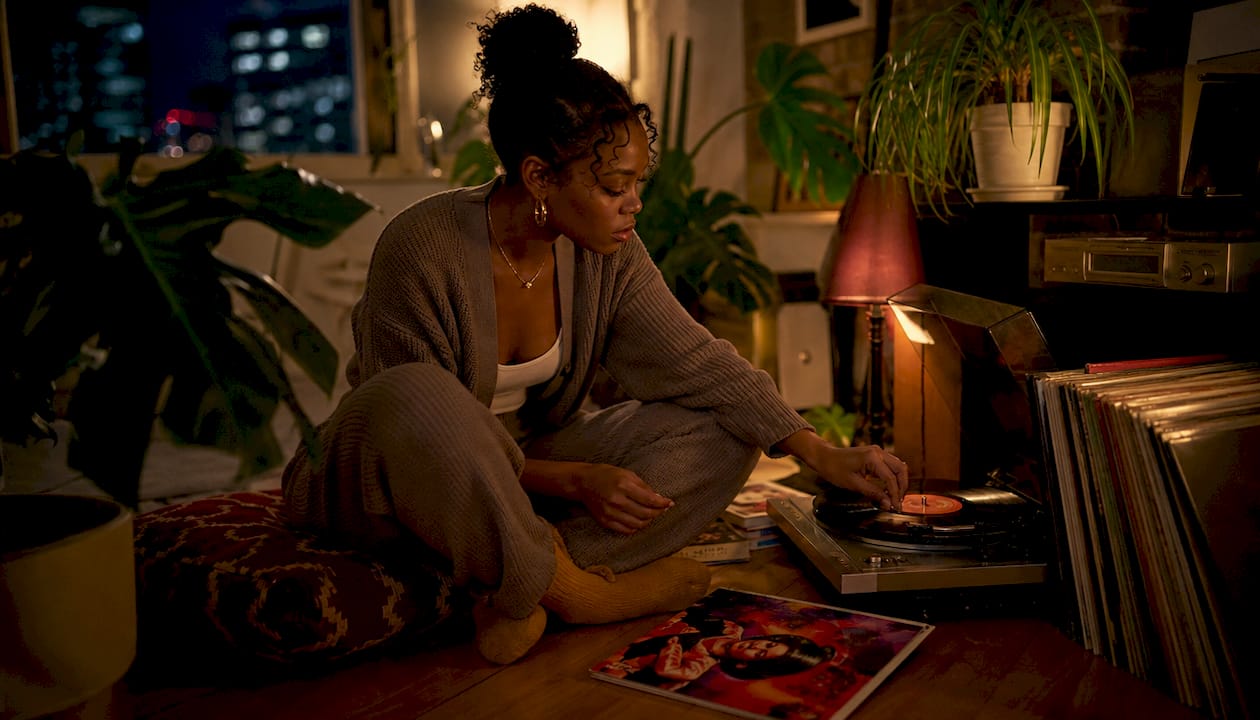
Late-night R&B listening essentials are defined by atmospheric production, emotional intimacy, and deliberate curation that transforms music into an immersive experience built for the quiet hours. Your brain actually processes music differently after dark. The prefrontal cortex steps back while the limbic system takes over, making every reverb tail and vocal breath feel closer, heavier, and more personal. That shift is why a song that sounds ordinary at noon can feel like it was written about your life at midnight. The late-night R&B genre, sometimes called the Quiet Storm aesthetic, exists precisely to meet you in that state.
1. What makes late-night R&B listening essentials different from daytime listening
Late-night R&B is not simply slow music played at night. It is a specific sonic and emotional register built around restraint, texture, and psychological intimacy. Slow tempo tracks at 60–90 BPM with wide stereo imaging and minimal compression reveal quiet dynamics that disappear entirely during daytime listening. Those subtle details are the whole point. Daytime listening competes with noise, distraction, and task focus. Night listening opens a direct channel to feeling.
2. How atmospheric production creates immersive late-night sound
Atmospheric R&B production is the architecture of the late-night listening experience. The techniques below are not stylistic choices. They are functional tools that shape how deeply a track lands emotionally.
- Reverb-heavy vocals create a sense of physical space, placing the singer inside a room rather than on a stage
- Ambient synth pads hold tension underneath a melody without resolving it, keeping the listener suspended
- Vinyl crackle and slowed percussion signal warmth and imperfection, which the brain reads as authenticity
- Breathy vocals and whispered ad-libs communicate vulnerability that polished production erases
- Minimal low-end compression lets bass frequencies breathe and resonate naturally
Atmospheric R&B is commercially gaining strength because listeners now prioritize immersive sound environments over high-energy hooks. That preference reflects a real shift in how people use music. Relaxation and emotional processing have become primary listening goals, not background energy.
Pro Tip:Listen through headphones in a dark or dimly lit room. The Quiet Storm aesthetic requires low ambient noise to fully reveal reverb tails, breath textures, and low-frequency resonance. Speakers in a noisy room flatten the experience.

3. Why emotional storytelling defines the best late-night R&B
The songwriting in great late-night R&B reads like a diary entry left open on the nightstand. First-person confession, layered metaphor, and unresolved emotional tension pull listeners into a narrative that feels personal rather than performed. That intimacy is the core of what makes this genre work at night.
Vulnerability in late-night R&B songwriting shows up in specific, recognizable ways:
- Vocal cracks and imperfect runs that signal genuine feeling rather than technical display
- Silence used as punctuation, letting the weight of a lyric settle before the next line arrives
- Whispered bridges that drop the listener into the most private moment of the song
- Unresolved chord progressions that mirror the feeling of a question without an answer
Younger listeners associate raw vocal cracks and ambient room noise with emotional honesty. They are moving away from polished production toward a lived-in sound that signals the artist actually felt what they sang. That authenticity is the emotional contract late-night R&B makes with its audience.
4. How to build a late-night R&B listening routine that actually sticks
Building a consistent listening ritual is the difference between passive consumption and genuine emotional engagement. A ritual trains your nervous system to associate a specific sound environment with relaxation and reflection. That association deepens over time.
- Start with 5–7 songs. A short playlist with a clear emotional arc is easier to commit to than a 40-track collection. Choose tracks that move from tension to release.
- Listen without skipping for at least 5 consecutive days.Sustainable music rituals require consistent, full listening of a curated playlist with an emotional arc to build lasting psychological associations.
- Set a fixed time. The ritual works best when it anchors to a specific moment, like the 30 minutes before sleep or the hour after you get home.
- Remove distractions. Phones face-down, screens off. The music needs your full attention to do its work.
- Resist the urge to add tracks immediately. Let the existing playlist settle before expanding it. Familiarity is part of what makes the ritual feel safe.
Pro Tip:Avoid building your ritual playlist entirely from algorithm-generated suggestions. Manual curation resists algorithmic bias and produces playlists that reflect your actual emotional needs rather than engagement metrics.
5. Curating the best R&B playlists: criteria and flow techniques
Playlist curation for late-night listening is a craft, not a shuffle. The goal is to build a continuous emotional environment where each track feels like the natural next thought after the one before it.
Tempo and energy flow
A single high-BPM or disruptive track breaks listener immersion immediately. Keep tempo consistent within a narrow range, especially in the first and last thirds of the playlist. The middle section can carry slightly more energy if the transitions are handled carefully.
Anchor tracks
Anchor tracks function as emotional bridges placed at genre or mood junctions to prevent abrupt shifts. A good anchor track shares sonic qualities with both the section before and after it. Think of it as a hallway between two rooms. The listener walks through without noticing the transition.
Sonic signatures as connective tissue
Reverb style, vocal register, and production era all act as invisible threads that hold a playlist together. A playlist built entirely from tracks with similar reverb character feels cohesive even when the artists and tempos vary. Mixing dry, close-mic vocals with heavily reverbed ones creates a jarring contrast that pulls listeners out of the experience.
Criteria checklist for chill night music selection:
- Tempo sits between 60–90 BPM
- Vocals carry reverb or room ambience
- No abrupt key changes between consecutive tracks
- Emotional arc moves from tension toward resolution by the final third
- At least two anchor tracks placed at mood transitions
Key Takeaways
Late-night R&B listening essentials work because atmospheric production, emotional storytelling, and consistent ritual listening combine to create an immersive experience that your brain is neurologically primed to receive after dark.
| Point | Details |
|---|---|
| Nighttime brain state | The limbic system dominates at night, making reverb and vocal texture feel more emotionally intense. |
| Production techniques | Reverb-heavy vocals, vinyl crackle, and minimal compression define the late-night R&B sound. |
| Ritual over volume | A 5–7 song playlist listened to consistently for 5+ days builds deeper emotional associations than large random collections. |
| Anchor tracks matter | Place anchor tracks at mood junctions to keep transitions smooth and immersion intact. |
| Manual curation wins | Building playlists by hand, away from algorithm suggestions, produces more authentic and personally resonant results. |
What I’ve learned from years of building late-night listening rituals
The most common mistake I see is treating late-night R&B like background music. You put on a playlist, scroll your phone, and wonder why the music never quite lands. The genre does not work that way. It asks something of you. It asks you to sit still.
The night I stopped skipping tracks was the night the ritual actually started. I had a playlist of seven songs. I committed to hearing all of them in sequence, every night for a week. By day three, the opening notes of the first track were already releasing tension in my chest before the verse even started. That is the psychological association the ritual builds. The music becomes a signal, not just a sound.
Resisting algorithm-driven recommendations changed what I discovered. When I stopped letting a platform decide what came next, I found tracks I would never have encountered otherwise. Songs with no viral moment, no playlist placement, no cultural momentum. Just the right production and the right feeling at the right hour. That is where the real late-night R&B lives.
My honest advice: build your ritual playlist by hand. Keep it short. Listen in the dark. Let the silence between tracks breathe. The pressure will leave your chest. You will feel it.
— DRVVYN
Drvvynsound: where your late-night ritual finds its sound
Drvvynsound was built for exactly the kind of listening this article describes. Every release under the DRVVYN artist brand carries the atmospheric production, emotional storytelling, and vocal intimacy that late-night R&B demands. The music moves through themes of love, reflection, healing, and personal growth because those are the feelings that surface when the world goes quiet.

If you are ready to build a ritual that actually holds, start with DRVVYN’s curated essentials. The tracks are crafted for the hours after midnight, when your listening is sharpest and the music can reach the places it is meant to reach. This is not background sound. This is the real thing.
FAQ
What are late-night R&B listening essentials?
Late-night R&B listening essentials are the production qualities, songwriting elements, and playlist habits that make R&B music most effective during nighttime listening. They include atmospheric production, emotional vulnerability, and consistent ritual curation.
Why does R&B sound better at night?
The brain’s limbic system becomes more active at night while the prefrontal cortex quiets down, making listeners more sensitive to subtle emotional cues like reverb, vocal texture, and harmonic tension in R&B music.
How do I build a late-night R&B listening routine?
Start with a short playlist of 5–7 songs with a clear emotional arc, then listen to it in full without skipping for at least five consecutive days. Consistency builds the psychological associations that make the ritual feel grounding.
What tempo works best for chill night music?
Tracks in the 60–90 BPM range with wide stereo imaging and minimal compression work best for late-night listening. That tempo range aligns with a relaxed heart rate and allows quiet sonic details to surface clearly.
What is the Quiet Storm aesthetic in R&B?
The Quiet Storm aesthetic is a late-night R&B style defined by vocal intimacy, low-frequency resonance, and minimal production. It requires low ambient noise and ideally headphone listening to fully appreciate its textural details.