Music Marketing
8–12 Edits to Win TikTok Music Promotion for Independent Artists
Campaign first TikTok music promotion for independent artists. Make 8–12 vertical edits, seed creators, test with $50–$350 in a 35 day window.
By DRVVYN · · 11 min read
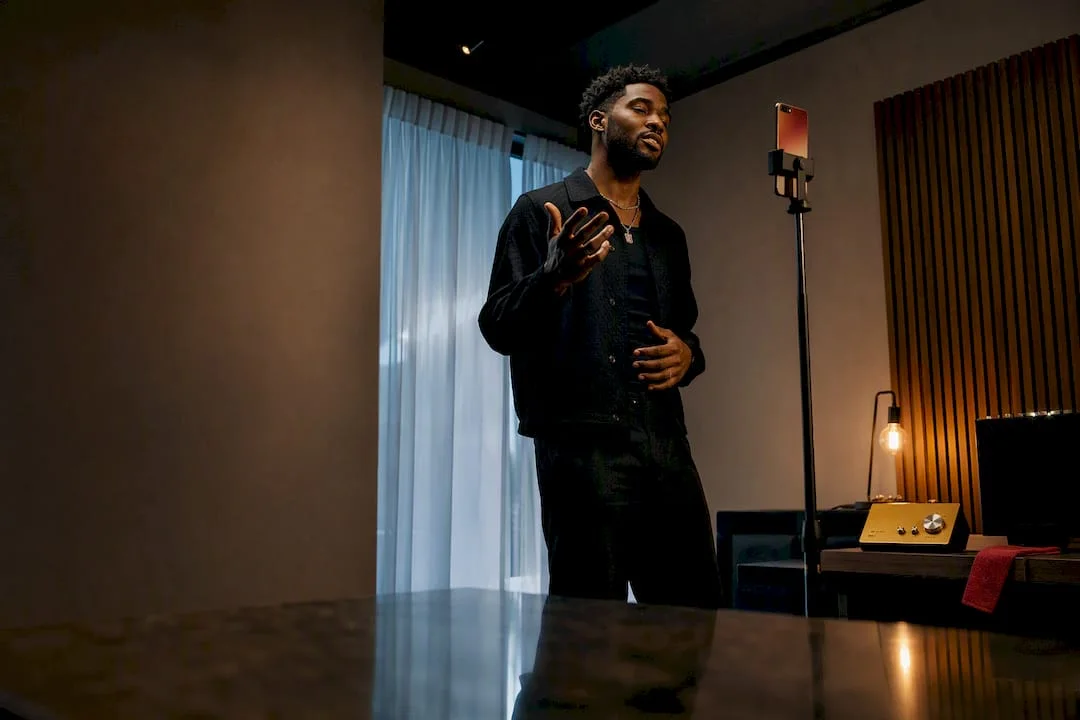
The fastest reliable way to reach listeners on TikTok is to build a hook-first edit of your track, seed it to a handful of creators, post several organic variations yourself, then put money behind whichever clip actually catches. Expect a 35-day window, a starting budget as low as $50 to $350, and results that show up in saves and shares before they show up in streams.
TL;DR:
- Successful TikTok promotion requires creating multiple well-cut assets rather than relying on a single video file, with assets tailored to specific use cases.
- Campaigns benefit most from seeding multiple creators early in the process, as their followers significantly expand potential reach compared to organic posting alone.
- A typical campaign spans roughly 35 days, involving pre-release assets, seeded creator videos, and paid boosts on the best-performing clips, with budgets starting around $50 to $350.
- Choosing the right tactic depends on your goal: seed creators for discovery, focus on organic posts for conversions, or amplify proven content with paid ads.
- Artists must ensure clear rights ownership and proper disclosure, since licensing, ownership splits, and creator labels impact promotion legality and future licensing opportunities.
What Is TikTok Music Promotion, and Which Method Fits You?
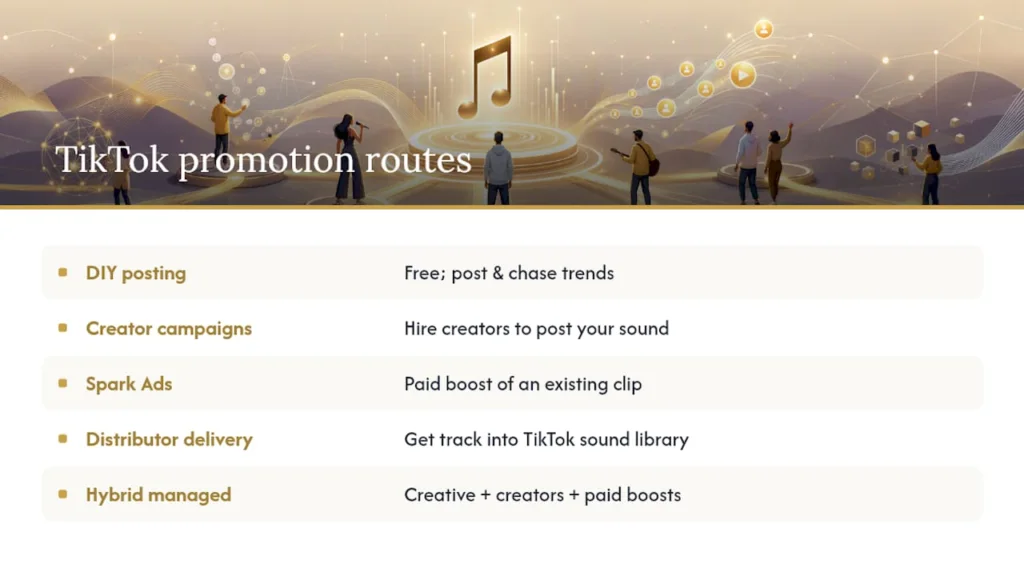
TikTok music promotion covers every way an artist gets a song heard on the platform, from posting it yourself to paying a service to place it in front of vetted creators. Most artists blend two or three approaches rather than picking one, and the mix that works for a bedroom singer-songwriter rarely matches what a label-backed release needs.
DIY organic posting costs nothing but your time. You upload your own cuts, chase trends, and hope the algorithm’s test audience responds. It works best for artists who already post consistently and understand their niche.
Creator campaigns hire real TikTok users, often micro-influencers with tight, engaged followings, to post your sound in a video they make themselves. This is where the sound spreads faster than any single artist account could manage alone.
Paid ads, specifically TikTok’s Spark Ads program, let you boost a post (yours or a creator’s) directly into more feeds. This works only once you already have a clip worth amplifying.
Distributor delivery simply gets your track into TikTok’s sound library through your existing distributor. It’s a prerequisite, not a promotion tactic on its own.
Hybrid managed campaigns combine creative production, creator outreach, and paid boosts under one coordinated plan.
Why Does TikTok Reward Certain Songs Over Others?
TikTok’s recommendation system doesn’t care how many followers you have. It watches how people behave in the first few seconds and scales the video accordingly. According to Sprout Social’s breakdown of the algorithm, completion rate, shares, saves, and sound usage matter far more than follower count, and a new video is tested on a small audience before TikTok decides whether to push it wider.
That test window is where most songs die quietly or take off. The mechanics run in a predictable sequence:
- Distribute the sound to TikTok through your distributor
- Seed the sound to a set of creators with a clear brief
- Approve the submitted videos before they post
- Post your own organic cuts alongside the creator content
- Analyze completion, saves, and shares daily
- Amplify whichever clip performs best with Spark Ads
One creator adopting your sound is worth more than ten of your own posts, because each of their followers becomes a fresh test audience, and every additional creator who picks up the sound compounds that effect rather than adding to it in a straight line.
When Should You Use Creators, Organic Posts, or Paid Ads?
Match the tactic to what you’re actually trying to accomplish, not to whatever tactic sounds most exciting that week.
- Chasing viral discovery on a hook-driven track? Lead with creator seeding. A wide creator network gives your sound more shots at the algorithm’s test audience than your own account can generate alone.
- Converting an existing fan base into streams? Lean organic. Your own posts, tied to email signups or a link in bio, do more for direct conversion than a stranger’s video ever will.
- Scaling something that’s already working? That’s what Spark Ads are for. Amplifying a proven organic winner beats spending on cold, unproven content every time.
Budget-wise, a small test boost in the tens to low hundreds of dollars tells you within days whether a clip has legs. Creator seeding realistically starts in the several hundreds for a handful of vetted posts. Release week calls for the full mix; catalog promotion months later usually only needs organic maintenance and the occasional boost.
Pro Tip:Don’t split your budget evenly across five clips. Post all five organically, then put every paid dollar behind the one with the best completion rate after 48 hours.
How Much Does TikTok Promotion Cost, and How Long Does It Take?
Give your distributor 1 to 2 weeks before your sound reliably shows up in TikTok’s library, according to LANDR’s guidance on getting music onto the platform. Plan your release date backward from that lead time, not forward from it.
The active campaign window most guides recommend runs roughly from Day −14 to Day +21, a 35-day stretch that covers pre-release buzz, launch, and the critical follow-up weeks when the algorithm still has your sound in rotation. Posting cadence during that window should sit at 3 to 7 posts per week across your own account and any seeded creators combined.
What the money typically buys:
- $50–$200: a single Spark Ads test on one clip
- ~$350 and up: a small creator seeding batch, usually 3 to 8 approved posts
- $500–$1,000+: a hybrid package covering creative assets, a wider creator network, and paid amplification
- Distribution fee only: getting the track into the sound library, no promotion included
Royalty payouts for TikTok sound usage run on their own delayed schedule, so check your distributor directly rather than assuming immediate payment once the sound is live.
What’s the Step-by-Step Campaign Checklist?
Run your campaign in three phases instead of treating release day as the finish line.
- Two weeks out: Cut a 15 to 30 second edit of your track with the hook in the first 3 seconds. Build 8 to 12 vertical 9:16 clips from different angles, lyrics, or moods. Upload to your distributor and write briefs for any creators you plan to seed.
- Release week: Post multiple cuts across several days rather than dumping them all at once. Seed micro-creators with your approved brief. Track completion rate and saves daily, and flag whichever clip is outperforming the rest by Day 3 or 4.
- Weeks two and three: Put Spark Ads budget behind that winning clip. Keep engaging the creators who posted it. Push viewers toward Spotify saves, playlist adds, and email signups, since downstream streaming behavior matters more than raw view counts.
Pro Tip:Cross-post your top TikTok cut to Instagram Reels and YouTube Shorts with almost no extra editing. It multiplies your reach for close to zero added production time.
A project management framework built for release cycles makes the three-phase structure far easier to run without missing a step.
How Do You Vet a TikTok Promotion Service Before You Pay?
Ask direct questions before handing anyone money, and expect direct answers back.
- Does the service show you the creator network’s size and how creators are vetted, not just a vague “thousands of influencers” claim?
- Do you approve each video before it posts, or does the service post on your behalf without your sign-off?
- Will you get real-time analytics on completion rate, saves, and shares, or just a final report weeks later?
- Is there a money-back or satisfaction guarantee if the campaign underperforms?
- Can they show past campaign results or case studies with real numbers?
Red flags worth walking away from: guaranteed viral results, no sample analytics, contracts with no defined deliverables, and any service that refuses to let you review content before it goes live.
How Creative Assets Change What a TikTok Campaign Can Do
Most campaigns fail at the asset stage, not the outreach stage. A creator can only work with what you hand them, and a single flat video file gives them almost nothing to build on.
DRVVYN Sound’s approach to this leans on a few specific practices:
- Producing 8 to 12 vertical cuts from one track instead of a single generic clip
- Writing briefs that show creators three concrete use cases, such as a reaction format, a studio moment, and a duet setup, they can copy directly
- Pairing the music with cinematic visuals so the clip already looks native to the platform before a creator touches it
The workflow runs assets produced, then brief written, then creator seed, then analytics review, and each stage feeds the next. Musicians looking for concrete recipes for that first stage can start with these visualizer ideas or compare editing tools in this CapCut versus Premiere Pro breakdown.
What Legal Rules Apply to TikTok Music Promotion?
Rights ownership determines what you’re allowed to promote, and this trips up more independent artists than any algorithm quirk ever will.
If you wrote and recorded the track yourself, you own both the composition and the master recording, and you can distribute it to TikTok freely through your chosen distributor. Problems start the moment a sample, a beat you licensed, or a co-write enters the picture. Every collaborator on a track, whether a producer, featured vocalist, or co-writer, needs a clear agreement covering how the song can be distributed and promoted, ideally in writing before release rather than after a creator campaign has already spread it.
Paying creators to post your sound also carries disclosure obligations. TikTok requires creators to label branded content, and skipping that label exposes both the artist and the creator to platform penalties, not just an awkward comment section. Build the disclosure requirement into your creator brief so nobody is guessing after the fact.
Sync and licensing deals raise a separate issue: if a brand or media company later wants to license a track that went viral on TikTok, unclear ownership splits can stall or kill that deal entirely. Publishing your work properly, splitting royalties with clear percentages, and registering with a performance rights organization before your campaign starts protects the upside if the song actually takes off. None of this replaces legal counsel for complex splits, but getting the basics documented early costs far less than untangling them after a hit.
What Does DRVVYN Sound Think Most Artists Get Wrong Here?
Most advice on this topic treats TikTok promotion as a posting problem. It isn’t. It’s an asset problem. Artists spend weeks worrying about hashtags and trending sounds while handing creators a single flat video clip that gives them nothing to work with creatively.
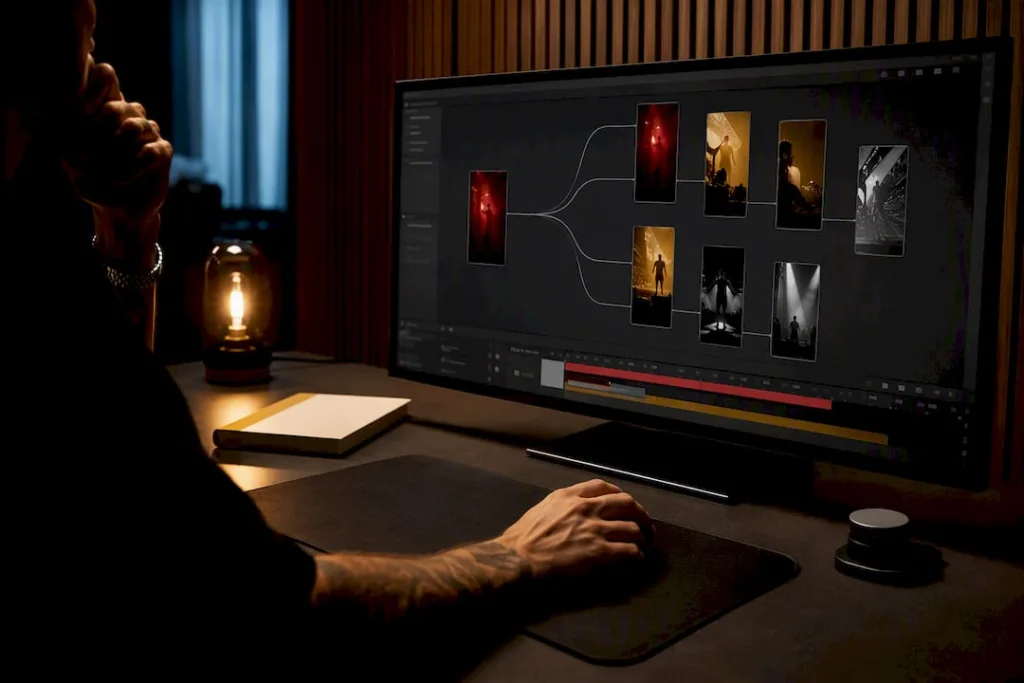
The conventional wisdom says post more and post often. That’s not wrong, but it skips the step that actually determines whether posting more does anything: having enough distinct, well-cut material that a creator can find an angle that fits their own content style. A creator brief with three concrete use cases will outperform a generic “please post this” message every time, because it removes the guesswork that kills most collaborations before they start.
What should come first, before a single creator gets a message: cut the assets, write the brief, then go find the people to seed it to. Reverse that order and you’re not running a campaign. You’re hoping one lands.
— DRVVYN Sound
Ready to Run a Real TikTok Campaign? Here’s the Direct Route
Building 8 to 12 vertical cuts, writing creator briefs, and coordinating approvals across a release window is a full job on top of writing and recording music, and most independent artists are doing it alone with a phone and a prayer. A service can handle the creative side of that equation: original production, vertical assets built for TikTok from the start, and campaign briefs that give creators something concrete to work with instead of a vague ask.
This fits artists who want cinematic visuals paired with their music rather than a phone-shot clip, and who would rather hand off the asset production and briefing than build it from scratch. Start by reviewing the music project management guide to see how a managed release cycle is structured, then reach out to talk through what a campaign brief for your next release could look like.
Sources
For more on algorithm mechanics, campaign timelines, and distribution logistics, see Sprout Social’s algorithm guide, Discovery Music Group’s TikTok marketing guide, and LANDR’s distribution overview.
- How the TikTok algorithm works (Sprout Social)
- How to Promote a Song on TikTok: 2026 Playbook | Echonos
- How to use TikTok to promote music (Music24)
- Get your music on TikTok (LANDR)
FAQ
Can TikTok Be Used for Music Promotion?
Yes. TikTok’s algorithm surfaces new sounds to test audiences based on engagement rather than follower count, making it one of the more accessible discovery platforms for independent artists.
Is TikTok Promotion Worth It for Music?
It’s worth it when paired with a clear conversion path. A viral clip that never points listeners toward saves, playlist adds, or email signups leaves most of its value on the table.
What Songs Can Be Promoted on TikTok?
Any released track works, but hook-driven songs with a clear moment in the first few seconds tend to adapt best to short-form clips and creator formats.
What Is TikTok Sound Promotion?
It’s the practice of getting a track into TikTok’s sound library and then actively encouraging creators and users to use it in their own videos, typically through seeding, briefs, and paid amplification of top-performing clips.