

Listening & Culture
Types of Songs for Quiet Evenings: Your Calm Night Guide
The best types of songs for quiet evenings fall into five core genres: ambient soundscapes, acoustic folk, lo-fi hip hop, instrumental jazz, and classical.
By DRVVYN · · 7 min read

The best types of songs for quiet evenings fall into five core genres: ambient soundscapes, acoustic folk, lo-fi hip hop, instrumental jazz, and classical music from Baroque or Impressionistic periods. What they share is more telling than what separates them. Slow tempos, soft instrumentation, and melodies that breathe rather than demand. The silence in your room doesn’t have to feel sharp. The right song turns it into something you can actually rest inside.
Here’s what each type brings to a quiet evening:
- Ambient soundscapes: Sustained tones, minimal rhythm, and gradual shifts that blend into the background rather than compete with your thoughts
- Acoustic folk: Soft vocals, unhurried guitar, and an intimate warmth that feels like a conversation winding down
- Lo-fi hip hop: Muffled beats, jazzy samples, and a gentle repetition that holds the room without filling it
- Instrumental jazz: Cool, velvety harmonies that move slowly enough to let your chest release its tension
- Classical (Baroque and Impressionistic): Flowing melodies and gentle dynamics that carry no urgency, only space
The instrumental-versus-vocal question matters here too. Vocals can stimulate rather than soothe, pulling your attention toward language when your mind is trying to let go. Instrumental tracks tend to relax more effectively because they remove that lyrical pull entirely.
Songs and playlists that bring each genre to life
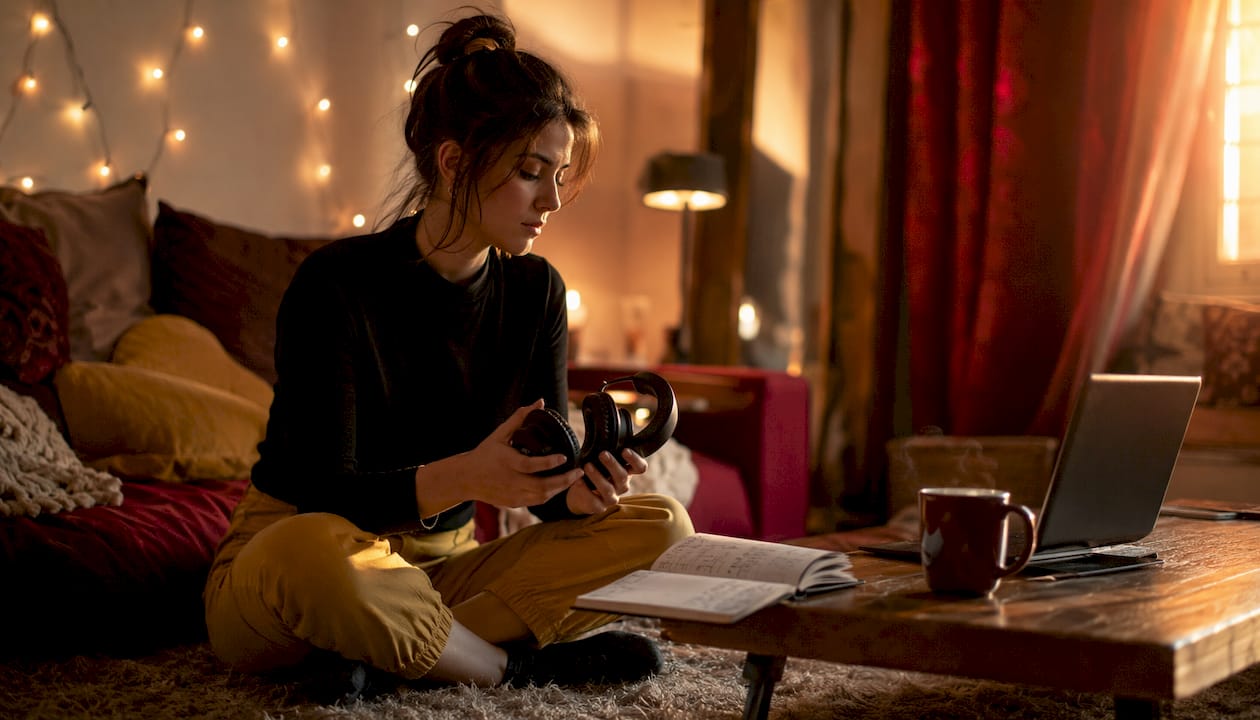
Knowing the genre is one thing. Hearing it is another. These are real tracks and artists worth starting with.
Ambient: Brian Eno’s “Music for Airports” remains the defining ambient record. Its sparse, beautiful textures feel less like music and more like a room that has been made safe. Aphex Twin’s Selected Ambient Works Volume II goes deeper and darker, but the long, evolving soundscapes carry the same quality of stillness. For something with water woven in, “Gentle Breeze” by DECEM, BeiGe Mellow, and Posple layers soft tones over water sounds in a way that feels genuinely grounding.
Classical: Claude Debussy’s “Clair de Lune” is the obvious choice, and it earns that reputation every time. Erik Satie’s “Gymnopédies” are sparse, elegant, and deeply meditative. Bach’s “Air on the G String” offers a different quality, more structured but no less calming. Solo piano, string quartets, and chamber music consistently outperform full orchestral works for evening listening because the smaller ensemble creates intimacy rather than spectacle.
Lo-fi hip hop: The Lofi Girl YouTube channel streams a near-endless catalog of gentle, instrumental hip hop that works as soft background music without asking anything of you. Nujabes, particularly tracks from Metaphorical Music, brings a soulful warmth that sits somewhere between jazz and lo-fi. The beats are present but never intrusive.
Acoustic folk: Nick Drake’s Pink Moon is hauntingly quiet, built almost entirely from acoustic guitar and a voice that barely rises above a murmur. Iron & Wine’s Our Endless Numbered Days offers whispered vocals and delicate arrangements that feel like the musical equivalent of a room with the lights turned low. For something more contemporary, Velvet Ennui’s “Candlelight Between the Pages” and “Soft Notes for a Long Night” carry that same unhurried quality.
Instrumental jazz: Miles Davis’s Kind of Blue, especially “Blue in Green,” is the standard for contemplative jazz. Bill Evans Trio’s Waltz for Debby is intricate and gentle at once. Grace Kenny’s “Slow Motion Evenings” captures exactly what the name suggests: jazz that moves like the last hour before sleep.
Pro Tip:Build a playlist that moves from slightly more textured music at the start of your evening toward purely ambient or instrumental tracks as the night deepens. The gradual shift mirrors your body’s natural wind-down and makes the transition to sleep feel less abrupt.
What makes a genre actually calming? The characteristics that count
Understanding why these genres work helps you make better choices when you’re building your own playlist rather than borrowing someone else’s.
| Genre | Tempo | Instrumentation | Vocal presence | Core relaxing quality |
|---|---|---|---|---|
| Ambient | Very slow or none | Synthesized tones, textures | None | Removes cognitive demand entirely |
| Classical (Baroque/Impressionistic) | Slow to moderate | Piano, strings, chamber ensemble | Rarely | Flowing melodies with no urgency |
| Lo-fi hip hop | Slow, consistent | Sampled beats, soft keys | Minimal or none | Familiar repetition, warm production |
| Instrumental jazz | Slow to mid | Piano, bass, brushed drums | None | Lush harmonies, sophisticated calm |
| Acoustic folk | Slow | Acoustic guitar, piano | Soft, understated | Intimate warmth, narrative comfort |
| Nature soundscapes | No tempo | Rain, waves, wind | None | Masks disruptive noise, grounds attention |
Ambient music works the way it does because it prioritizes atmosphere over melody. There are no strong rhythms pulling your attention forward, no lyrical hooks asking you to follow along. The sustained tones and subtle shifts reduce cognitive activity rather than directing it. Your mind has permission to drift.
Classical music operates differently. Its steady tempo and natural ebb and flow can actually mirror restful physiological patterns. Baroque and Impressionistic works tend to avoid the dramatic crescendos that jolt you back to alertness. Debussy understood this intuitively. “Clair de Lune” never raises its voice.
Lo-fi hip hop’s power is in its consistency. The muffled, warm production and chill, repetitive melodies create a gentle, constant backdrop that holds the room without demanding attention. It feels familiar even the first time you hear it, which is part of why it works so well as soft background music.
Nature soundscapes deserve their own mention. Rain, ocean waves, and distant thunder are effective not because they are musical but because they mask disruptive household noises and create a natural, contained atmosphere. They are the original calm music for relaxation, and they still work.
How to match your music to your emotional state at night
The genre you reach for at 9:00 PM should depend on more than habit. Your emotional state shapes what will actually help you release the day rather than just fill the silence.
The Calm editorial team offers a useful framework here. For anxiety, ambient or new age music tends to work best because it creates space without adding stimulation. For restlessness, solo piano or light jazz provides just enough gentle engagement to quiet a busy mind without tipping into overstimulation. The distinction matters because anxiety and restlessness feel similar but respond to different sonic textures.
“For anxiety, consider meditative, lyric-free new age music, calming nature sounds, or slower classical pieces. These can help to soothe worries and create a peaceful mindset. For restlessness, heavier orchestral classics or acoustic songs with familiar melodies can engage your mind just enough to ease restlessness and promote sleep.” — Calm editorial team
Drvvynsound’s approach to music psychology reinforces this. Music that connects to themes of reflection and healing, the kind that acknowledges where you are emotionally rather than trying to override it, tends to carry you further into genuine rest. A song that meets your tension before releasing it does more work than one that simply ignores it.
A few practical ways to apply this:
- After a high-stress day: Start with lo-fi hip hop or cool jazz. The rhythm gives your nervous system something to follow while the low intensity gradually lets the pressure leave your chest.
- When your thoughts won’t slow down: Solo piano or Baroque chamber music. The structure gives your mind something to lightly track without spiraling.
- When you feel emotionally raw: Acoustic folk with soft vocals. The intimacy of the sound validates the feeling rather than pushing past it.
- When you simply want to disappear into the evening: Pure ambient or nature soundscapes. No melody to follow, no words to process. Just atmosphere.
Pro Tip:Keep a short “emotional state” playlist for each of these moods rather than one long general playlist. Switching between them takes seconds, and the specificity makes a real difference in how quickly you settle.
The songs for peaceful nights that actually work are the ones you return to because they feel true, not just quiet. Drvvynsound curates music built around exactly that kind of emotional honesty. If you want a starting point that already has this thinking built in, explore the playlists at Drvvynsound and let the music do what it was made to do.

Key Takeaways
The most effective approach to finding calm music for relaxation is matching the genre’s sonic texture to your specific emotional state, not just your general preference for quiet.
| Point | Details |
|---|---|
| Five core genres | Ambient, acoustic folk, lo-fi hip hop, instrumental jazz, and classical music are the primary types of songs for quiet evenings. |
| Instrumental beats vocal | Lyrics stimulate the mind; purely instrumental tracks relax more effectively by removing the lyrical pull. |
| Emotional state guides genre | Ambient suits anxiety; solo piano or light jazz works better for restlessness, per the Calm editorial team. |
| Tempo and texture matter most | Slow tempos, soft instrumentation, and minimal dynamic shifts are the shared traits of every effective calming genre. |
| Build by mood, not just time | Curating short, mood-specific playlists rather than one long general list produces faster, more reliable relaxation. |