

Listening & Culture
Why Artists Create Night-Themed Music: The Full Story
Night-themed music is defined as music intentionally composed to evoke the emotional, atmospheric, and psychological qualities of nighttime. Understanding.
By DRVVYN · · 9 min read
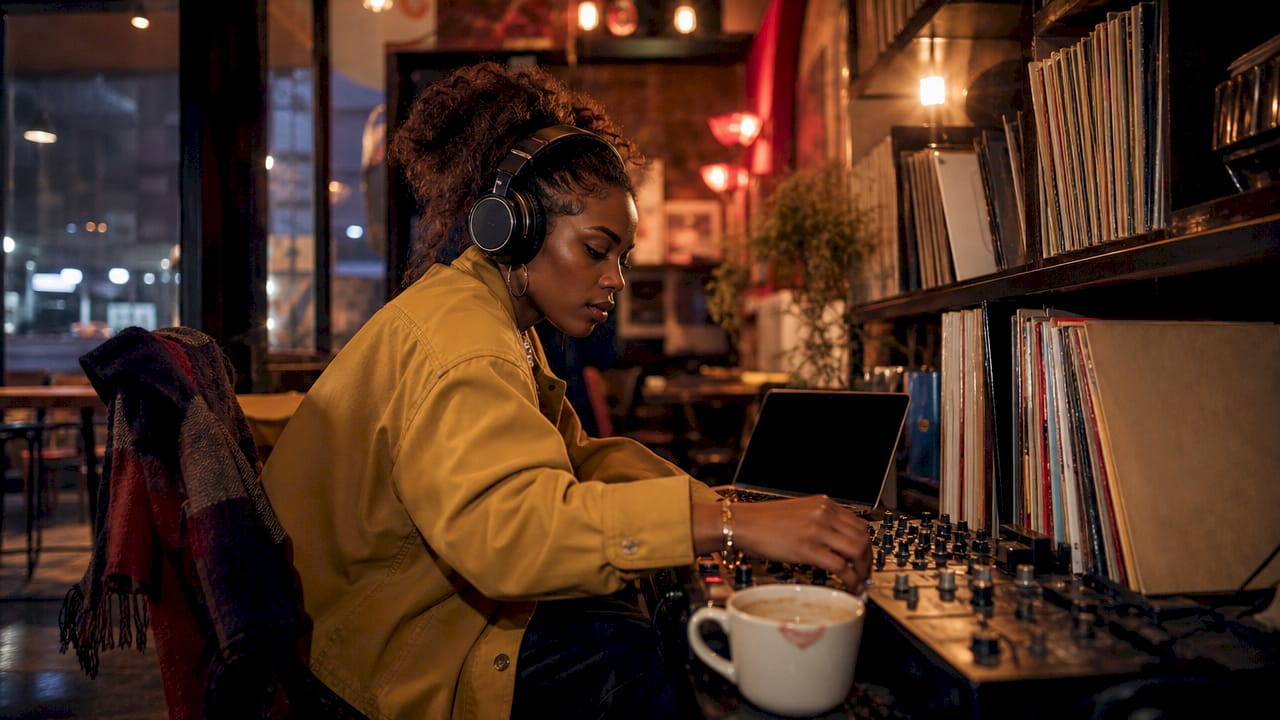
Night-themed music is defined as music intentionally composed to evoke the emotional, atmospheric, and psychological qualities of nighttime. Understanding why artists create night-themed music requires looking past aesthetics into neuroscience, cultural history, and production craft. The brain shifts cognitive focus after dark from task-oriented thinking to emotional evaluation, making night the most fertile ground for raw creative expression. Gothic and contemporary traditions both treat darkness as a psychological landscape. Producers use minor keys, long reverb tails, and low-pass filtering to build the sonic texture listeners feel in their chest at 2:00 AM.
Why artists create night-themed music: the core reasons
The pull toward nighttime creation is not romantic myth. It is rooted in biology, history, and sound design. Three forces converge to make night the defining creative window for artists across R&B, ambient, electronic, and cinematic music.
First, the brain works differently after dark. Second, night carries centuries of cultural weight that artists consciously draw from. Third, specific production techniques translate that emotional weight into sound. Each force reinforces the others, which is why night-themed music feels so distinctly alive.
The three pillars of night music creation:
- Neurological: Circadian biology shifts the brain toward emotional processing at night, deepening musical immersion.
- Cultural: Gothic, Romantic, and contemporary traditions frame night as a space of solitude, mystery, and truth.
- Technical: Slower tempos, minor keys, reverb, and filtering build the sonic architecture of darkness.
How does the brain respond differently to music at night?
The brain becomes more responsive to auditory input at night because circadian biology shifts cognitive focus from task-oriented processing to emotional evaluation. During the day, attention is fragmented across obligations. At night, that fragmentation lifts, and the mind settles into sustained, immersive listening. This is why a song that felt ordinary at noon can feel devastating at midnight.
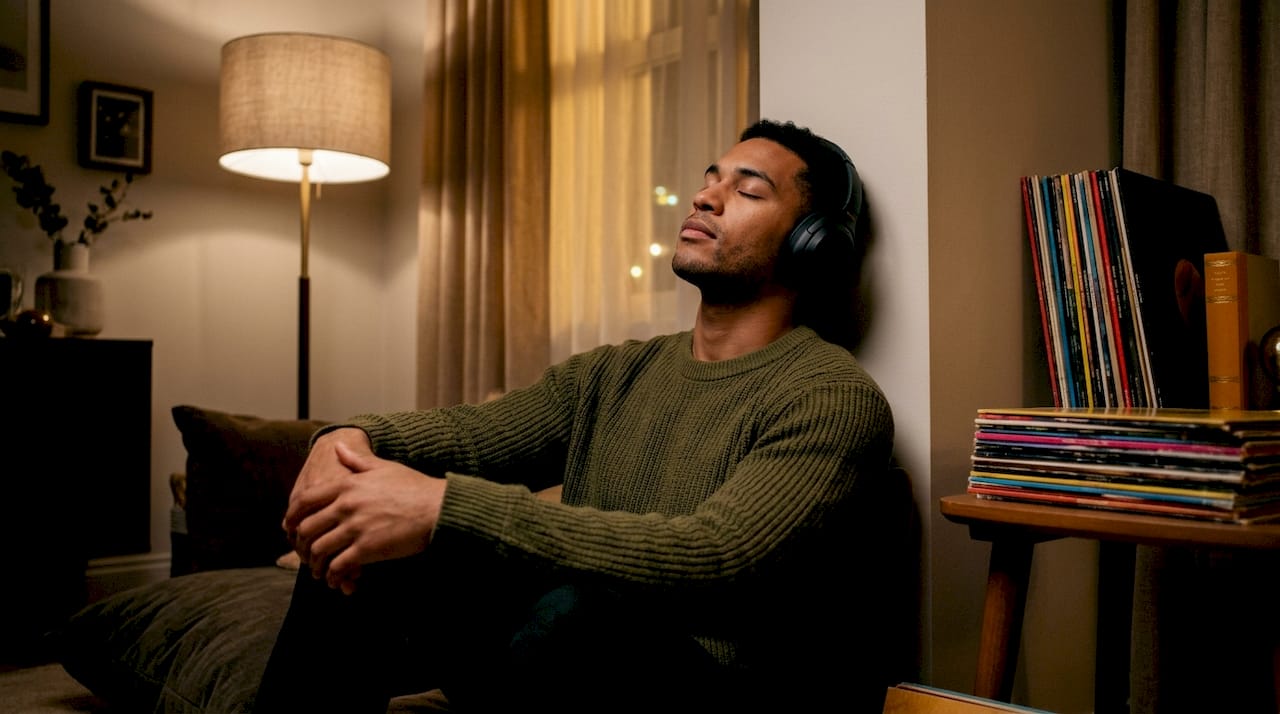
This neurological shift matters for artists, not just listeners. When a producer or songwriter sits down after 9:00 PM, their own emotional evaluation system is running at full capacity. Self-criticism quiets. Emotional honesty rises. The music that emerges tends to carry more weight because the person making it is feeling more, not less.
Long-form musical arcs with sustained builds and slow progressions land harder at night because internal biological timing aligns with the music’s pacing. A seven-minute ambient track with a gradual swell asks for the kind of uninterrupted attention that nighttime naturally provides. Daytime listening rarely offers that.
What this means for music enthusiasts:
- Slower tempos feel more emotional at night because the brain is primed for feeling, not doing.
- Repetition and subtle progression gain weight after dark, rewarding patient listening.
- The listening environment matters. Headphones in a quiet room at night amplify the effect significantly.
- Artists who work nocturnally are not just following a cliché. They are working with their own biology.
What role does cultural symbolism play in night-themed music?
Night has been a symbolic psychological landscape in art and music for centuries. Gothic literature and music romanticized darkness as a space where hidden emotions surface, where longing and grief become visible. That tradition did not fade. It evolved into the brooding textures of post-punk, the introspection of R&B, and the atmospheric weight of cinematic music.
Artists do not just set songs at night. They use night as a character. Darkness signals permission to be vulnerable, to say the things that feel too exposed in daylight. The emotional solitude of 3:00 AM is not just a setting. It is a psychological state that listeners recognize and share.
“The night heightens anxieties and emotional vulnerability. It demands acceptance of inner wounds during creation. That confrontation can yield extraordinary beauty.”
— Nuit Oceān, on nighttime creativity
Nightlife and club culture add another layer. Artists like Aris Chantzopoulos blend ritualistic nightlife imagery with nature and myth, creating atmospheric works that feel both ancient and immediate. The night becomes a meeting point between the personal and the collective, between memory and the present moment.
The significance of night music also lives in what it gives listeners permission to feel. Grief, longing, desire, and numbness all feel more acceptable after dark. Artists understand this. They write toward that permission, creating music that functions as emotional shelter.
What production techniques create the sound of night music?
The sonic qualities of night-themed music are not accidental. Producers use specific, repeatable techniques to build the atmosphere that listeners associate with darkness and introspection.
Professional production guidance recommends the following framework for creating night music:
- Set the tempo between 60–90 BPM. Slower tempos mirror the body’s resting state and create space for emotional weight to settle.
- Choose minor keys. A minor, D minor, and E minor are the most common choices. They carry inherent tension and melancholy without requiring lyrical explanation.
- Apply reverb with a 3–5 second decay. Long reverb tails simulate large, open spaces, the kind of emptiness that feels like standing outside at midnight.
- Use low-pass filtering above 8–10 kHz. Rolling off high frequencies removes brightness and sharpness from the mix, leaving a darker, warmer sonic texture.
- Layer field recordings at low volume. Subtle sounds of rain, distant traffic, or wind add environmental depth without pulling attention from the music itself.
- Keep the mix dynamically restrained. Night music breathes. Avoid compression that flattens dynamics, because the quiet moments carry as much meaning as the loud ones.
| Technique | Purpose | Effect on listener |
|---|---|---|
| 60–90 BPM tempo | Mirrors resting heart rate | Induces calm and emotional openness |
| Minor keys (A, D, E) | Creates harmonic tension | Evokes melancholy and introspection |
| 3–5 second reverb decay | Simulates open space | Feels expansive and solitary |
| Low-pass filter above 8–10 kHz | Removes brightness | Creates sonic darkness and warmth |
| Ambient field recordings | Adds environmental texture | Deepens immersion and realism |
Pro Tip:When mixing night music, reference your track on headphones in a dark room before finalizing. The emotional response you feel in that environment is the one your listeners will have. If something feels too sharp or too bright, trust that instinct and pull it back.
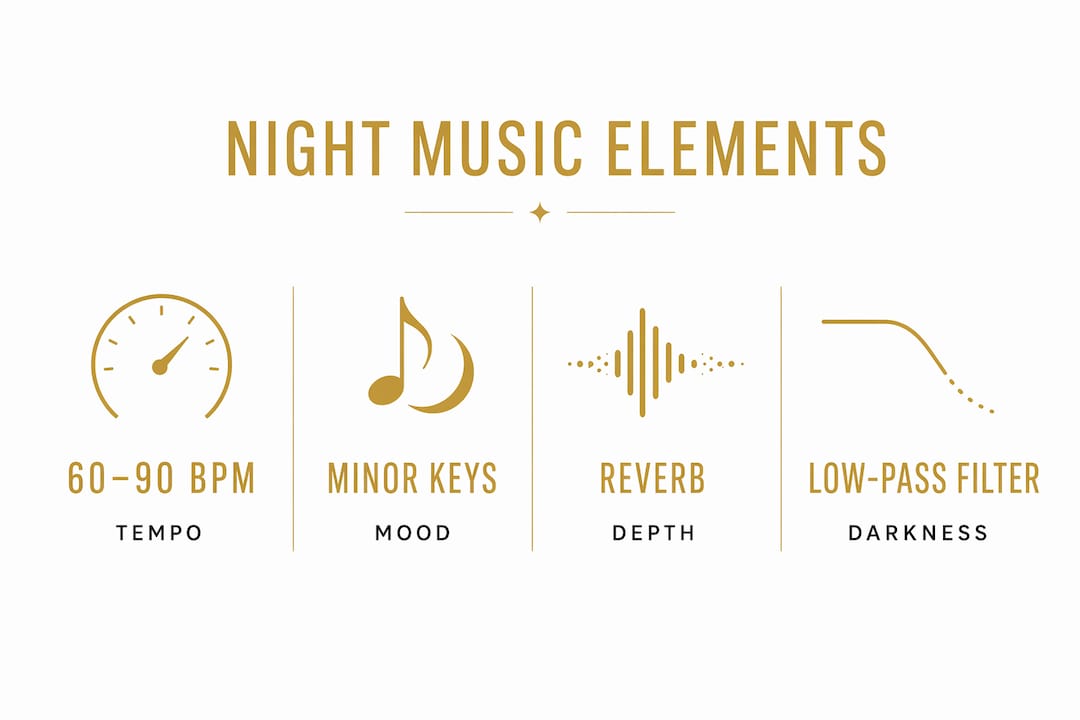
Mixing strategies that roll off high frequencies except on percussion preserve the sense of darkness while keeping rhythmic clarity. The result is a mix that feels like the night itself: present, textured, and slightly suspended.
What happens when artists actually work through the night?
Artists who work from 9:00 PM to 5:00 AM report lower self-editing and fewer social interruptions, which produces more raw and emotionally honest creative output. The enforced quiet of late night removes the pressure to perform or explain. What remains is the work itself.
Photographer Ryan McGinley’s “Night Shift” project captured New York City between those hours, documenting urban solitude and chaos invisible in daylight. The same principle applies to music. Night reveals what daylight hides, and artists who work in that window access a version of themselves that is less guarded and more truthful.
What artists consistently report about nighttime creation:
- The absence of external noise lowers the internal critic, making it easier to commit to a vulnerable idea.
- Night removes the social pressure to be productive in conventional ways, freeing the mind to follow instinct.
- Emotional memories surface more readily after midnight, giving songwriters direct access to the feelings they want to translate into sound.
The 3:00 AM to 4:00 AM window, called the “velvet hour,” is particularly significant. Reduced cognitive control during this period facilitates risk-taking and unedited musical phrasing. The music that comes out of the velvet hour is difficult to replicate at noon because the neurological state that produced it simply does not exist at noon. It is not discipline that creates this music. It is surrender.
Pro Tip:If you are a music enthusiast who wants to understand night-themed music more deeply, listen to your favorite nocturnal tracks between midnight and 2:00 AM with no other stimulation. The music will reveal layers you have never noticed before.
Key Takeaways
Night-themed music is the product of biology, cultural tradition, and deliberate production craft working together to create emotional depth that daylight cannot replicate.
| Point | Details |
|---|---|
| Circadian biology drives creativity | The brain shifts to emotional processing at night, making artists more vulnerable and expressive. |
| Night carries cultural weight | Gothic and contemporary traditions frame darkness as a space for solitude, truth, and longing. |
| Minor keys and slow tempos define the sound | Tempos of 60–90 BPM and minor keys like A, D, and E minor create the harmonic tension night music needs. |
| The velvet hour produces raw output | The 3–4 AM window lowers cognitive control, enabling emotionally honest music that is hard to replicate. |
| Listening environment shapes the experience | Night music lands hardest in quiet, dark environments with headphones and no distractions. |
Night music and the courage it takes to feel
Night music asks something of me that daytime music rarely does. It asks me to stop performing and start feeling. When I work on a track late at night, the silence is not empty. It is full of everything I have been avoiding since morning.
What I have learned is that the artists who make the most affecting night-themed music are not the most technically gifted. They are the most willing. Willing to sit with discomfort. Willing to let a chord progression breathe for eight bars without rushing to resolve it. Willing to leave a lyric imperfect because the imperfection is the truth.
The cultural obsession with productivity has made slow, introspective listening feel almost countercultural. Night music is a form of resistance to that. It says: slow down, feel this, stay here. That is not nostalgia. That is a real human need that faster, brighter music cannot meet.
My honest encouragement to you is this. Find a night-themed track that unsettles you slightly, the kind that makes the pressure in your chest shift. Listen to it in the dark. Do not analyze it. Let it do what it was made to do. That experience is exactly what the artist was reaching for when they made it at 3:00 AM.
— DRVVYN
Drvvynsound and the sound of after dark
Drvvynsound was built for exactly this kind of listening. The music created under the DRVVYN name lives in the emotional space this article describes: slow, atmospheric, honest, and made for the hours when the noise finally stops.

If you have ever felt a song reach something in you that words could not, Drvvynsound’s original music and playlists are designed to meet you there. The catalog draws from R&B, cinematic production, and introspective storytelling, built around the same principles of minor keys, emotional depth, and atmospheric space that define the best night-themed music. Start with DRVVYN Essentials on Spotify for a curated entry point into that world.
FAQ
Why do artists prefer working at night to create music?
Artists working at night experience lower self-editing and fewer social interruptions, which produces more emotionally honest output. The brain’s circadian shift toward emotional processing after dark also deepens creative vulnerability.
What makes music sound like it belongs to the night?
Producers use tempos of 60–90 BPM, minor keys such as A, D, and E minor, reverb with 3–5 second decay, and low-pass filtering above 8–10 kHz to create the sonic texture of night-themed music.
What is the “velvet hour” in music creation?
The velvet hour refers to the 3:00 AM to 4:00 AM window when reduced cognitive control enables risk-taking and raw, unedited musical expression that is difficult to replicate at other times of day.
How does night music affect the listener differently than daytime music?
Night music lands harder because the brain shifts from task-oriented processing to emotional evaluation after dark, allowing listeners to absorb long-form musical arcs with undivided attention and deeper feeling.
What genres most commonly use night-themed music techniques?
R&B, ambient, cinematic, and electronic music most consistently use the production techniques and emotional frameworks associated with night-themed music, though the influence extends into post-punk, soul, and lo-fi as well.