

Listening & Culture
Why Headphone Listening Feels Deeper Than Any Speaker
Discover why headphone listening feels deeper. Learn how sensory isolation and proximity to sound enhance your music experience like never before.
By DRVVYN · · 9 min read
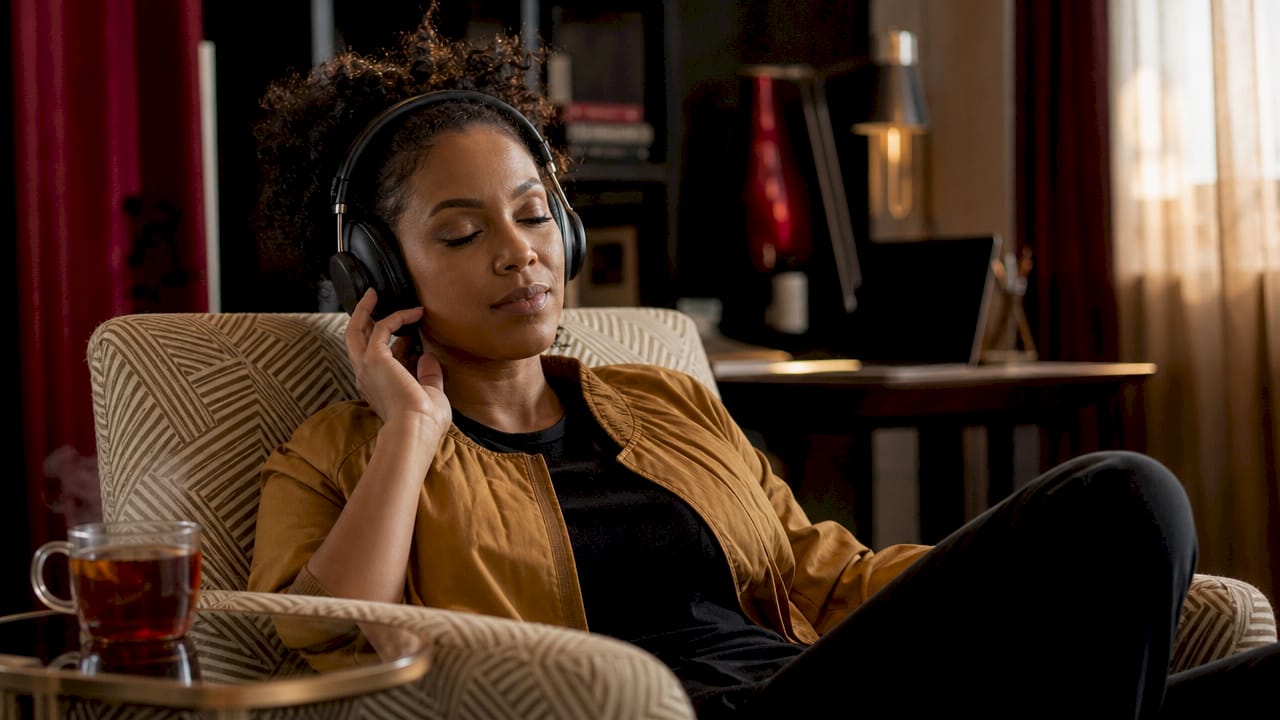
Headphone listening feels deeper because it removes the space between you and the sound. The drivers sit millimeters from your eardrums, your brain stops fighting ambient noise, and the music lands with a weight that speakers simply cannot replicate. This is not a matter of audio quality alone. It is a combination of sensory isolation, physical driver proximity, and spatial audio technology working together to pull you fully inside the music. Understanding why this happens changes how you listen, and what you listen for.
Why headphone listening feels deeper: the science of sensory isolation
Sensory isolation is the first and most powerful reason headphone listening hits differently. When you put on headphones, you cut the brain’s constant background task of filtering environmental noise. That task costs real cognitive energy, even when you are not aware of it.
Auditory masking in busy environments forces the brain to process unpredictable sounds continuously, draining attention even below the level of conscious thought. Every car passing, every conversation nearby, every air conditioner hum pulls a fraction of your focus away from the music. Headphones cut that drain almost entirely.
The result is a shift in how your brain allocates attention. With the filtering load lifted, your auditory cortex can direct full bandwidth toward the music itself. You start hearing the breath before a vocal phrase, the subtle reverb tail on a snare, the tension in a chord before it resolves. None of those details are new. Your brain simply has the capacity to register them now.
Here is what that means in practice:
- Ambient noise reduction frees attentional bandwidth that your brain would otherwise spend on filtering
- Micro-interruptions from unpredictable sounds break emotional continuity; headphones eliminate them
- Controlled sound input creates a predictable auditory environment that the brain processes with less effort
- Emotional encoding strengthens when attention is undivided, making the music feel more personal and present
Pro Tip:Choose headphones with strong passive isolation, such as closed-back over-ear designs, when you want the deepest emotional immersion. Active noise cancellation adds another layer, but even good passive seal makes a significant difference.
How driver proximity and soundstage shape the intimate feel
The physical closeness of headphone drivers to your eardrums is the second major factor. Speakers project sound across a room, and the air between you and the speaker softens and scatters the signal. Headphones deliver that signal directly, with almost no distance to blur it.
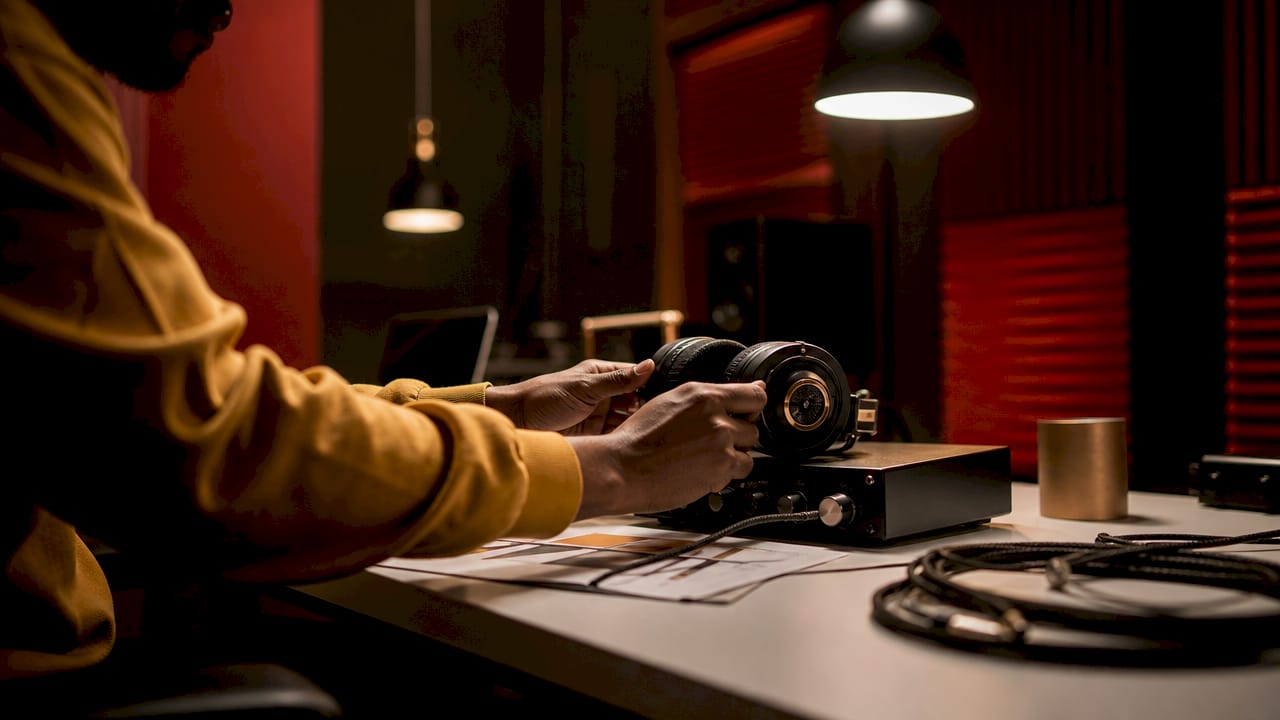
Close driver placement amplifies harmonic detail in a way that creates what audio engineers call “in-head localization.” The sound feels like it originates inside your skull rather than in front of you. That sensation is intimate, sometimes uncomfortably so, but it is also what makes a vocal feel like it is being sung directly to you.
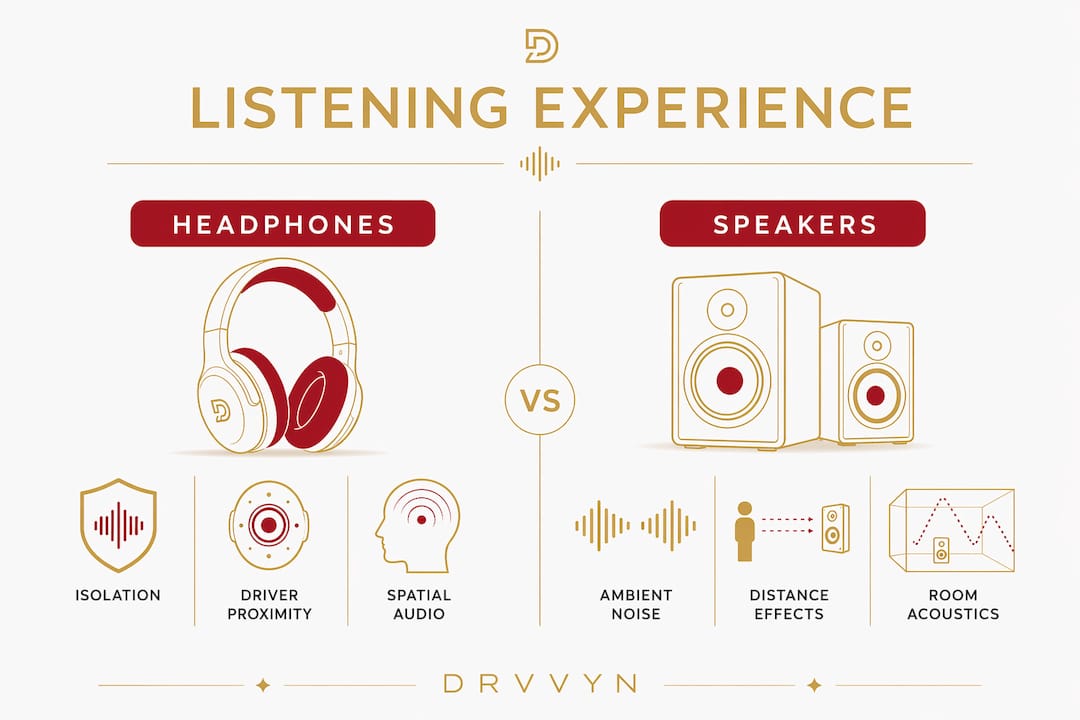
The design of the headphone determines how that intimacy is shaped. Open-back and closed-back designs produce very different soundstage experiences.
| Feature | Open-back headphones | Closed-back headphones |
|---|---|---|
| Soundstage width | Wider, more natural | Narrower, more focused |
| Imaging precision | Diffuse, speaker-like | Tight, direct |
| Isolation | Low, ambient noise enters | High, blocks outside sound |
| Best use | Critical listening at home | Immersive listening anywhere |
| In-head localization | Reduced, more external feel | Stronger, more intimate feel |
Open-back designs allow acoustic leakage that creates a diffuse sound field the brain processes more like speaker sound. That reduces the in-head effect and adds a sense of space and realism. Closed-back designs trap the sound, which intensifies the intimacy but can make the soundstage feel compressed.
Beyond design, driver tuning matters enormously. Fast transient response and minimized distortion preserve the spatial cues and micro-details that create a sense of depth and precise instrument placement. A slow or distorted driver smears those cues together, and the image collapses into a flat wall of sound.
How spatial audio technology deepens immersion in headphones
Spatial audio is the third layer of the headphone depth experience, and it is the one that has changed most dramatically in recent years. Standard stereo places sound on a flat left-right plane. Spatial audio adds height and depth, wrapping sound around you in a full 360-degree field.
Spatial audio’s 360-degree virtual space heightens perceived music dimensionality by adapting audio to the listener’s head movement in real time. Technologies like Dolby Atmos use object-based audio, placing individual instruments and vocals at specific points in three-dimensional space rather than mixing them into a flat stereo field.
Head-tracking takes this further. Accelerometers and gyroscopes inside the headphones detect when you turn your head. The audio field stays fixed in virtual space, so turning left makes the music feel like it is coming from your right. That single feature shifts the experience from “sound in my head” to “I am standing inside the sound.”
The practical benefits for music listeners are significant:
- Dolby Atmos places instruments at precise spatial coordinates, giving each element its own location in the mix
- Head-tracking sensors make the sound field feel anchored in real space rather than locked to your skull
- Binaural processing uses head-related transfer function (HRTF) models to simulate how sound reaches each ear naturally
- Dynamic audio adaptation responds to movement, reinforcing the brain’s sense that the sound exists in a real environment
Pro Tip:When choosing headphones for spatial audio, confirm they support head-tracking and are paired with a streaming service or device that delivers Dolby Atmos or a comparable spatial format. The hardware and the source content both need to support it for the full effect.
What happens in your brain during deep headphone listening
The immersive audio experience headphones create is not just acoustic. It is neurological. The brain enters a different processing state when you listen alone, in isolation, with full attention on the music.
Focused listening sessions neurologically encode music more deeply, producing stronger emotional encoding and recall than casual background listening. The brain engages differently during analytical listening, activating regions tied to memory, emotion, and reward simultaneously. That is why a song heard through headphones in a quiet room can feel like it is reaching somewhere speakers never quite touch.
Listening alone reduces social monitoring cognitive load, freeing neural resources for auditory processing. When you are around other people, part of your brain stays alert to social cues, facial expressions, and conversational context. Alone with headphones, that monitoring quiets. The music gets more of you.
Here is how that plays out in a listening session:
- Social monitoring drops. Your brain stops tracking the room and redirects attention inward.
- Top-down auditory processing increases. You begin actively interpreting the music rather than passively receiving it.
- Emotional encoding strengthens. The brain links what it hears to feeling and memory with greater intensity.
- The default mode network activates. Absorbed attention during solitary listening activates the auditory cortex alongside the default mode network, creating a state that feels both restorative and intellectually engaging.
- Memory consolidation deepens. Songs heard in this state tend to stay with you longer and carry more emotional weight.
This is why the same song can feel completely different through headphones than through a speaker in a shared room. The acoustic signal may be identical. The brain receiving it is not.
Key Takeaways
Headphone listening feels deeper because isolation, driver proximity, spatial audio, and focused brain states all work together to intensify how you perceive and emotionally process music.
| Point | Details |
|---|---|
| Sensory isolation frees attention | Blocking ambient noise reduces the brain’s filtering load, directing full focus to musical detail. |
| Driver proximity creates intimacy | Close placement amplifies harmonic detail and produces an in-head feel that makes music feel personal. |
| Spatial audio adds dimension | Dolby Atmos and head-tracking create a 360-degree sound field that moves beyond flat stereo. |
| Solitary listening deepens encoding | Listening alone reduces social cognitive load, strengthening emotional and memory encoding. |
| Design choice shapes the experience | Open-back headphones widen the soundstage; closed-back designs intensify isolation and intimacy. |
What I have learned from years inside the headphones
There is a version of listening that most people never reach. Not because the music is not good enough, but because the conditions are never right. Noise, distraction, other people in the room. The music plays, but you are not really inside it.
Headphones change that equation. When I put them on before a session, something in the room shifts. The outside world does not disappear, exactly. It just stops mattering. The sound fills the space between thought and feeling, and that is where music actually lives.
What I have noticed over time is that the headphone choice matters less than the intention. You can have the most technically advanced pair in the world and still listen passively, still let the music run in the background while your mind wanders. The depth comes from bringing your full self to the experience. The headphones just make that easier by removing everything that competes for your attention.
The in-head localization that some listeners find unsettling is actually one of the most honest things about headphone sound. It tells you the truth: this music is inside you now. Not in the room. Not coming from somewhere else. It is yours, and it is asking something of you. That is not a flaw in the technology. That is the point.
If you want to go deeper, start with silence. Find a room where the world cannot reach you. Put on something that has always meant something to you. Then actually listen. Not to analyze. Not to critique. Just to feel where it takes you.
— DRVVYN
Drvvynsound and the music built for this kind of listening
Some music is made to fill a room. Drvvynsound makes music built for the space between your ears.

DRVVYN’s catalog of R&B songs, visualizers, and curated playlists is designed for exactly the kind of focused, immersive listening this article describes. The production choices, the vocal layering, the emotional weight in each track. All of it rewards the listener who shows up fully present. If you are ready to experience music that meets you where you are, explore Drvvynsound’s releases and find what resonates. The headphones are yours. The music is waiting.
FAQ
Why does music sound better with headphones than speakers?
Headphones place drivers close to your eardrums and eliminate ambient noise, freeing the brain’s full attention for musical detail. Speakers require the brain to filter room reflections and environmental sound, which reduces perceived depth and emotional presence.
What is in-head localization in headphone listening?
In-head localization is the perception that sound originates inside your skull rather than in external space. It results from close driver placement and is reduced by open-back designs that allow sound to diffuse more naturally.
Does spatial audio actually make headphones sound more immersive?
Yes. Spatial audio with head-tracking creates a dynamic, reactive 360-degree sound field that moves with your head, simulating real-world auditory cues that standard stereo cannot replicate.
Why does listening alone make music feel more powerful?
Listening alone reduces social monitoring load, freeing neural resources for deeper auditory and emotional processing. The brain encodes music more strongly when it is not dividing attention between the sound and the social environment.
Are open-back or closed-back headphones better for immersive listening?
Closed-back headphones deliver stronger isolation and intimacy, which suits emotional and focused listening. Open-back headphones produce a wider, more natural soundstage that feels less confined, making them better for analytical or critical listening sessions at home.