

Listening & Culture
Best Playlists for Solo Nights, Built by Mood
Find the best playlists for solo nights and learn how their pacing, track order, and atmosphere can sharpen your next release's listener experience at home
By DRVVYN · · 6 min read
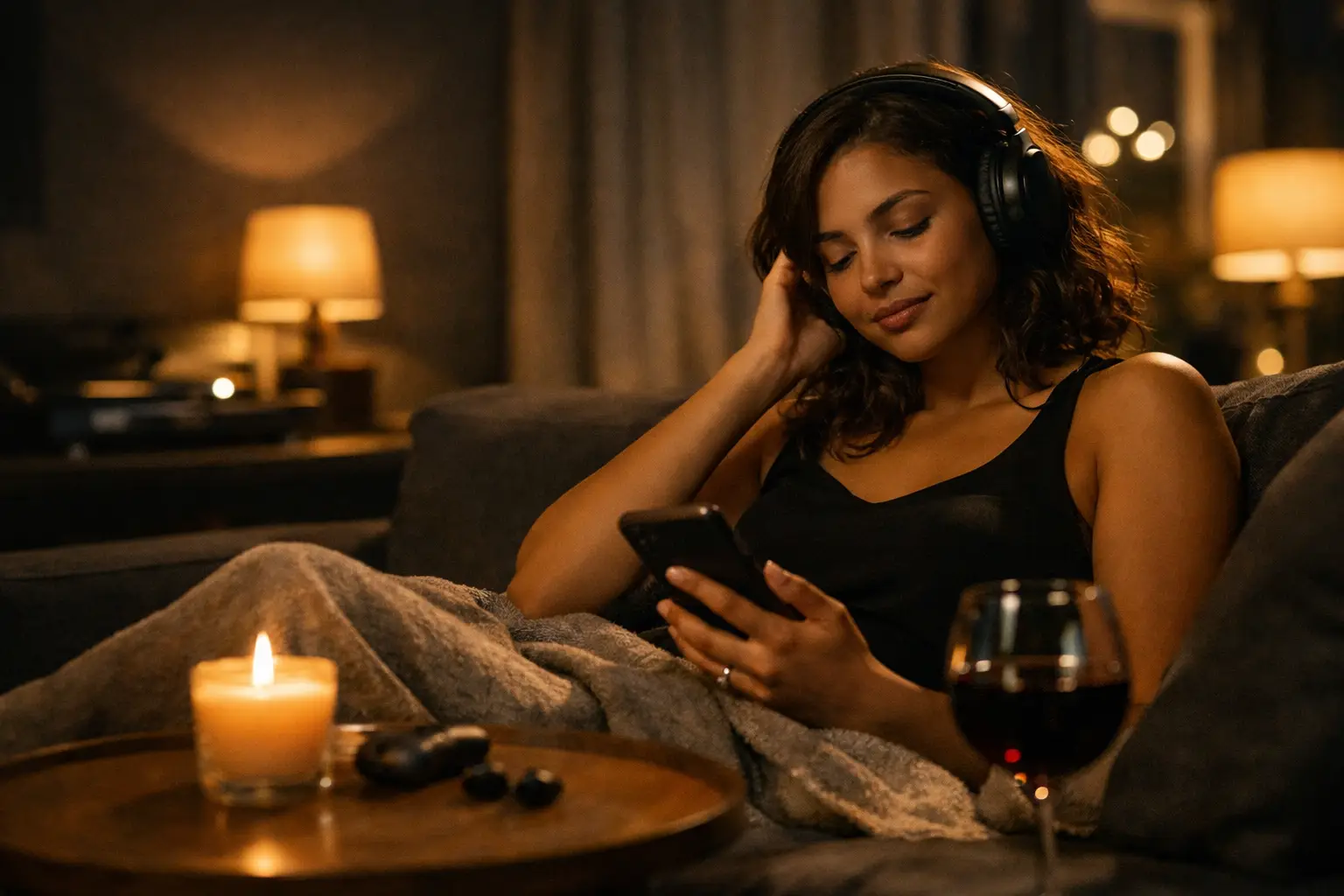
The best playlists for solo nights are not really about being alone. They are about choosing the room you want your mind to sit in. Streetlight through blinds. A half-finished song in the session. The calm after everyone else has gone quiet.
For an independent artist, that feeling is useful information. A playlist is not just background. It is a map of attention: where the listener enters, what makes them stay, and how much space a song is allowed to take.
What a Solo-Night Playlist Needs
A strong solo-night playlist has a point of view. It does not throw every quiet song into one pile. It decides whether the night feels reflective, weightless, restless, or clear.
That decision matters more than genre. A restrained electronic track can sit beside an intimate R&B record if both hold the same temperature. A sparse indie song can follow a slow hip-hop cut if the emotional movement makes sense.
Start with a setting, not an algorithm-friendly label. Think: driving home after midnight, headphones in a dark apartment, writing when sleep will not arrive, or making dinner with no plans after. Specific scenes produce better sequencing than broad words like chill or sad.
The best playlists leave room for contrast, too. If every song is hushed, the listener can drift away. A little lift in the middle – a brighter chord, a stronger drum pattern, a vocal that reaches – gives the quieter moments their shape.
Four Playlist Directions Worth Building
You do not need a massive catalog of playlists. Four distinct moods can cover a wide range of late-night listening and give you useful reference points for your own work.
1. The After-Hours Drive
This is motion without urgency. Low-lit synths, patient drums, open space around the vocal. The songs should feel like the road is moving beneath them.
Begin with something immediate but controlled. Let the center of the playlist widen into more rhythmic tracks, then taper toward a final song that feels like arriving somewhere without needing to announce it.
For artists, this is a useful home for music with forward momentum that is not built for a peak-hour room. If your track carries a night-drive energy, ask whether its first seconds establish the world quickly enough. In a playlist, long intros can be beautiful. They still need to earn the wait.
2. The Apartment at 1 A.M.
This is closer. Vocals feel near. Small details matter: a breath before a line, a piano pedal, an imperfect guitar sound, a bass note that lingers longer than expected.
Keep the sequence intimate rather than flat. Pair songs by lyrical honesty, vocal texture, or negative space. A production can be minimal without feeling unfinished. The difference is intention.
This direction suits artists making personal songs that do not need to perform their emotion at full volume. If the lyrics are the center, place the clearest and most immediate song early. Do not hide your strongest human moment at track nine because you are trying to make the playlist feel mysterious.
3. The Quiet Focus Session
Some solo nights are not about reflection. They are about finishing the thing. This playlist supports concentration without disappearing completely.
Favor repetition, steady tempos, and music that creates a lane rather than constantly asking for attention. Instrumental tracks work well, but lyrics can work too when they are treated as texture rather than a demand for close listening.
For a producer or songwriter, this is more than a listening mood. It is a practical test. Put a work-in-progress between songs you respect. Does the low end feel crowded? Does the transition into the vocal feel abrupt? Does the energy hold without forcing itself forward? Reference listening will not make the creative choices for you, but it can reveal where your ears have adapted to a loop.
4. The Last Light Before Sleep
This is the gentlest lane, but it should not be bland. Choose songs with warmth, soft edges, and an emotional landing. The playlist needs fewer dramatic turns.
The ending matters most here. Avoid closing on a track that makes the listener feel suspended in a way that is accidental. Leave them with resolution, even if it is unresolved on paper. A final chord, a fading texture, or a lyric that softens the room can do enough.
If you release music that lives here, be honest about the trade-off. Subtle songs often build connection slowly. Their value is not always obvious in a quick scroll. They need clean presentation, context, and the right listener expectation.
Sequence for the Person You Are Becoming
A playlist is a small act of curation. It says, “Stay here for a while.” That is close to what an artist release page, email, or catalog should do as well.
When building a solo-night playlist, avoid treating tracks as interchangeable content. Give each song a job. The opener sets the temperature. The second track confirms it. The middle creates movement. The final stretch makes the listener feel they did not spend the last hour by accident.
A useful rule is to listen to every transition, not only every song. Two great records can make a weak handoff. Pay attention to tempo, key, vocal density, drum entrance, and emotional distance. You do not need to make every transition technically perfect. You need to make it feel intentional.
Keep it short enough to replay. Around 45 to 75 minutes is often enough for a contained mood. Longer playlists can work for focus, travel, or hosting, but a solo-night sequence benefits from an ending. It should feel like a film, not an endless feed.
Use the Playlist as a Release Test
Independent artists spend a lot of time asking where a song fits. A better question is what it does to the room.
Build a private reference playlist around the feeling your release is meant to carry. Add songs from different artists without worrying about matching genre labels too closely. Then place your demo in three positions: near the beginning, at the emotional center, and after a song with stronger production. Listen on headphones, speakers, and during an ordinary task.
The goal is not to copy anything in the playlist. It is to understand context. Maybe your song needs a shorter opening. Maybe it needs less arrangement in the first verse. Maybe it is already doing exactly what it needs to do, and the temptation to add more is the problem.
Write down what you notice in plain language. “The vocal feels too far away after track four” is more useful than “fix the mix.” “The second chorus arrives late for this mood” gives you a real creative decision to consider.
This same exercise can shape how you talk about the release. If the song belongs in a 1 A.M. apartment playlist, the visual world, short-form clip, and release copy should not pretend it is a Friday-night anthem. Clear framing helps the right people recognize themselves in the work.
A Note on Owning the Listening Path
Platform playlists can introduce music to new listeners. They are part of the landscape. But the relationship cannot end at a platform queue.
When someone connects with the mood around a song, give them a place to find the larger world: your catalog, your story, and a way to hear from you again. That is one reason DRVVYN is building Artist DRVVYN Engine, an upcoming artist-owned system designed around a more connected digital home. The music should not disappear into a scattered stack of profiles and subscriptions.
The solo night is private. The connection that begins there does not have to be.
Build the playlist with care. Then make work that deserves to be the song someone returns to when the room gets quiet.